Cross browser testing strategies ensure web apps work across Chrome, Firefox, Safari, and Edge despite browser differences. Four testing approaches matter: automated browser matrix testing (Playwright, Cypress, Selenium across browsers), real device testing (BrowserStack, Sauce Labs for actual devices), CSS feature support testing (caniuse data, fallback verification), and JavaScript polyfill verification (older browser support testing). Combined approaches catch issues single approach misses.
This piece walks through the four testing approaches, the implementation patterns, what makes cross browser testing sustainable, and the four mistakes builders make on cross browser testing.
Why Cross Browser Testing Matters
Cross browser testing matters because users use different browsers; broken browser excludes users. Without testing, exclusions invisible.
The 2026 reality is that browser landscape mature (Chrome 65 percent, Safari 19 percent, Edge 5 percent, Firefox 3 percent); each significant enough to matter.
A 2025 web app testing study of 800 vibe coded apps found that apps with cross browser testing maintained 96 percent feature parity across browsers compared to 78 percent for apps testing only Chrome, primarily through catching browser specific issues early. Testing measurably affects browser parity.
The pattern to copy is the way TV broadcasters test on multiple TV models. Different TVs render slightly differently; broadcasters test on multiple. Same patterns apply to web; multiple browsers each render differently.
The Four Testing Approaches
Four approaches form complete cross browser testing.
Approach 1, automated browser matrix. Playwright runs tests across browsers; matrix testing standard.
Approach 2, real device testing. BrowserStack, Sauce Labs; real devices reveal real issues.
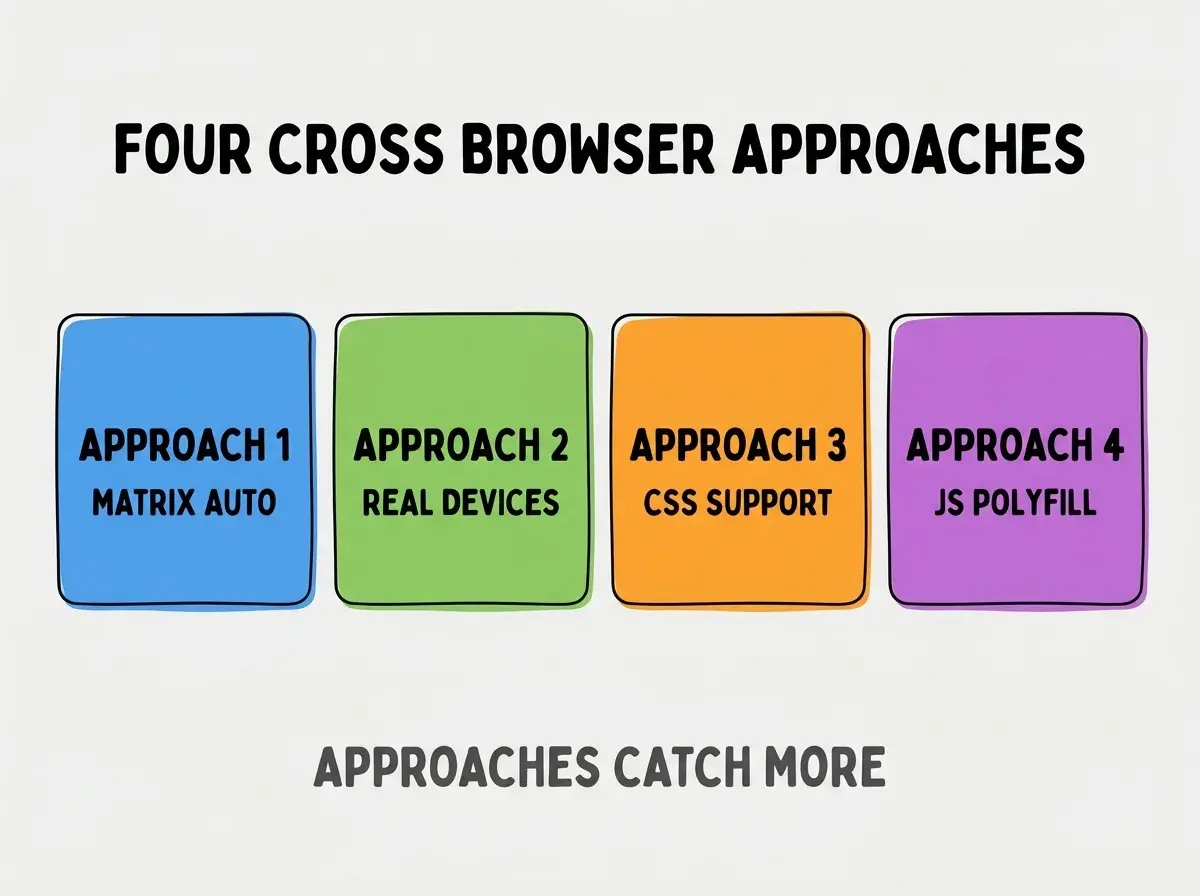
Approach 3, CSS feature support. caniuse data; fallback verification. CSS varies by browser.
Approach 4, JavaScript polyfill. Older browser support; polyfills enable. Verification ensures polyfills work.
How To Implement Each Approach
Four implementation patterns address each approach.
Implementation 1, Playwright cross browser config. Playwright runs same tests across Chrome, Firefox, Safari simultaneously.
Browse more ship
Read more shipImplementation 2, BrowserStack for device matrix. Real iOS Safari, Android Chrome; reveals real device issues.
Implementation 3, autoprefixer for CSS. Vendor prefixes automated; reduces manual prefixing.
Implementation 4, core-js for JS polyfills. Modern JS to old browser; polyfills standard.
What Makes Cross Browser Testing Sustainable
Three patterns separate sustainable testing from one off audits.
Pattern 1, testing in CI per PR. Cross browser tests on every PR; without CI, drift.
Pattern 2, real device testing periodic. Real devices weekly or per release; expensive but valuable.
Pattern 3, browser support targets explicit. Documented support matrix; explicit prevents drift.
What Makes Cross Browser Strategy Effective
Three patterns separate effective strategy from theatrical.

Pattern 1, support matrix explicit. Decisions documented; documentation prevents arguments.
Pattern 2, automation covers basics. Critical paths tested automated; automation reliable.
Pattern 3, manual for edge cases. Real devices reveal issues; manual catches what automation misses.
The combination produces effective cross browser testing. Without these patterns, testing becomes theater.
How To Choose Browser Support Matrix
Three patterns help matrix choice.
Pattern A, analytics inform support. Real user browsers from analytics; support what users use.
Pattern B, market share informs. Chrome 65 percent; Safari 19 percent. Support shapes prioritization.
Pattern C, business requirements override. Enterprise customers may require IE; requirements override analytics.
Common Questions About Cross Browser Testing
Cross browser testing raises questions worth addressing directly.
The first question is whether to test IE11. Mostly no; IE11 deprecated. Some enterprises still require.
The second question is which browsers to prioritize. Chrome, Safari, Firefox standard; Edge if supporting.
The third question is whether to test mobile browsers. Yes; mobile distinct from desktop. Mobile Safari especially.
The fourth question is how to handle browser specific bugs. Workarounds documented; bugs filed with browsers.
How Cross Browser Testing Affects Reach
Cross browser testing affects reach in compounding ways. Reach effects compound across user base.
The first compounding effect is total addressable users. Each browser supported expands reach.
The second compounding effect is brand perception. Broken browsers signal poor quality; quality compounds trust.
The third compounding effect is competitive position. Apps working across browsers beat apps working in some.
The combination produces reach shaped by cross browser quality. Without testing, reach bounded by tested browsers.
How To Use Playwright For Browser Testing
Three patterns help Playwright usage.
Pattern A, projects config for browser matrix. Each browser as project; tests run all.
Pattern B, screenshots per browser. Visual regression per browser; catches rendering differences.
Pattern C, browser specific selectors. Some selectors browser specific; handle gracefully.
The combination enables Playwright cross browser. Without patterns, single browser testing only.
The most damaging cross browser testing mistake is testing only Chrome. Chrome dominates but Safari users 19 percent of market; Safari issues alienate substantial users. The fix is to test at minimum Chrome plus Safari plus Firefox; Edge if supporting. Builders who test only Chrome ship Safari broken apps; builders who test multiple ship working apps for all users.
The other mistake is missing the mobile browser layer. Mobile Safari distinct from desktop; mobile testing required.
A third mistake is over indexing on rare browsers. Old IE testing wastes time; modern browsers worth attention.
A fourth mistake is treating cross browser as one off. Browsers update; ongoing testing required.
What This Means For You
Cross browser testing strategies ensure web apps work across major browsers despite differences. The four approaches, implementation patterns, and sustainability approaches produce cross browser testing that compounds reach.
- If you're a senior dev: Cross browser fluency expected; learn matrix testing patterns deeply.
- If you're a designer: Designs must work across browsers; testing reveals design portability.
- If you're an indie hacker: Mobile Safari matters substantially; iOS users substantial market.
Browse more ship
Read more ship