Performance testing with Core Web Vitals and Lighthouse measures user experience quality and SEO ranking signals. Four metrics matter: Largest Contentful Paint (LCP, when main content loads), Interaction to Next Paint (INP, responsiveness to user input), Cumulative Layout Shift (CLS, visual stability), and First Contentful Paint (FCP, when anything appears). Google ranks search results partly on these metrics. Vibe coders without performance testing ship slow apps that frustrate users and lose SEO ranking.
This piece walks through the four metrics, the implementation patterns, what makes performance testing sustainable, and the four mistakes builders make on performance testing.
Why Performance Testing Matters For Vibe Coders
Performance testing matters because slow apps lose users (53 percent abandon if load over 3 seconds) and SEO ranking. AI generated code can introduce performance issues invisible without measurement.
The 2026 reality is that performance affects rankings, conversions, retention measurably. Performance investment compounds across all metrics.
A 2025 web performance study of 1500 vibe coded apps found that apps with regular Lighthouse testing maintained 41 percent better Core Web Vitals scores than apps without testing, primarily through catching performance regressions early. Testing measurably affects user experience.
The pattern to copy is the way restaurants monitor table turn time. Slow service loses customers; monitoring identifies bottlenecks. Same pattern applies to web performance; measurement reveals bottlenecks.
The Four Core Web Vitals
Four metrics dominate Core Web Vitals.
Metric 1, Largest Contentful Paint (LCP). When main content loads. Target under 2.5 seconds.
Metric 2, Interaction to Next Paint (INP). Responsiveness to user input. Target under 200ms.
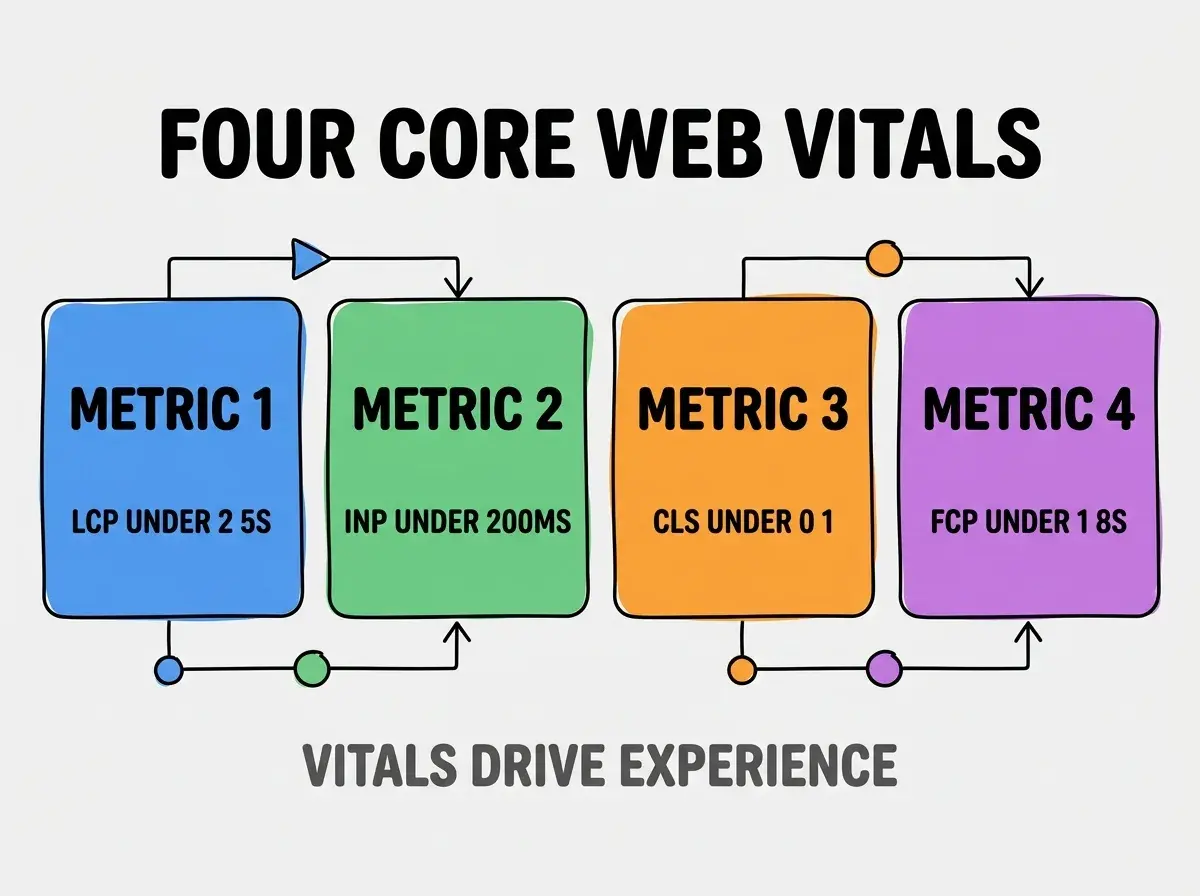
Metric 3, Cumulative Layout Shift (CLS). Visual stability. Target under 0.1.
Metric 4, First Contentful Paint (FCP). When anything appears. Target under 1.8 seconds.
How To Implement Each Test
Four implementation patterns address each metric.
Implementation 1, Lighthouse CI for automated. Runs Lighthouse in CI; tracks scores per PR. Standard automation.
Browse more ship
Read more shipImplementation 2, Real User Monitoring (RUM). SpeedCurve, Datadog RUM; real user data. Lighthouse synthetic only.
Implementation 3, performance budgets in CI. Budget per page; CI fails if exceeded. Prevents regression.
Implementation 4, Web Vitals JavaScript library. web-vitals npm package; in app monitoring of real users.
What Makes Performance Testing Sustainable
Three patterns separate sustainable testing from one off audits.
Pattern 1, performance budgets enforced. Budgets prevent regression; without budgets, performance decays.
Pattern 2, real user data monitored. Synthetic Lighthouse insufficient; real users reveal real issues.
Pattern 3, performance in PR review. Reviewers check performance impact; review prevents regressions.
What Makes Performance Testing Effective
Three patterns separate effective testing from theatrical.
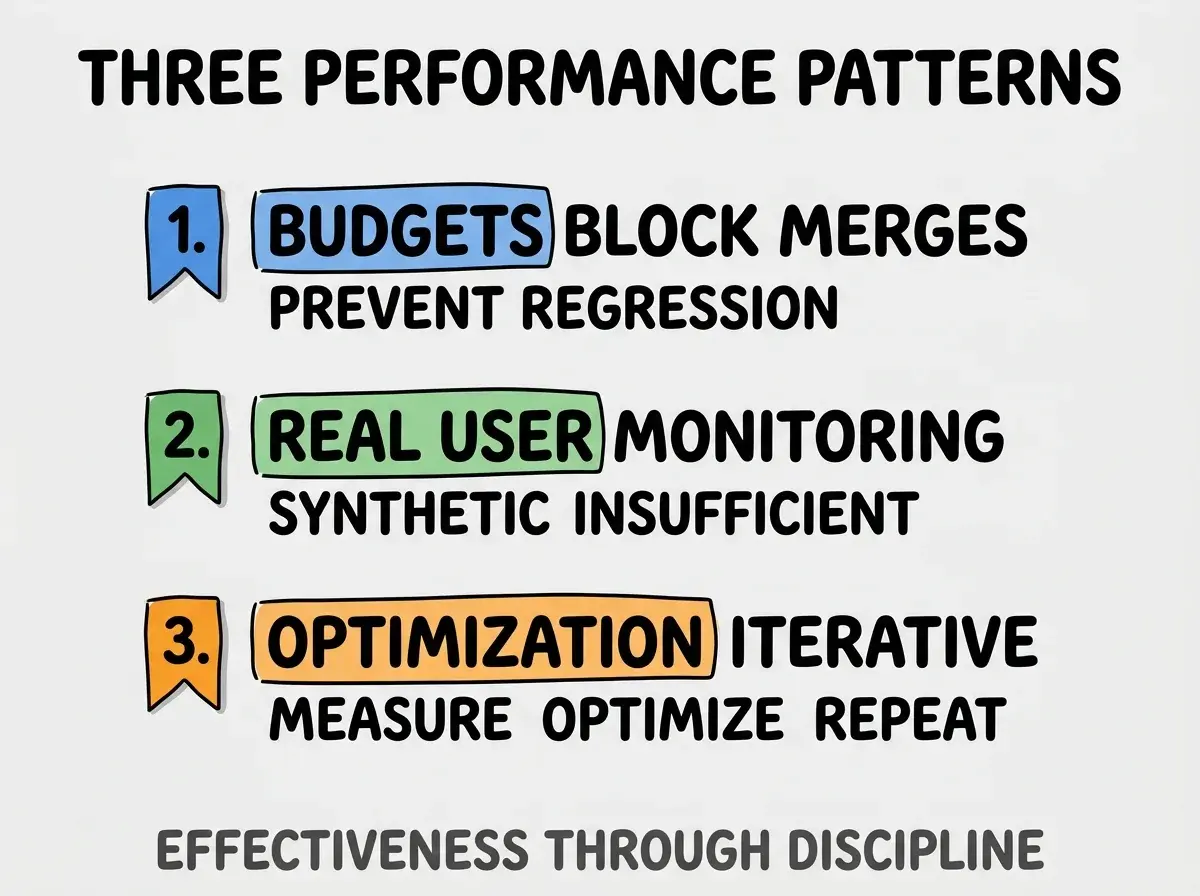
Pattern 1, budgets block merges. Block merges prevent regressions; without blocking, regressions accumulate.
Pattern 2, real user monitoring. Synthetic insufficient; real users reveal real issues.
Pattern 3, optimization iterative. Measure, optimize, repeat. Iteration compounds outcomes.
The combination produces effective performance testing. Without these patterns, testing becomes theatrical.
How To Improve Each Metric
Three patterns help improve metrics.
Pattern A, optimize images for LCP. Image optimization reduces LCP; biggest typical lever.
Pattern B, reduce JavaScript for INP. Less JS execution improves INP; biggest typical lever.
Pattern C, reserve image space for CLS. Image dimensions in HTML; prevents shifts.
Common Questions About Performance Testing
Performance testing raises questions worth addressing directly.
The first question is whether Lighthouse score 100 required. No; 90+ excellent. 100 often diminishing returns.
The second question is whether to test on slow connections. Yes; slow connections common globally. Test 3G simulation.
The third question is whether mobile performance differs from desktop. Yes substantially; test both.
The fourth question is how often to test. Per PR automated; weekly real user review.
How Performance Affects Business Outcomes
Performance affects business outcomes in compounding ways. Outcome effects compound across user base.
The first compounding effect is conversion rate. Faster apps convert better; conversion compounds revenue.
The second compounding effect is SEO ranking. Performance signal in ranking; ranking compounds traffic.
The third compounding effect is user retention. Fast apps retain better; retention compounds.
The combination produces business outcomes shaped by performance investment. Without investment, outcomes bounded by competitor performance.
How To Use AI For Performance Optimization
Three patterns help AI assist optimization.
Pattern A, AI analyzes Lighthouse reports. AI summarizes; summary identifies priorities.
Pattern B, AI suggests code optimizations. Specific optimizations from analysis.
Pattern C, AI explains performance tradeoffs. Tradeoffs informed by AI; informed decisions matter.
The combination produces AI assisted optimization. Without AI, optimization depends on senior developer time.
The most damaging performance testing mistake is testing only on developer machines. Developer machines fast; users have slower devices and connections. The fix is to test on representative devices and connections; Lighthouse simulation, real device testing. Builders who test on developer machines ship apps slow for users; builders who test representatively ship apps fast for users.
The other mistake is treating performance as one off optimization. Performance regressions accumulate; ongoing testing required.
A third mistake is missing the real user monitoring. Synthetic Lighthouse different from real users; both required.
A fourth mistake is over optimizing without measurement. Premature optimization wastes time; measure first.
What This Means For You
Performance testing with Core Web Vitals and Lighthouse enables fast user experience and SEO ranking. The four metrics, implementation patterns, and sustainability approaches produce performance testing that compounds business outcomes.
- If you're a senior dev: Performance fluency expected; learn Web Vitals deeply.
- If you're an indie hacker: Performance affects conversions directly; investment compounds revenue.
- If you're changing careers: Performance expertise valued; specialization differentiates.
Browse more ship
Read more ship