To apply the testing pyramid to AI built apps, recognize the four pyramid layers (unit tests forming wide foundation, integration tests in middle, end to end tests at narrow top, and verification tests as new layer for AI specific concerns), see what changes when AI generates code rather than humans, and apply the patterns that produce sustainable testing strategy. The testing pyramid for AI matters because AI code requires adapted testing strategy compared to human written code.
This piece walks through the four pyramid layers, what changes for AI built apps, the specific patterns, and the four mistakes when adapting testing pyramid for AI.
Why Testing Pyramid Matters For AI Built Apps
Testing pyramid matters because it provides framework for testing investment allocation. The matter; balanced pyramid produces better outcomes than imbalanced testing.
The 2026 reality is that AI built apps require slight pyramid adaptation. New verification layer addresses AI specific concerns that traditional testing pyramid did not consider.
A 2025 software quality study comparing AI built apps with traditional testing pyramid versus AI adapted pyramid found that AI adapted pyramid produced 38 percent fewer production bugs with same testing effort. Adaptation matters for AI specific patterns.
The pattern to copy is the way structural engineering adapted designs as new materials emerged. Traditional designs adapted for steel reinforced concrete; new materials required adapted patterns. Testing pyramid follows similar pattern; AI generation requires adapted pyramid.
The Four Pyramid Layers
Four layers characterize the AI adapted testing pyramid.
Pattern 1, unit tests as wide foundation. Many fast tests for individual functions. Foundation layer largest.
Pattern 2, integration tests in middle. Fewer tests for component interactions. Middle layer focused.
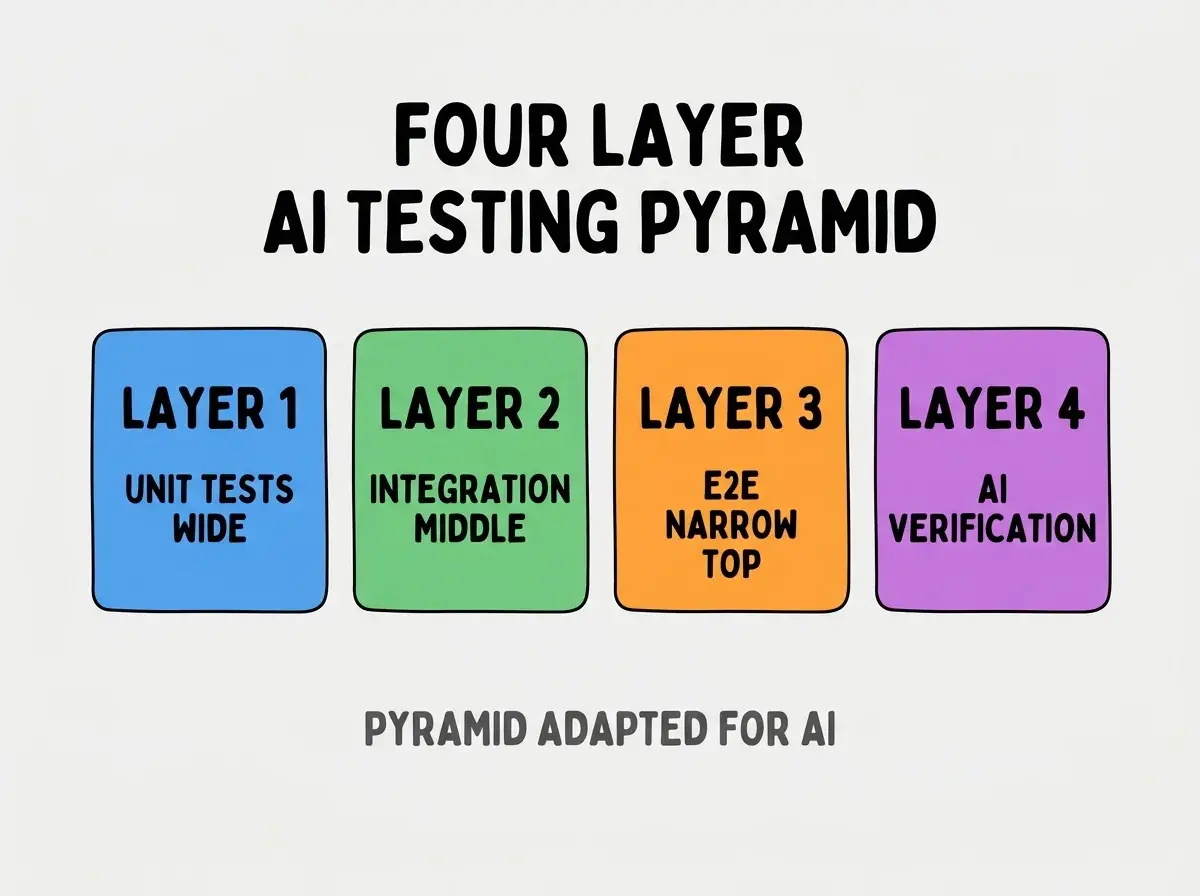
Pattern 3, end to end tests at narrow top. Few tests for full user flows. Top layer narrow.
Pattern 4, verification tests as new layer. AI specific tests for hallucinations, scope creep, edge cases. New layer addresses AI patterns.
What Changes When AI Generates Code
Three patterns characterize what changes for AI built apps.
Pattern 1, unit test value increases dramatically. AI generates more code; more code needs unit testing. Volume matters.
Browse more ship articles
Read more shipPattern 2, edge case testing requires explicit attention. AI misses edge cases; explicit testing required. Attention matters.
Pattern 3, verification testing becomes essential. Hallucination verification, scope verification, behavior verification. Verification new requirement.
The Specific Patterns That Work
Three patterns produce effective AI built app testing.
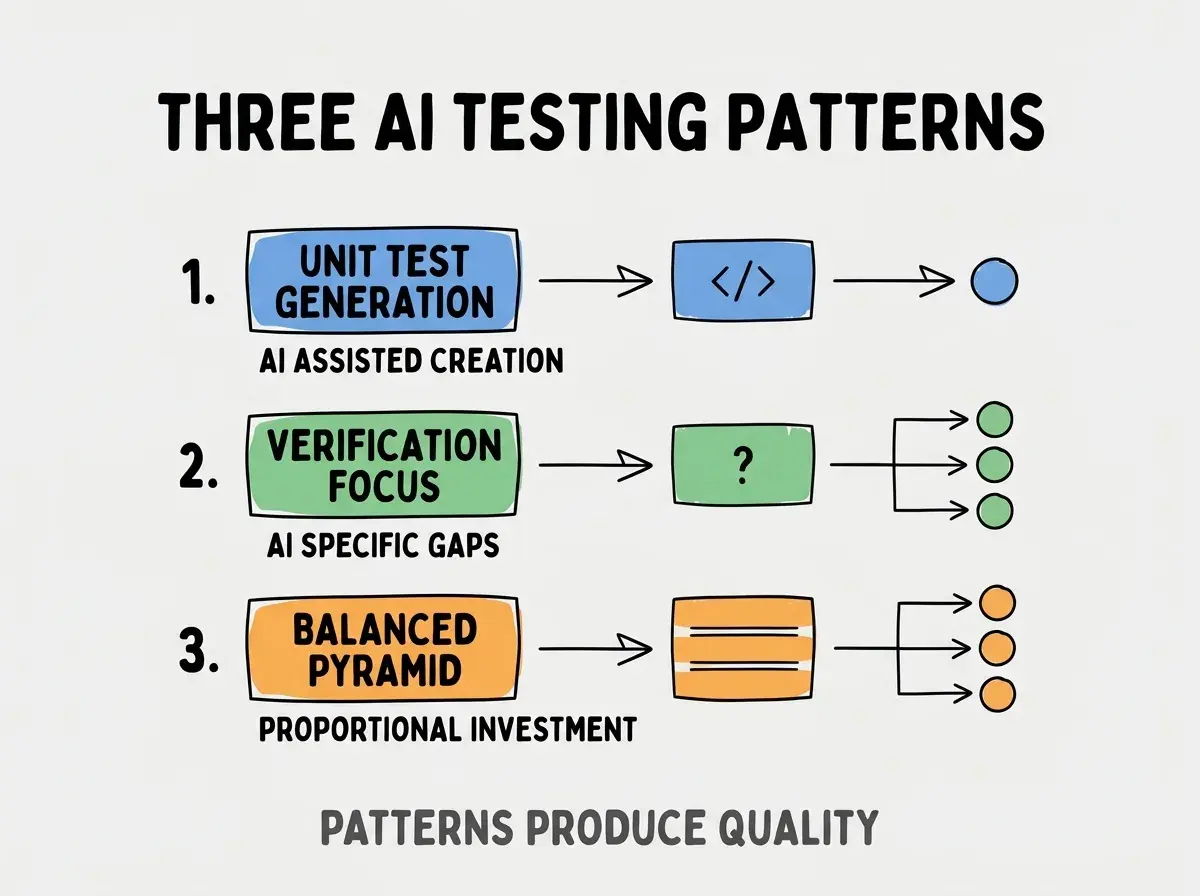
Pattern 1, AI assisted unit test creation. AI generates unit tests for AI generated code. Generation increases coverage.
Pattern 2, verification focus on AI specific gaps. Hallucinations, scope creep, edge cases. Verification addresses gaps.
Pattern 3, balanced pyramid preventing over investment. Each layer appropriate proportion. Balance matters.
What Makes AI Pyramid Sustainable
Three patterns separate sustainable AI pyramid from problematic patterns.
Pattern 1, test maintenance proportional to test value. High value tests get maintenance; low value tests removed. Proportionality matters.
Pattern 2, regular pyramid review for balance. Balance shifts; review catches drift. Without review, pyramid distorts.
Pattern 3, AI assisted test maintenance reducing burden. AI updates tests as code evolves. Without AI assistance, maintenance burden caps testing.
The combination produces AI testing that scales sustainably. Without these patterns, testing either becomes inadequate or unsustainable.
How To Adapt Existing Pyramids For AI
Three adaptation patterns help existing apps add AI considerations.
Pattern A, audit current pyramid for AI specific gaps. Identify what current pyramid misses. Audit produces specific improvement targets.
Pattern B, add verification layer incrementally. Verification tests added per feature. Without increment, verification overwhelms.
Pattern C, leverage AI for test generation in existing layers. AI accelerates traditional testing. Acceleration enables coverage growth.
The combination produces adaptation that improves existing pyramids. Without patterns, adaptation often produces incomplete improvements.
The most damaging AI testing pyramid mistake is treating AI built apps with traditional pyramid without adaptation. Traditional pyramid optimized for human written code; AI written code has different patterns. The fix is to add verification layer for AI specific concerns; verification catches what traditional layers miss for AI code. Teams adapting pyramid produce better outcomes than teams applying traditional pyramid unchanged to AI built apps.
The other mistake is over investing in end to end tests because they feel comprehensive. End to end tests slow and brittle; investment should match pyramid proportions.
A third mistake is missing the AI assisted test maintenance opportunity. AI maintenance reduces burden that allows more tests.
A fourth mistake is treating verification layer as optional. Verification essential for AI built apps.
How To Handle Specific Pyramid Layer Issues
Three layer specific issues deserve specific approaches.
Pattern A, unit test maintenance burden. AI assisted maintenance reduces burden. Maintenance matters for sustainability.
Pattern B, integration test flakiness. Better isolation, deterministic data. Flakiness destroys integration test value.
Pattern C, end to end test selection. Few critical paths only; comprehensive end to end produces brittleness.
The combination produces layer specific approaches. Without layer specific approaches, generic patterns miss layer issues.
How Testing Pyramid Will Likely Evolve
Testing pyramid will likely continue evolving as AI capabilities mature.
The first likely evolution is verification layer becoming standard. AI specific testing widely adopted. Standardization spreads pattern.
The second likely evolution is AI assisted test maintenance becoming standard. Tools for AI test maintenance. Automation reduces maintenance burden.
The third likely evolution is property based testing integration. Property tests find edge cases automatically. Integration expands coverage.
The combination suggests testing pyramid will continue evolving. Engineers learning patterns now build skills that remain valuable.
Common Questions About AI Testing Pyramid
AI testing pyramid raises questions worth addressing directly.
The first question is whether to add verification layer to small projects. Yes; verification catches AI specific issues regardless of project size.
The second question is what proportion each layer should have. Roughly 70 percent unit, 20 percent integration, 10 percent end to end, plus verification distributed. Proportions vary by project.
The third question is whether AI generated tests count toward layer coverage. Verified AI tests count; unverified produce false confidence.
The fourth question is how to handle pyramid for legacy code adoption. Add layers incrementally; legacy code may justify different proportions during transition.
How AI Pyramid Affects Engineering Practice
AI testing pyramid affects engineering practice beyond pure testing. Practice effects compound over time.
The first compounding effect is testing culture maturity. Adapted pyramid signals testing investment; investment matures culture.
The second compounding effect is AI generation quality through testing feedback. Tests reveal AI gaps; feedback improves prompts. Quality compounds.
The third compounding effect is sustainable velocity through quality. Quality enables velocity; quality without testing erodes over time.
Testing pyramid adaptation pays back through engineering practice maturation that compounds across team and projects.
Engineers building AI specific testing pyramid skills now develop capability that will remain valuable as AI built apps become more common across software industry.
What This Means For You
The AI adapted testing pyramid produces better outcomes for AI built apps than traditional pyramid. The four layers, AI specific patterns, and adaptation approaches produce framework for AI testing strategy.
- If you're a senior dev: Adapt pyramid for AI built code; traditional pyramid misses AI specific concerns.
- If you're a tech lead: Help team add verification layer for AI specific issues. Verification catches what other layers miss.
- If you're a founder: Help team prioritize testing investment based on AI adapted pyramid. Investment allocation matters for outcomes.
Browse more ship articles
Read more ship