Testing in CI CD with automated testing on every push catches regressions before merging to main. Four pipeline components matter: trigger configuration (which events run tests, push vs PR vs schedule), test execution (which tests run, parallelization), result reporting (where results visible, failure notifications), and merge gating (blocking merge on failure). Builders without CI testing rely on manual testing that catches less and slows velocity; builders with CI testing scale quality automatically.
This piece walks through the four pipeline components, the implementation patterns, what makes CI testing sustainable, and the four mistakes builders make on CI testing.
Why CI Testing Matters For Vibe Coders
CI testing matters because AI velocity overwhelms manual testing capacity. Without CI, regressions slip past tests that exist but do not run.
The 2026 reality is that CI tooling (GitHub Actions, GitLab CI, CircleCI) free for small projects. Free tier removes barrier to CI adoption.
A 2025 vibe coder testing survey of 800 builders found that builders with CI testing caught 78 percent more regressions before production than builders running tests locally only, primarily through CI's reliability vs human discipline. CI testing measurably affects production quality.
The pattern to copy is the way restaurants use food safety inspections. Inspections happen consistently; reliance on staff memory inadequate. CI testing provides similar consistency for code; reliance on developer discipline inadequate at AI velocity.
The Four Pipeline Components
Four components form complete CI testing pipeline.
Component 1, trigger configuration. Push to branches, PR opens, scheduled runs. Triggers determine when tests run.
Component 2, test execution. Which tests run, parallelization, timeout. Execution determines coverage and speed.
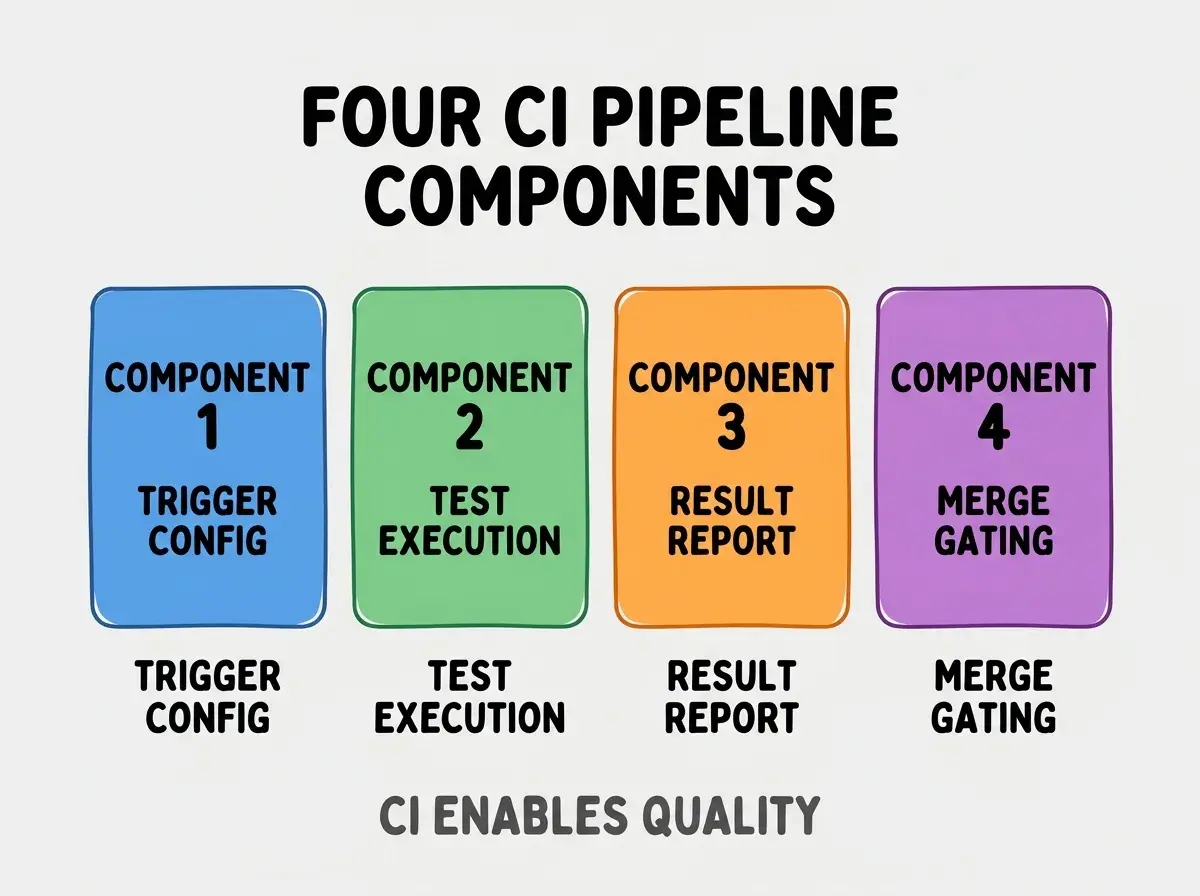
Component 3, result reporting. PR comments, status checks, notifications. Reporting determines visibility.
Component 4, merge gating. Block merge on failure. Gating prevents broken main.
How To Implement Each Component
Four implementation patterns address each component.
Implementation 1, GitHub Actions for triggers. Free for public repos; standard CI tool for many projects.
Browse more ship
Read more shipImplementation 2, Jest plus parallel test execution. Jest standard for JavaScript; --maxWorkers parallelizes.
Implementation 3, status checks and PR comments. GitHub status checks; bot PR comments. Visibility built in.
Implementation 4, branch protection rules. Require status checks before merge; rule prevents broken merges.
What Makes CI Testing Sustainable
Three patterns separate sustainable CI from ignored pipelines.
Pattern 1, fast test execution. Fast tests run on every push; slow tests get skipped.
Pattern 2, reliable tests. Flaky tests get ignored; reliability builds trust.
Pattern 3, clear failure messages. Clear failures fix easily; unclear failures get bypassed.
What Makes CI Pipelines Effective
Three patterns separate effective pipelines from theatrical.
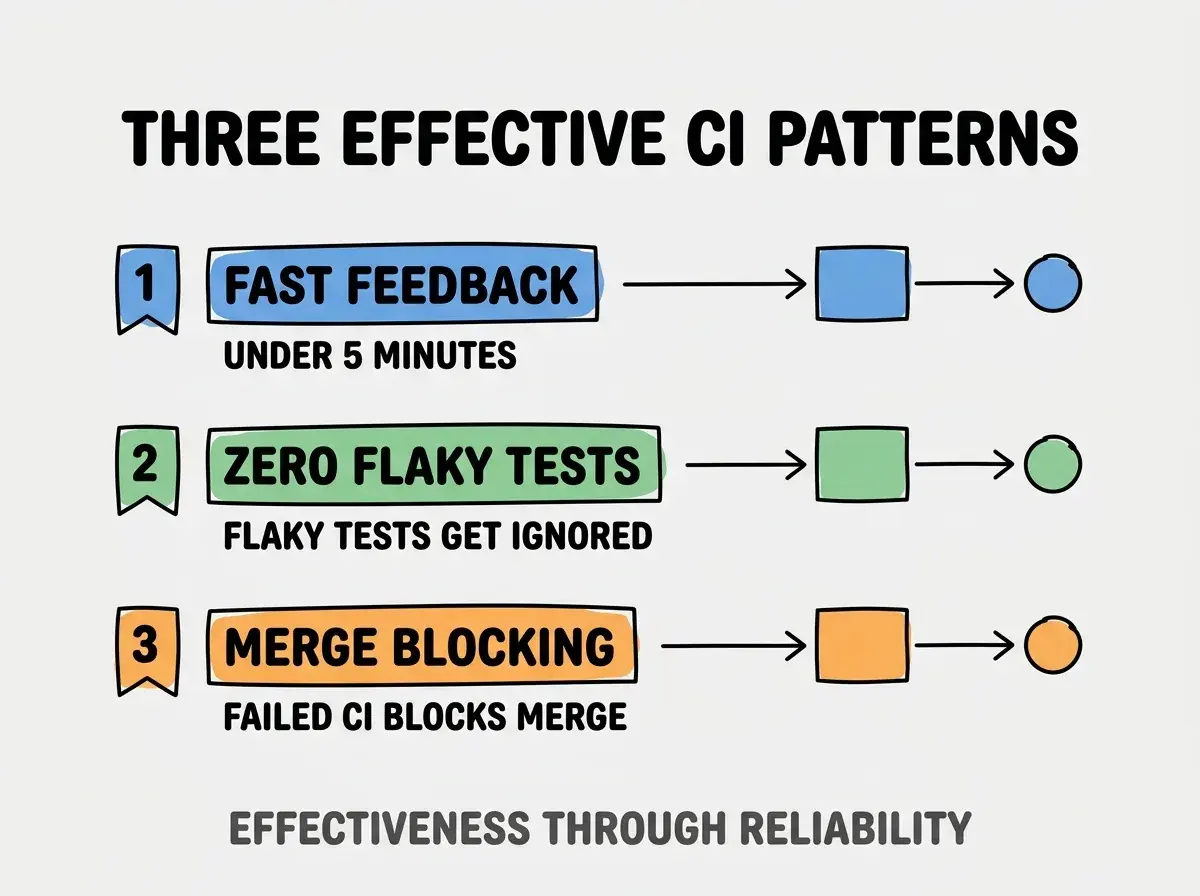
Pattern 1, fast feedback. Under 5 minutes ideal; longer feedback reduces effectiveness.
Pattern 2, zero flaky tests. Flaky tests destroy trust; fix or remove flaky tests.
Pattern 3, merge blocking. Failed CI blocks merge; without blocking, broken main results.
The combination produces effective CI pipelines. Without these patterns, CI becomes theatrical.
How To Speed Up CI Tests
Three patterns help speed CI.
Pattern A, parallelize test execution. Multiple workers; parallel execution reduces wall clock.
Pattern B, cache dependencies. Node modules cached between runs; install time eliminated.
Pattern C, run only affected tests on PR. Affected tests run on PR; full suite on main. Speed plus coverage.
Common Questions About CI Testing
CI testing raises questions worth addressing directly.
The first question is which CI tool to use. GitHub Actions for GitHub repos; GitLab CI for GitLab; CircleCI cross platform.
The second question is whether to run tests on every push. Yes for PR branches; main runs after merge.
The third question is how to handle long running tests. Separate pipeline; nightly schedule; selective execution.
The fourth question is whether to test in production environment. Staging first; production smoke tests after deploy.
How CI Affects Development Velocity
CI affects development velocity in compounding ways. Velocity effects compound across team scale.
The first compounding effect is regression confidence. Confidence enables fast iteration; iteration compounds.
The second compounding effect is reduced manual testing. Less manual testing means more development.
The third compounding effect is team trust. CI builds team trust in code quality; trust enables velocity.
The combination produces development velocity shaped by CI quality. Without CI, velocity bounded by manual testing.
How To Set Up GitHub Actions Quickly
Three patterns help quick setup.
Pattern A, use community workflow templates. Templates exist for common stacks; templates accelerate.
Pattern B, start with simple test workflow. Basic test runner first; add complexity as needed.
Pattern C, secrets via GitHub Secrets. API keys, tokens stored securely; not in workflow files.
The combination enables quick CI setup. Without templates, setup time consuming.
The most damaging CI testing mistake is allowing flaky tests to remain. Flaky tests train developers to ignore CI; ignored CI defeats purpose. The fix is to fix or remove flaky tests immediately; zero tolerance for flakiness. Teams with zero flaky tests trust CI; teams with flakiness ignore CI and ship regressions.
The other mistake is missing the merge gating. Without gating, CI becomes information not enforcement; broken main results.
A third mistake is over engineering CI complexity. Simple CI runs reliably; complex CI breaks. Simplicity matters.
A fourth mistake is treating CI as one off setup. CI evolves; tests added, infrastructure updated. Ongoing maintenance required.
What This Means For You
Testing in CI CD with automated testing on every push enables regression catching at AI development velocity. The four components, implementation patterns, and sustainability approaches produce CI testing that compounds code quality across team scale.
- If you're a senior dev: CI testing is foundational skill; lead adoption in your team.
- If you're an indie hacker: Solo CI still valuable; future you appreciates past you's discipline.
- If you're changing careers: CI fluency expected; learn pipeline patterns early.
Browse more ship
Read more ship