Automated code quality gates in CI CD enforce quality standards before code merges. Four gate types matter: lint and format gates (code style enforced), test coverage gates (minimum coverage required), security scan gates (vulnerabilities blocked), and performance budget gates (no regressions). Combined gates prevent quality regressions; without gates, quality drifts as AI generated code accumulates.
This tutorial walks through the four gate types, the implementation patterns, what makes quality gates sustainable, and the four mistakes builders make on quality gates.
Why Quality Gates Matter
Quality gates matter because manual review fails at AI velocity; gates enforce automatically. Without gates, quality drifts.
The 2026 reality is that gate tools (ESLint, Vitest, Snyk, Lighthouse) integrate easily. Maturation removed barrier.
A 2025 vibe coder code quality study of 800 builders found that builders with comprehensive quality gates shipped 64 percent fewer regressions than builders without gates, primarily through gates catching issues before merge. Gates measurably affect quality.
The pattern to copy is the way airports use security gates before flights. Each passenger checked; consistency. Same patterns apply to code; each PR checked; consistency.
The Four Gate Types
Four types form complete quality gates.
Type 1, lint and format. Code style enforced. Foundation.
Type 2, test coverage. Minimum coverage. Verification.
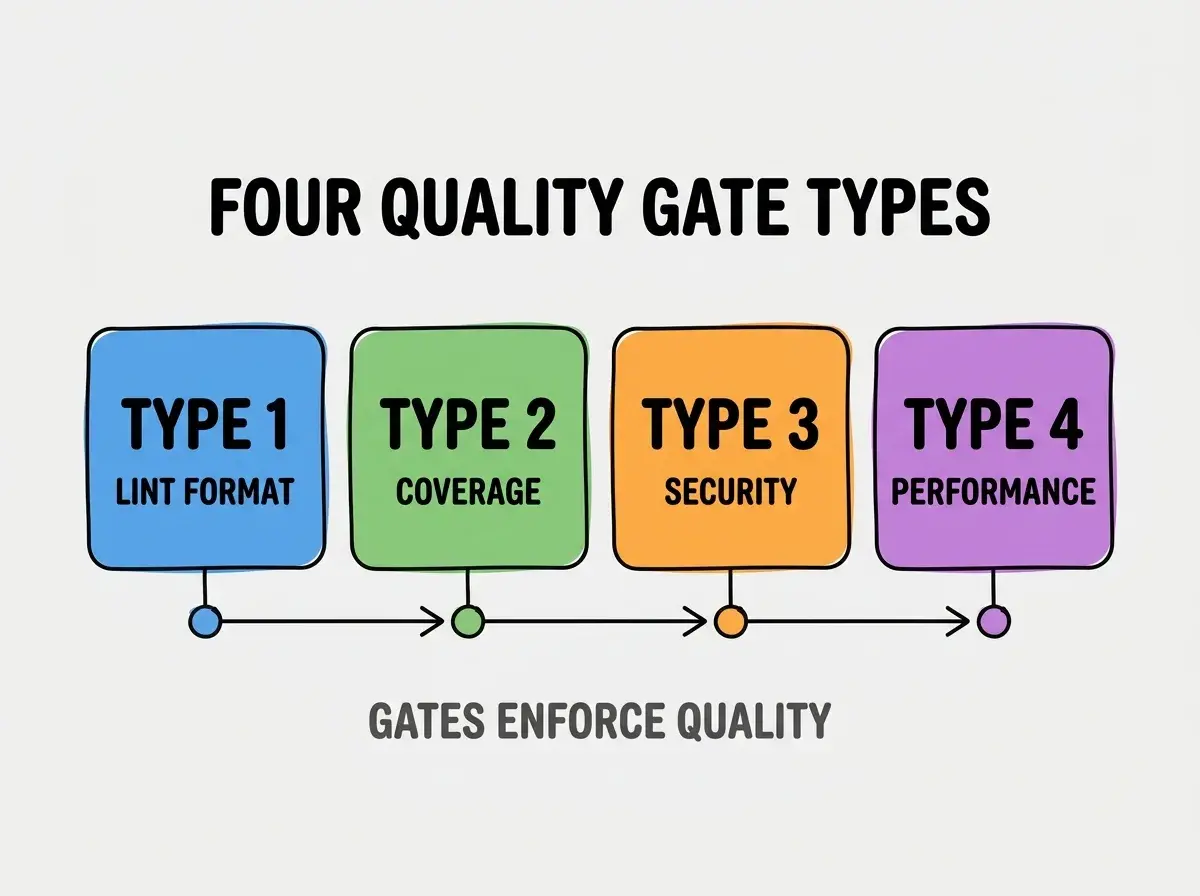
Type 3, security scan. Vulnerabilities blocked. Safety.
Type 4, performance budget. No regressions. Speed.
How To Implement Each Gate
Four implementation patterns address each gate.
Implementation 1, ESLint plus Prettier in CI. Standard lint and format.
Browse more ship
Read more shipImplementation 2, Vitest with coverage threshold. Coverage min in config.
Implementation 3, Snyk or GitHub Advanced Security. Security scanning.
Implementation 4, Lighthouse CI for performance. Performance budget.
What Makes Quality Gates Sustainable
Three patterns separate sustainable gates from disabled.
Pattern 1, gates fast. Slow gates frustrate; fast maintains use.
Pattern 2, clear failure messages. Clear messages enable fix.
Pattern 3, gates evolve with team. Gates updated as standards evolve.
What Makes Gate Strategy Effective
Three patterns separate effective from theatrical.
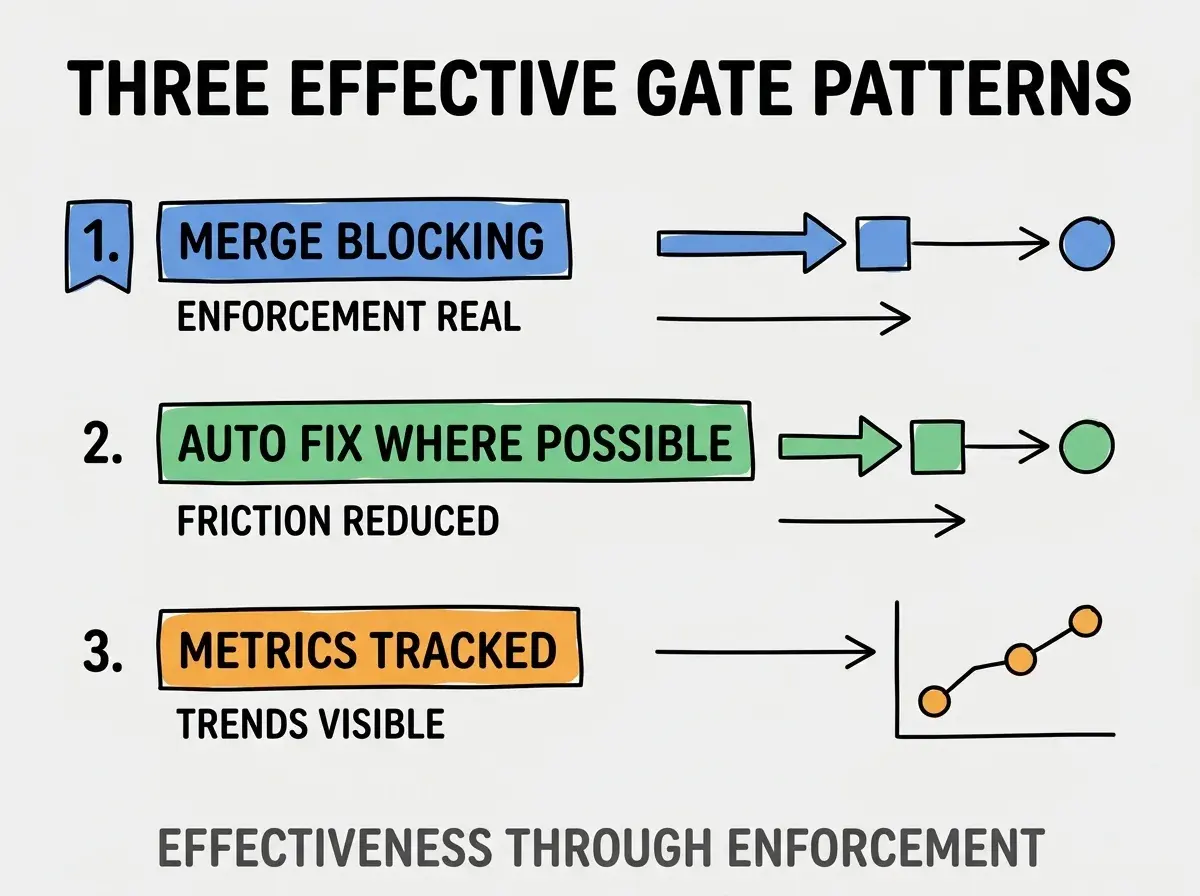
Pattern 1, merge blocking. Enforcement real; without blocking, advisory.
Pattern 2, auto fix where possible. Friction reduced; auto fixes apply.
Pattern 3, metrics tracked. Trends visible.
The combination produces effective gate strategy. Without these patterns, gates become advisory.
How To Set Coverage Thresholds
Three patterns help thresholds.
Pattern A, start at current coverage. Baseline before tightening.
Pattern B, tighten gradually. Quarterly increases; not sudden.
Pattern C, per directory thresholds. Different code different standards.
Common Questions About Quality Gates
Quality gates raise questions worth addressing directly.
The first question is what coverage threshold. 80 percent reasonable; depends on project.
The second question is whether to gate on warnings. Errors block; warnings inform.
The third question is what about emergency bypasses. Allow with audit; rare use.
The fourth question is how to handle slow gates. Optimize or move to scheduled.
How Quality Gates Affect Velocity
Gates affect velocity in compounding ways. Velocity effects compound across team.
The first compounding effect is regression reduction. Fewer regressions less rework.
The second compounding effect is shipping confidence. Gated code trusted.
The third compounding effect is team learning. Gate failures teach.
The combination produces velocity shaped by gate quality. Without gates, velocity bounded by manual review.
How To Add Gates To Existing Project
Three patterns help adding.
Pattern A, baseline current state. Current as starting point.
Pattern B, gates not regressing baseline. Don't break current.
Pattern C, tighten over time. Improve incrementally.
The combination enables gate addition. Without patterns, gates risky.
The most damaging quality gate mistake is too strict initial gates. Strict gates frustrate; team disables. The fix is to start permissive then tighten; tighten with team buy in. Builders who tighten gradually maintain gates; builders who set strict immediately face team resistance and gate disabling.
The other mistake is missing the auto fix component. Auto fix reduces friction.
A third mistake is over indexing on coverage. Coverage matters but quality matters more.
A fourth mistake is treating gates as one off. Gates evolve with project.
What This Means For You
Automated code quality gates in CI CD enforce quality standards at AI velocity. The four types, implementation patterns, and sustainability approaches produce gates that compound code quality.
- If you're a senior dev: Gate fluency expected for production; learn patterns.
- If you're a founder: Code quality affects velocity; gates investment justified.
- If you're changing careers: CI CD expertise valuable; specialty differentiates.
Browse more ship
Read more ship