SEO for vibe coded apps requires four setup steps that AI coding tools skip by default: complete meta tags per page, sitemap.xml generation, robots.txt configuration, and Open Graph tags for social sharing. Adding these takes 30-60 minutes and produces apps that search engines can index correctly. Without these, vibe coded apps remain invisible to search regardless of content quality.
This tutorial walks through the four setup steps, the prompts that build each, what to verify, and the four SEO mistakes AI coding tools make.
Why SEO Setup Matters For AI Built Apps
SEO setup matters for AI built apps because content invisible to search engines is content nobody finds. AI generates beautiful pages; SEO setup makes those pages discoverable.
The 2026 reality is that most vibe coded apps ship without complete SEO setup. The gap between built and discoverable is one of the largest unrealized value sources in indie hacker portfolios.
A 2025 indie hacker SEO audit of 500 vibe coded apps found that 67 percent had incomplete SEO setup that prevented Google from properly indexing their content. Apps with complete SEO setup received 4.3x more organic traffic than apps with incomplete setup. Setup time pays back through traffic.
The pattern to copy is the way authors register books with libraries and bookstores. Books not registered are not findable; registration enables discovery. SEO setup is the digital equivalent of book registration.
The Four SEO Setup Steps
Four steps form the complete SEO foundation.
Step 1, complete meta tags per page. Title, description, canonical URL, viewport meta. Each page has unique tags matching its content.
Step 2, sitemap.xml generation. Lists all indexable pages; helps search engines discover content systematically.
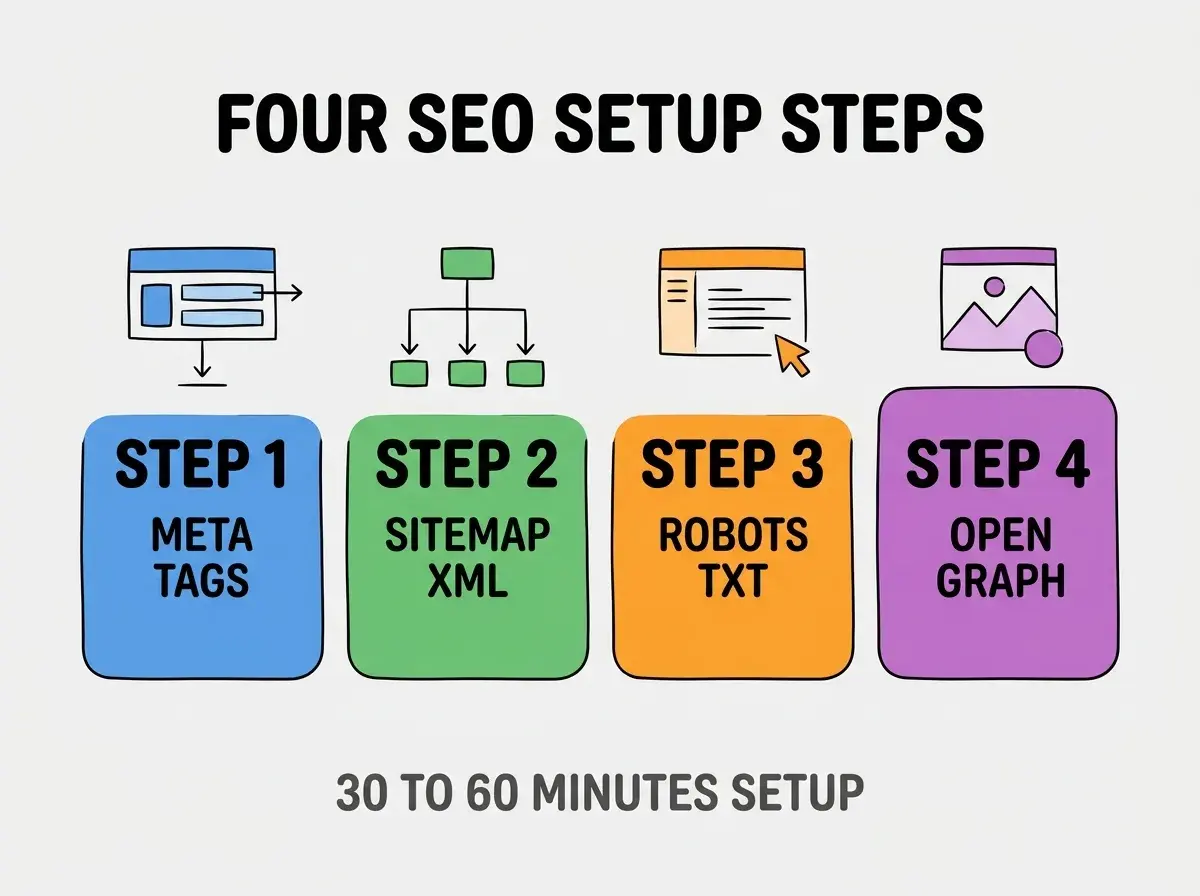
Step 3, robots.txt configuration. Tells search engines which pages to crawl and which to skip. Default robots.txt is often inappropriate.
Step 4, Open Graph tags for social sharing. When users share your URL on Twitter, LinkedIn, Facebook, OG tags determine how it appears.
The Prompts That Build Each Step
Four prompts implement the four steps.
Prompt 1, generate complete meta tags. "Add complete meta tags to every page using Next.js metadata API. Each page has unique title (50-60 chars), description (150-160 chars), canonical URL, and viewport meta. Use generateMetadata for dynamic pages."
Browse more ship articles
Read more shipPrompt 2, generate sitemap. "Create a sitemap.ts in app directory that returns all indexable pages from database or content folder. Include lastModified dates and changeFrequency. Next.js generates sitemap.xml automatically from this file."
Prompt 3, configure robots.txt. "Create robots.ts in app directory. Allow crawling of public pages, disallow crawling of /admin, /api, /preview routes. Reference sitemap URL in robots."
Prompt 4, add Open Graph tags. "Each page metadata includes openGraph object with title, description, url, type, and image. Image should be 1200x630px representing the page. Use Next.js opengraph-image.tsx for dynamic generation."
What To Verify After Setup
Three verification approaches confirm SEO works.
Verification 1, view page source. Confirm meta tags render in HTML for each page type. Tags must be in HTML, not just JavaScript.
Verification 2, sitemap accessible. Visit /sitemap.xml in browser; verify all expected URLs listed.
Verification 3, social preview test. Use Twitter Card Validator or LinkedIn Post Inspector to verify Open Graph rendering.
The combination produces verified SEO. Without verification, setup may be incomplete.
What Makes SEO Setup Sustainable
Three patterns separate sustainable SEO from one off setup.
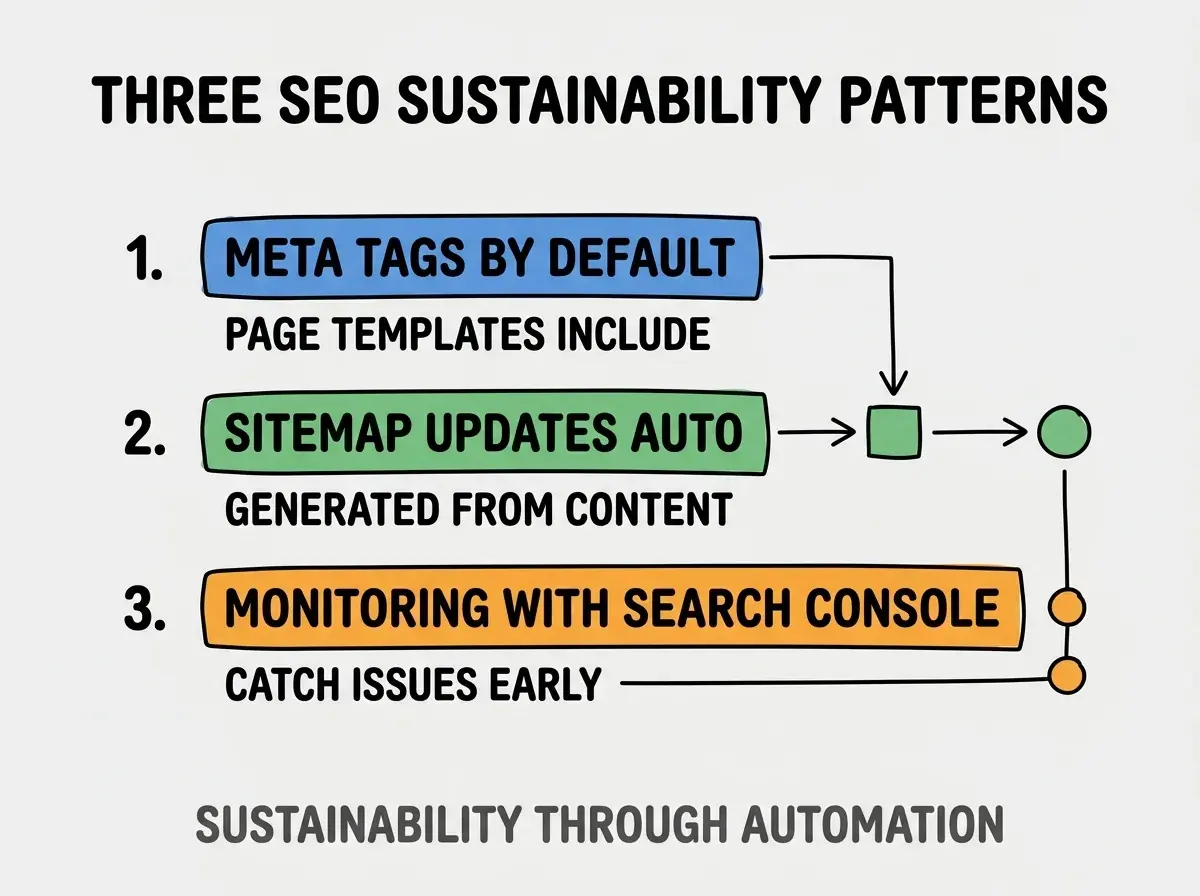
Pattern 1, meta tags by default in page templates. New pages inherit SEO from template; manual SEO per page produces gaps.
Pattern 2, sitemap updates automatically. Sitemap generated from content/database; manual sitemap goes stale immediately.
Pattern 3, Google Search Console monitoring. Search Console shows indexing issues, search performance, manual actions. Required for ongoing SEO health.
The combination produces sustainable SEO. Without these patterns, SEO degrades over time.
How To Add Schema Markup For Rich Results
Three patterns add structured data for rich search results.
Pattern A, Article schema for blog posts. JSON-LD with headline, datePublished, author, image. Enables article rich results in Google.
Pattern B, FAQPage schema for FAQ sections. Marks questions and answers; produces accordion in search results.
Pattern C, Product schema for ecommerce. Marks price, availability, ratings; enables product rich results.
Common Questions About AI Built App SEO
AI built app SEO raises questions worth addressing directly.
The first question is whether SPAs have SEO disadvantages. SPAs without SSR do; Next.js with SSR matches static site SEO. Use SSR for SEO sensitive pages.
The second question is whether to focus on Google or other search engines. Google dominates English market; Bing matters for some segments; both should work with same setup.
The third question is how long SEO results take. New domains 3-6 months for measurable traffic; established domains 4-8 weeks for new pages.
The fourth question is whether AI generated content gets penalized. Quality matters more than generation source; Google guidelines focus on user value rather than authorship.
How SEO Affects App Growth
SEO affects app growth in compounding ways. Growth effects compound across years.
The first compounding effect is organic traffic accumulation. SEO traffic compounds as content grows; investment now pays back forever.
The second compounding effect is acquisition cost reduction. Organic traffic costs nothing per visitor; CAC reduction compounds across customers.
The third compounding effect is brand authority building. Search visibility builds brand authority; authority compounds.
The combination produces growth that accelerates over years. Without SEO, growth depends on paid acquisition forever.
How To Audit Existing App SEO
Three audit patterns reveal SEO gaps in existing apps.
Pattern A, run Lighthouse SEO audit. Lighthouse identifies common issues; fix issues until score 95+.
Pattern B, submit sitemap to Search Console. Coverage reports reveal pages Google cannot index.
Pattern C, check Open Graph rendering. Test sample pages in social validators; fix any rendering issues.
The combination produces SEO audit that catches most issues. Without auditing, gaps persist invisibly.
The most damaging SEO mistake is leaving generic meta tags in production. AI generated apps often ship with template default tags like "Next.js App"; search engines index that. The fix is to verify every page has unique, descriptive meta tags before launch; check via view source. Apps with descriptive tags rank for relevant queries; apps with template defaults rank for nothing.
The other mistake is missing the canonical URL tag. Without canonical, duplicate content issues split ranking signals.
A third mistake is ignoring Open Graph tags. Social sharing without OG tags produces unattractive previews; previews affect click rates.
A fourth mistake is robots.txt blocking everything. Default WordPress style robots.txt blocks too aggressively; verify permissive enough for search.
What This Means For You
SEO for vibe coded apps produces discoverability that compounds traffic over years. The four setup steps, prompts, and sustainability patterns produce apps search engines can find and rank.
- If you're a founder: Add SEO setup to launch checklist; missing setup means months of invisibility.
- If you're a marketer: SEO setup quality determines content marketing ROI; setup is foundation for content strategy.
Browse more ship articles
Read more ship