Protecting branches preventing accidental pushes to production matters because force pushes to main destroy history and broken pushes deploy broken code. Four protection rules matter: require pull request before merge (no direct pushes), require status checks pass (CI must pass), require approvals from team members (no solo merges), and restrict who can push (only specific people or none directly). Combined rules prevent classes of incidents that would otherwise reach production.
This piece walks through the four protection rules, the implementation patterns, what makes branch protection sustainable, and the four mistakes builders make on branch protection.
Why Branch Protection Matters
Branch protection matters because main branch is production source; broken main breaks production. Without protection, single mistake reaches users.
The 2026 reality is that AI velocity makes accidents more likely; AI assisted force push possible without intent. Protection compensates for velocity.
A 2025 production incident study of 500 vibe coded products found that products with branch protection rules experienced 73 percent fewer production incidents from accidental commits than products without protection, primarily through preventing direct pushes that bypass CI. Protection measurably reduces incidents.
The pattern to copy is the way nuclear plants require two key turn for critical operations. Two keys prevent single person mistake; branch protection provides similar safeguards for code. Both prevent classes of catastrophic errors.
The Four Protection Rules
Four rules form complete branch protection.
Rule 1, require pull request. No direct pushes; PR required for changes.
Rule 2, require status checks pass. CI must pass; broken CI blocks merge.
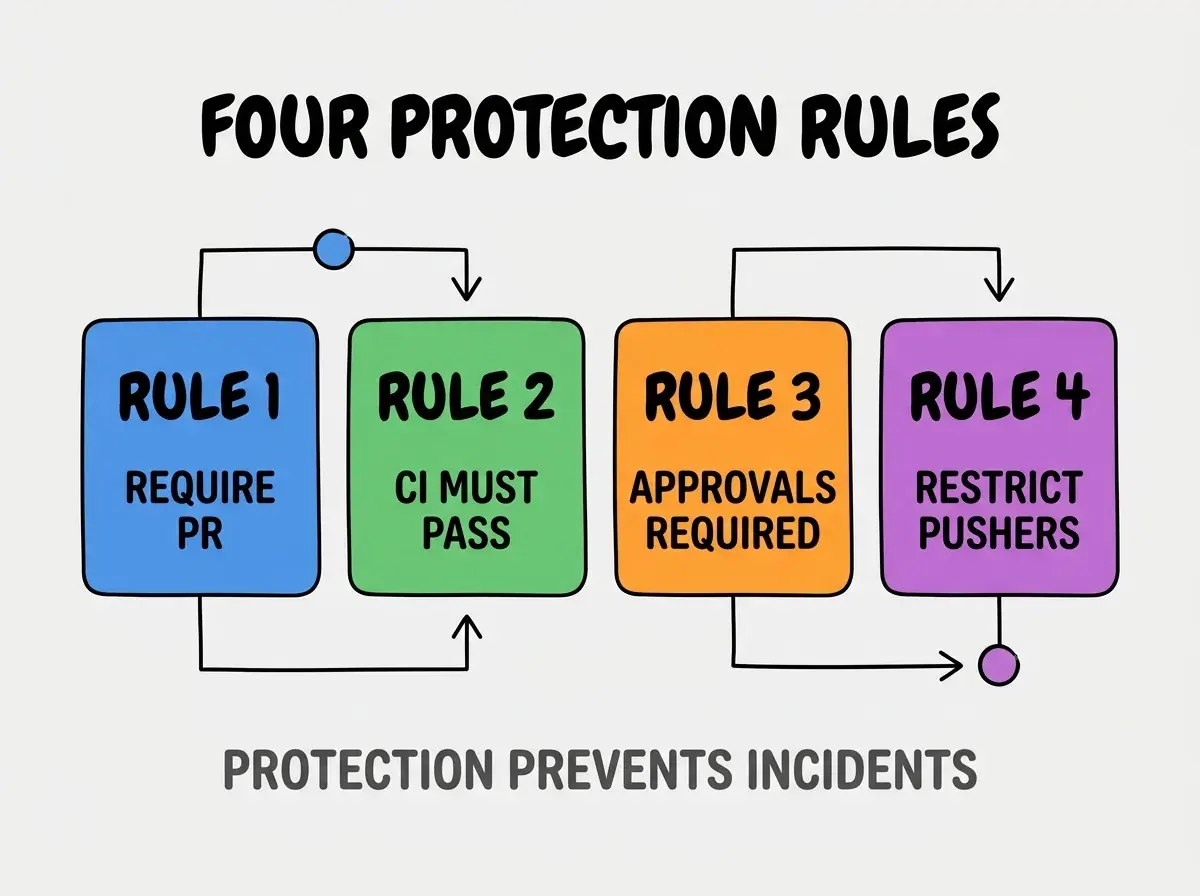
Rule 3, require approvals. Team review; no solo merges.
Rule 4, restrict pushers. Only specific people or none directly. Maximum protection.
How To Implement Each Rule
Four implementation patterns address each rule.
Implementation 1, GitHub branch protection settings. Settings > Branches > Add rule. Standard.
Browse more ship
Read more shipImplementation 2, status check selection. Pick which CI checks required; granular.
Implementation 3, required approvers count. 1 for small teams; 2 for larger. Match team size.
Implementation 4, allow specified people for emergencies. Emergency push capability for senior; rare use.
What Makes Branch Protection Sustainable
Three patterns separate sustainable protection from disabled rules.
Pattern 1, rules don't block legitimate work. Match rules to team capacity; over restriction frustrates.
Pattern 2, emergency processes documented. Emergencies happen; documented process matters.
Pattern 3, periodic rule review. Rules evolve with team; review keeps relevant.
What Makes Protection Effective
Three patterns separate effective protection from theatrical security.
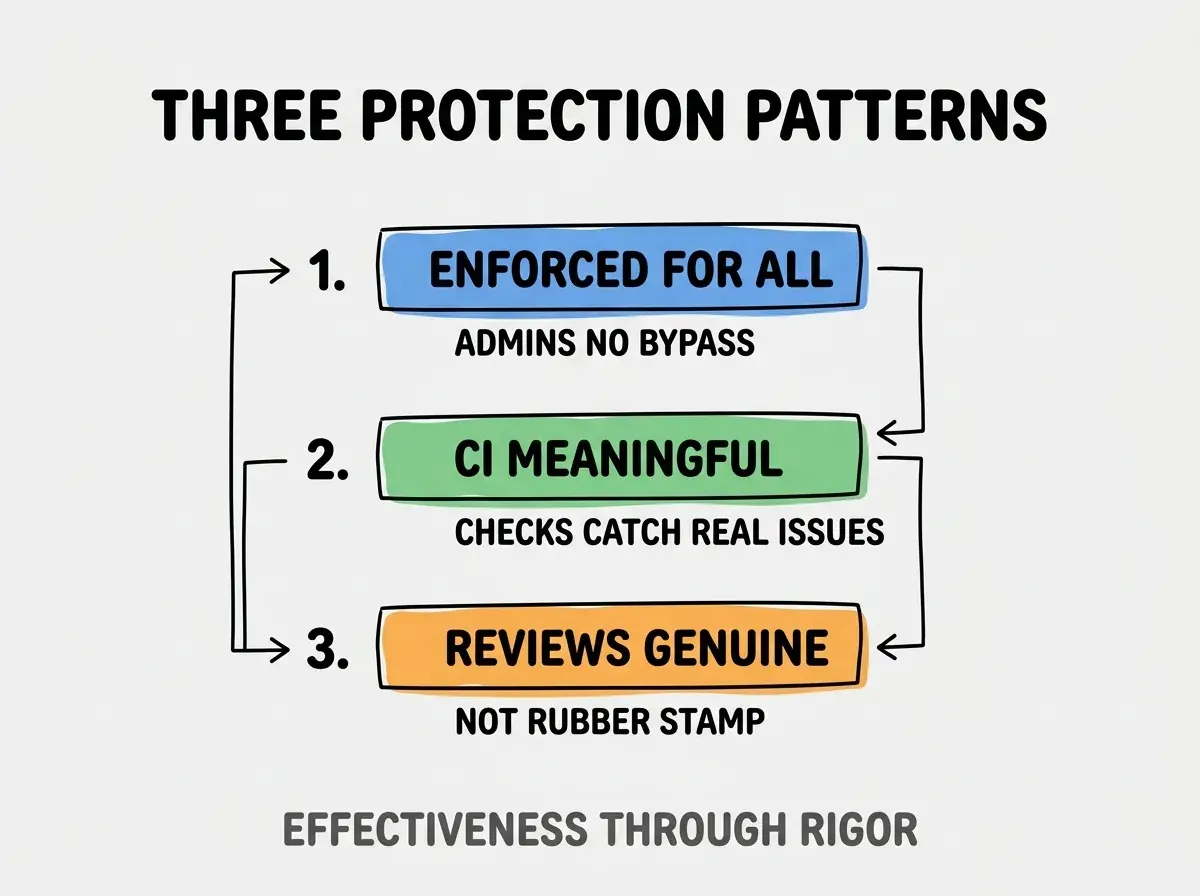
Pattern 1, enforced for all. Including admins; no bypass.
Pattern 2, CI meaningful. Checks catch real issues; theatrical CI useless.
Pattern 3, reviews genuine. Not rubber stamp; actual review.
The combination produces effective protection. Without these patterns, protection theatrical.
How To Set Up GitHub Branch Protection
Three patterns help setup.
Pattern A, classic protection rules. Settings > Branches; standard interface.
Pattern B, rulesets for advanced. New ruleset feature; more control.
Pattern C, code owners for review distribution. CODEOWNERS file; auto assigns reviewers.
Common Questions About Branch Protection
Branch protection raises questions worth addressing directly.
The first question is whether solo developer needs protection. Yes; protects against own mistakes.
The second question is whether to require linear history. Sometimes; preference for clean history.
The third question is whether to allow force push to feature branches. Yes; force push to main no.
The fourth question is how to handle emergency hotfixes. Documented process; emergency push allowed.
How Protection Affects Team Velocity
Protection affects team velocity in compounding ways. Velocity effects compound across team scale.
The first compounding effect is incident reduction. Fewer incidents mean more development time.
The second compounding effect is review quality. Required reviews compound code quality.
The third compounding effect is shared responsibility. Reviews distribute knowledge; distribution compounds.
The combination produces velocity shaped by protection rigor. Without protection, velocity bounded by incident response.
How To Educate Team On Protection
Three patterns help team education.
Pattern A, document rules in repo. Documentation visible; visibility informs.
Pattern B, onboarding includes protection explanation. New devs learn early; learning compounds.
Pattern C, retrospectives surface protection issues. Issues discussed; discussion improves protection.
The combination produces team understanding. Without education, protection feels arbitrary.
The most damaging branch protection mistake is exempting admins from rules. Admins make mistakes too; admin bypass defeats protection purpose. The fix is to enforce rules for everyone including admins; admins lead by example. Teams enforcing for all maintain protection; teams exempting admins normalize bypass that erodes culture.
The other mistake is over restrictive rules. Excessive restrictions block legitimate work; balance matters.
A third mistake is missing the emergency process. Emergencies happen; without process, protection becomes obstacle.
A fourth mistake is treating protection as one off setup. Rules evolve; ongoing review required.
What This Means For You
Protecting branches preventing accidental pushes to production prevents classes of incidents. The four rules, implementation patterns, and sustainability approaches produce protection that compounds production reliability.
- If you're a senior dev: Protection setup is responsibility; lead implementation.
- If you're an indie hacker: Solo protection still valuable; protects against own mistakes.
- If you're changing careers: Protection fluency expected; learn patterns early.
Browse more ship
Read more ship