To load test your AI built app effectively, follow the four load testing phases (define realistic traffic patterns based on actual user behavior, build test scenarios reproducing real workflows, execute tests against staging environment matching production, and analyze results identifying bottlenecks before users find them), recognize what makes load tests reveal real issues versus theoretical concerns, and apply the patterns that produce production confidence. The load testing matters because production traffic exposes issues that development testing cannot find.
This piece walks through the four load testing phases, what makes load tests valuable, the specific tooling, and the four mistakes that produce load tests that miss real issues.
Why Load Testing AI Built Apps Matters
Load testing matters because AI built apps often have hidden bottlenecks. The matter; bottlenecks invisible during development become production incidents under traffic.
The 2026 reality is that AI generated code sometimes contains performance issues that only emerge under load. Without load testing, these issues reach production where they affect users.
A 2025 production reliability study of 300 AI built apps found that apps with structured load testing experienced 78 percent fewer production performance incidents compared to apps relying on user reports. Load testing produces measurable reliability improvements.
The pattern to copy is the way bridges undergo load testing before opening. Engineers test bridges with simulated load before public traffic; testing prevents collapse under real load. AI built apps follow similar pattern; testing under simulated load prevents production failures.
The Four Load Testing Phases
Four phases produce effective load testing.
Pattern 1, define realistic traffic patterns. Actual user patterns from analytics. Realistic patterns produce realistic results.
Pattern 2, build test scenarios matching real workflows. Login, browse, action, logout. Scenarios match user paths.
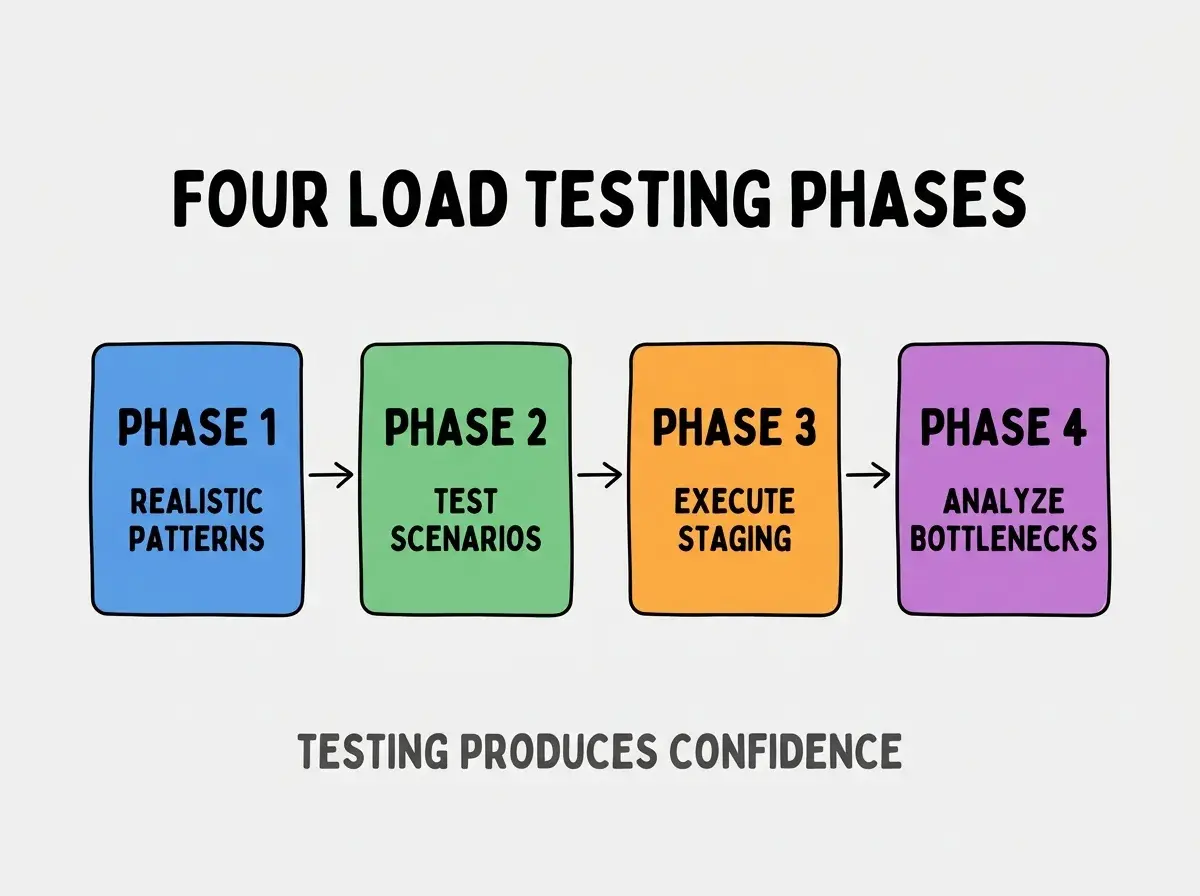
Pattern 3, execute against staging matching production. Production parity matters; staging mismatches produce misleading results.
Pattern 4, analyze results identifying real bottlenecks. Latency percentiles, error rates, resource utilization. Analysis reveals what raw numbers hide.
What Makes Load Tests Valuable
Three patterns characterize valuable load tests.
Pattern 1, scenarios based on actual usage data. Synthetic patterns mislead; actual data informs. Without actual data, tests miss real bottlenecks.
Browse more ship articles
Read more shipPattern 2, gradual ramp up revealing breaking points. Sudden full load misses breaking points; gradual reveals. Ramp up matters for understanding.
Pattern 3, monitoring during tests catching issues live. Real time monitoring catches what post hoc analysis misses. Monitoring matters dramatically.
The Specific Tooling That Works
Three tool categories combine effectively for load testing.
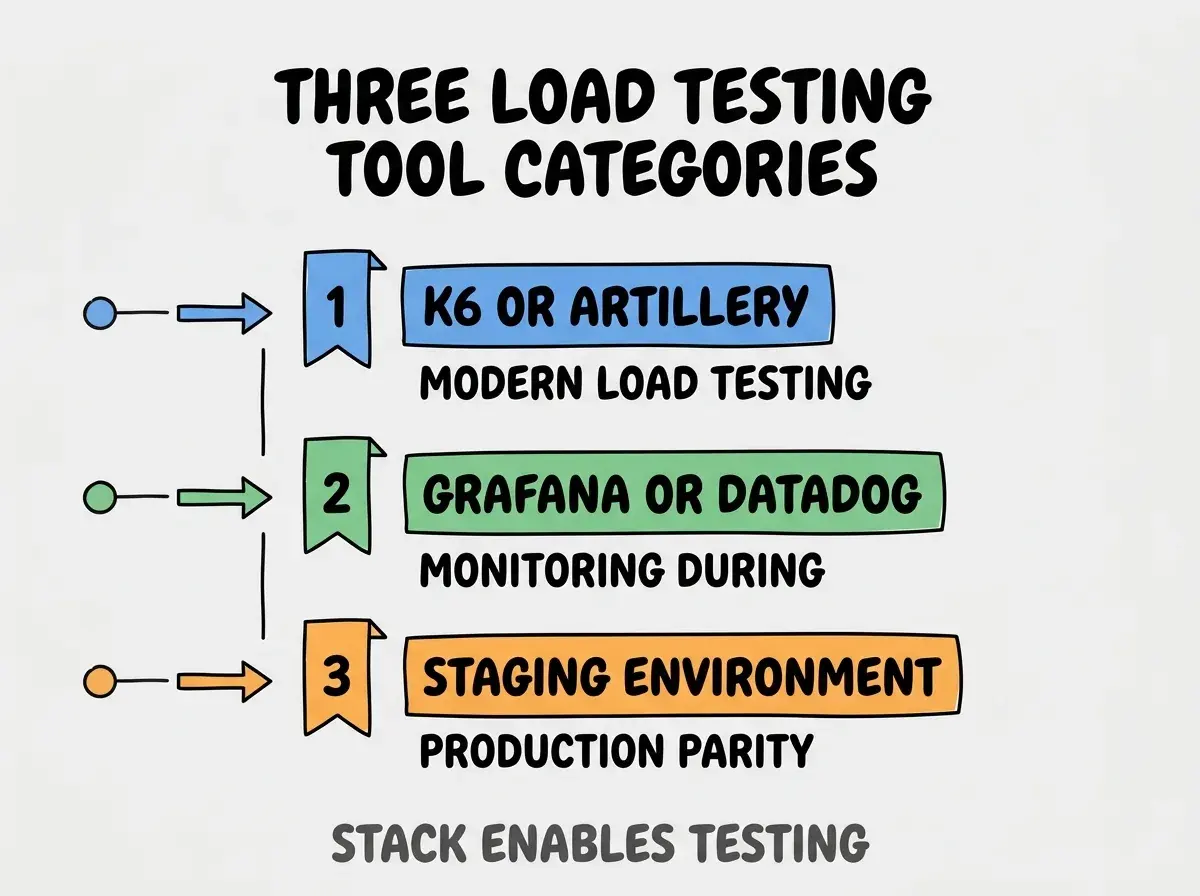
Tool 1, k6 or Artillery for modern load testing. JavaScript scenarios, distributed load generation. Modern tools easier than older alternatives.
Tool 2, Grafana or Datadog for monitoring during tests. Real time metrics, dashboard visibility. Monitoring catches issues during tests.
Tool 3, staging environment with production parity. Same infrastructure, same data shape, same configurations. Parity matters for result validity.
What Makes Load Testing Sustainable
Three patterns separate sustainable load testing from problematic patterns.
Pattern 1, load testing as routine before major deploys. Routine catches regressions. Without routine, regressions reach production.
Pattern 2, baseline measurements enabling comparison. Baselines enable trend tracking. Without baselines, drift invisible.
Pattern 3, automated load testing in CI for major changes. Automation reduces manual burden. Without automation, testing skipped.
The combination produces sustainable load testing. Without these patterns, load testing happens reactively after incidents.
How To Set Up Initial Load Testing
Three setup patterns help initial load testing.
Pattern A, start with simple smoke tests. Single user scenarios validate setup. Without smoke tests, complex tests start broken.
Pattern B, build test scenarios incrementally. One scenario at a time. Without increment, complex tests overwhelm.
Pattern C, document expected baseline performance. Performance expectations guide test interpretation. Without expectations, results lack context.
The combination produces setup that establishes load testing capability. Without patterns, setup often produces tests that do not reveal issues.
The most damaging load testing mistake is testing against staging that differs from production. Different infrastructure, different data, different configuration produce different bottlenecks. The fix is to maintain production parity in staging; tests on accurate staging predict production behavior while tests on different staging mislead. Teams that maintain parity produce useful load tests; teams that test against different environments often produce false confidence or false alarms.
The other mistake is missing real time monitoring during tests. Without monitoring, issues happen invisibly during tests.
A third mistake is testing only happy paths. Real users do unexpected things; testing should include unexpected patterns.
A fourth mistake is treating load testing as one time activity. Load testing requires ongoing practice as application evolves.
How To Handle Specific Load Patterns
Three load patterns deserve specific approaches.
Pattern A, sudden traffic spikes. Test rapid ramp up. Spikes reveal autoscaling issues.
Pattern B, sustained high traffic. Test extended duration. Sustained reveals memory leaks.
Pattern C, mixed traffic patterns. Multiple user types simultaneously. Mixed reveals interaction issues.
The combination produces pattern specific testing. Without specific patterns, generic tests miss pattern specific issues.
How Load Testing Will Likely Evolve
Load testing will likely continue evolving as deployment patterns mature.
The first likely evolution is AI assisted scenario generation. AI generating realistic scenarios from analytics. Generation reduces scenario authoring burden.
The second likely evolution is continuous load testing in production. Synthetic transactions on production. Continuous catches issues automation alone misses.
The third likely evolution is integrated chaos engineering. Load plus failure injection. Combined testing reveals reliability beyond pure load.
The combination suggests load testing will become more capable. Engineers learning patterns now build skills that remain valuable.
Common Questions About Load Testing
Load testing raises questions worth addressing directly.
The first question is how often to run load tests. Before major deploys minimum; weekly for high traffic apps. Frequency matches change rate.
The second question is what load levels to test. 2-3x peak production load; reveals headroom.
The third question is whether to test in production. Carefully yes; canary patterns enable production testing safely.
The fourth question is how to handle data privacy in load tests. Synthetic test data, anonymized production samples. Without data handling, privacy issues arise.
How Load Testing Affects Engineering Confidence
Load testing affects engineering confidence beyond bottleneck identification. Confidence effects compound through team and product.
The first compounding effect is launch confidence. Tested systems launch with confidence; untested systems launch with anxiety. Confidence affects launch decisions.
The second compounding effect is on call sustainability. Known capacity reduces on call stress; unknown capacity produces stress. Stress affects retention.
The third compounding effect is customer trust through reliability. Reliable systems build trust over time. Trust enables growth that reliability supports.
Load testing investment pays back through confidence and reliability that compound through engineering and customer outcomes.
Teams investing in load testing build engineering capability that handles growth confidently while teams without load testing face growth crises that proper testing would have prevented.
What This Means For You
Load testing reveals production bottlenecks before users find them. The four phases, tool combinations, and setup patterns produce framework for sustainable load testing.
- If you're a senior dev: Load testing prevents production incidents. Investment pays back through avoided incidents.
- If you're an indie hacker: Solo deployments need load testing most; without it, traffic spikes produce visible failures.
- If you're a founder: Help engineering team prioritize load testing before major launches. Launches without load testing often produce launch failures.
Browse more ship articles
Read more ship