The scaling playbook for vibe coded apps describes what to do at week 1, month 1, and month 6 milestones. Four growth phases matter: launch survival (week 1, basic monitoring and incident response ready), early scale (month 1, performance optimization for first 1000 users), product scale (month 6, infrastructure for 10K-100K users), and operational maturity (ongoing, automation and team scaling). Each phase requires different focus; phase confusion causes scaling failures.
This piece walks through the four growth phases, the milestone checklists, what makes scaling sustainable, and the four mistakes builders make on scaling.
Why The Scaling Playbook Matters
The scaling playbook matters because scaling failures kill growing apps; scaling decisions made too early or too late both damage. Right phase at right time enables sustainable growth.
The 2026 reality is that vibe coded apps scale from MVP to thousands of users in months; rapid growth requires playbook. Without playbook, scaling reactive and expensive.
A 2025 startup operations survey of 400 vibe coded apps that scaled past 10K users found that apps following structured scaling playbook reached scale 41 percent faster than ad hoc scaling, primarily through preventing premature optimization and reactive scrambling. Playbook measurably affects scaling outcomes.
The pattern to copy is the way restaurants follow growth phase playbooks. Phase 1 (opening), phase 2 (regular customers), phase 3 (multiple locations) all have specific operational focus. Same phasing applies to apps; phase appropriate operations matter.
The Four Growth Phases
Four phases describe scaling journey.
Phase 1, launch survival (week 1). Basic monitoring; incident response ready. Survival focus.
Phase 2, early scale (month 1). Performance for first 1000 users; bottleneck identification.
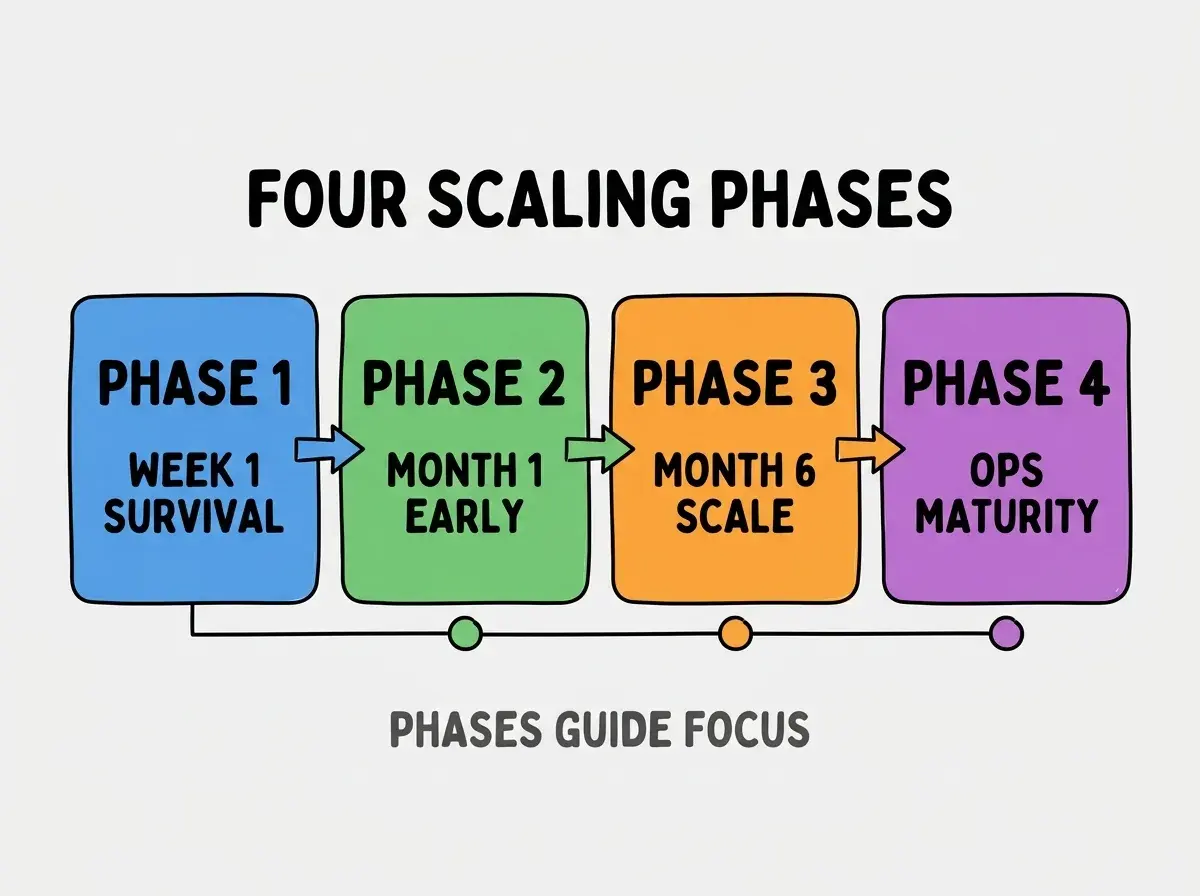
Phase 3, product scale (month 6). Infrastructure for 10K-100K users; architectural decisions.
Phase 4, operational maturity (ongoing). Automation, team scaling. Compound focus.
How To Implement Each Phase
Four implementation patterns address each phase.
Implementation 1, week 1 setup. Sentry for errors, UptimeRobot for uptime, on call rotation. Survival kit.
Browse more grow
Read more growImplementation 2, month 1 optimization. Identify slow endpoints; cache hot data; optimize heaviest queries.
Implementation 3, month 6 architecture. Read replicas, CDN, queue systems. Prepare for scale.
Implementation 4, ongoing automation. CI/CD mature, alerting refined, runbooks documented.
What Makes Scaling Sustainable
Three patterns separate sustainable scaling from boom bust cycles.
Pattern 1, monitor everything important. Visibility prevents surprises; surprises cause incidents.
Pattern 2, automate incident response. Automated responses faster than human; speed compounds.
Pattern 3, document runbooks. Documentation enables team scaling; without docs, team bottleneck.
What Makes Scaling Decisions Right
Three patterns separate right decisions from premature or late.
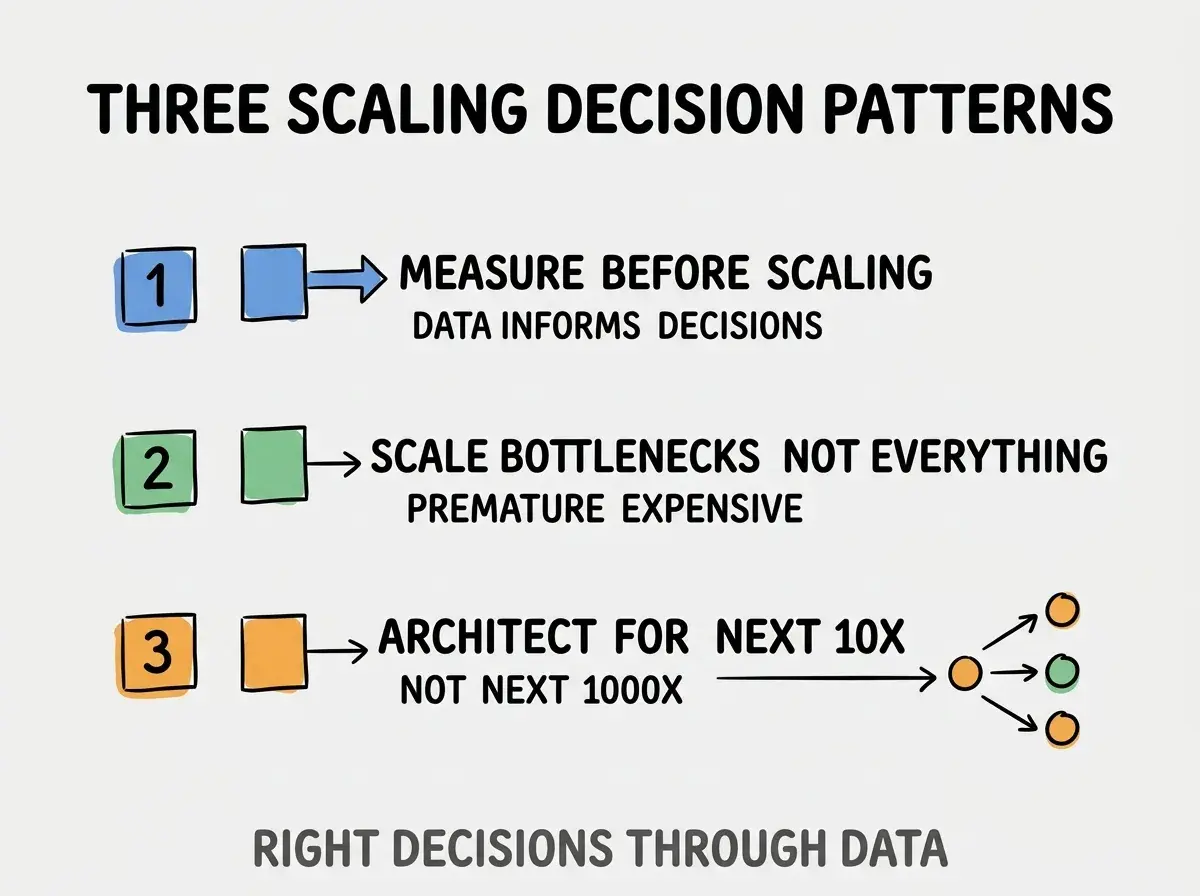
Pattern 1, measure before scaling. Data informs decisions; without data, decisions guesses.
Pattern 2, scale bottlenecks not everything. Bottlenecks specific; scaling everything wasteful.
Pattern 3, architect for next 10x. Not next 1000x; over architecture wastes time.
The combination produces right scaling decisions. Without these patterns, scaling either premature or late.
How To Identify Bottlenecks
Three patterns help bottleneck identification.
Pattern A, APM tools (Sentry, DataDog). Application monitoring reveals slow paths.
Pattern B, database query analysis. Slow query log; queries to optimize.
Pattern C, load testing for predicted growth. Load tests reveal bottlenecks before users.
Common Questions About Scaling
Scaling raises questions worth addressing directly.
The first question is when to add monitoring. Day one; before users matters more after.
The second question is whether to use serverless or servers. Both viable; depends on traffic patterns.
The third question is whether to scale database vertical or horizontal. Vertical first; horizontal when vertical limits.
The fourth question is when to hire ops engineer. When ops takes 50 percent of senior dev time; before that, learn ops yourself.
How Scaling Affects Product Strategy
Scaling affects product strategy in compounding ways. Strategy effects compound across product life.
The first compounding effect is feature velocity. Scaled apps enable focused feature development; chaos blocks features.
The second compounding effect is unit economics. Efficient scaling improves margins; margins compound.
The third compounding effect is competitive position. Scalable apps capture growth; scaling failures lose users.
The combination produces product outcomes shaped by scaling. Without scaling discipline, product bounded by infrastructure.
How To Plan For Each Milestone
Three patterns help milestone planning.
Pattern A, write milestone goals explicitly. Goals documented; documentation prevents drift.
Pattern B, weekly milestone review. Reviews keep milestones present.
Pattern C, retrospectives at each milestone. Retrospectives surface lessons; lessons compound.
The combination produces milestone discipline. Without planning, milestones miss.
The most damaging scaling mistake is premature optimization. Building for 100K users with 100 users wastes engineering time and adds complexity that slows feature development. The fix is to scale based on actual data; optimize what bottlenecks. Builders who measure first scale efficiently; builders who premature optimize burn time on unused architecture.
The other mistake is opposite: late scaling. Reactive scaling causes incidents; proactive prevents.
A third mistake is missing the team scaling component. Tech scaling matters but team scaling required for ongoing growth.
A fourth mistake is treating scaling as project. Scaling ongoing; never done.
What This Means For You
The scaling playbook for vibe coded apps describes phase appropriate operations across week 1 to month 6 milestones. The four phases, implementation patterns, and sustainability approaches produce scaling that compounds growth.
- If you're a founder: Playbook reduces scaling risk; investment compounds across product life.
- If you're an indie hacker: Solo scaling possible with playbook; without playbook, scaling stalls.
- If you're changing careers: Scaling expertise valued; phase based playbook differentiates.
Browse more grow
Read more grow