Scaling payment processing for SaaS goes beyond initial Stripe integration to handle volume, edge cases, and global complexity. Four scaling concerns matter: webhook reliability (handling at scale, retries, deduplication), failed payment recovery (smart retries, dunning, recovery flows), multi currency handling (currency conversion, local payment methods), and fraud prevention (Radar configuration, manual review workflow). Scaling payment processing right reduces revenue leakage; wrong scaling loses revenue invisibly.
This piece walks through the four scaling concerns, the implementation patterns, what makes payment processing sustainable, and the four mistakes builders make on scaling payments.
Why Payment Scaling Matters
Payment scaling matters because payment failures and edge cases consume revenue invisibly. At scale, single percent improvement in payment success compounds substantially.
The 2026 reality is that payment processors mature but scaling complexity remains in handling. Tooling exists; using it requires discipline.
A 2025 SaaS payment study of 400 vibe coded products found that products with scaled payment processing recovered 47 percent more failed payments than products with basic Stripe integration, primarily through smart retry logic and dunning flows recovering payments that initial attempt failed. Scaling measurably affects revenue.
The pattern to copy is the way utility companies handle payment failures with grace period plus payment plan. Recovery focused not collection focused; same patterns apply to SaaS payments. Recovery compounds.
The Four Scaling Concerns
Four concerns dominate payment scaling.
Concern 1, webhook reliability. Handling at scale, retries, deduplication. Foundation.
Concern 2, failed payment recovery. Smart retries, dunning. Revenue recovery.
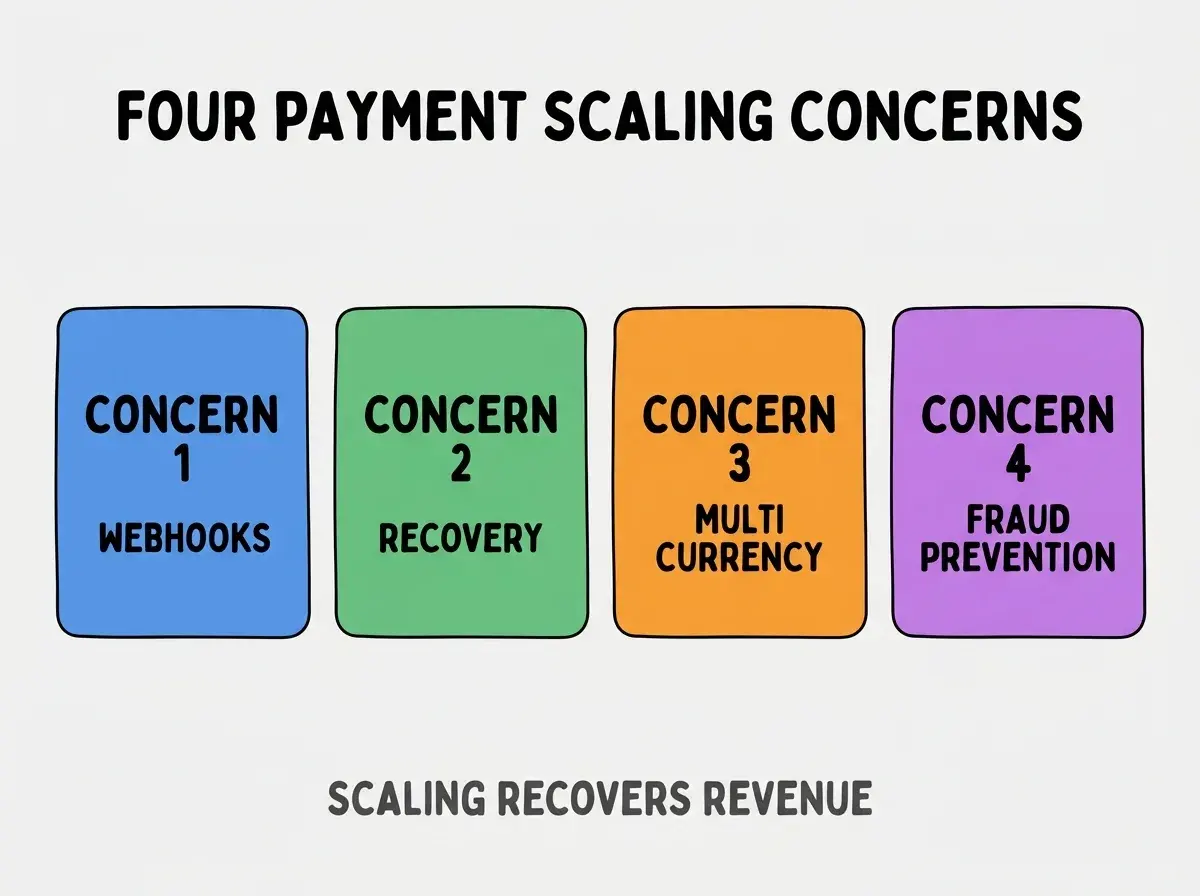
Concern 3, multi currency. Currency conversion, local methods. Global.
Concern 4, fraud prevention. Radar, manual review. Loss prevention.
How To Implement Each Concern
Four implementation patterns address each concern.
Implementation 1, webhook handler with deduplication. Idempotency keys; duplicate webhooks safe.
Browse more grow
Read more growImplementation 2, Stripe Smart Retries plus dunning emails. Stripe handles retries; emails inform customer.
Implementation 3, Stripe multi currency plus local methods. Stripe handles conversion; methods configurable.
Implementation 4, Stripe Radar with custom rules. Radar built in; custom rules per business.
What Makes Payment Processing Sustainable
Three patterns separate sustainable processing from operational nightmare.
Pattern 1, monitoring active. Payment failures monitored; without monitoring, leakage invisible.
Pattern 2, customer communication clear. Payment issues communicated; clear reduces churn.
Pattern 3, support escalation defined. Some issues need human; escalation matters.
What Makes Payment Strategy Effective
Three patterns separate effective strategy from theatrical.
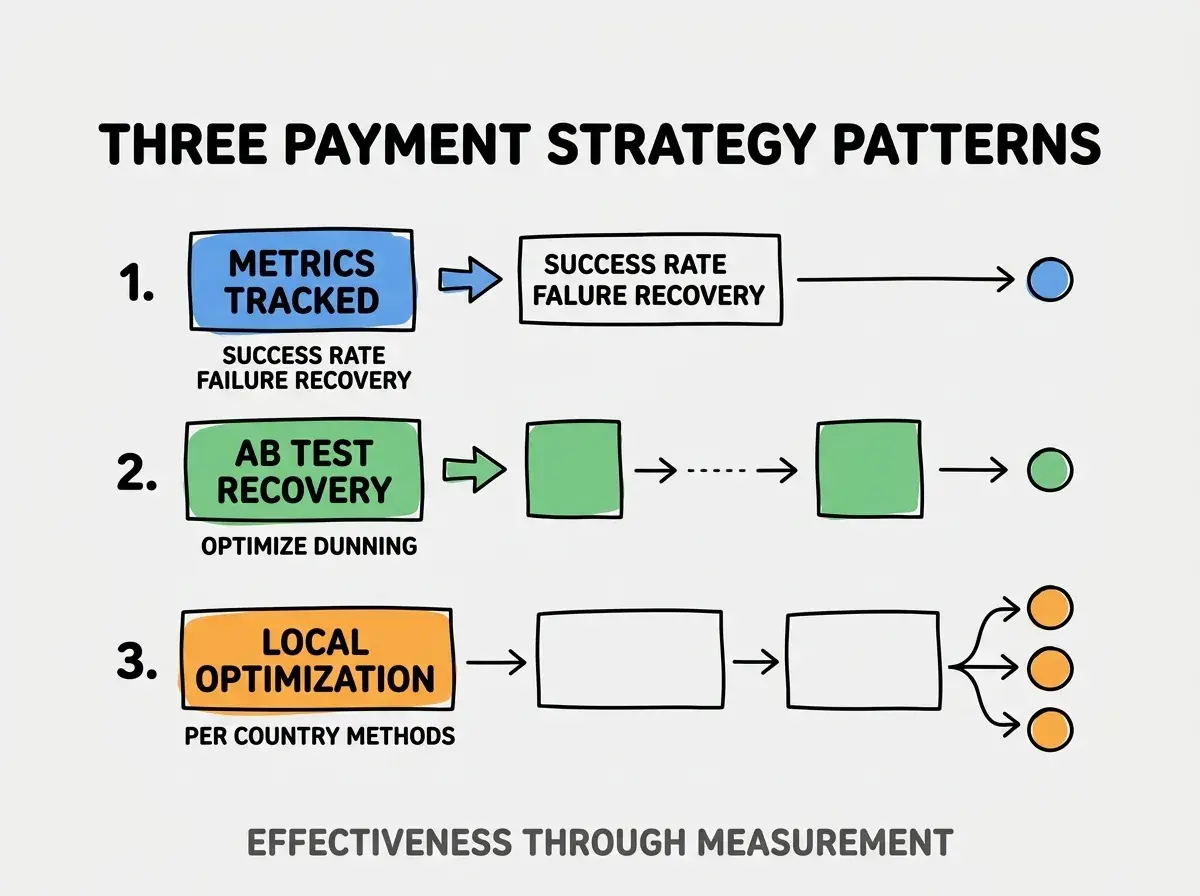
Pattern 1, metrics tracked. Success rate, failure recovery; visibility informs.
Pattern 2, A B test recovery. Optimize dunning; testing compounds.
Pattern 3, local optimization. Per country methods; conversion compounds.
The combination produces effective payment strategy. Without these patterns, leakage continues.
How To Set Up Smart Retries
Three patterns help retry setup.
Pattern A, Stripe Smart Retries enable. Stripe ML based; outperforms simple retry.
Pattern B, custom retry logic for special cases. Some cases need custom; layered approach.
Pattern C, retry timing optimized. Different times work for different cards.
Common Questions About Payment Scaling
Payment scaling raises questions worth addressing directly.
The first question is whether webhook events guaranteed. No; design for retries. Idempotency key pattern.
The second question is whether to use Radar. Yes; fraud prevention essential.
The third question is when to add multi currency. When international customers material; not before.
The fourth question is how to handle disputes. Stripe handles process; engagement matters.
How Payment Scaling Affects Revenue
Payment scaling affects revenue in compounding ways. Revenue effects compound across customer base.
The first compounding effect is reduced churn. Payment failures cause churn; recovery prevents.
The second compounding effect is increased AOV. Multi currency captures AOV that conversion lost.
The third compounding effect is market expansion. Local payment methods expand market.
The combination produces revenue shaped by payment scaling. Without scaling, revenue bounded by payment failures.
How To Handle Payment Disputes
Three patterns help dispute handling.
Pattern A, evidence preparation upfront. Logs, communications stored; evidence available.
Pattern B, response within deadline. Stripe deadlines; missed = lost.
Pattern C, learn from disputes. Patterns reveal product issues; learning compounds.
The combination handles disputes. Without patterns, disputes cost.
The most damaging payment scaling mistake is treating Stripe as set and forget. Stripe defaults adequate for start; scaling requires configuration. The fix is to invest in Stripe optimization (Smart Retries, Radar rules, dunning emails); investment compounds revenue. Builders who optimize Stripe maintain revenue; builders who use defaults lose 5-15 percent revenue invisibly.
The other mistake is missing the customer communication. Payment issues silent surprise customers; communication softens.
A third mistake is over restrictive fraud rules. Restrictive rules block legitimate; balance matters.
A fourth mistake is treating payments as one off. Payment patterns evolve; ongoing optimization required.
What This Means For You
Scaling payment processing for SaaS recovers revenue and reduces churn. The four concerns, implementation patterns, and sustainability approaches produce payment processing that compounds revenue.
- If you're a senior dev: Payment scaling fluency expected for SaaS; learn patterns deeply.
- If you're an indie hacker: Solo payment optimization possible with Stripe; investment justified by revenue impact.
- If you're a founder: Payment health affects valuation; investment justified across stages.
Browse more grow
Read more grow