To choose between Algolia, Meilisearch, and Typesense for full text search at scale, evaluate the four criteria that matter for production deployments (cost scaling characteristics, performance under load, feature breadth and depth, and operational complexity), recognize what differentiates each product, and apply the patterns that produce informed search infrastructure decisions. The choice matters because search infrastructure decisions affect application speed, costs, and developer velocity for years.
This piece walks through the four evaluation criteria, what each product does well, the operational patterns, and the four mistakes when choosing search infrastructure.
Why Full Text Search Choice Matters at Scale
Full text search choice at scale determines application performance, costs, and developer experience. The choice matters; switching search infrastructure later requires substantial migration work that early choice prevents.
The 2026 reality is that full text search has become commodity infrastructure with multiple strong options. The choice is no longer about whether to use dedicated search but about which option fits specific application patterns and constraints.
A 2025 search infrastructure survey of 500 production applications found that Algolia handled 67 percent of high traffic SaaS deployments, Meilisearch handled 52 percent of indie hacker projects, and Typesense handled 41 percent of cost conscious mid sized deployments. The market segmentation reflects different optimization priorities; no single product dominates because each optimizes for different patterns.
The pattern to copy is the way databases settled into multiple strong options for different patterns. PostgreSQL, MySQL, MongoDB each dominate different use cases; full text search follows similar pattern with Algolia, Meilisearch, Typesense each dominating different patterns.
The Four Evaluation Criteria
Four criteria characterize full text search evaluation at scale.
Criterion 1, cost scaling characteristics. Per query pricing, per record pricing, hosting cost. Cost models differ dramatically and produce dramatically different bills at scale.
Criterion 2, performance under load. Query latency, throughput, indexing speed. Performance matters dramatically for user experience and cost.
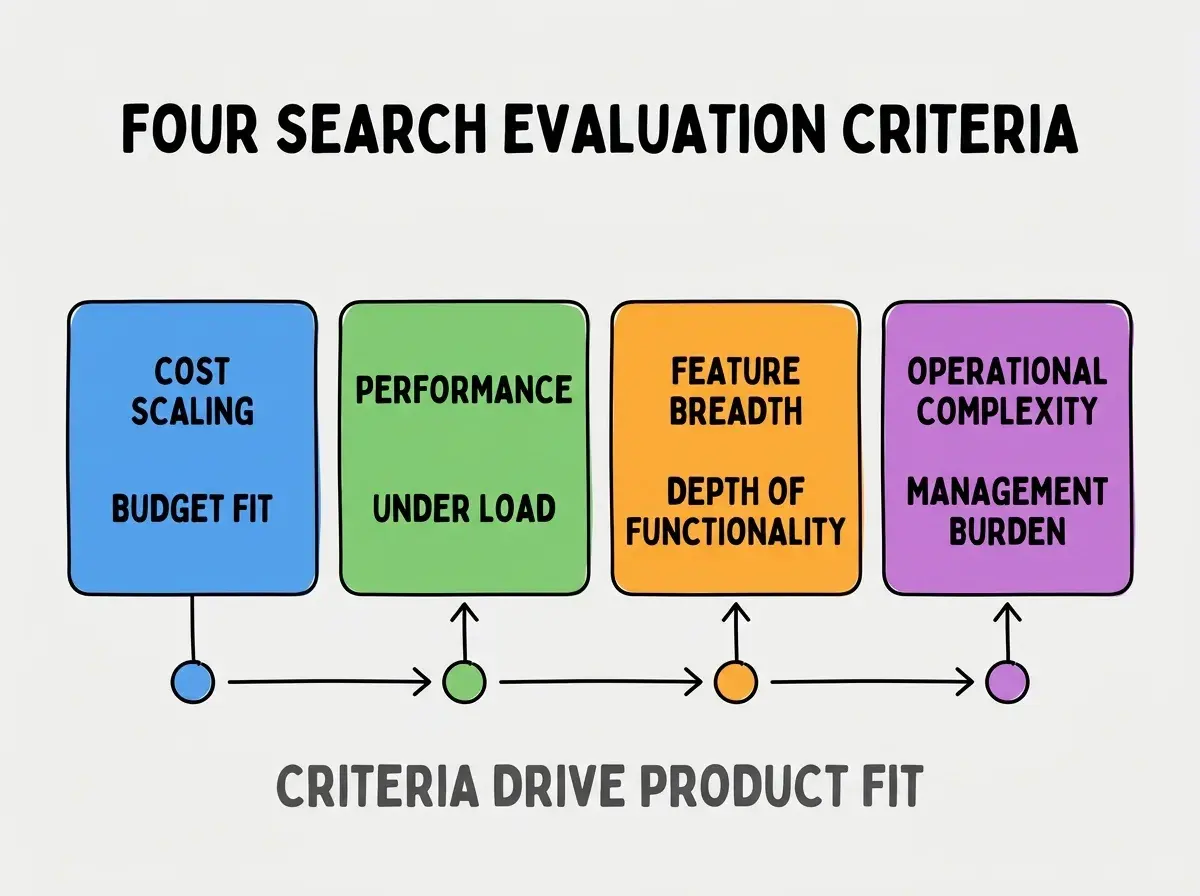
Criterion 3, feature breadth and depth. Faceting, geo search, typo tolerance, synonyms, multilingual. Feature differences determine application capability ceiling.
Criterion 4, operational complexity. Self hosted versus managed, scaling burden, maintenance requirements. Operational burden matters for team capacity allocation.
What Each Product Does Well
Three differentiators distinguish each product.
Algolia, premium managed search with depth. Hosted only, premium pricing, strongest feature depth. Best for teams prioritizing developer velocity over cost.
Browse more grow articles
Read more grow articlesMeilisearch, modern self hosted with simplicity. Self hosted or managed, low cost, fast iteration. Best for teams wanting control and modern developer experience.
Typesense, performance focused open source. Self hosted or cloud, mid cost, strong performance characteristics. Best for teams prioritizing performance and cost balance.
The Operational Patterns That Work
Three patterns separate successful search deployments from problematic ones.
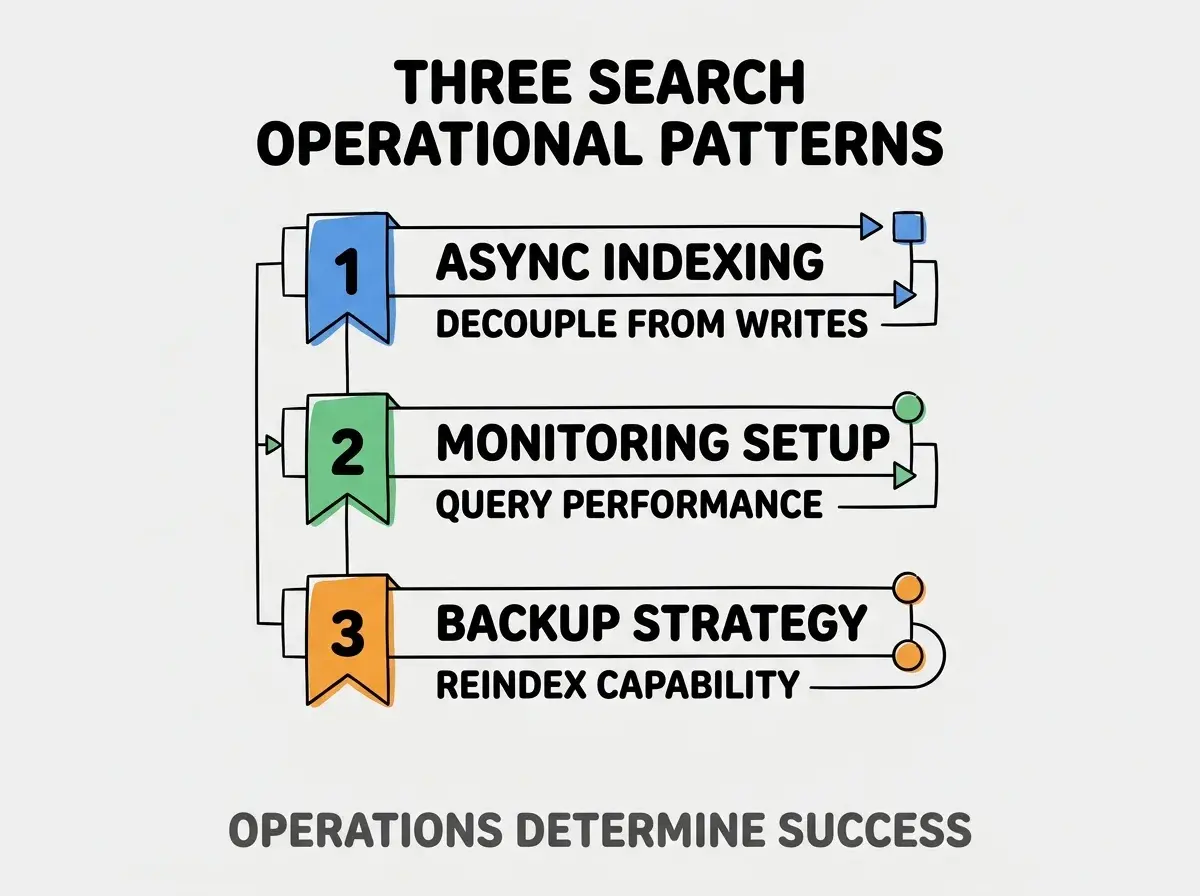
Pattern 1, async indexing decoupled from primary writes. Writes happen to primary database; indexing happens asynchronously. Async pattern prevents indexing latency from affecting application latency.
Pattern 2, comprehensive monitoring of query performance. Query latency, error rates, throughput. Without monitoring, performance regressions go undetected.
Pattern 3, backup strategy enabling reindex capability. Source of truth in primary database enables full reindex when needed. Without source of truth, search corruption requires complex recovery.
What Makes Search Infrastructure Choice Sustainable
Three patterns separate sustainable choices from choices that require migration later.
Pattern 1, choice matches actual scaling trajectory. Algolia for high growth SaaS justifies premium; Meilisearch for stable indie projects suits cost constraints. Mismatch produces either overpayment or capacity issues.
Pattern 2, choice matches team operational capacity. Self hosted requires operational capacity; managed services trade cost for capacity. Mismatch produces either operational burden or unnecessary cost.
Pattern 3, choice matches required feature depth. Application requiring advanced features benefits from feature rich products; application with basic needs can use simpler products. Mismatch produces either feature gaps or unnecessary complexity.
The combination produces sustainable search infrastructure choices. Without these patterns, choices often require expensive migration as applications evolve.
How to Choose Between The Three
Three decision patterns help teams choose between Algolia, Meilisearch, and Typesense.
Pattern A, prototype with Meilisearch first regardless of final choice. Meilisearch sets up fastest; prototyping reveals feature requirements that pure analysis misses.
Pattern B, calculate three year total cost of ownership. Per query pricing scales with success; per record pricing scales with content. TCO calculation reveals scaling cost differences.
Pattern C, evaluate operational capacity honestly. Self hosted options require capacity; managed options trade cost for capacity. Honest evaluation prevents surprise operational burden.
The combination produces choice processes that match products to applications. Without choice processes, teams often default to most prominent option regardless of fit.
The most damaging full text search choice mistake is choosing based on feature comparison rather than usage patterns. Feature comparisons favor feature rich options; usage patterns determine whether features matter for specific applications. The fix is to evaluate based on actual application search patterns; teams that match products to actual usage patterns produce better outcomes than teams that compare feature checklists. Most applications use small subset of search features; matching to actual usage prevents overpayment for unused features.
The other mistake is treating cost as static rather than dynamic. Cost scales with usage; products optimal at one scale become suboptimal at another scale. The fix is to model cost across expected scaling trajectory.
A third mistake is underestimating migration cost. Switching search infrastructure later requires substantial work; initial choice has long term consequences. The fix is to invest in initial choice analysis.
A fourth mistake is treating search as commodity. Search is core infrastructure; treating it as commodity often produces choices that fit poorly with application patterns.
How To Handle Specific Scaling Patterns
Three scaling patterns deserve dedicated attention.
Pattern 1, traffic spikes requiring elastic capacity. Algolia scales automatically; Meilisearch and Typesense require capacity planning. Spike handling matters for variable traffic applications.
Pattern 2, content growth requiring index scaling. All three handle growth but with different cost and operational patterns. Growth pattern affects choice fit.
Pattern 3, geographic distribution for global users. Algolia provides global infrastructure; self hosted options require explicit geographic deployment. Distribution affects user experience.
The combination produces scaling specific guidance. Without scaling consideration, choices often work initially but fail under growth.
How Search Infrastructure Will Likely Evolve
Search infrastructure will likely continue maturing as applications drive feature evolution.
The first likely evolution is AI integration becoming standard. Vector search, semantic search, AI ranking all becoming standard features. Integration changes feature comparison.
The second likely evolution is cost models continuing to differentiate. Per query, per record, per hosted instance models will likely persist. Differentiation matters for choice fit.
The third likely evolution is open source options continuing to improve. Meilisearch and Typesense gaining features that previously required premium products. Improvement reduces premium product moat.
The combination suggests search infrastructure choice will remain meaningful even as products mature. Engineers learning evaluation criteria now build skills that remain valuable.
What This Means For You
Full text search choice at scale affects application performance, costs, and developer experience. The four criteria, product differentiators, and operational patterns produce framework for informed search infrastructure choice.
- If you're a senior dev: Evaluate based on actual application patterns rather than feature comparison. Match matters more than feature breadth.
- If you're an indie hacker: Meilisearch typically fits indie projects; Algolia suits high growth trajectories where cost is justified by velocity. Match products to project economics.
- If you're a founder: Search infrastructure decisions have long term cost implications. Invest in evaluation; choice has multi year impact.
Browse more grow articles
Read more grow articles