To pick a revenue model for a solo AI-built product in 2026, evaluate four models that consistently work for solo operators (subscription SaaS for ongoing value, one-time purchases for tools and templates, marketplace fees for two-sided products, and usage-based pricing for variable-consumption products), validate pricing with paying customers rather than surveys, and pick the model that aligns with how your product creates value rather than the model that seems most popular. The right model depends on your product shape and customer behavior; copying others' models without thinking through the fit is a common path to revenue stagnation.
This piece walks through the four models, the validation patterns that produce real pricing, the model-product alignment principles, and the four mistakes solo founders make when picking and pricing revenue models.
Why Revenue Model Matters Even for Solo Products
Revenue model is the single biggest determinant of business shape. Subscription products grow through retention; one-time products grow through traffic; marketplaces grow through liquidity; usage-based products grow through customer success. The model determines what work matters most.
The 2026 reality is that solo AI-built products often struggle not because the product is bad but because the revenue model fights the product. Subscription pricing for tools that solve one-time problems produces high churn; one-time pricing for tools with ongoing value leaves money on the table.
A 2025 IndieHackers revenue analysis of 1,400 solo SaaS products found that products whose revenue model aligned with their value pattern grew revenue 3.1x faster over 18 months than products with misaligned models. The mechanism was straightforward: model-aligned products converted easier and retained better; misaligned products fought their pricing constantly. Picking the right model upfront is one of the highest-leverage decisions a solo founder makes.
The pattern to copy is the way different physical businesses match their pricing to their service shape. Restaurants charge per meal; gyms charge per month; consultants charge per hour or per project. Each pricing structure fits the underlying value pattern. AI-built products work the same way; the model should fit the value, not the other way around.
The Four Revenue Models That Work
Four revenue models consistently work for solo AI-built products. Each fits different product shapes.
Model 1, subscription SaaS. Monthly or annual recurring fee for ongoing access. Best for products users return to repeatedly. The default model for most software but not always the best fit.
Model 2, one-time purchase. Single payment for permanent access (often with optional upgrades). Best for tools, templates, and one-time-use products. Lower lifetime value per customer but easier conversion.
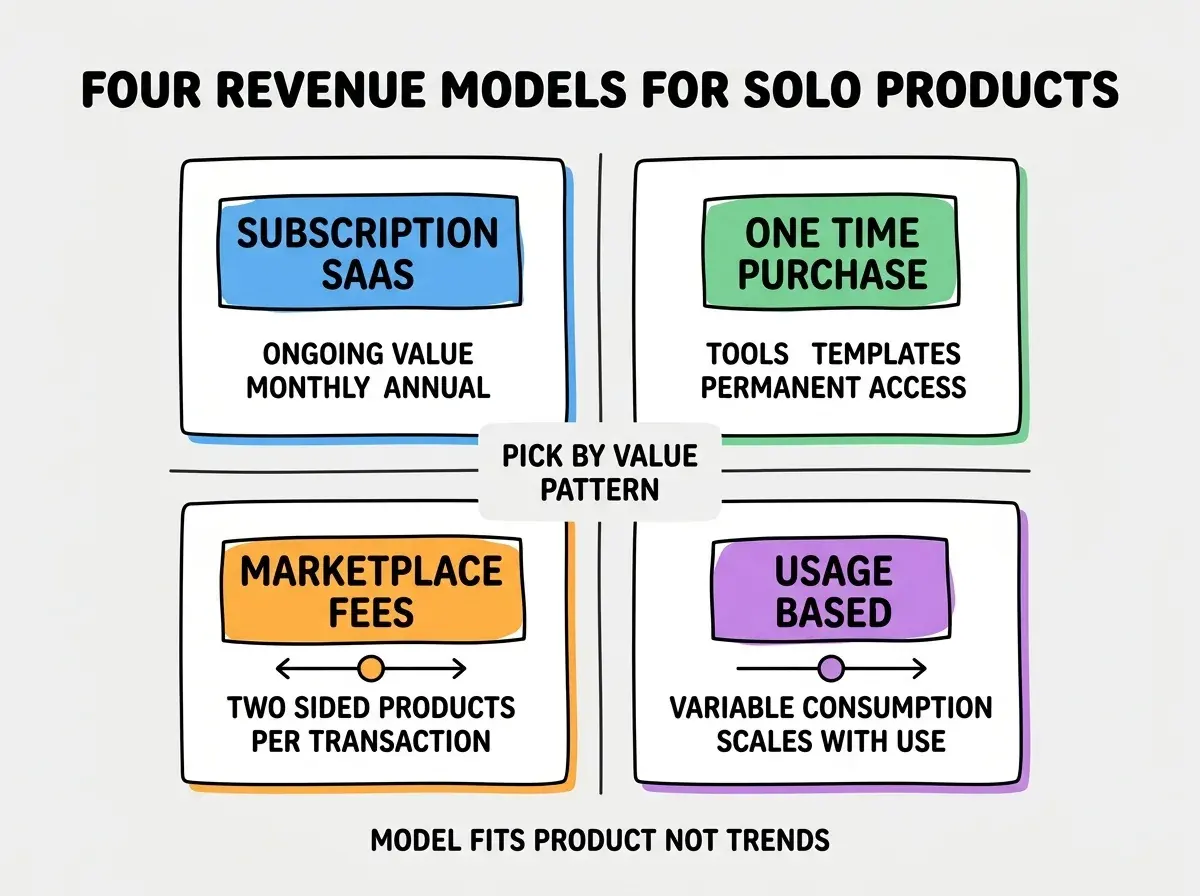
Model 3, marketplace fees. Percentage of transactions between buyers and sellers on your platform. Best for two-sided products. High operational complexity but high ceiling.
Model 4, usage-based pricing. Pay for what you use (per API call, per generation, per processed item). Best for variable-consumption products. Aligns customer cost with value received.
How to Validate Pricing With Real Customers
Three validation patterns produce real pricing data rather than survey hypotheticals.
Pattern 1, charge from day one. Even nominal pricing ($5/month) generates real signal. Free users tell you what they want; paying users tell you what they value.
Browse more business strategy guides
Read more foundations articlesPattern 2, A/B test pricing across cohorts. Show different price points to similar user cohorts; measure conversion and retention. Real conversion data beats survey responses.
Pattern 3, raise prices and watch what happens. Most solo founders underprice. Raise prices 30-50 percent on new customers; the conversion drop is usually smaller than expected, and revenue per customer rises substantially.
The Model-Product Alignment Principles
Three alignment principles help match the right model to your product shape.
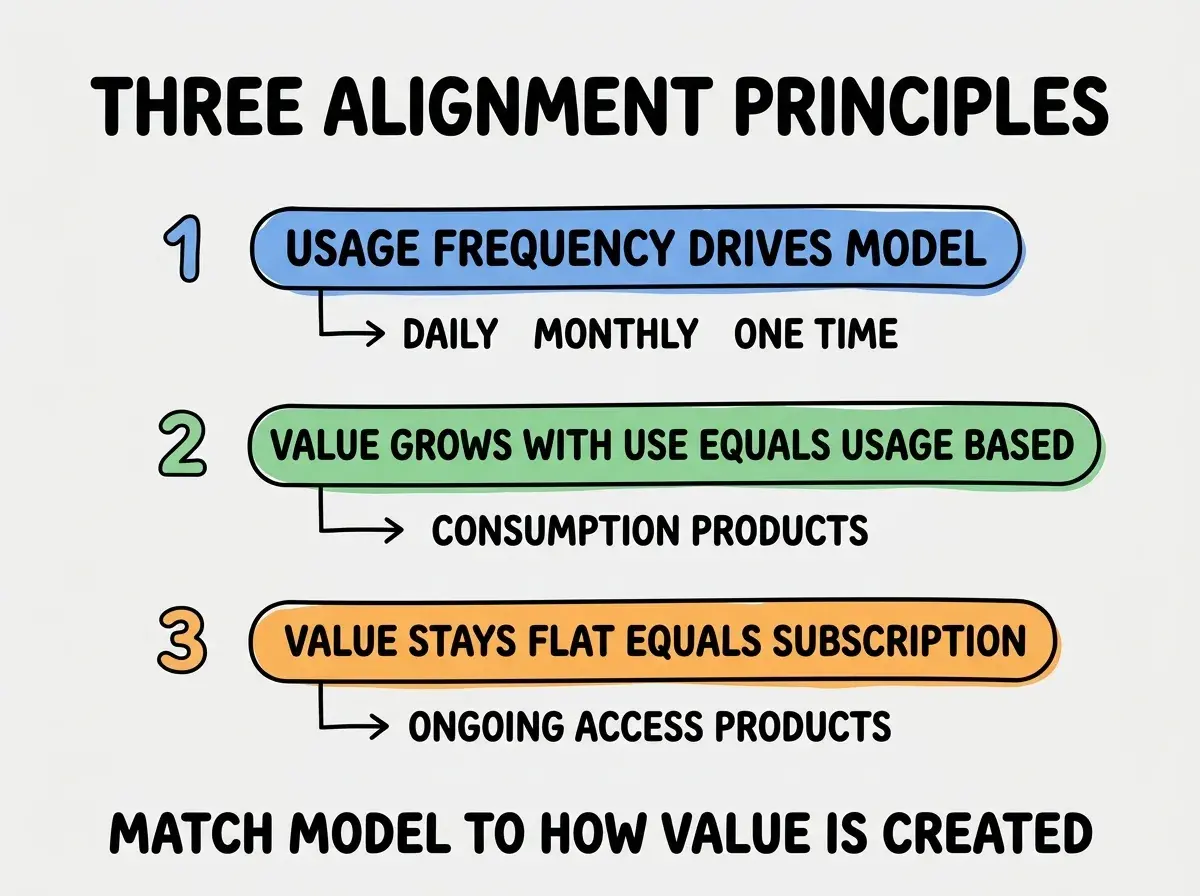
Principle 1, usage frequency drives the model. Daily-use products warrant subscriptions; monthly-use products often work better as one-time or usage-based.
Principle 2, value-grows-with-use products fit usage-based pricing. AI generation tools, processing tools, API products. The customer pays in proportion to value received.
Principle 3, value-stays-flat products fit subscriptions. Tools that provide ongoing access at consistent value. Subscription pricing matches the value delivery pattern.
How to Migrate Between Models When Needed
Three migration patterns help when your initial revenue model needs to change.
Pattern 1, grandfather existing customers under old pricing. When you change models or raise prices, keep existing customers on their current terms. The goodwill preserved exceeds the revenue gained from forcing migrations.
Pattern 2, communicate changes 30+ days in advance. Surprise pricing changes destroy trust; advance notice preserves it. Send the email twice; once 30 days out, once 7 days out.
Pattern 3, offer optional new pricing to existing customers. Some existing customers will voluntarily move to the new model if it benefits them. Make the migration optional and easy; the take-up rate often surprises.
The combination produces revenue model evolution that strengthens rather than damages customer relationships. Without these patterns, model migrations often produce churn waves that exceed the revenue gains from the new model.
The Pricing Levels That Work for Solo Products
Three pricing patterns help solo founders avoid the most common pricing mistakes.
Pattern A, price at $20-50/month minimum for SaaS. Below $20 is hobby pricing that produces unsustainable customer acquisition cost economics. Solo founders need higher per-customer revenue than venture-backed teams.
Pattern B, price one-time products at $30-200. Below $30 is impulse-purchase territory; above $200 requires substantial sales work. The sweet spot allows web-based purchase without sales overhead.
Pattern C, price usage-based with reasonable minimums. Pure consumption pricing produces unpredictable revenue. Most successful usage-based products combine a base subscription with consumption overage.
The combination produces sustainable revenue per customer for solo founders. Without these patterns, founders often choose pricing levels that look reasonable for venture-funded teams but fail the unit economics for solo operators.
The most damaging revenue model mistake for solo founders is starting with free pricing to "validate first, monetize later." Free users provide unreliable validation signals (they will use anything that costs nothing); the transition from free to paid kills most of the user base; and the founder's time is consumed by free users while paid users would fund actual development. The fix is to charge from day one, even if pricing is low. Solo founders who charge from day one report 4x higher revenue at month 12 than founders who started free. Charging early is one of the highest-leverage decisions a solo founder makes.
The other mistake is treating revenue model as permanent. Models can and should evolve as products mature. Many successful products started as one-time purchases and added subscriptions later, or started as subscriptions and added usage-based tiers. The fix is to revisit the model annually; what fit at $1K MRR may not fit at $100K MRR. Adaptation produces sustained growth; rigidity produces ceiling effects.
A third mistake is offering too many pricing tiers from day one. Three tiers maximum (basic, pro, enterprise) is enough; more produces analysis paralysis at the buying decision. Solo founders especially benefit from simple pricing because each additional tier multiplies the support burden. Two tiers often outperform four tiers in conversion testing.
What This Means For You
Revenue model is one of the most consequential decisions for solo AI-built products in 2026. The four models cover most cases; the alignment principles help pick the right one; the validation patterns produce real pricing data.
- If you're a founder: Pick your model based on value pattern, not on what other products do. Validate pricing by charging real customers; adjust based on what they actually pay.
- If you're changing careers into founder roles: Study revenue models across product types. The pattern recognition transfers across every business you ever start.
- If you're a student: Practice picking and defending revenue models for products you study. The skill compounds with every product you analyze.
Browse more solo founder strategy guides
Read more foundations articles