To freelance vibe code successfully in 2026, position around AI-assisted delivery speed (not commodity coding hours), choose one of four pricing models that align with the value you produce (project pricing for outcomes, retainer for ongoing work, productized services for repeatable scope, or rev-share for high-trust partnerships), find clients in places where speed and outcome-quality matter more than developer credentials, and treat AI proficiency as the differentiator that lets you charge senior rates while delivering at junior timelines. The freelance opportunity is real but requires repositioning from how freelance developers worked in 2022.
This piece walks through positioning, the four pricing models, where to find clients, and the four mistakes freelance vibe coders make when transitioning from traditional freelancing.
Why Freelance Vibe Coding Is Different from Traditional Freelancing
Traditional freelance development sold hours of skilled labor; clients paid for the developer's time and expected output proportional to hours billed. Freelance vibe coding sells outcomes delivered fast with AI assistance; clients pay for results and the time-to-result is a feature, not something to hide.
The 2026 reality is that clients increasingly evaluate freelancers on speed and outcome quality, not on credentials or hour counts. The freelancers who reposition successfully command rates that exceed what traditional freelancing produced; those who try to compete on hours-billed face downward pressure as AI commoditizes that part of the work.
A 2025 Toptal freelancer income study of 1,500 freelance developers found that those who explicitly positioned around AI-assisted delivery earned 1.7x more per project than those who did not, despite spending 40 percent less time per project. The dynamics favor freelancers who price for outcomes and use AI to compress delivery time. Hours-based freelancers face increasing competition; outcome-based freelancers see growing margins.
The pattern to copy is the way premium contractors price construction projects. Premium contractors do not bill by the hour; they bid the job, deliver fast with crews who know the work, and charge a premium for predictable outcomes. AI gives freelance developers the equivalent of an experienced crew; pricing should reflect that.
The Four Pricing Models That Work
Four pricing models consistently work for freelance vibe coding. Each fits different client types and project shapes.
Model 1, project pricing for outcomes. Fixed price for a defined deliverable (a working MVP, a specific feature, a refactor). Best when scope is clear; difficult when scope shifts.
Model 2, retainer for ongoing work. Monthly fee for a defined number of hours or deliverables. Best for clients who need consistent capacity rather than discrete projects. Predictable income for the freelancer.
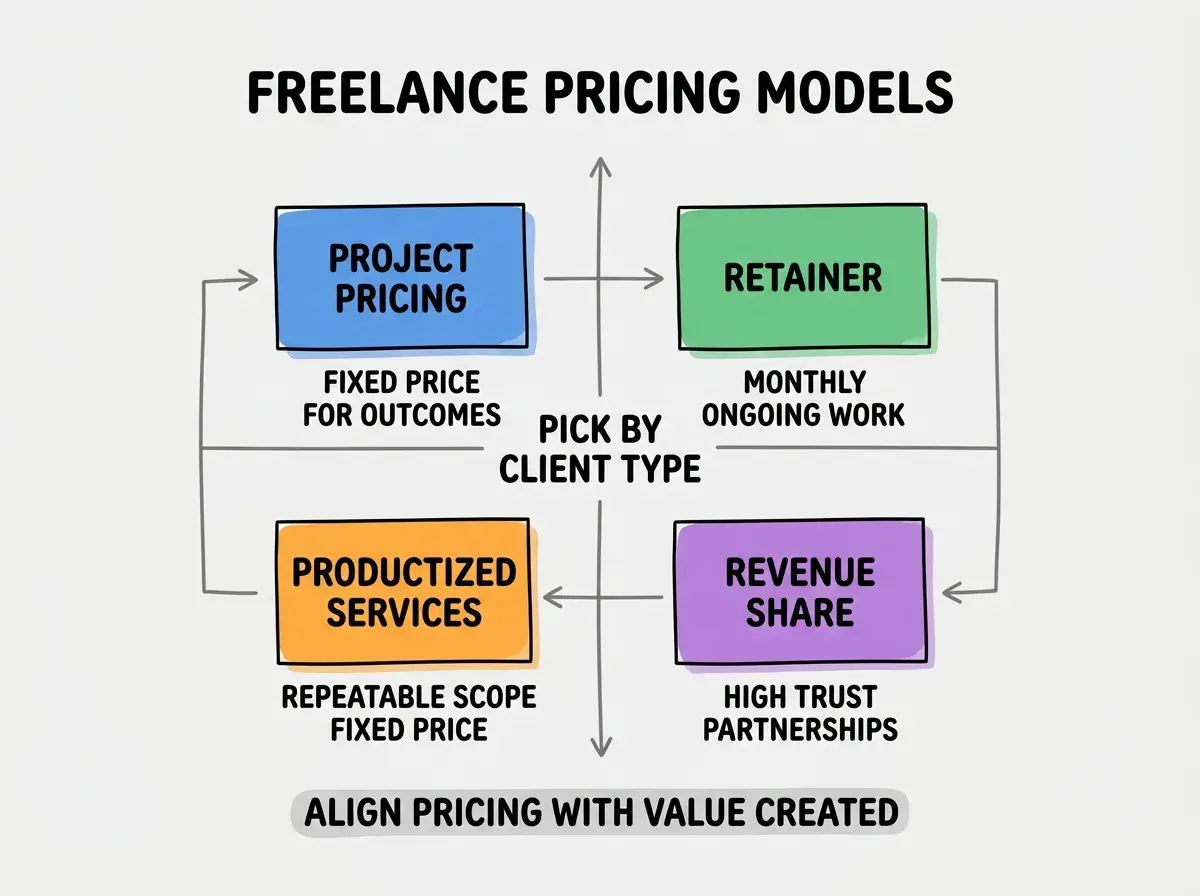
Model 3, productized services. Specific repeatable scopes at fixed prices ("I will ship your auth system for $5K"). Best for freelancers who want to scale without proportional hours; the productization makes the work efficient.
Model 4, revenue share or equity. Reduced upfront fee plus ongoing percentage. Best for high-trust founder relationships where you believe in the product. High variance; hits and misses both happen.
How to Position Around AI-Assisted Delivery
Three positioning principles separate freelancers who command premium rates from those competing on price.
Principle 1, lead with speed and outcomes, not skills. "I ship MVPs in 2 weeks" beats "I am a senior React developer." Outcome-focused positioning attracts clients who care about results.
Browse more freelance career guides
Read more foundations articlesPrinciple 2, show recent shipped work, not credentials. A portfolio of 8 recent shipped projects beats a resume of past employers. Clients want to see the work, not the work history.
Principle 3, charge for value delivered, not hours worked. AI compresses time; pricing should reflect outcomes not effort. Freelancers who continue charging hourly rates leave significant value on the table as AI accelerates their work.
Where to Find Clients in 2026
Three client sources consistently produce premium-rate work for freelance vibe coders.
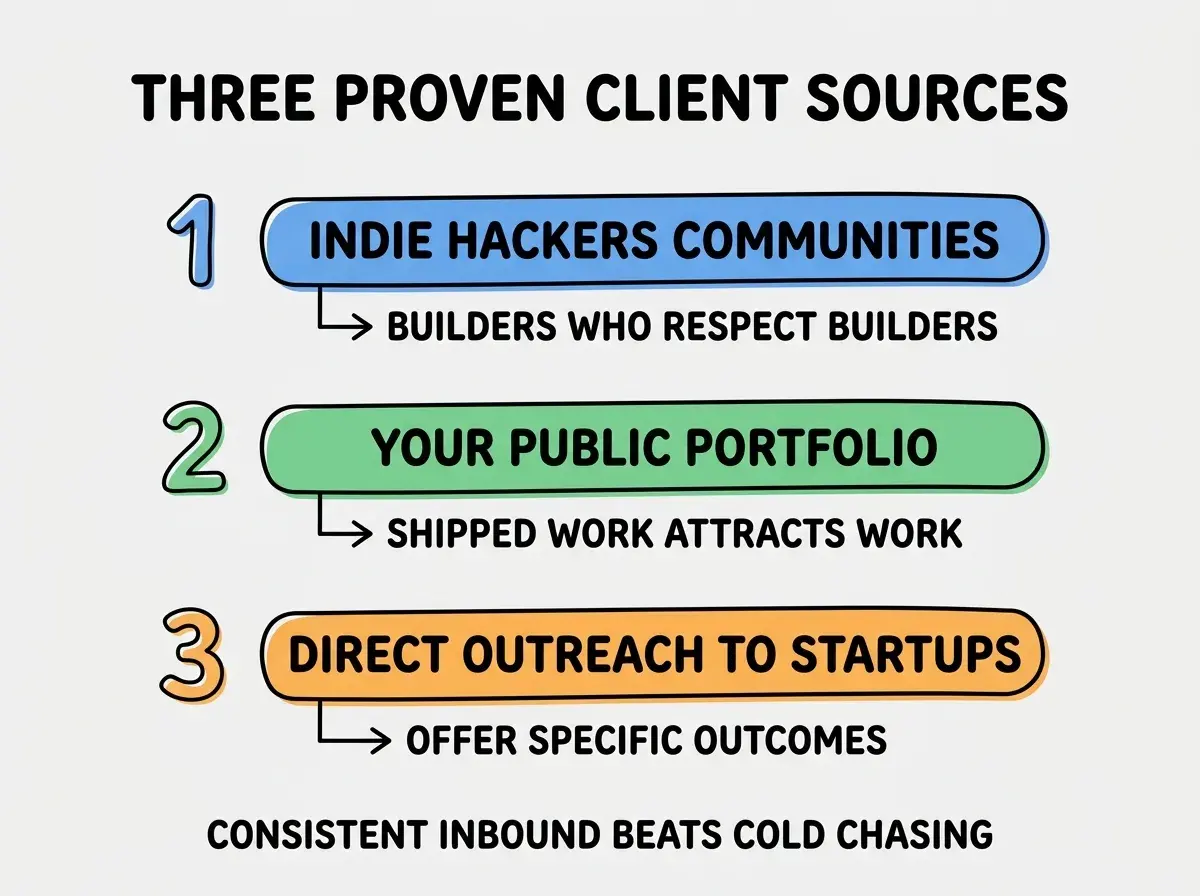
Source 1, IndieHackers and founder communities. Founders who have built things themselves understand the value of speed. They pay better than commodity buyers.
Source 2, your public portfolio. A blog or portfolio site showcasing recent shipped work attracts inbound leads. Inbound clients typically pay 2-3x more than outbound or platform clients.
Source 3, direct outreach to specific startups. Identify 50 startups whose products you understand, send personalized offers (not pitches) describing specific outcomes you could deliver. 5-10 percent conversion is realistic.
The combination produces sustainable freelance income. Without these sources, freelancers rely on Upwork or similar platforms where rate compression is severe and client quality is variable.
The most damaging freelance vibe coding mistake is hiding the AI assistance from clients. Some freelancers worry that disclosing AI usage will reduce perceived value. The data says the opposite: clients who know you use AI assistance and ship faster value the speed and pay accordingly. The fix is to be transparent about your tools and process; the speed becomes a feature you sell, not a secret to keep. Freelancers who lead with AI-assisted positioning report 1.7x higher rates than those who hide it. Honesty is more profitable than concealment.
The other mistake is taking on every client who reaches out. Some clients are bad fits regardless of pay (unclear scope, unrealistic timelines, micromanagement tendencies). The fix is to qualify ruthlessly; turn down 60-70 percent of inquiries that do not fit your model. The remaining clients pay more, take less time, and produce better outcomes than the diluted client mix you get from accepting everyone.
A third mistake is undervaluing recurring revenue from existing clients. Freelancers often chase new clients while letting existing relationships fade. The fix is to nurture top clients deliberately; a quarterly check-in with each past client produces meaningful repeat work and referrals. Existing clients are the cheapest source of new work; ignoring them in favor of cold outreach burns acquisition budget that retention-focused freelancers do not need to spend.
A fourth mistake is failing to track time even when you bill flat-fee. Time tracking is the data that informs whether your project pricing is profitable. Freelancers who do not track time often discover after months that certain project types lose money; freelancers who track time spot the unprofitable patterns immediately and adjust pricing or scope.
How to Set Up Your First Three Clients
Three patterns help establish a freelance vibe coding practice from zero clients.
Pattern 1, do the first one at a discount or free. Find a founder you respect, offer to ship a specific deliverable in 2 weeks at 50 percent off (or free for a friend). The portfolio piece and testimonial matter more than the revenue.
Pattern 2, charge full rate for client two. Use the client one outcome as proof. Quote the rate you actually want; if they negotiate, hold firm. The pricing precedent shapes every subsequent client conversation.
Pattern 3, raise rates 30-50 percent for client three. As demand exceeds capacity, prices should rise. Most freelancers wait too long to raise rates; the result is being booked solid at low rates while turning down better-paying work.
The combination produces a sustainable practice within 60-90 days for committed freelancers. Without these patterns, freelancers often stall at low rates because their first-client pricing anchors all future pricing conversations.
What This Means For You
Freelance vibe coding is one of the highest-leverage career paths in 2026 for developers who position correctly. The opportunity is real but requires deliberate repositioning from traditional freelance models.
- If you're a founder: Even if you do not freelance personally, understanding the freelance market helps when hiring contractors. The good ones cost more but ship dramatically faster.
- If you're changing careers into freelance development: Skip the bidding platforms entirely. Build a public portfolio and a positioning around speed and outcomes from day one.
- If you're a student: Practice the freelance pricing models on small projects (friends, local businesses, side gigs). The pricing skill is as valuable as the technical skill.
Browse more career strategy guides
Read more foundations articles