To implement push notifications effectively in vibe coded apps, follow the four notification patterns (request permission contextually based on user value, send notifications matching user expectations rather than convenience, time notifications respecting user attention patterns, and design notification content that drives action rather than awareness alone), recognize what makes notifications drive engagement versus uninstalls, and apply the patterns that produce sustained user value. The push notification capability matters because notifications either drive engagement or drive uninstalls depending on implementation quality.
This piece walks through the four notification patterns, what makes notifications valuable, the specific tooling, and the four mistakes that produce uninstalls.
Why Push Notifications Matter
Push notifications matter as primary mobile engagement channel. The matter; notifications drive return visits that other channels cannot match.
The 2026 reality is that push notifications have become both essential and risky. Done well drives engagement; done poorly drives uninstalls. Quality determines outcome.
A 2025 mobile engagement study of 500 apps found that apps with structured notification patterns achieved 47 percent higher retention while apps with poor notification patterns experienced 38 percent higher uninstall rates. Notification quality determines retention dramatically.
The pattern to copy is the way utilities communicate with customers. Utilities send notifications only when value justifies; not every event becomes notification. Apps follow similar pattern; selective notifications produce engagement that broadcast notifications produce uninstalls.
The Four Notification Pattern Approach
Four patterns produce notifications that drive engagement.
Pattern 1, contextual permission requests. Ask after user experiences value, not at app open. Context produces permission grants.
Pattern 2, notifications matching user expectations. What user signed up for. Without expectation match, notifications feel intrusive.
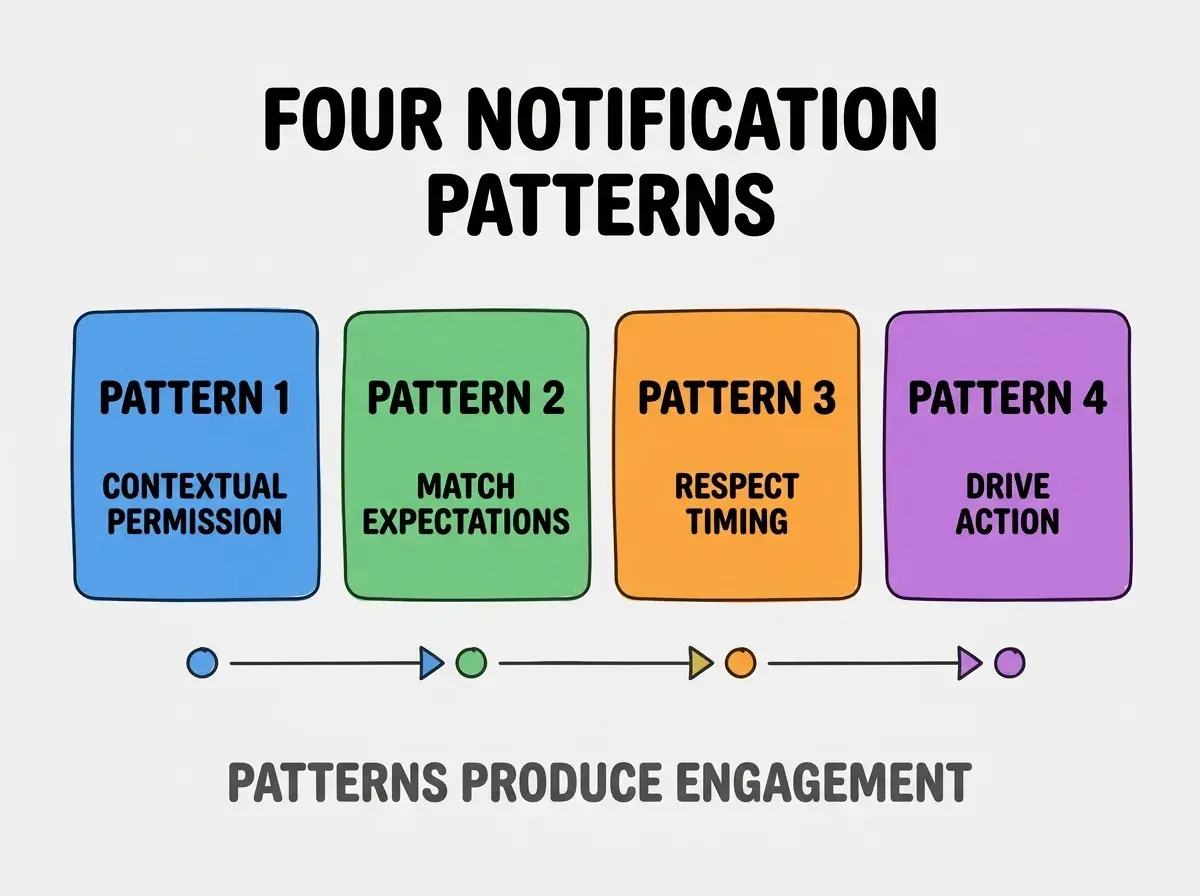
Pattern 3, timing respecting attention patterns. Avoid 3am notifications, work hours when appropriate. Timing matters dramatically.
Pattern 4, content driving action. Specific actions, not vague awareness. Action drives engagement.
What Makes Notifications Valuable
Three patterns characterize valuable notifications.
Pattern 1, notification value greater than interruption cost. Value justifies attention; without value, interruption resented.
Browse more build articles
Read more buildPattern 2, notification frequency below threshold. Too many notifications cause permission revocation. Frequency matters.
Pattern 3, notification personalization preventing irrelevance. Generic notifications often irrelevant. Personalization improves relevance.
The Specific Tooling That Works
Three tool categories combine effectively for push notifications.
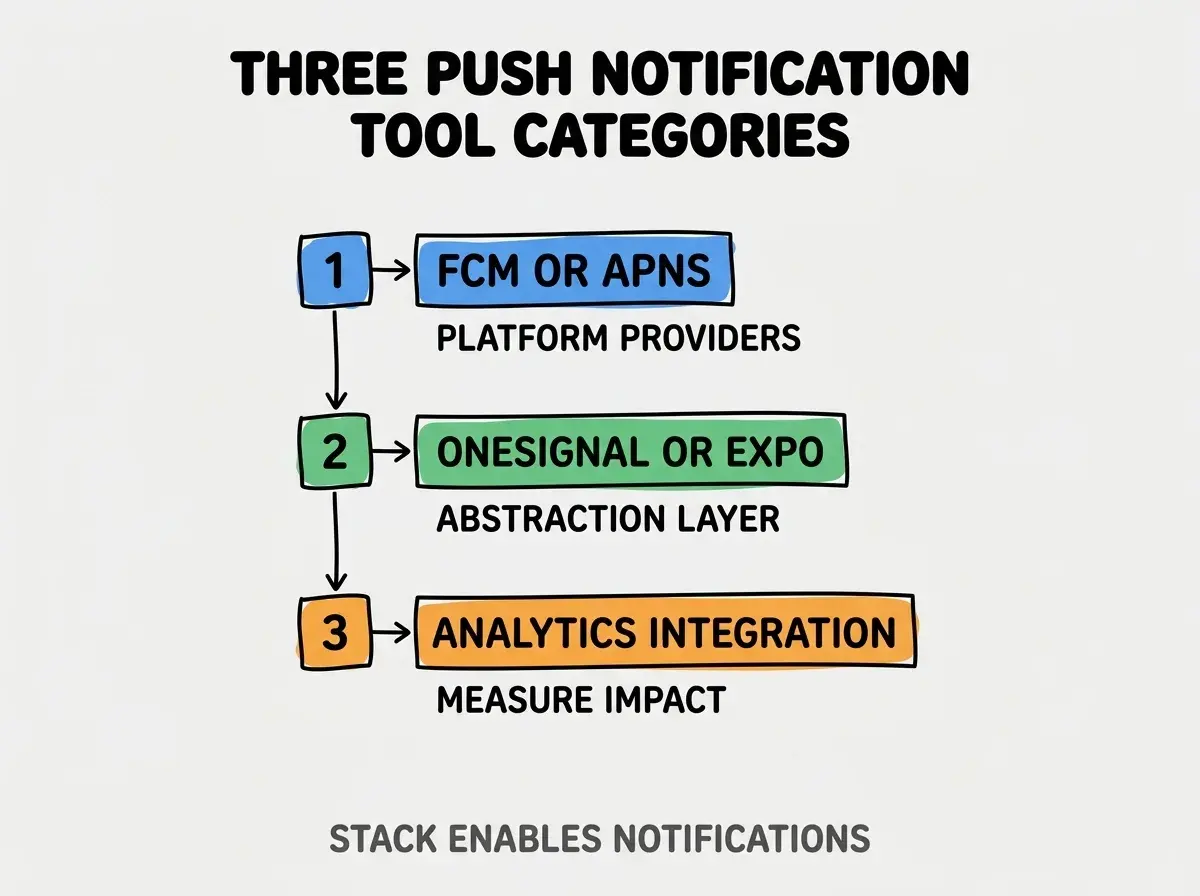
Tool 1, FCM or APNs for platform providers. Firebase Cloud Messaging, Apple Push Notification Service. Direct providers offer most control.
Tool 2, OneSignal or Expo for abstraction. Cross platform abstraction. Abstraction reduces platform specific complexity.
Tool 3, analytics integration for measurement. Open rates, conversion rates, opt out rates. Analytics enable optimization.
What Makes Notifications Sustainable
Three patterns separate sustainable notification practice from problematic patterns.
Pattern 1, regular review of notification effectiveness. Periodic review of metrics. Without review, effectiveness drifts.
Pattern 2, user notification preferences honored explicitly. Granular preferences, easy adjustment. Without honoring, opt outs spike.
Pattern 3, notification fatigue monitoring. Decreasing engagement signals fatigue. Without monitoring, fatigue produces uninstalls.
The combination produces notification practice that maintains value over time. Without these patterns, notifications often degrade from value to noise.
How To Implement Notifications Initially
Three implementation patterns help initial notification setup.
Pattern A, start with single notification type. One type validates approach. Multiple types from start risk fatigue.
Pattern B, A/B test notification copy and timing. Variations reveal what works. Without testing, assumptions remain unverified.
Pattern C, instrument opt out rate as quality signal. Opt outs signal notification problems. Without monitoring, problems compound.
The combination produces initial notifications that establish quality patterns. Without patterns, initial notifications often produce poor engagement.
The most damaging push notification mistake is asking permission at app open before user experiences value. Premature permission asks produce denial; denied permission rarely reverses. The fix is to ask permission contextually after user experiences value worth notifying about; users grant permission when value clear. Apps asking contextually produce dramatically higher permission rates than apps asking at app open.
The other mistake is treating notifications as marketing channel. Notifications work for value delivery; marketing tone produces uninstalls.
A third mistake is missing notification analytics. Without analytics, notification quality stays anecdotal.
A fourth mistake is over notifying to drive engagement. Over notification produces opposite effect; engagement drops with frequency.
How To Handle Specific Notification Types
Three notification types deserve specific approaches.
Type A, transactional notifications. Order updates, security alerts. Users expect; usually high value.
Type B, engagement notifications. Re engagement, feature announcements. Carefully targeted; easy to overdo.
Type C, time sensitive notifications. Breaking news, urgent updates. Use sparingly; overuse desensitizes.
The combination produces type specific notification approaches. Without specific approaches, generic notification serves types mediocrely.
How Push Notifications Will Likely Evolve
Push notifications will likely continue evolving as platforms mature.
The first likely evolution is interactive notifications expanding. Reply, action, browse from notification. Interaction reduces app open friction.
The second likely evolution is AI personalization deepening. Personalization based on usage patterns. Personalization improves relevance.
The third likely evolution is delivery timing optimization. AI optimizing delivery timing per user. Optimization improves engagement.
The combination suggests notifications will become more capable. Engineers learning patterns now build skills that remain valuable.
Common Questions About Push Notifications
Push notifications raise questions worth addressing directly.
The first question is whether to send daily notifications. Depends on app type; daily appropriate for some, intrusive for others.
The second question is how to handle notification permission denial. Respect denial; provide alternative engagement paths. Without respect, app store reviews suffer.
The third question is whether to use notification scheduling. Yes when appropriate; user time zone, do not disturb hours all matter.
The fourth question is how to balance notification frequency with engagement. Test fits between fatigue and forgetting; balance per app type.
How Notification Quality Affects App Reputation
Push notification quality affects app reputation beyond engagement metrics. Reputation effects compound over time.
The first compounding effect is app store review quality. Notification complaints common; quality affects reviews. Reviews affect downloads.
The second compounding effect is user word of mouth. Notification quality discussed informally. Word affects acquisition.
The third compounding effect is notification trust generally. Apps with quality notifications get permission; apps without lose permissions.
Notification quality affects app reputation that compounds across acquisition, retention, and word of mouth growth. Quality matters more than feature breadth for sustained app success.
The investment in notification quality pays back through retention and reputation that quantity focused notification strategies cannot match. Quality wins over quantity for notification value.
Notification practices that respect users build trust that enables ongoing engagement; practices that disrespect users produce permanent permission loss that cannot be recovered.
Investment in notification quality compounds through user lifetime in ways that single notification campaigns cannot capture. Long term thinking matters for notification strategy.
Building notification capability into vibe coded apps requires the same care as any other production feature; AI generation alone produces functional notifications but not engaging notifications.
Engineers building notification quality investments now develop skills that transfer across mobile and engagement contexts beyond any individual app.
What This Means For You
Push notifications drive engagement when done well and uninstalls when done poorly. The four patterns, tool combinations, and quality patterns produce framework for notifications that users appreciate.
- If you're a founder: Notification quality affects retention and reputation. Plan notifications carefully; quality matters more than quantity.
- If you're a senior dev: Notification implementation requires careful platform handling. Help product team understand technical considerations.
- If you're a product manager: Notification strategy affects engagement directly. Design notifications around user value.
Browse more build articles
Read more build