App Store submission preparing your AI built app requires meeting platform requirements that AI tools cannot generate alone. Four submission requirements matter: app metadata (name, description, keywords, screenshots, privacy policy), technical compliance (no crashes, proper permissions, performance), platform guidelines (Apple Human Interface, Google Material), and review process navigation (rejection responses, expedited review when justified). Apps without preparation get rejected; preparation enables first submission acceptance.
This piece walks through the four requirements, the implementation patterns, what makes submissions successful, and the four mistakes builders make on App Store submission.
Why App Store Submission Matters
App Store submission matters because mobile apps require store distribution; without store, no users. Stores enforce quality standards apps must meet.
The 2026 reality is that submission tooling (EAS Submit, fastlane) has matured but content requirements remain. Tools handle mechanics; content requires effort.
A 2025 mobile app launch survey of 400 vibe coded apps found that apps following submission checklist passed first review 67 percent of the time vs 31 percent for apps submitted without checklist, primarily through metadata completeness and guideline compliance. Preparation measurably affects approval.
The pattern to copy is the way book authors prepare manuscripts for publishers. Format, content, copyright all checked before submission; rejected manuscripts cost weeks. Apps work the same way; rejected submissions cost weeks.
The Four Submission Requirements
Four requirements form complete submission prep.
Requirement 1, app metadata. Name, description, keywords, screenshots, privacy policy. Visible to users.
Requirement 2, technical compliance. No crashes, proper permissions, performance. Apps must work.
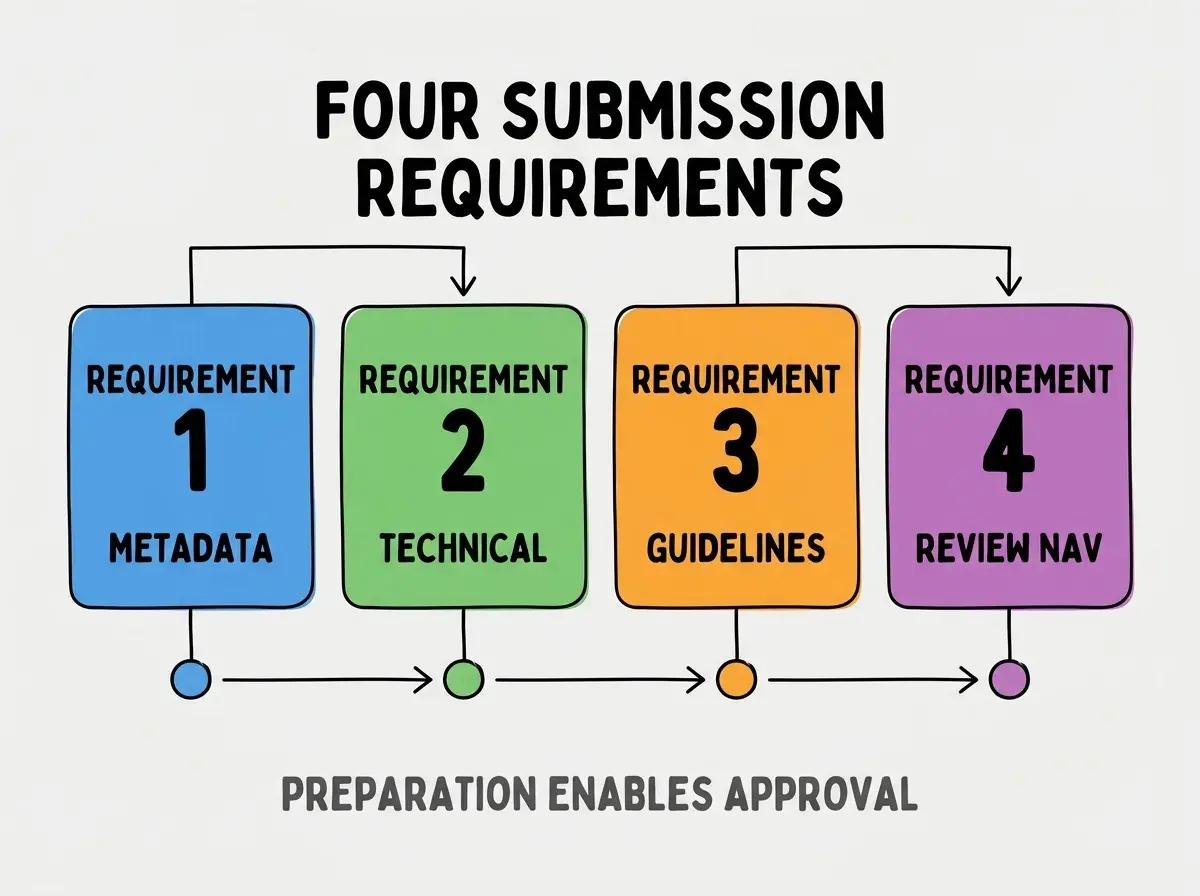
Requirement 3, platform guidelines. Apple HIG, Google Material. Design must conform.
Requirement 4, review process navigation. Rejections, appeals, communications. Process matters.
How To Prepare Each Requirement
Four implementation patterns address each requirement.
Implementation 1, metadata template. Title 30 chars, subtitle 30 chars, description 4000 chars, screenshots 5-10. Standard.
Browse more build
Read more buildImplementation 2, technical audit. Test on real devices, check crash logs, verify permissions justified.
Implementation 3, guideline compliance review. Read Apple HIG; check key compliance points (haptics, gestures, navigation).
Implementation 4, professional rejection responses. Address reviewer concerns specifically; expedited review for time critical.
What Makes Submissions Successful
Three patterns separate successful submissions from rejection cycles.
Pattern 1, complete metadata first time. Incomplete metadata triggers rejection; complete enables review.
Pattern 2, real device testing. Simulator passes; real devices reveal real issues.
Pattern 3, screenshots that sell. Screenshots drive download decisions; quality matters.
What Makes App Store Process Sustainable
Three patterns separate sustainable app store process from one off submissions.
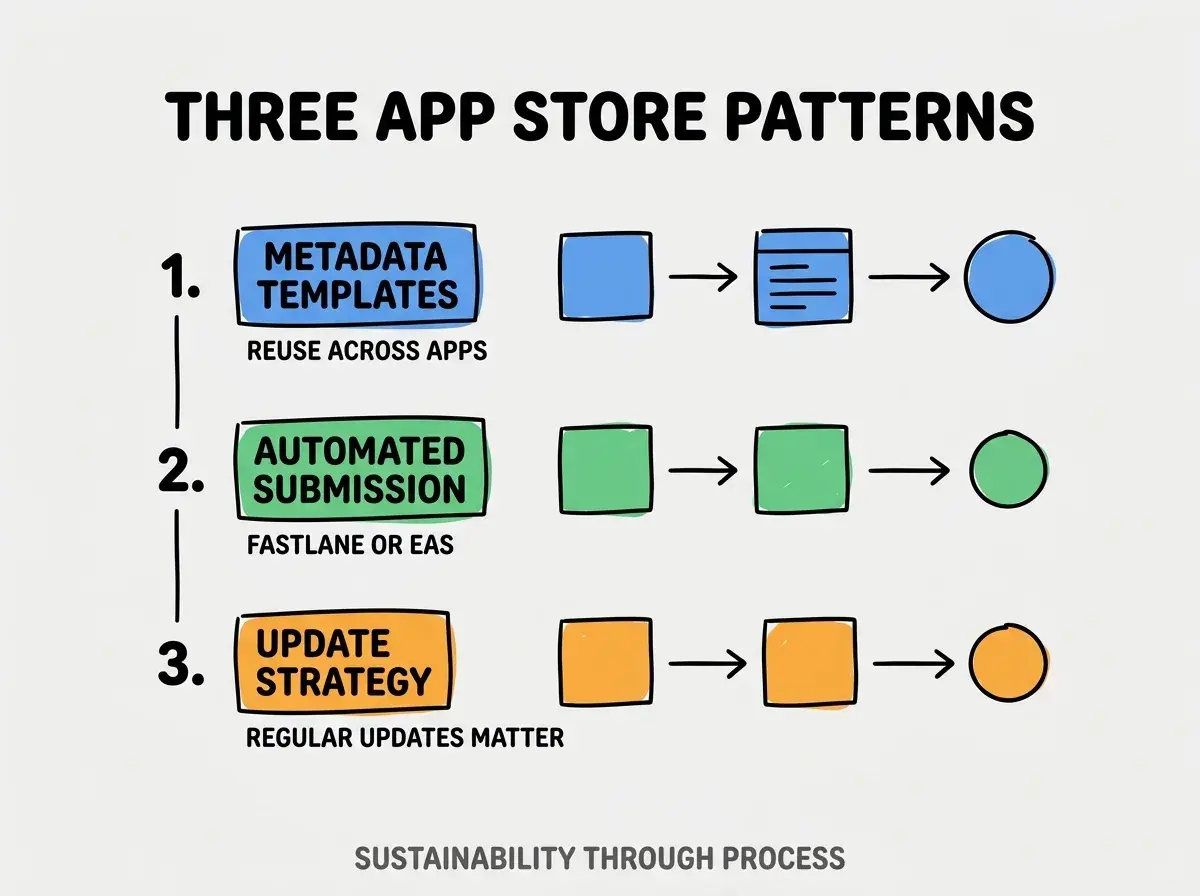
Pattern 1, metadata templates. Reuse across apps; templates compound.
Pattern 2, automated submission. fastlane or EAS Submit; automation reliable.
Pattern 3, update strategy. Regular updates matter for visibility; updates compound.
The combination produces sustainable app store process. Without these patterns, app store work consumes disproportionate time.
How To Handle Common Rejections
Three patterns help rejection handling.
Pattern A, address specific guideline cited. Apple cites guideline number; address specifically.
Pattern B, professional appeal if disagree. Appeal exists; professional appeals sometimes succeed.
Pattern C, accept feedback when valid. Some rejections valid; accept and fix.
Common Questions About App Store Submission
App Store submission raises questions worth addressing directly.
The first question is whether to launch on iOS first or Android first. iOS strict review; Android faster. Either works.
The second question is what about TestFlight before submission. Yes; TestFlight catches issues.
The third question is how long review takes. 24-72 hours typical for App Store; hours for Play Store.
The fourth question is whether to use App Store Optimization (ASO). Yes; ASO drives discovery.
How App Store Submission Affects Launch
App Store submission affects launch in compounding ways. Launch effects compound across product life.
The first compounding effect is launch timing. Approval timing affects launch; predictable timing matters.
The second compounding effect is brand perception. Quality submission signals quality app; perception compounds.
The third compounding effect is discoverability. ASO from submission affects discovery; discovery compounds.
The combination produces launch outcomes shaped by submission quality. Without preparation, launch suffers.
How To Optimize App Store Listing
Three patterns help listing optimization.
Pattern A, keyword research before metadata. Research drives keywords; keywords drive discovery.
Pattern B, A B test screenshots. Multiple screenshot sets; data informs.
Pattern C, regularly update listing. Updates signal active app; activity affects ranking.
The combination produces optimized listings. Without optimization, discovery limited.
The most damaging app store mistake is incomplete metadata. Empty fields, generic descriptions, poor screenshots all trigger rejection or poor performance. The fix is to invest serious time in metadata; metadata is most visible part of app to users and reviewers. Builders who invest in metadata succeed; builders who treat metadata as afterthought struggle.
The other mistake is missing the privacy policy requirement. Privacy policy required; without it, automatic rejection.
A third mistake is over indexing on iOS launch. Both stores worth attention; ignore one limits market.
A fourth mistake is treating submission as one off. Submissions ongoing; updates need attention.
What This Means For You
App Store submission preparing your AI built app requires meeting platform requirements through systematic preparation. The four requirements, implementation patterns, and sustainability approaches produce submissions that pass review and reach users.
- If you're a founder: App store discoverability affects market; investment in submission justified.
- If you're an indie hacker: Solo submissions possible with checklist; investment compounds across apps.
- If you're changing careers: Mobile launch fluency expected; submission patterns transferable.
Browse more build
Read more build