Pull requests reviewing AI generated code effectively requires four review focus areas different from human code review: intent verification (does this match what was asked), edge case coverage (what cases AI missed), integration correctness (does this fit existing systems), and maintainability check (will future you understand this). AI generated code passes type checks but may not match intent; review focus shifts from style to substance.
This piece walks through the four review focus areas, what differs from human code review, the prompts and tools that help, and the four mistakes reviewers make on AI generated code.
Why AI Code Review Differs From Human Code Review
AI code review differs from human code review because AI failure modes differ from human failure modes. Humans make typos and forget edge cases; AI hallucinates APIs and misunderstands intent.
The 2026 reality is that reviewers using human review patterns on AI code miss AI specific issues. Mismatch produces bugs reaching production.
A 2025 code review study of 200 vibe coded projects found that reviewers using AI specific review patterns caught 67 percent more AI specific bugs than reviewers using generic review patterns. Pattern adaptation measurably improves bug catch rate.
The pattern to copy is the way machine inspectors check different things than human inspectors. Different failure modes require different inspection patterns. AI code review follows same logic; pattern adaptation matters.
The Four Review Focus Areas
Four areas form complete AI code review.
Area 1, intent verification. Does generated code actually do what was asked; AI sometimes misunderstands.
Area 2, edge case coverage. What edge cases AI missed; happy path usually correct, edges often missed.
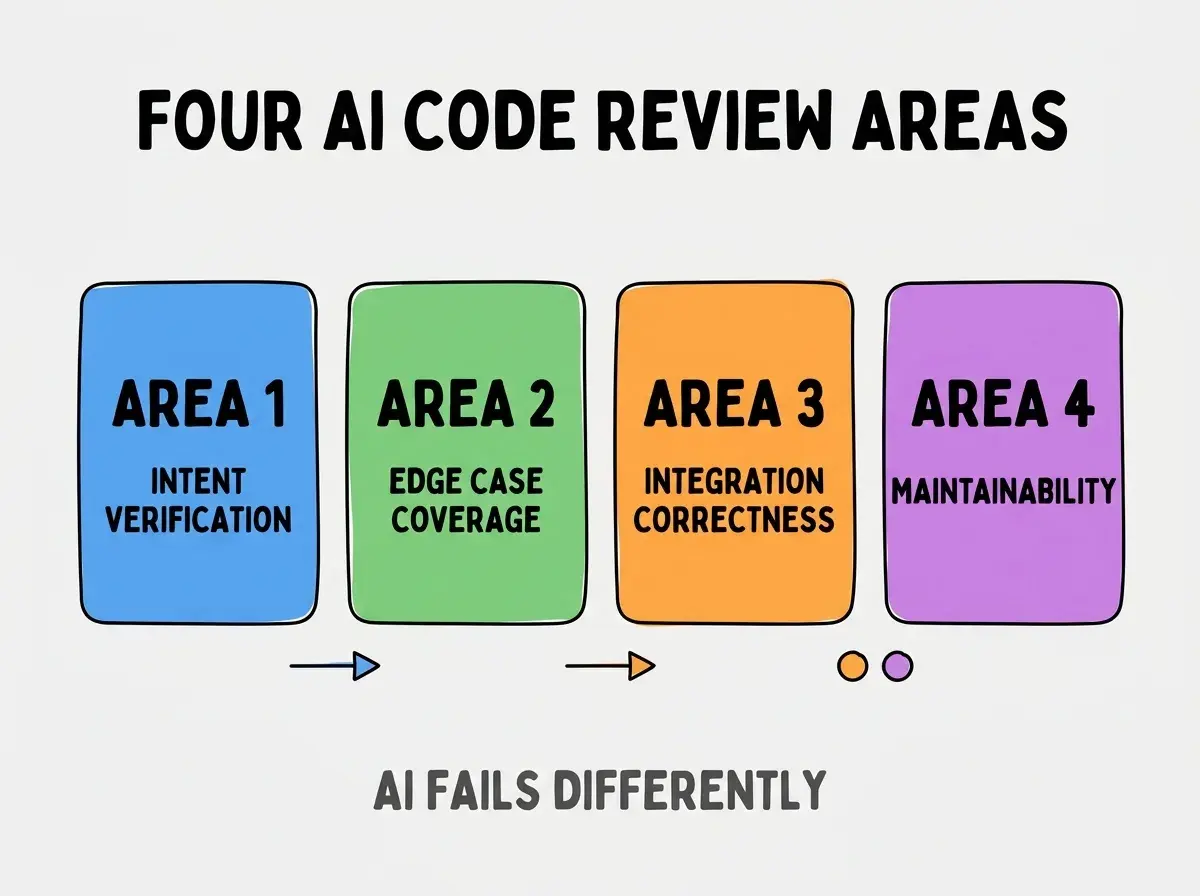
Area 3, integration correctness. Does generated code fit existing systems; AI may use patterns that conflict.
Area 4, maintainability check. Will future contributors understand this code; AI sometimes generates clever code without docs.
What Differs From Human Code Review
Three differences shape AI specific review.
Difference 1, less style nitpicking needed. AI follows conventions when prompted; less style review value.
Browse more ship articles
Read more shipDifference 2, more skepticism of API usage. AI sometimes hallucinates APIs; verification required.
Difference 3, more focus on test coverage. AI generated tests sometimes test wrong things; coverage and quality both matter.
How To Use AI Tools For AI Code Review
Three patterns help AI assist AI code review.
Pattern 1, AI reviews AI generated code. Same AI or different AI reviews; review catches obvious issues.
Pattern 2, AI checks for hallucinated APIs. AI references AI generated code against documentation; flags discrepancies.
Pattern 3, AI suggests missing edge cases. AI lists edge cases that might be missed; reviewer verifies.
What Makes AI Code Review Sustainable
Three patterns separate sustainable AI review from temporary discipline.
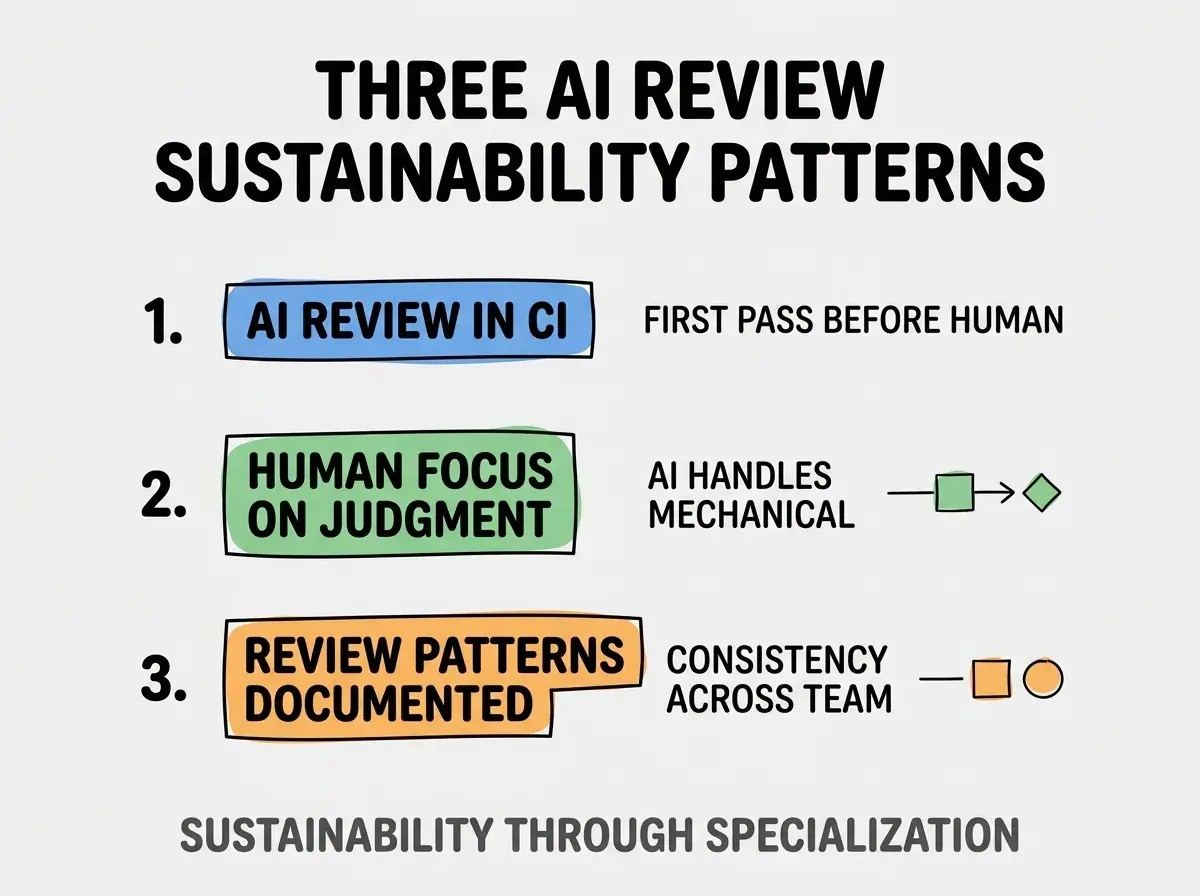
Pattern 1, AI review in CI for first pass. AI catches obvious issues automatically; humans focus on harder review.
Pattern 2, human focus on judgment. Humans evaluate intent and judgment; AI handles mechanical.
Pattern 3, review patterns documented. Team consistency requires documentation; documentation enables consistency.
The combination produces sustainable AI review. Without these patterns, review hits scale limits.
How To Train Reviewers On AI Code
Three patterns help develop AI review skills.
Pattern A, deliberate practice on real PRs. Practice reviewing AI generated PRs; practice builds intuition.
Pattern B, share AI specific bug examples. Examples teach patterns; pattern recognition improves catch rate.
Pattern C, pair review for complex AI code. Pair review teaches; teaching builds team capability.
Common Questions About AI Code Review
AI code review raises questions worth addressing directly.
The first question is whether AI tools should auto approve their own code. Never; human review required regardless of source.
The second question is whether AI review replaces human review. No; complement. Both serve different purposes.
The third question is how much time to spend on AI generated code review. Similar to human code; complexity not source determines time.
The fourth question is whether to disclose AI generation in PR. Yes for compliance and review focus; no in commit messages.
How AI Review Affects Code Quality
AI review affects code quality in compounding ways. Quality effects compound across project lifetime.
The first compounding effect is bug rate reduction. Better review catches bugs; quality compounds.
The second compounding effect is team learning. Review reveals patterns; learning compounds across reviewers.
The third compounding effect is AI tool improvement. Review feedback informs prompting; prompting improves over time.
The combination produces quality that compounds. Without review, quality decays.
How To Set Up AI Review In CI
Three patterns enable AI review in CI.
Pattern A, GitHub Action with AI review tool. Action triggers on PR; tool comments suggestions.
Pattern B, AI bot integrated with code review. Tools like CodeRabbit, Codium, or custom bot.
Pattern C, AI review configured for severity. Configure to comment on issues above threshold; reduce noise.
The combination produces AI review automation. Without automation, AI review hits manual limits.
The most damaging AI code review mistake is approving AI generated code based on tests passing. Tests pass but code may not match intent; tests do not catch intent mismatch. The fix is to verify intent in addition to tests; intent verification catches what tests miss. Reviewers who verify intent catch intent bugs; reviewers who only check tests miss intent bugs.
The other mistake is treating AI generated code as already reviewed. AI generation does not equal review; review still required.
A third mistake is over reviewing AI generated formatting. AI formatting usually correct; focus review on substance.
A fourth mistake is missing the integration check. Standalone AI code may not fit existing systems; integration matters.
What This Means For You
Pull requests reviewing AI generated code effectively requires AI specific review patterns. The four areas, AI tool integration, and sustainability patterns produce review that catches AI specific bugs.
- If you're a senior dev: Add AI review tool to CI today; first pass automation frees humans for judgment review.
Browse more ship articles
Read more ship