Prompting in Hindi, Spanish, and Mandarin for vibe coding reveals that AI tools handle non English languages with measurable but improving quality gaps. Four language patterns matter: model coverage variance (English best, others lag), code mixing strategies (English keywords with native explanations work better), cultural context preservation (idioms translate poorly), and tooling availability (most docs English only). Combined patterns describe non English vibe coding reality in 2026.
This analysis walks through the four patterns, the implementation approaches, what makes non English prompting effective, and the four mistakes builders make on multilingual vibe coding.
Why Non English Vibe Coding Matters
Non English vibe coding matters because half the world's developers speak languages other than English as primary. AI coding tool quality in their native languages affects who gets to participate in vibe coding revolution.
The 2026 reality is that Hindi, Spanish, and Mandarin combined represent over 2 billion potential developers; AI coding tool support determines how many participate fully.
A 2025 multilingual AI coding study of 1500 non English developers found that developers using English plus native code mixing produced 31 percent better AI output than developers prompting fully in native language, primarily through model bias toward English technical terms. Strategy measurably affects output quality.
The pattern to copy is the way scientific community settled on English as common technical language while researchers think and discuss in native languages. Code mixing is normal in technical work; same patterns apply to AI prompting where native explanation plus English keywords produces best results.
The Four Language Patterns
Four patterns describe non English vibe coding landscape.
Pattern 1, model coverage variance. English best. Foundation reality.
Pattern 2, code mixing strategies. English keywords with native explanation. Effective.
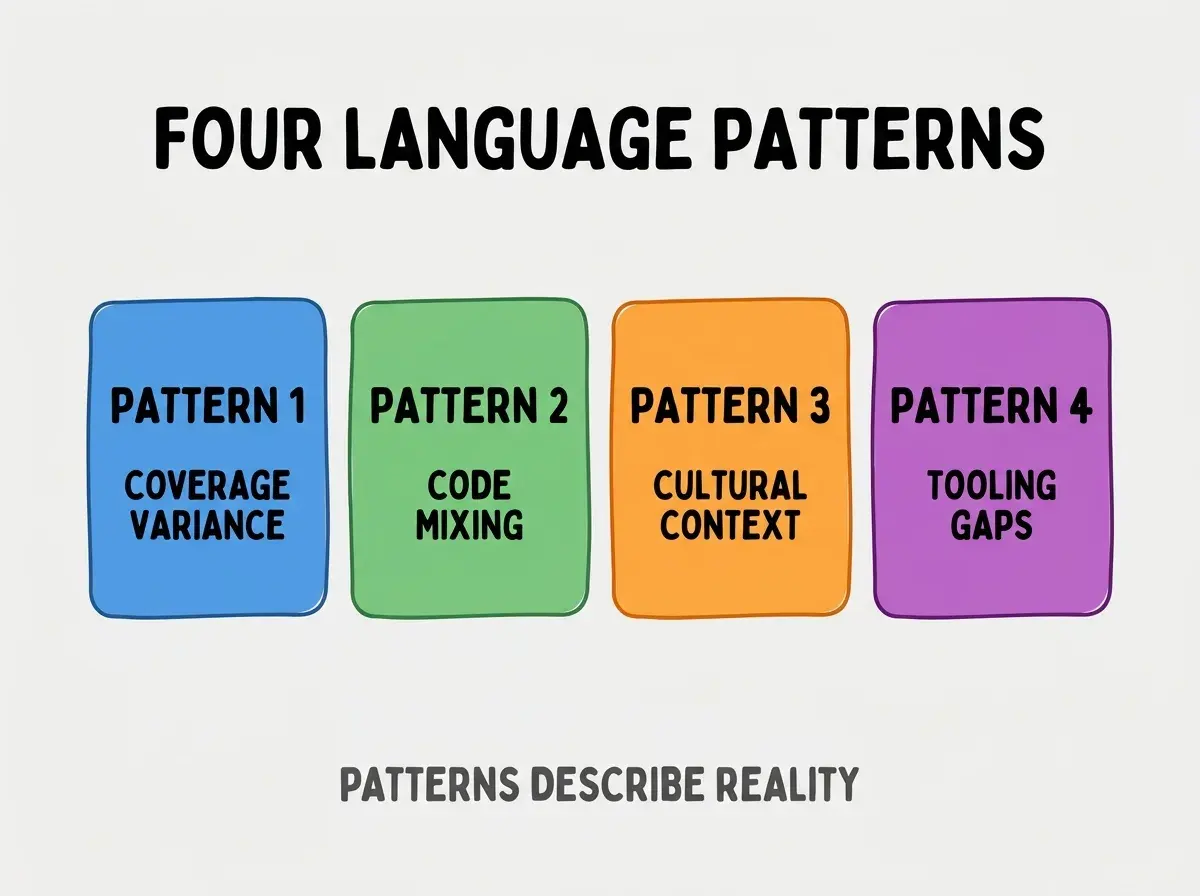
Pattern 3, cultural context preservation. Idioms translate poorly. Friction.
Pattern 4, tooling availability gaps. Docs English only. Barriers.
How To Implement Each Pattern
Four implementation patterns address each pattern.
Implementation 1, choose models with strong multilingual. Claude, GPT show better non English than smaller models.
Browse more pulse
Read more pulseImplementation 2, code mixing in prompts. Native language for context, English for technical terms; combination outperforms.
Implementation 3, explicit cultural context. When idioms matter, explain rather than translate; AI handles explained context better.
Implementation 4, contribute to multilingual docs. Open source docs translation accelerates ecosystem.
What Makes Non English Prompting Effective
Three patterns separate effective from frustrating.
Pattern 1, English keywords retained. Variable names, function names, frameworks in English; explanations in native.
Pattern 2, examples bilingual. Show input/output examples; reduces ambiguity from translation.
Pattern 3, tooling chosen for multilingual. Some tools handle multilingual better than others.
What Makes Multilingual Strategy Effective
Three patterns separate effective from theatrical.
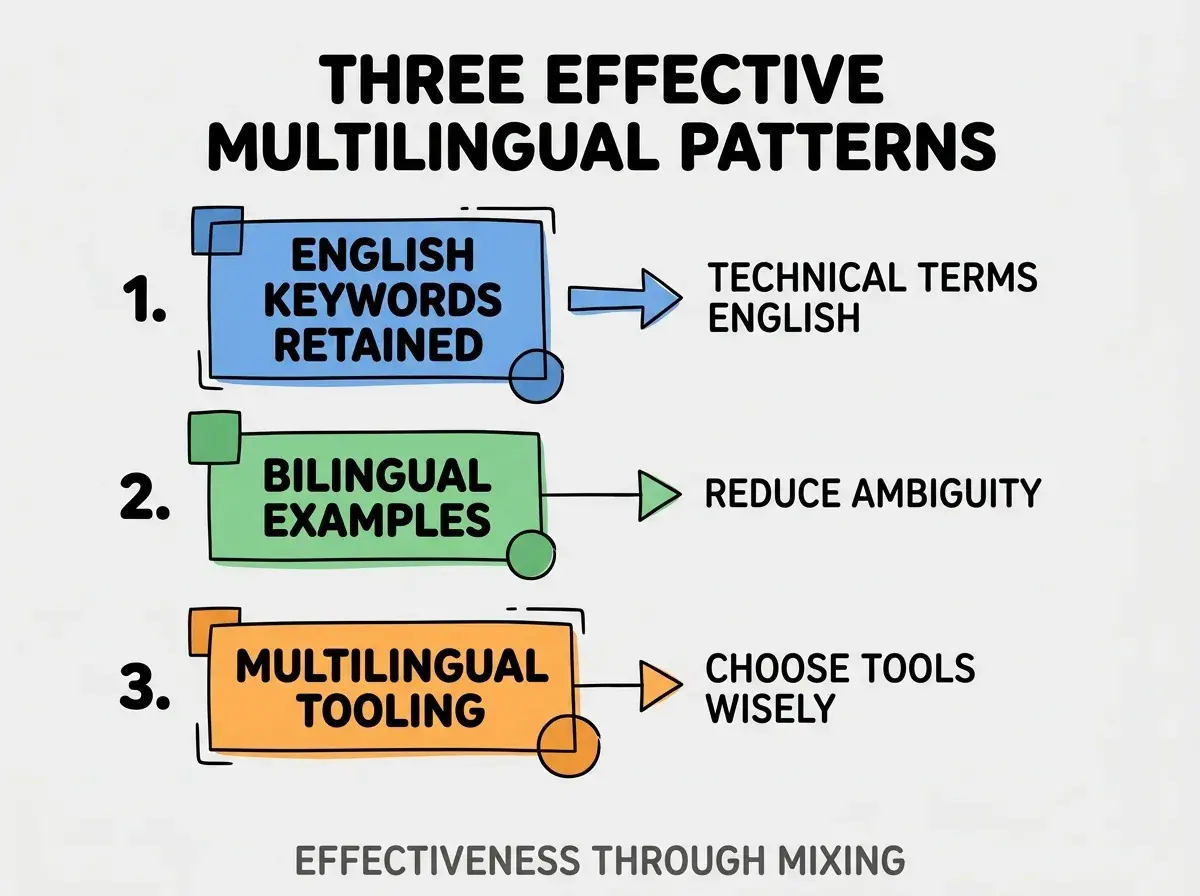
Pattern 1, English keywords retained. Technical terms English.
Pattern 2, bilingual examples. Reduce ambiguity.
Pattern 3, multilingual tooling. Choose tools wisely.
The combination produces effective multilingual vibe coding. Without these patterns, friction multiplies.
How To Choose Models For Non English
Three patterns help model choice.
Pattern A, frontier models for general. Claude, GPT handle most languages well.
Pattern B, region specific models for niche. Some regional models excel at specific languages.
Pattern C, evaluate per language. Test with your typical prompts; pick best.
Common Questions About Non English Vibe Coding
Non English vibe coding raises questions worth addressing directly.
The first question is whether to learn English instead. English helps; not required for most modern AI coding.
The second question is what about voice mode in non English. Voice mode coverage varies; check per language and tool.
The third question is how to handle right to left languages. Some tools UI not ready; affects workflow.
The fourth question is whether documentation translates well. Machine translation good for getting started; native review for production.
How Multilingual Coding Affects Developer Demographics
Multilingual coding affects demographics in compounding ways. Demographic effects compound across years.
The first compounding effect is global participation. Non English tools enable global builders.
The second compounding effect is local solutions. Native language tools enable local problem solving.
The third compounding effect is talent pool diversity. Diverse builders build diverse products.
The combination produces demographics shaped by multilingual support. Without support, vibe coding stays English centric.
How To Improve Non English AI Output
Three patterns help improvement.
Pattern A, prompt iteration in native. Refine prompts; AI learns from corrections in same conversation.
Pattern B, explicit format requests. Request output in specific format; reduces translation ambiguity.
Pattern C, native language code comments. Code in English, comments in native; pragmatic balance.
The combination produces improved output. Without iteration, output stays generic.
The most damaging non English vibe coding mistake is fully translating technical terms. Translating 'function', 'variable', 'array' to native confuses AI; standard English terms work better. The fix is to keep technical terms English, explain context in native language. Builders who code mix produce better output; builders who fully translate fight model bias toward English standards.
The other mistake is missing the model evaluation step. Different models very different for non English.
A third mistake is using generic translations. Native nuance matters; literal translation loses precision.
A fourth mistake is treating English limitation as personal failing. Model bias is real; not user inadequacy.
What This Means For You
Prompting in Hindi, Spanish, and Mandarin reveals real but addressable gaps in AI coding tools. The four patterns, implementation approaches, and effectiveness factors enable non English builders to participate fully in vibe coding while contributing to ecosystem improvement.
- If you're a founder: Multilingual product opportunity; AI tool gaps in major languages create market openings.
- If you're a senior dev: Multilingual tool fluency increasingly valuable; global team coordination depends on tool quality.
- If you're a student: Native language vibe coding viable starting point; English helpful but not required.
Browse more pulse
Read more pulse