Data residency requirements for AI built apps determine which countries can access user data and which cannot. Four jurisdiction patterns dominate: EU GDPR data residency, US state level requirements, China data sovereignty, and emerging markets adopting EU style requirements. Each pattern affects which deployment platforms work, which AI APIs can process data, and which storage providers serve which users. Understanding residency early prevents architecture rebuilds when targeting global markets.
This piece walks through the four jurisdiction patterns, what each requires, how to architect for multi residency, and the four mistakes builders make ignoring residency.
Why Data Residency Matters For AI Built Apps
Data residency matters for AI built apps because AI processing often crosses borders. AI APIs typically run in specific regions; data sent to AI may leave residency required jurisdiction; legal exposure follows.
The 2026 reality is that data residency requirements have tightened globally. EU GDPR enforcement, US state privacy laws, and China data sovereignty all increased through 2025.
A 2025 enterprise compliance survey of 400 organizations operating internationally found that 67 percent had encountered data residency issues with AI tools, requiring architecture changes that averaged 3-6 months of additional work. Residency awareness early prevents costly rebuilds.
The pattern to copy is the way international shipping companies handle customs. Each border has rules; rules affect what can move where. Data residency for AI apps follows same logic; jurisdiction rules affect where data can flow.
The Four Jurisdiction Patterns
Four patterns characterize data residency requirements globally.
Pattern 1, EU GDPR data residency. EU user data must stay in EU or adequacy approved countries. Affects most major non EU AI providers.
Pattern 2, US state level requirements. California, Virginia, others adopting EU style. Patchwork of state requirements complex to navigate.
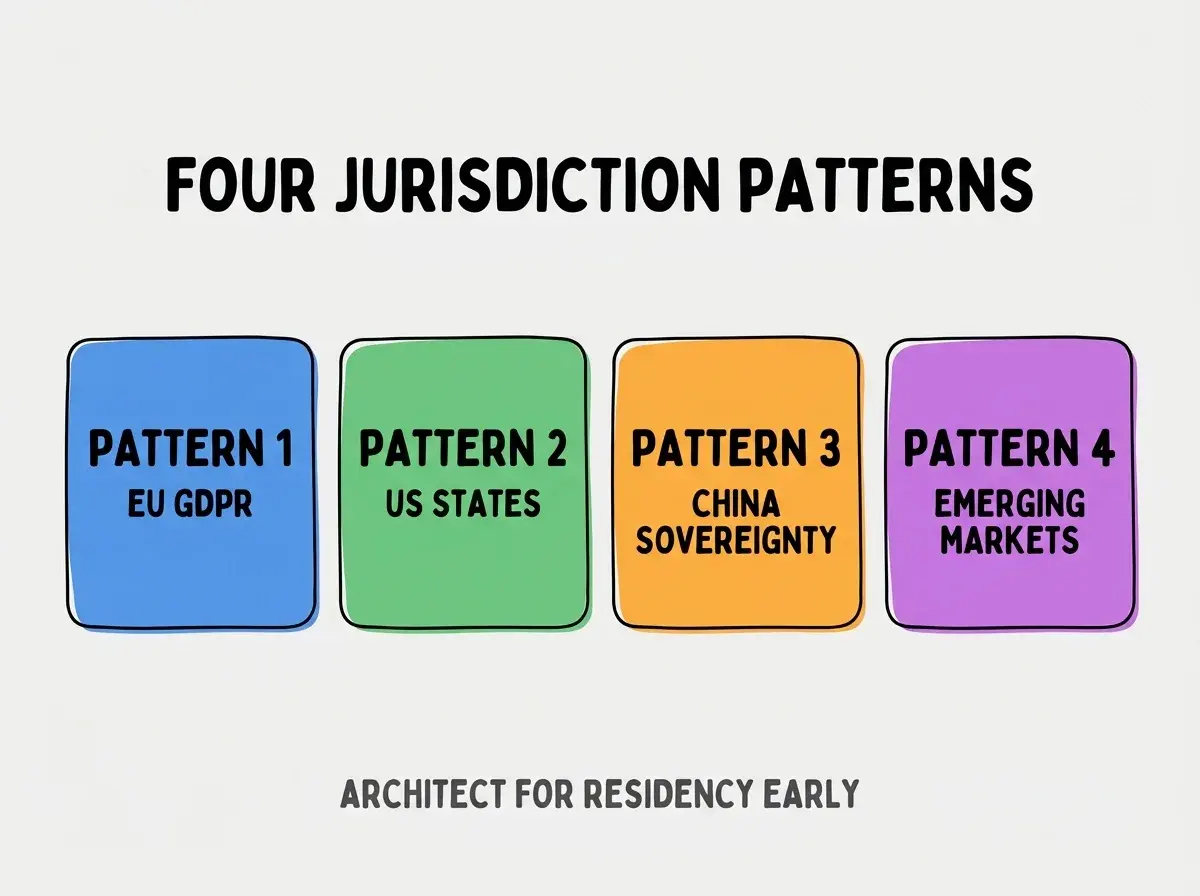
Pattern 3, China data sovereignty. Chinese user data must stay in China; foreign tech often blocked. Significant architecture implications.
Pattern 4, emerging markets adopting EU style. Brazil LGPD, India DPDP, others. EU pattern spreading globally.
What Each Pattern Requires
Four requirement summaries describe pattern impact.
Requirement 1, EU GDPR. Data processing in EU or adequate jurisdiction; standard contractual clauses for transfers; user rights enforcement.
Browse more pulse
Read more pulseRequirement 2, US state laws. California CCPA, Virginia VCDPA. Common requirements include user opt out, deletion rights, disclosure.
Requirement 3, China. Data localization in China; security review for transfers; specific AI tool requirements.
Requirement 4, emerging markets. Pattern matches EU GDPR with local variations; awareness per market matters.
How To Architect For Multi Residency
Three architecture patterns enable multi jurisdiction operation.
Pattern 1, regional deployment per jurisdiction. EU users hit EU servers; US users hit US servers. Routing by user location.
Pattern 2, regional AI API selection. EU users get EU based AI APIs (or appropriate); residency requirements maintained.
Pattern 3, regional database per jurisdiction. User data stored in user's jurisdiction; cross border transfers minimized.
What Makes Residency Architecture Sustainable
Three patterns separate sustainable residency architecture from one off compliance.
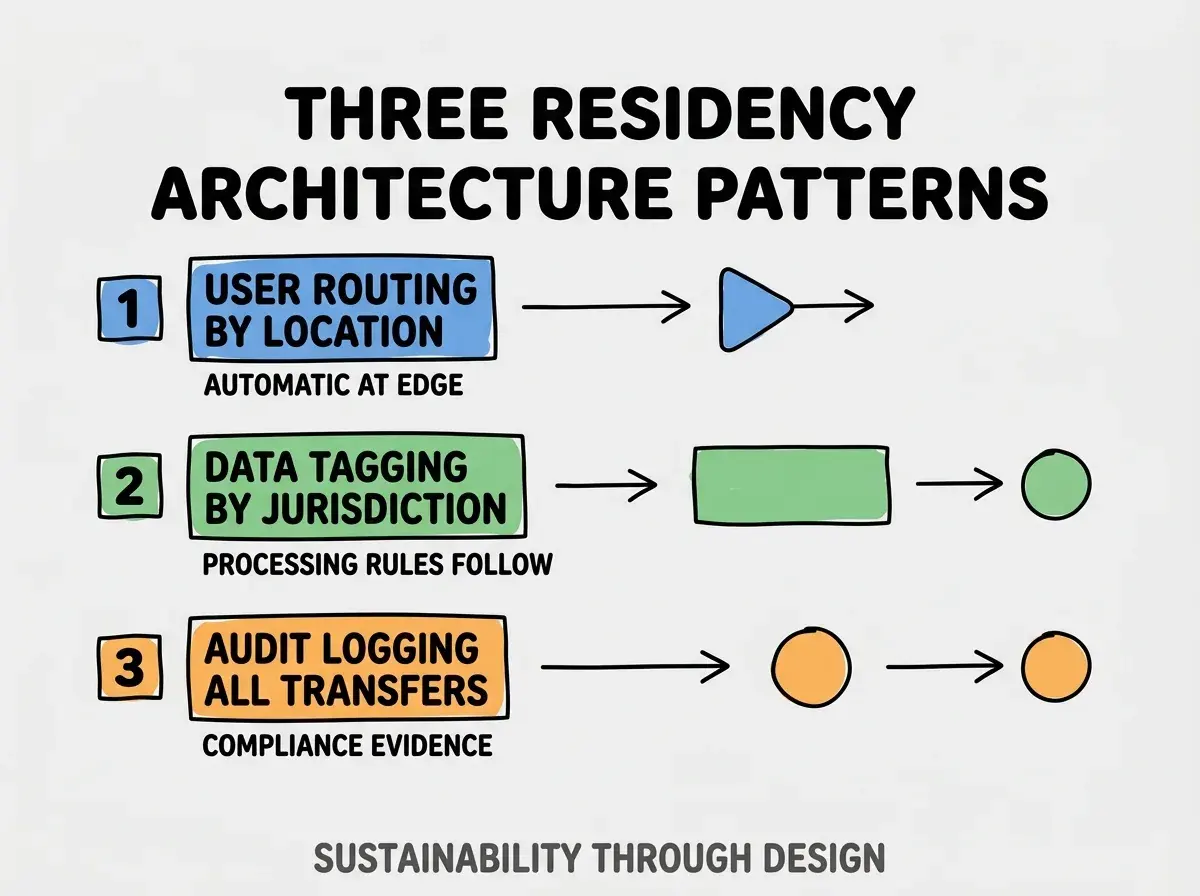
Pattern 1, user routing by location automatically. Edge networks route users to appropriate regional servers; automation prevents human error.
Pattern 2, data tagging by jurisdiction. Data tagged with originating jurisdiction; processing rules follow tags.
Pattern 3, audit logging all cross border transfers. Logs prove compliance; logs enable response to inquiries.
The combination produces sustainable residency architecture. Without these patterns, residency compliance fails at scale.
How To Add Residency To Existing Apps
Three patterns help add residency to apps not designed for it.
Pattern A, add geographic user identification. First step is knowing where users are; geographic data enables routing.
Pattern B, identify cross border data flows. Audit current flows; identify which need residency compliance.
Pattern C, prioritize highest risk jurisdictions. EU usually highest risk; address EU first; expand to others.
Common Questions About Data Residency
Data residency raises questions worth addressing directly.
The first question is whether small apps need residency compliance. Yes if processing EU user data; size does not exempt. Even solo builders face EU GDPR.
The second question is whether AI APIs are GDPR compliant. Some yes; verify per provider. Anthropic, OpenAI, and others offer EU regions.
The third question is whether to refuse users from problematic jurisdictions. Sometimes; depends on revenue vs compliance cost. Honest assessment required.
The fourth question is how residency interacts with global AI training. AI training using residency restricted data raises questions; answer evolving rapidly.
How Residency Affects Architecture Decisions
Data residency affects architecture decisions in compounding ways. Architecture effects compound across project lifetime.
The first compounding effect is platform selection. Residency narrows platform choice; some platforms work everywhere, some narrow to specific jurisdictions.
The second compounding effect is AI tool selection. AI tools with regional deployment options serve global markets better.
The third compounding effect is hosting cost structure. Multi region deployment costs more than single region; cost compounds with growth.
The combination produces architecture decisions shaped by residency. Without residency awareness, architecture limits global expansion.
How To Stay Current On Residency Requirements
Three patterns help maintain residency awareness.
Pattern A, follow privacy law tracker services. IAPP and similar organizations track changes; subscription enables awareness.
Pattern B, work with privacy lawyer for major launches. Lawyers catch issues developers miss; engagement justified for major scale.
Pattern C, monitor regulator enforcement actions. Enforcement reveals priorities; priorities inform compliance investment.
The combination produces residency awareness that compounds. Without awareness, requirements catch organizations off guard.
The most damaging data residency mistake is treating residency as final launch concern rather than architectural concern. Residency requirements affect every architecture decision; treating as launch concern produces architecture rebuilds. The fix is to incorporate residency from architecture start; architecture supports residency naturally when designed for it. Organizations designing for residency scale globally; organizations adding residency late face expensive rebuilds.
The other mistake is assuming AI providers handle residency. AI providers offer options; you must choose appropriately. Defaults often fail residency.
A third mistake is missing the documentation requirement. Documentation often required for compliance audits; documentation produces evidence.
A fourth mistake is treating residency as static. Requirements evolve; static approach falls behind regulations.
What This Means For You
Data residency requirements for AI built apps shape architecture decisions for global scale. The four jurisdiction patterns, requirements, and architecture approaches produce framework for residency aware development.
- If you're a senior dev: Add residency to architecture decisions; retroactive residency costs more than initial design.
- If you're a founder: Residency limits market expansion; awareness shapes go to market strategy.
Browse more pulse
Read more pulse