To understand whether prompt engineering is temporary or permanent career, recognize the four perspective patterns the debate produces (skill embedded into all roles making dedicated role unnecessary, dedicated specialty role for complex AI integration work, hybrid role combining prompt skills with domain expertise, and skill differentiator within other roles rather than standalone role), see what the data reveals about each perspective, and consider what the perspectives mean for career planning. The career question matters because it affects skill investment decisions for current and aspiring developers.
This piece walks through the four perspective patterns, what the data reveals, the implications for career planning, and the four mistakes when interpreting prompt engineering career trends.
Why The Prompt Engineering Career Question Matters
The prompt engineering career question matters for skill investment decisions. The matter; significant skill investment justifies if career emerges; investment wastes if career does not.
The 2026 reality is that prompt engineering as career remains contested. Some companies hire prompt engineers; others embed skill into existing roles. Trajectory unclear.
A 2025 job market analysis of 50,000 AI related job postings found that explicit prompt engineer titles peaked in 2024 then declined 27 percent in 2025, while AI engineer titles requiring prompt skills grew 87 percent same period. Title trends suggest skill embedding rather than standalone role emergence.
The pattern to copy is the way other technology skills evolved. Some skills became standalone roles (data scientists); some became embedded skills (basic SQL). Prompt engineering trajectory unclear which pattern dominates.
The Four Perspective Patterns
Four patterns characterize the prompt engineering career debate.
Pattern 1, skill embedded into all roles. Everyone learns prompt engineering as base skill. Embedded skills do not produce dedicated roles.
Pattern 2, dedicated specialty role. Complex AI integration justifies specialist. Specialty role pattern resembles data scientist emergence.
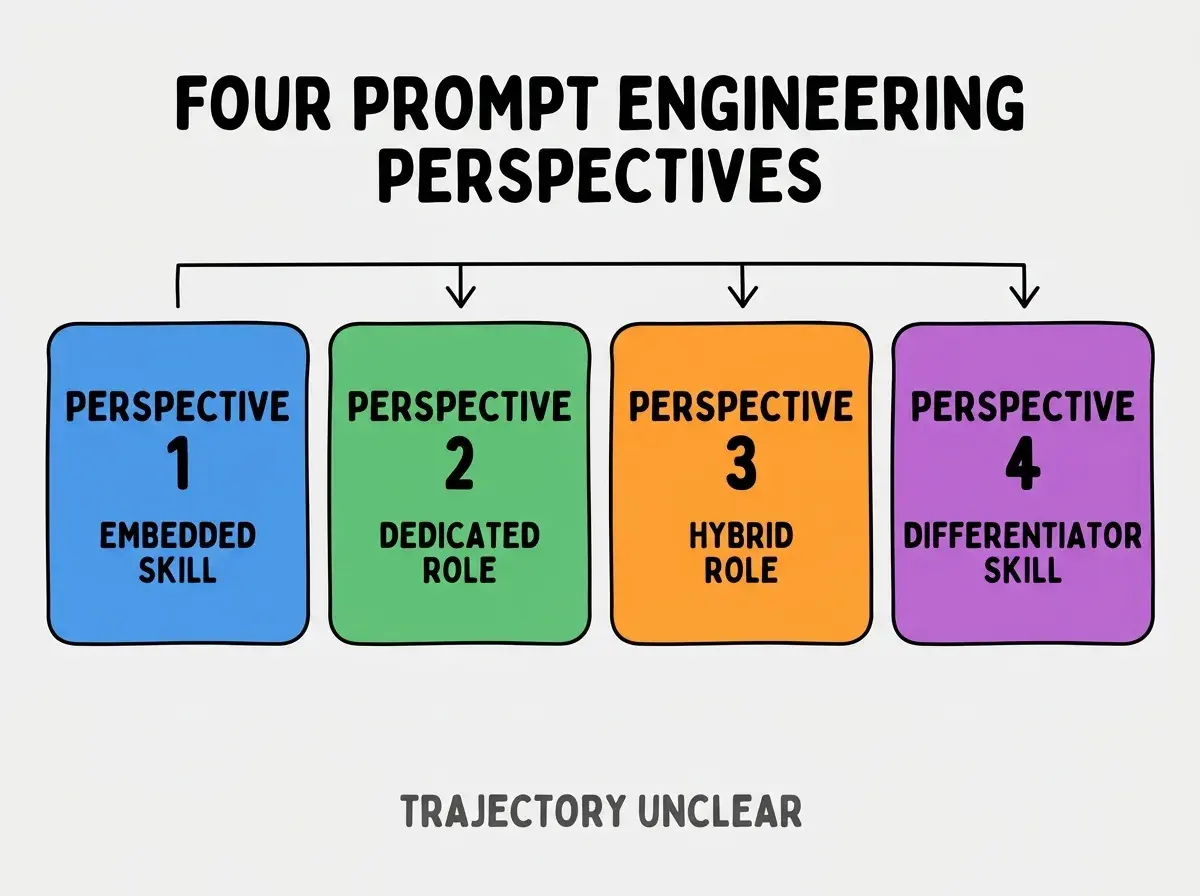
Pattern 3, hybrid role combining prompt with domain. Prompt skills plus domain expertise. Hybrid pattern resembles full stack developer emergence.
Pattern 4, differentiator skill within other roles. Skill differentiates engineers but does not produce role. Differentiator pattern resembles testing skill emergence.
What The Data Reveals
Three patterns reveal underlying career dynamics.
Pattern 1, dedicated prompt engineer titles declining. Standalone titles peaked then declined. Decline suggests embedding rather than role emergence.
Browse more pulse
Read more pulsePattern 2, AI engineer titles rising rapidly. Roles combining AI with engineering growing. Combination suggests hybrid pattern winning.
Pattern 3, prompt skills appearing in many job descriptions. Skill mentioned across roles not concentrated in one. Distribution suggests embedding.
What The Patterns Mean For Career Planning
Three implications matter for career planning.
Implication 1, prompt skills worth investing in but not as standalone career. Skills produce value within other roles; standalone career path uncertain.
Implication 2, hybrid roles offer better career paths than pure prompt roles. AI engineer, AI product manager, AI designer all produce value. Hybrids offer trajectory.
Implication 3, domain expertise plus prompt skills outperforms either alone. Combination produces value that pure technical or pure domain cannot match.
How To Apply Career Insights
Three application patterns help individuals apply insights.
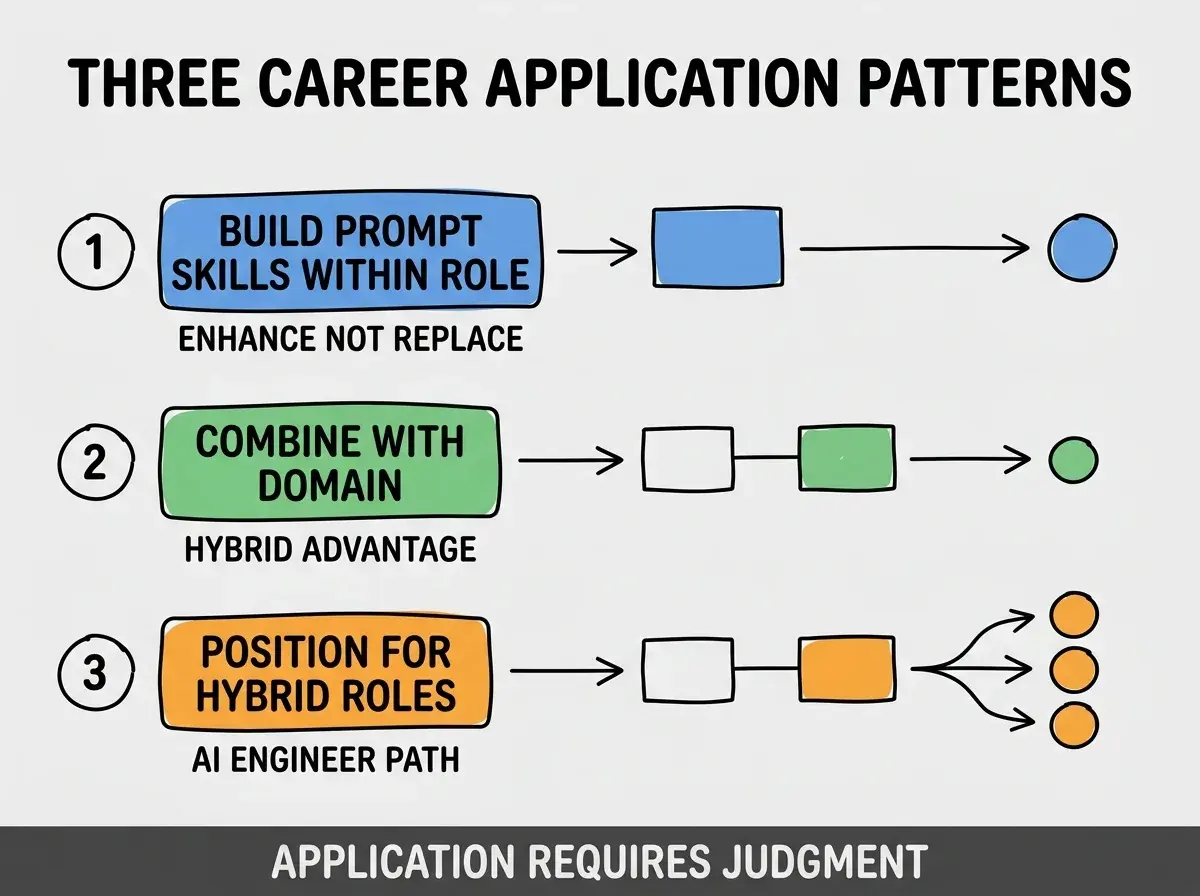
Pattern 1, build prompt skills within current role. Enhance existing role; do not pivot to standalone prompt role. Skill enhancement reduces career risk.
Pattern 2, combine prompt skills with domain expertise. Domain plus prompt produces hybrid value. Combination outperforms either alone.
Pattern 3, position for hybrid roles like AI engineer. Hybrid roles emerging clearly; positioning matters. Direction matters more than specifics.
What Makes Prompt Skill Investment Sustainable
Three patterns separate sustainable skill investment from problematic patterns.
Pattern 1, skill investment proportional to role relevance. High AI exposure roles deserve more investment; low AI exposure roles less. Proportionality matters.
Pattern 2, skill maintenance as AI capabilities evolve. Prompt patterns change as AI changes; maintenance matters. Without maintenance, skill becomes stale.
Pattern 3, skill demonstration through portfolio. Showing skill matters more than claiming skill. Portfolio enables demonstration.
The combination produces sustainable skill investment that pays back. Without these patterns, investment may not produce expected value.
The most damaging prompt engineering career mistake is positioning entire career around standalone prompt engineer role. Standalone role trajectory uncertain; betting entire career on uncertain trajectory creates risk. The fix is to build prompt skills within other career paths; embedded skills produce value regardless of standalone role trajectory. Career builders who hedge produce better outcomes than career builders who specialize on uncertain trajectory.
The other mistake is dismissing prompt skills entirely. Skills produce real value even if standalone career uncertain. The fix is to invest proportionally rather than dismissing.
A third mistake is treating prompt engineering as purely technical. Prompt engineering combines technical and communication skills; treating as pure technical misses important dimension.
A fourth mistake is over indexing on current trends. Career planning should consider 5+ year horizon; current trends may not represent long term direction.
How To Build Prompt Skills That Transfer
Three skill building patterns produce transferable prompt skills.
Pattern A, deliberate practice with diverse AI tools. Different tools have different patterns; diversity produces transferable skills. Tool specific skills less transferable.
Pattern B, document patterns that work for personal reference. Documentation builds personal knowledge base. Without documentation, learning stays implicit.
Pattern C, share patterns with team or community. Sharing accelerates collective learning and tests pattern quality. Sharing produces feedback.
The combination produces skill development that transfers across roles and tools. Without skill building patterns, skills stay context specific.
How Prompt Engineering As Career Will Likely Evolve
Prompt engineering career patterns will likely continue evolving as AI matures.
The first likely evolution is hybrid role specialization. AI engineer, AI product manager, AI designer all maturing into distinct hybrid roles. Specialization within hybrids matters.
The second likely evolution is prompt skills becoming baseline expectation. Like Excel skills today; expected rather than differentiating. Baseline shifts skill investment dynamics.
The third likely evolution is advanced prompt patterns producing specialty value. Complex prompt engineering for high stakes contexts may produce specialist value. Specialty within specific contexts.
The combination suggests prompt skills matter but as embedded or hybrid rather than standalone. Career builders learning patterns now build foundations that remain valuable.
Common Questions About Prompt Engineering Careers
Prompt engineering careers raise questions worth addressing directly.
The first question is whether to take prompt engineering courses. Yes for foundation; no for guaranteed career. Skills produce value within other roles.
The second question is whether prompt engineering certificates matter. Marginally; demonstration through portfolio matters more. Certificates supplement portfolio not replace it.
The third question is whether prompt engineering jobs pay well. Hybrid roles pay well; pure prompt roles less consistently. Hybrid path better for compensation.
The fourth question is whether to study academic AI to support prompt engineering career. Helpful but not required; practical skills often matter more than academic depth for prompt engineering work.
The fifth question is how to demonstrate prompt skills in interviews. Live prompt engineering exercises beat resume claims; demonstration matters dramatically.
What This Means For You
Prompt engineering as career remains uncertain but skills produce value within hybrid roles. The four perspectives, application patterns, and skill building approaches produce framework for navigating career uncertainty.
- If you're a career changer: Build prompt skills within target career not as standalone career. Embedded skills produce value regardless of standalone role trajectory.
- If you're a student: Combine prompt skills with domain study. Domain plus prompt produces career advantage.
- If you're a senior dev: Add prompt skills to existing engineering capability. Combination produces value pure engineering or pure prompt cannot match.
Browse more pulse
Read more pulse