A personal writing tool with AI assistance lets writers build custom workflows that fit their voice rather than forcing fit into generic apps. Four writing assistant features matter: voice preservation (AI matches your style), distraction free editor (focus mode), revision history (track changes over time), and contextual suggestions (rewrite, expand, summarize on demand). Combined features produce writing tools that augment without replacing writer judgment.
This tutorial walks through the four features, the implementation patterns, what makes writing tools sustainable, and the four mistakes creatives make on AI writing tools.
Why Personal Writing Tools Matter For Creatives
Personal writing tools matter because writers have specific needs that generic tools poorly serve. Voice preservation, custom workflows, niche features all combine to make off the shelf tools frustrating compromises.
The 2026 reality is that AI tools (Claude, GPT) make personal writing tools buildable in days; writers no longer dependent on Notion, Google Docs, or specialized software with rigid workflows.
A 2025 creative writing study of 600 writers found that writers using personal AI assisted tools produced 2.3x more publishable content than writers using generic editors, primarily through voice preservation and reduced friction in their specific workflow. Custom tools measurably affect output volume.
The pattern to copy is the way painters historically built custom brushes for specific techniques rather than buying generic brushes. Custom tools enable craft that mass tools cannot. Same patterns apply to writing; custom AI writing tools enable techniques generic tools constrain.
The Four Writing Assistant Features
Four features form complete personal writing tool.
Feature 1, voice preservation. AI matches your style. Foundation.
Feature 2, distraction free editor. Focus mode. Craft enabling.
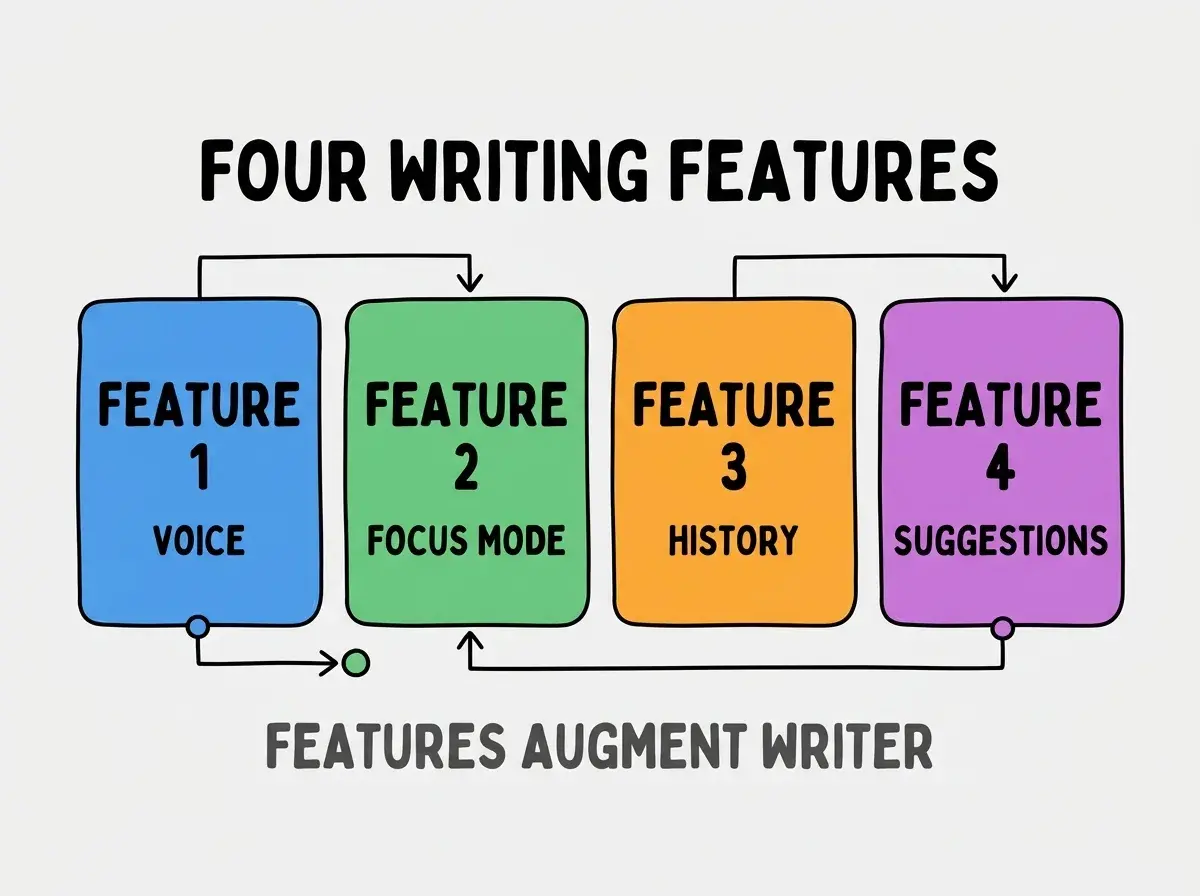
Feature 3, revision history. Track changes over time. Reflection.
Feature 4, contextual suggestions. Rewrite, expand on demand. Augmentation.
How To Implement Each Feature
Four implementation patterns address each feature.
Implementation 1, voice via system prompt with samples. AI prompt includes 3-5 paragraphs of your writing; AI matches tone.
Browse more build
Read more buildImplementation 2, full screen editor with hideable UI. Toggle distractions; focus mode standard.
Implementation 3, version history per save. Auto save snapshots; diff visible.
Implementation 4, command palette for AI actions. Cmd K opens AI suggestions; not auto intrusive.
What Makes Writing Tools Sustainable
Three patterns separate sustainable from abandoned.
Pattern 1, AI augments not replaces. AI suggests; writer decides.
Pattern 2, fast and reliable. Lag breaks flow; reliability essential.
Pattern 3, owns own data. Local first or self hosted preserves writer ownership.
What Makes Writing Tool Strategy Effective
Three patterns separate effective from theatrical.
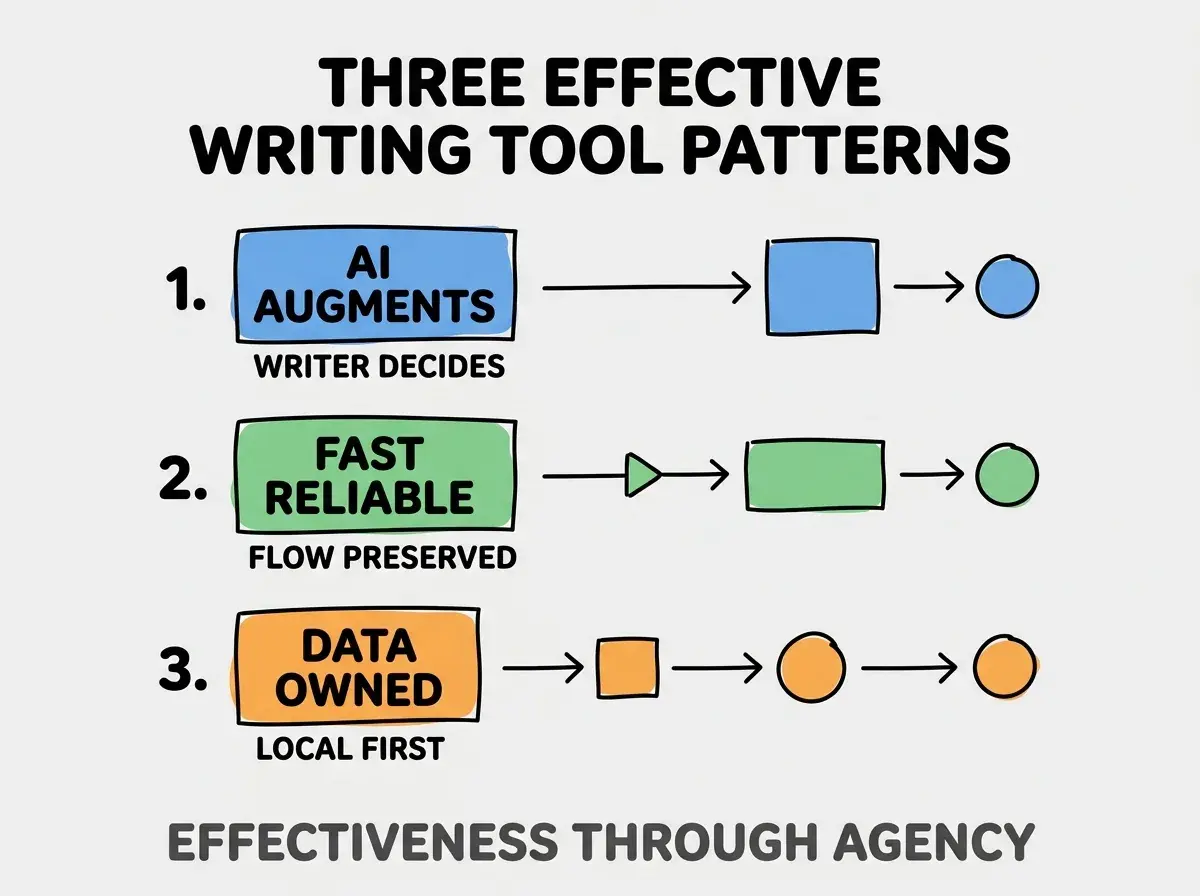
Pattern 1, AI augments. Writer decides.
Pattern 2, fast reliable. Flow preserved.
Pattern 3, data owned. Local first.
The combination produces effective writing tool. Without these patterns, tool becomes obstacle.
How To Choose Tech Stack
Three patterns help stack choice.
Pattern A, web for cross device. Browser based works everywhere.
Pattern B, Electron for desktop polish. Native feel desktop only.
Pattern C, mobile app for on the go. Mobile writing increasingly common.
Common Questions About AI Writing Tools
AI writing tools raise questions worth addressing directly.
The first question is whether AI will homogenize voice. Risk exists; mitigation via voice preservation patterns.
The second question is how to handle long form writing. Chunked AI assistance; not whole document at once.
The third question is whether to use AI for ideation. Yes; brainstorming valuable use case.
The fourth question is what about plagiarism risk. AI generated content authorship complex; disclosure norms evolving.
How AI Writing Tools Affect Creative Output
AI writing tools affect output in compounding ways. Output effects compound across years.
The first compounding effect is volume. Reduced friction enables more writing.
The second compounding effect is iteration speed. Quick rewrite enables refinement.
The third compounding effect is voice consistency. Voice preservation maintains across pieces.
The combination produces output shaped by tool quality. Without tool fit, output bounded.
How To Train AI On Your Voice
Three patterns help voice training.
Pattern A, paragraph samples in system prompt. 3-5 paragraphs of your best writing.
Pattern B, style guide explicit. Document your style rules explicitly.
Pattern C, regular calibration. As style evolves, update samples.
The combination produces voice trained AI. Without training, AI defaults to generic.
The most damaging AI writing tool mistake is letting AI generate without writer review. Generated content without review homogenizes voice and introduces errors. The fix is to use AI for suggestions writer accepts or rejects; human in loop preserves voice. Writers who maintain editorial control produce distinctive work; writers who accept AI output without review produce content indistinguishable from any AI output.
The other mistake is missing the focus mode. Distractions kill writing flow.
A third mistake is over reliance on AI. AI augments craft; not replaces.
A fourth mistake is treating writing tool as one off. Tool evolves with writing practice.
What This Means For You
A personal writing tool with AI assistance enables writers to build custom workflows that augment voice rather than constrain it. The four features, implementation patterns, and sustainability approaches produce tools that compound writing practice.
- If you're a creative: Personal writing tools enable craft beyond generic apps; build for your specific needs.
- If you're a founder: Writing tool building demonstrates AI integration patterns; transferable to other creative tools.
- If you're changing careers: Building tools for writers shows AI augmentation pattern; valuable career signal.
Browse more build
Read more build