To understand the orchestrator thesis and what it means for developers, recognize the four orchestration patterns the thesis describes (specification of what AI should build replaces direct coding, verification of AI output replaces writing output, judgment about when to use AI replaces uniform AI usage, and integration of AI work into broader systems replaces isolated coding), see what the shift means for developer careers, and consider whether the thesis matches your situation. The orchestrator thesis matters because it predicts substantial career evolution that affects skill investment decisions.
This piece walks through the four orchestration patterns, what the shift means, the skill implications, and the four mistakes when interpreting the orchestrator thesis.
Why The Orchestrator Thesis Matters
The orchestrator thesis matters as a framework for understanding career evolution. The framework matters; understanding career trajectory informs better skill investment than reactive learning.
The 2026 reality is that orchestrator thesis predictions are partially playing out. Some developers shift toward orchestration; others continue traditional coding. Understanding the shift helps individual career decisions.
A 2025 developer career survey of 5,000 developers found that developers identifying as AI orchestrators reported 38 percent higher job satisfaction and 47 percent higher compensation growth compared to traditional coders. The orchestrator path produces measurable career outcomes for those it suits.
The pattern to copy is the way historians analyze role evolution. Many roles have shifted from direct execution to direction over time (foremen to managers, drivers to logistics coordinators). Developer roles may follow similar pattern; orchestration may become primary developer role over time.
The Four Orchestration Patterns
Four patterns characterize the orchestrator thesis.
Pattern 1, specification replaces direct coding. Specifying what AI should build replaces writing code. Specification skill matters more than coding skill.
Pattern 2, verification replaces writing output. Verifying AI output replaces writing output. Verification skill becomes critical.
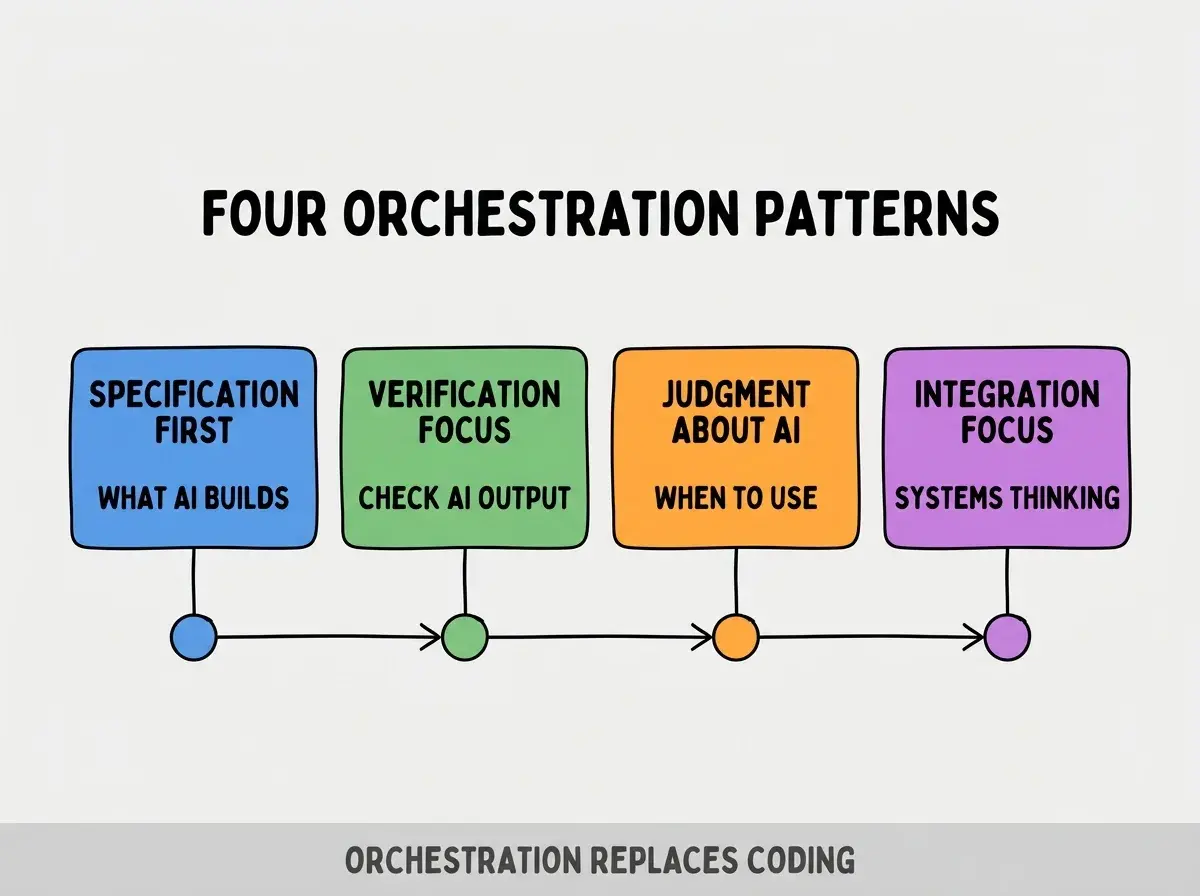
Pattern 3, judgment about AI usage replaces uniform AI usage. Knowing when to use AI matters more than using AI everywhere. Judgment becomes differentiator.
Pattern 4, integration into broader systems replaces isolated coding. Connecting AI work to systems matters more than perfect isolated code. Systems thinking matters.
What The Shift Means For Developer Careers
Three implications matter for developers considering orchestration shift.
Implication 1, skill investment shifts toward judgment and verification. Coding skill matters less; judgment and verification skill matters more. Skill investment must shift accordingly.
Browse more foundations
Read more foundationsImplication 2, career paths bifurcate by orchestration adoption. Orchestrators and traditional coders may follow different career trajectories. Path matters for opportunity.
Implication 3, value capture shifts toward orchestration capabilities. Companies increasingly value orchestration; compensation patterns reflect value. Value matters for career economics.
What The Skill Implications Are
Three skill categories matter most for orchestration.
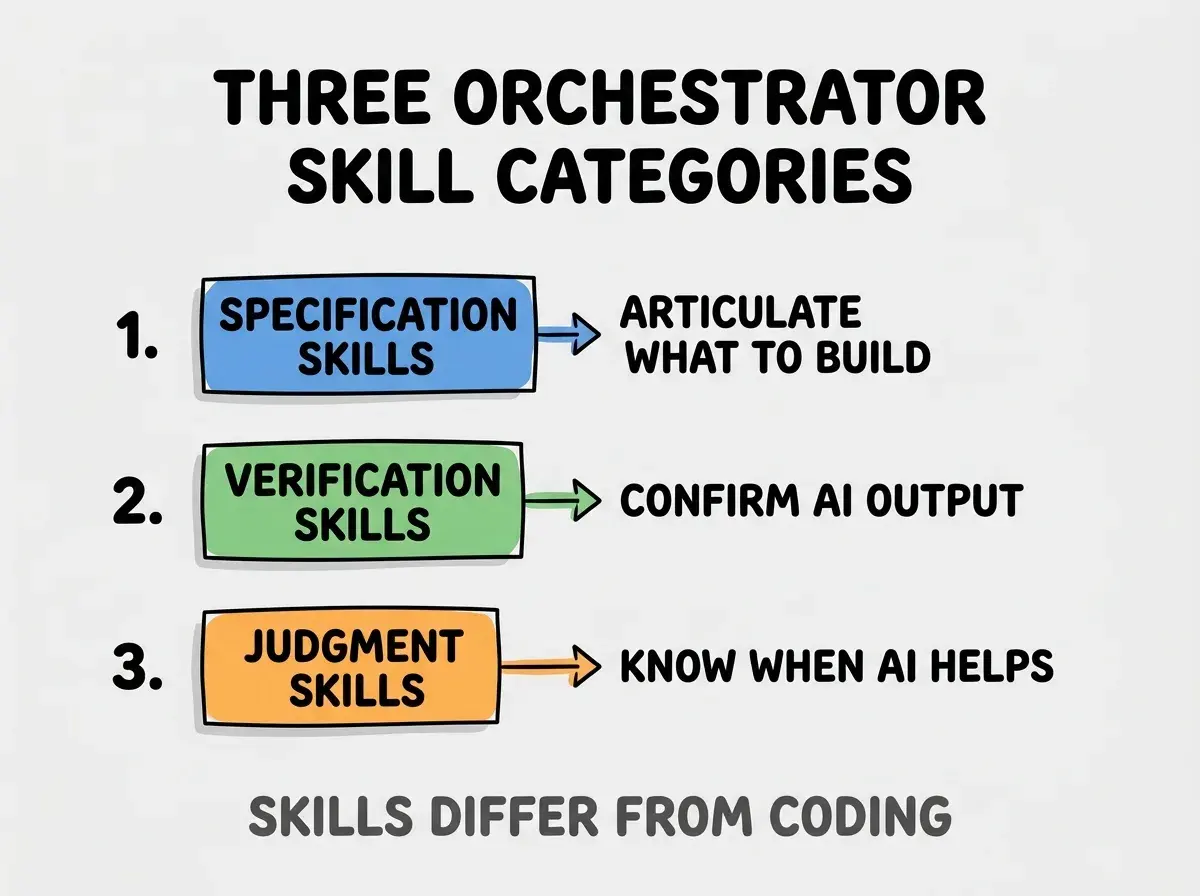
Pattern 1, specification skills articulating what to build. Clear specification produces better AI output. Articulation skill matters dramatically.
Pattern 2, verification skills confirming AI output correctness. Verification catches AI mistakes. Without verification, mistakes reach production.
Pattern 3, judgment skills knowing when AI helps versus hurts. Judgment prevents wrong tool usage. Without judgment, AI usage produces inconsistent outcomes.
What Makes The Shift Sustainable
Three patterns separate sustainable orchestration shift from problematic transitions.
Pattern 1, gradual transition rather than abrupt switch. Gradual builds skills while maintaining capability. Abrupt creates skill gaps.
Pattern 2, maintaining coding skills as foundation. Orchestration builds on coding; coding skills remain foundational. Without coding skills, orchestration becomes hollow.
Pattern 3, deliberate practice of orchestration skills. Specification, verification, judgment all need practice. Without practice, orchestration stays at low capability.
The combination produces orchestration shift that produces career value. Without these patterns, shift produces neither orchestration capability nor coding capability.
How To Develop Orchestration Skills
Three development patterns build orchestration capability.
Pattern A, practice specification through writing detailed prompts. Detail matters; vague prompts produce vague output. Practice produces specification skill.
Pattern B, practice verification through structured AI output review. Structured review catches what unstructured misses. Practice builds verification skill.
Pattern C, practice judgment through deliberate AI usage decisions. Conscious decisions about when to use AI build judgment. Without consciousness, decisions stay habitual.
The combination produces orchestration skill development. Without development patterns, skills stay at incidental level.
The most damaging orchestrator thesis mistake is abandoning coding skills before developing orchestration skills. Abandonment without replacement produces neither orchestration nor coding capability. The fix is to build orchestration skills while maintaining coding skills; coding remains foundation that orchestration builds on. Developers who balance both produce better outcomes than developers who abandon one for the other prematurely.
The other mistake is treating orchestrator thesis as predicting all developer roles. Some developer roles may resist orchestration; specialization matters.
A third mistake is missing the verification skill investment. Verification is critical orchestration skill; without it, orchestration produces low quality outcomes.
A fourth mistake is treating orchestration as inherently superior. Orchestration suits some work; traditional coding suits other work. Choice matters.
How To Recognize When Orchestration Suits
Three pattern recognition help identify when orchestration suits situation.
Pattern 1, well defined problems with clear specifications. Orchestration works when problems specifiable. Without specification, orchestration struggles.
Pattern 2, broad problem domain that AI training covers. Common patterns benefit from AI familiarity. Novel domains need traditional approaches.
Pattern 3, verification pathway exists for AI output. Without verification capability, orchestration becomes risky. Verification matters as much as generation.
The combination produces situation specific orchestration decisions. Without recognition patterns, orchestration applies indiscriminately.
How The Orchestrator Thesis Will Likely Evolve
The orchestrator thesis will likely continue evolving as AI capabilities mature.
The first likely evolution is orchestration capability bar rising. As AI improves, orchestration requires more sophistication. Bar rising matters for skill investment.
The second likely evolution is hybrid roles emerging. Roles combining traditional coding and orchestration. Hybrids may dominate over pure roles.
The third likely evolution is specialization within orchestration. Different orchestration roles for different domains. Specialization matters as field matures.
The combination suggests orchestration will continue but specifics evolve. Engineers learning patterns now build skills that remain valuable.
Common Questions About The Orchestrator Thesis
The orchestrator thesis raises questions worth addressing directly.
The first question is whether orchestrator thesis applies to all developers. No; suits some developers and contexts. Forced application produces poor outcomes.
The second question is whether to abandon coding skills entirely. No; coding skills remain foundation. Orchestration builds on coding rather than replacing it.
The third question is when to start developing orchestration skills. Now if interested; gradual development beats abrupt transition. Start matters less than starting.
The fourth question is whether orchestration skills transfer across organizations. Yes; orchestration capability portable across employers. Portability matters for career flexibility.
How To Evaluate If Orchestration Path Suits You
Three evaluation patterns help individuals decide whether orchestration suits.
Pattern A, evaluate enjoyment of specification work. Some enjoy specification; others find it tedious. Enjoyment predicts sustainability.
Pattern B, evaluate verification patience. Verification requires patience that pure coding does not. Patience matters for orchestration sustainability.
Pattern C, evaluate judgment confidence. Judgment requires confidence in choices. Without confidence, judgment becomes paralysis.
What This Means For You
The orchestrator thesis predicts career evolution that affects skill investment. The four patterns, implications, and skill development approaches produce framework for evaluating orchestrator path.
- If you're a senior dev: Evaluate whether orchestrator path suits your context. Some senior dev work suits orchestration; some does not.
- If you're a product manager: PM skills overlap with orchestration. PMs may have advantage in orchestration transition.
- If you're a founder: Help engineering team consider orchestration where appropriate. Some teams benefit; some do not.
Browse more foundations
Read more foundations