To understand the 80 20 anatomy of vibe coding wall, recognize the four wall patterns that kill projects in the last 20 percent (production readiness gaps that demos hide, edge case explosion that prototype testing missed, integration complexity that simple flows ignored, and operational requirements that solo demos do not need), see how the patterns combine into the wall, and apply the prevention patterns. The 80 20 understanding matters because most AI built projects die in the 20 percent; understanding why prevents abandonment.
This piece walks through the four wall patterns, what makes the last 20 percent so deadly, the prevention patterns, and the four mistakes that produce wall collisions.
Why The 80 20 Wall Matters
The 80 20 wall matters because it predicts where AI built projects fail. The prediction matters; understanding pattern enables prevention rather than reactive crisis management.
The 2026 reality is that AI tools accelerate the first 80 percent dramatically while the last 20 percent remains stubbornly hard. The acceleration produces false confidence that wall collision later disappoints.
A 2025 vibe coding project tracking study of 500 projects found that 67 percent of abandoned projects abandoned during the last 20 percent push for production readiness. Among completed projects, the last 20 percent took 4-5x longer than the first 80 percent on average; the time ratio reveals where wall lives.
The pattern to copy is the way construction projects experience similar dynamics. Foundations, framing, exterior happen quickly; interior finish, code compliance, certificates of occupancy take comparable or longer time. Software projects follow similar pattern; getting demo to work is fast while getting production ready is slow.
The Four Wall Patterns
Four patterns characterize the 80 20 wall.
Pattern 1, production readiness gaps that demos hide. Error handling, edge cases, monitoring all missing in demos. Production exposes gaps demos never showed.
Pattern 2, edge case explosion that prototype testing missed. Real users produce edge cases prototypes never see. Volume of edge cases overwhelms.
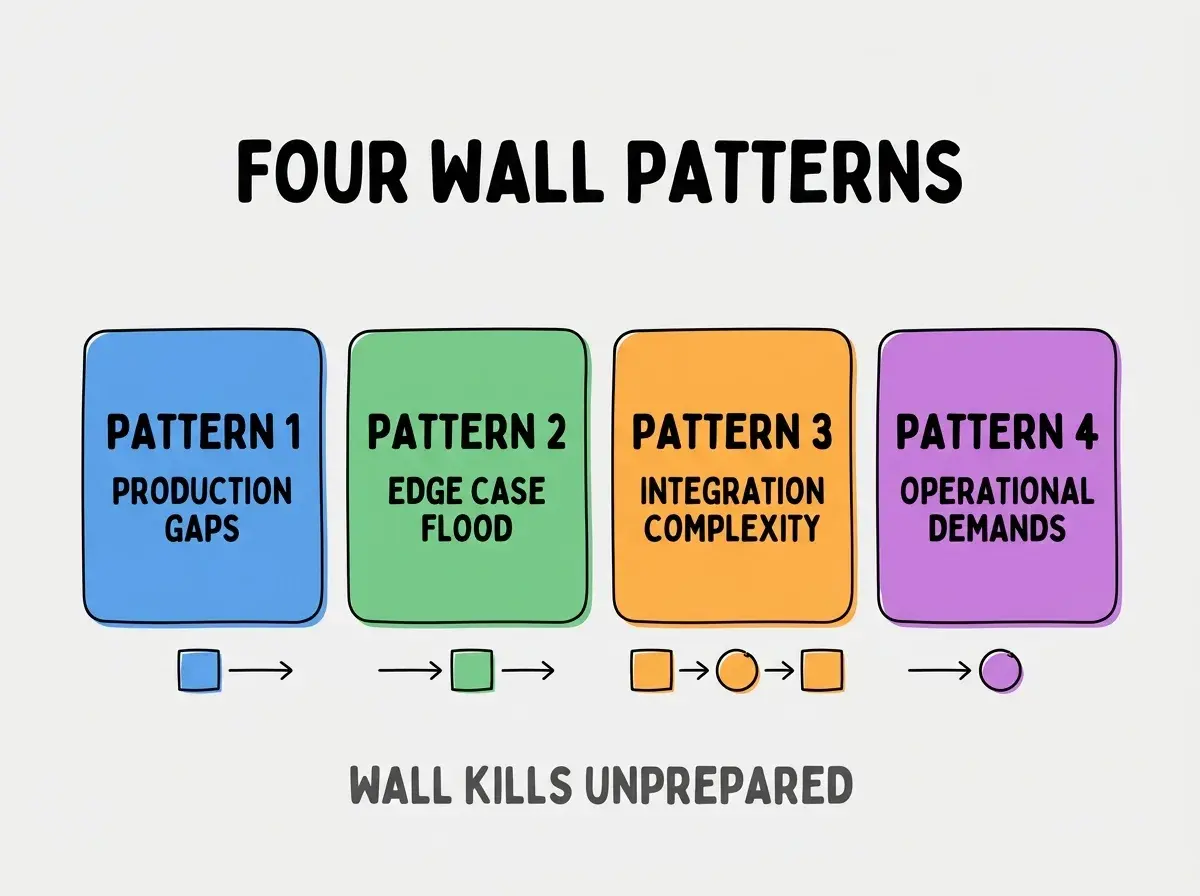
Pattern 3, integration complexity that simple flows ignored. Integrations with payments, email, analytics, monitoring all add complexity. Complexity compounds.
Pattern 4, operational requirements that solo demos do not need. Backups, security, compliance, support all required for production. Operational requirements absent from demos.
What Makes The Last 20 Percent So Deadly
Three patterns explain wall difficulty.
Pattern 1, AI tools optimize for happy path not edge cases. AI training emphasizes common patterns; edge cases get less coverage. Imbalance shows in the last 20 percent.
Browse more foundations
Read more foundationsPattern 2, motivation declines as work becomes verification. First 80 percent feels creative; last 20 percent feels like cleanup. Motivation differential matters.
Pattern 3, time investment compounds beyond expectations. Each edge case takes time; many edge cases compound. Compounding catches builders by surprise.
The Prevention Patterns That Work
Three patterns prevent wall collision.
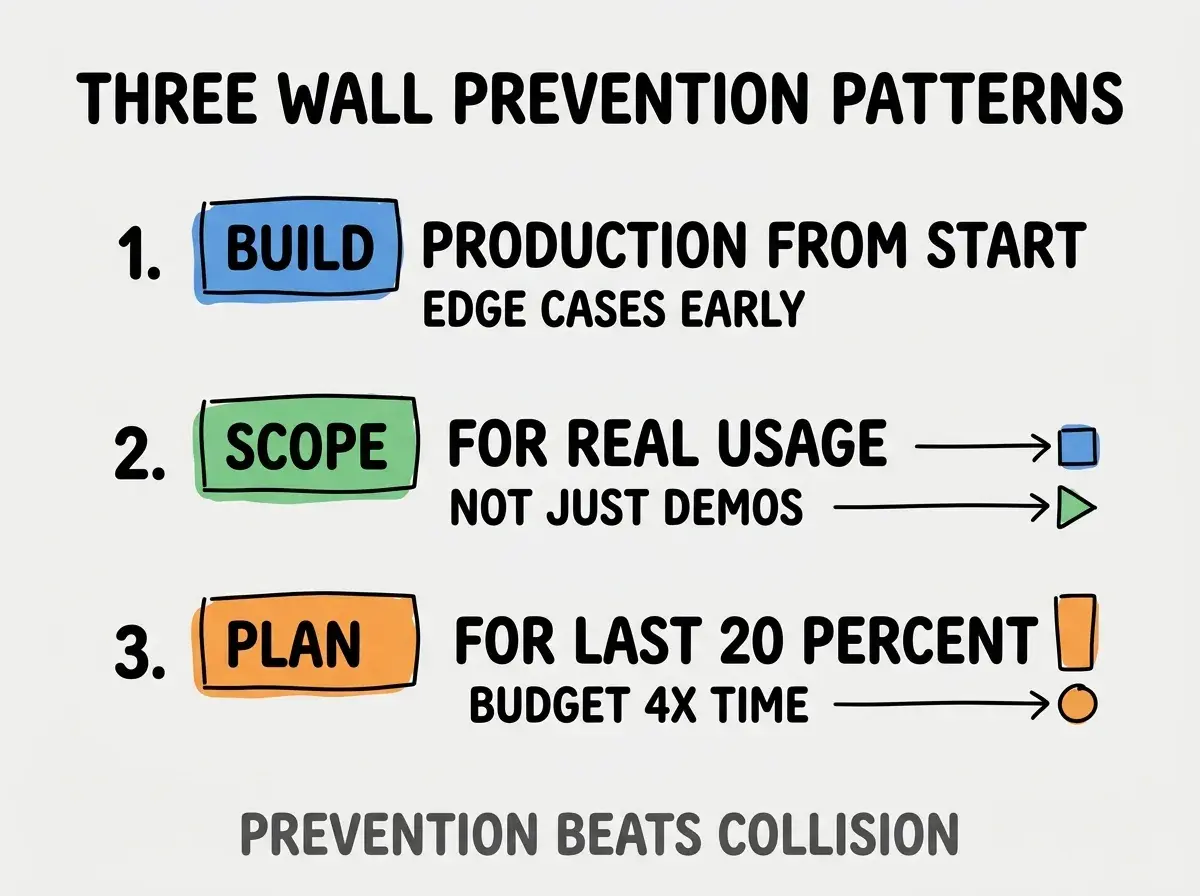
Pattern 1, build production patterns from start. Error handling, edge cases, monitoring built incrementally. Without incremental, last 20 percent becomes overwhelming.
Pattern 2, scope for real usage not just demos. Demo scope misses production patterns. Production scope from start prevents demo to production gap.
Pattern 3, plan for last 20 percent in timeline. Budget 4-5x first 80 percent time for last 20 percent. Without planning, wall surprises producing abandonment.
What Makes Wall Survival Sustainable
Three patterns separate wall survival from wall collision.
Pattern 1, motivation maintenance through last 20 percent. Last 20 percent requires sustained motivation; motivation patterns matter.
Pattern 2, scope discipline preventing scope expansion in last 20 percent. Adding features in last 20 percent compounds difficulty. Discipline matters.
Pattern 3, support seeking when wall feels impossible. Other builders, mentors, communities all help. Without support, wall feels insurmountable.
The combination produces wall survival. Without these patterns, wall collision becomes project death.
How To Recognize Wall Approach
Three recognition patterns help builders see wall coming.
Pattern A, increasing time per feature signals wall approach. Features taking longer signals wall dynamics. Recognition enables preparation.
Pattern B, motivation decline signals wall approach. Mood shift from creative to grinding signals wall. Self awareness matters.
Pattern C, edge case discoveries accelerate signals wall approach. Edge cases per week increasing signals approaching wall. Pattern matters.
The combination produces wall recognition. Without recognition, wall collision happens without preparation.
The most damaging 80 20 wall mistake is treating first 80 percent velocity as predictive of completion timeline. First 80 percent suggests project will complete quickly; last 20 percent reveals different dynamics. The fix is to plan timeline based on full project not first 80 percent; honest planning produces sustainable timelines while optimistic planning produces wall collisions and abandonment. Builders who plan honestly complete projects that builders who plan optimistically abandon.
The other mistake is treating wall as personal failure. Wall affects most builders; recognizing pattern reduces personal failure framing. The fix is to treat wall as predictable not personal.
A third mistake is missing the production readiness investment until wall hits. Investment during first 80 percent prevents wall accumulation. Without investment, wall arrives loaded.
A fourth mistake is solo wall encounters. Wall is harder solo; community provides perspective and support that solo encounters lack.
How To Plan For Last 20 Percent
Three planning patterns help last 20 percent succeed.
Pattern A, explicit timeline budget for last 20 percent. Allocate 4-5x first 80 percent time. Without allocation, surprise produces abandonment.
Pattern B, scope freezes preventing expansion. No new features during last 20 percent push. Scope freeze maintains achievable target.
Pattern C, milestone celebration through last 20 percent. Small wins during difficult phase sustain motivation. Without celebration, motivation erodes.
The combination produces last 20 percent planning. Without planning patterns, last 20 percent becomes crisis.
How The Wall Will Likely Evolve
The 80 20 wall will likely continue but with shifting characteristics as AI tools mature.
The first likely evolution is wall location shifting. AI improvements may move wall later in projects. Shift does not eliminate wall but changes timing.
The second likely evolution is production patterns becoming more accessible to AI. AI generating production patterns better. Improvement reduces but does not eliminate wall.
The third likely evolution is community knowledge spreading. As wall becomes widely known, prevention patterns spread. Spread reduces individual surprise.
The combination suggests wall remains but becomes more manageable. Builders learning patterns now build resilience that remains valuable.
Common Questions About The 80 20 Wall
The 80 20 wall raises questions worth addressing directly.
The first question is whether wall affects all projects. Most projects experience wall dynamics; severity varies by project type and approach. Pattern more universal than specific.
The second question is whether wall can be eliminated entirely. Probably not; wall reflects fundamental difference between demo and production. Reduction possible, elimination unlikely.
The third question is whether to push through wall or pivot. Depends on project value and wall difficulty. Some projects worth pushing; some worth pivoting. Judgment matters.
What This Means For You
The 80 20 wall determines AI built project completion rates. The four patterns, prevention approaches, and recognition strategies produce framework for surviving the wall.
- If you're a founder: Plan for wall explicitly; without planning, wall produces project abandonment that planning could have prevented.
- If you're an indie hacker: Solo builders face wall hardest; community support matters dramatically. Build community before wall arrives.
- If you're a career changer: Wall is predictable; recognizing pattern prevents personal failure framing. Pattern recognition matters for sustained learning.
Browse more foundations
Read more foundations