Five architecture decisions determine whether vibe coded apps grow well or require rebuilds within months. The decisions are framework choice, database selection, authentication approach, deployment platform, and state management strategy. Made well, these decisions enable years of growth. Made poorly, these decisions force expensive rebuilds when scale or requirements shift. The decisions matter most at project start when changing them costs little; later changes cost dramatically more.
This piece walks through the five architecture decisions, what makes each well, what AI defaults look like, and the four mistakes builders make when treating architecture casually.
Why Architecture Decisions Matter For Vibe Coded Apps
Architecture decisions matter because they constrain everything that comes after. Wrong framework choice constrains hiring, performance, and capability. Wrong database choice constrains scaling and features. Wrong choices compound across project lifetime.
The 2026 reality is that AI tools generate code matching whatever architecture you specify. Architecture quality depends on your specification, not AI capability.
A 2025 vibe coded app retrospective study of 200 projects found that 73 percent of projects requiring architecture rebuilds had inadequate initial architecture decisions. Initial decisions matter dramatically; rebuild costs averaged 4-6 months of additional work.
The pattern to copy is the way structural engineers approach building foundations. Foundation decisions made wrong cost dramatically more later than right; foundations get attention upfront. Software architecture follows the same dynamic.
The Five Architecture Decisions
Five decisions determine vibe coded app trajectory.
Decision 1, framework choice. React vs Vue vs Svelte; Next.js vs Remix vs Nuxt. Choice affects hiring, performance, capability.
Decision 2, database selection. Postgres vs MySQL vs SQLite vs DynamoDB. Choice affects scaling, features, cost.
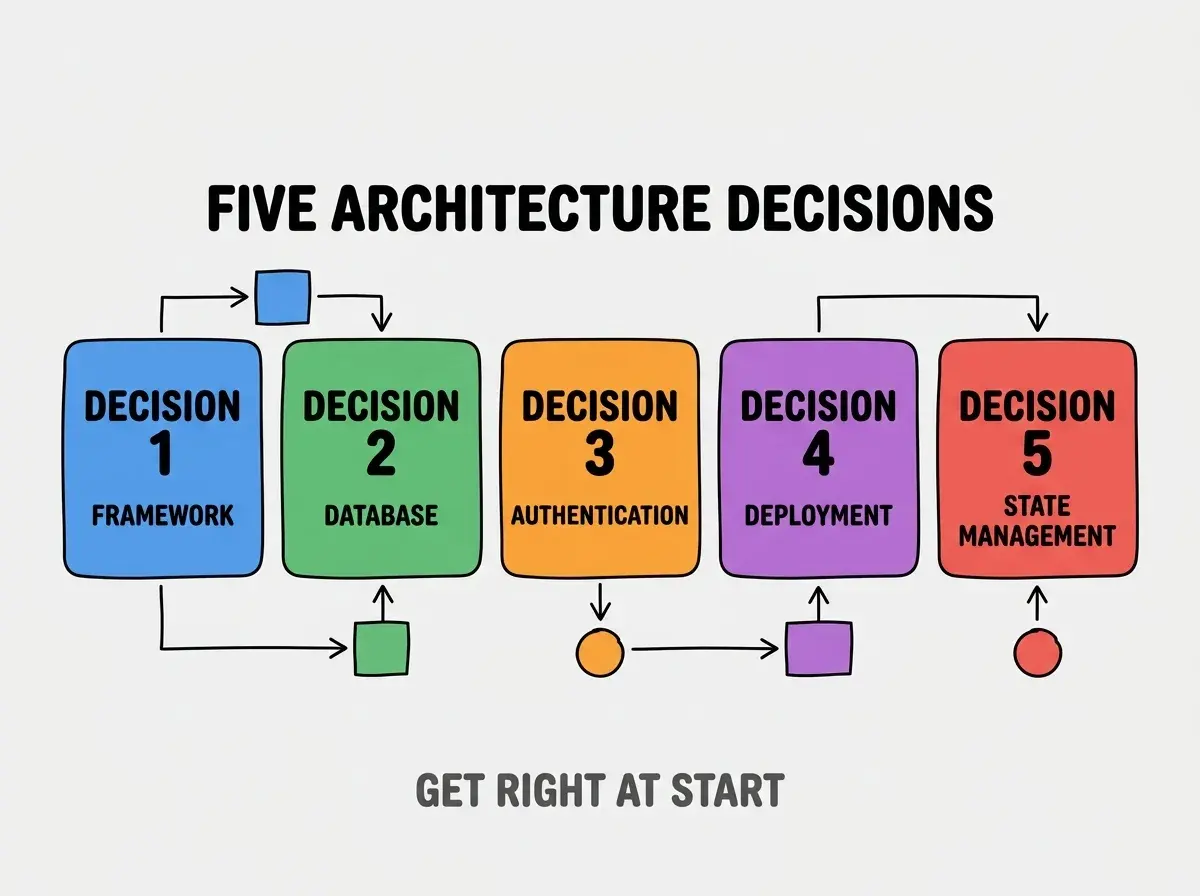
Decision 3, authentication approach. Build custom vs use service (Clerk, Auth0, Supabase Auth). Choice affects security, time to market.
Decision 4, deployment platform. Vercel vs Cloudflare vs AWS. Choice affects cost, capability, complexity.
Decision 5, state management strategy. React Context vs Zustand vs Redux. Choice affects code organization and complexity.
How To Make Each Decision Well
Five decision approaches produce good architecture.
Decision 1, choose framework matching your team and ecosystem. Next.js for React teams; ecosystem maturity matters more than novel features.
Browse more foundations
Read more foundationsDecision 2, default to Postgres unless reason for alternative. Postgres handles 99 percent of needs; alternatives need specific justification.
Decision 3, use auth service unless requirements demand custom. Clerk, Supabase Auth save weeks; custom auth introduces security risk.
Decision 4, default to Vercel for Next.js apps. Tight integration, generous free tier, mature platform. Alternatives need specific reason.
Decision 5, start simple with state management. React Context for small apps; Zustand if Context becomes complex; Redux only for complex apps with team requirements.
What AI Default Architecture Looks Like
AI defaults follow patterns that produce mixed quality.
Default 1, framework matches request. AI uses whatever you ask; ask for popular choice.
Default 2, database whatever first comes up. AI defaults vary; specify Postgres explicitly.
Default 3, custom auth from scratch. AI builds auth even when service would be better; specify auth service.
Default 4, deployment matches stack. AI defaults usually appropriate; verify regardless.
Default 5, state management as needed. AI adds state libraries reactively; specify upfront.
What Makes Architecture Decisions Sustainable
Three patterns separate sustainable architecture from architecture debt.
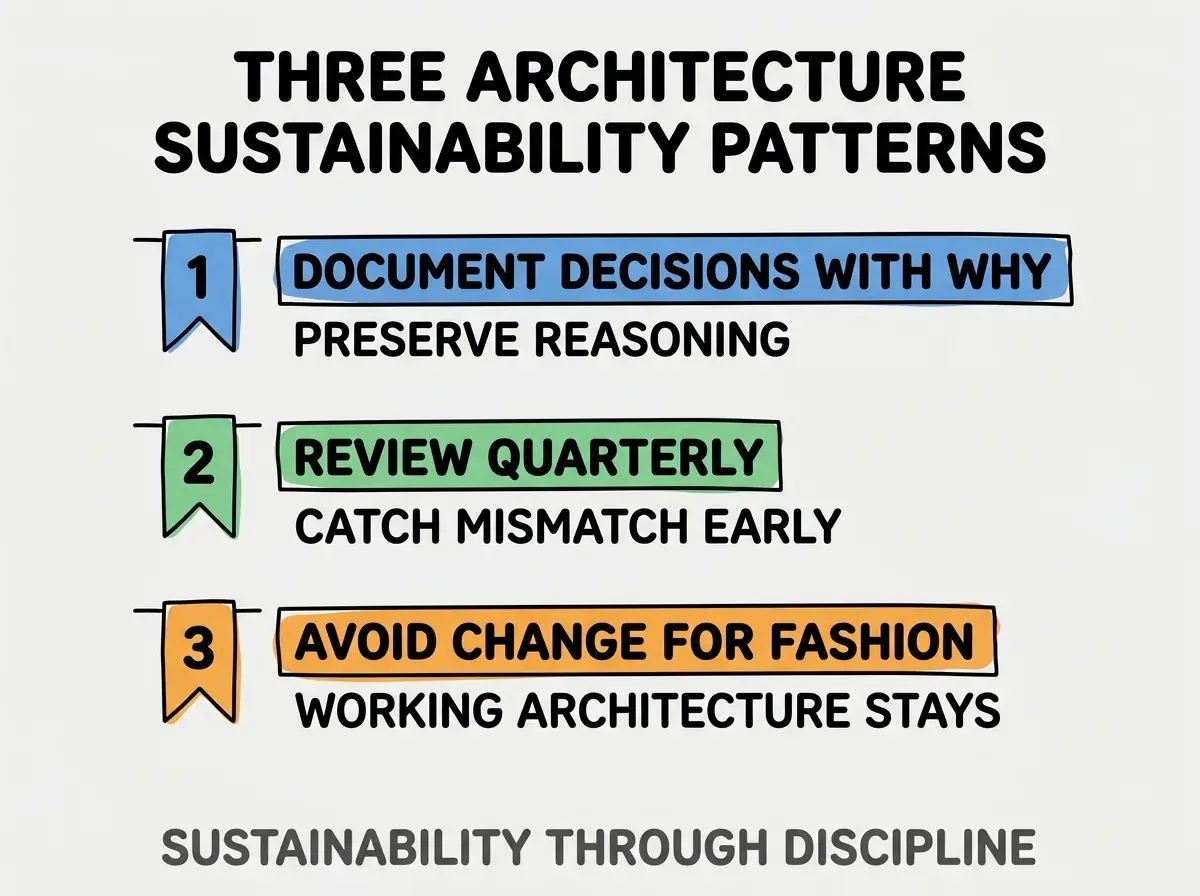
Pattern 1, document decisions with why. Why captured prevents re deriving; future contributors benefit.
Pattern 2, review quarterly for misalignment. Quarterly review catches when architecture stops fitting needs.
Pattern 3, avoid change for fashion. New frameworks always tempt; working architecture stays unless real reason exists.
The combination produces sustainable architecture. Without these patterns, architecture debt accumulates.
How To Recover From Bad Initial Decisions
Three recovery patterns help when initial decisions need changing.
Pattern A, change one layer at a time. Frontend framework change; backend stays. Database change; framework stays. Layer isolation reduces risk.
Pattern B, strangler pattern for gradual migration. New code uses new architecture; old code migrates over time. Gradual migration manageable.
Pattern C, accept rebuild when fundamental. Sometimes rebuild beats migration. Honest assessment required.
Common Questions About Architecture Decisions
Architecture decisions raise questions worth addressing directly.
The first question is whether to use cutting edge or stable technologies. Stable for production; cutting edge for experiments. Match risk tolerance.
The second question is whether to choose technologies you know or learn new. Sometimes both; team capability matters but learning happens.
The third question is how much architecture matters for small projects. Less but not zero; small projects sometimes grow into big projects.
The fourth question is whether AI tools should make architecture decisions. AI can suggest; humans should decide. Architecture too consequential for full delegation.
How Architecture Affects Long Term Outcomes
Architecture affects long term outcomes in compounding ways. Long term effects compound across years.
The first compounding effect is hiring flexibility. Popular architecture stack expands hiring pool; niche architecture limits hiring.
The second compounding effect is feature capability. Architecture enables or limits features; capability constraints affect product evolution.
The third compounding effect is operational cost. Architecture affects scaling cost; cost compounds with traffic growth.
The combination produces project outcomes shaped by initial architecture. Without architecture attention, outcomes follow accidental decisions.
How To Use AI For Architecture Decisions
Three patterns help AI assist architecture decisions.
Pattern A, ask AI to evaluate tradeoffs. AI good at listing pros and cons; humans decide based on context.
Pattern B, ask AI for similar app architecture references. AI knows common patterns; references inform decisions.
Pattern C, validate AI architecture suggestions with humans. AI can suggest unusual choices; human validation catches issues.
The combination produces AI assisted architecture decisions. Without validation, AI suggestions sometimes fail.
The most damaging architecture mistake is treating decisions as easily reversible. Some architecture decisions cost months to change; treating them casually produces months of rebuild work later. The fix is to invest decision time proportional to change cost; high change cost decisions deserve more upfront thought. Builders who invest upfront produce sustainable apps; builders who rush decisions face rebuild cycles.
The other mistake is over engineering architecture for unknown future. Architecture for current scale beats architecture for hypothetical scale.
A third mistake is following architecture trends without understanding tradeoffs. Trends sometimes don't fit your situation; understanding tradeoffs matters.
A fourth mistake is missing the documentation opportunity. Documented decisions inform future decisions; undocumented decisions get re derived poorly.
What This Means For You
Five architecture decisions determine vibe coded app trajectory more than any other factor. The five decisions, decision approaches, and sustainability patterns produce architecture that enables years of growth.
- If you're a founder: Spend a day on architecture decisions before starting development; investment pays back across project life.
- If you're an indie hacker: Default to popular stable choices; novelty rarely justifies risk for indie scale.
Browse more foundations
Read more foundations