To follow the optimal AI coding workflow from plan to PR, work through the four workflow stages (planning that establishes scope and approach before AI generation, generation that produces code with explicit context, review that validates AI output before commitment, and integration that produces clean PRs ready for human review), recognize what makes the workflow sustainable across projects, and apply the patterns that produce reliable AI assisted development. The workflow matters because ad hoc AI coding produces inconsistent results while structured workflows produce reliable outcomes.
This piece walks through the four workflow stages, what makes the workflow sustainable, the specific tooling, and the four mistakes that produce workflow failure.
Why Optimal AI Coding Workflow Matters
Optimal AI coding workflow determines whether AI assistance produces reliable results or chaotic outcomes. The structure matters; without workflow, AI assistance produces results that vary dramatically session to session.
The 2026 reality is that AI coding has matured enough that workflow patterns matter more than tool choice. Same tools produce dramatically different results in different workflows; workflow structure now matters more than which AI tool teams choose.
A 2025 developer productivity study of 600 developers found that developers using structured AI workflows shipped 3.2x more features per week compared to developers using ad hoc AI assistance. The productivity difference reflects how much workflow structure improves AI assistance outcomes.
The pattern to copy is the way professional kitchens use mise en place. Mise en place means everything in its place; preparation precedes execution. Professional kitchens that follow mise en place produce consistent results faster than kitchens without preparation. AI coding follows similar pattern; preparation through planning produces faster, more consistent execution.
The Four Workflow Stages
Four stages produce optimal AI coding workflow.
Stage 1, planning that establishes scope and approach. What problem solves, what constraints exist, what approach to take. Planning prevents AI generation in wrong direction.
Stage 2, generation with explicit context. Including relevant existing code, constraints, examples in prompts. Context matters dramatically for AI output quality.
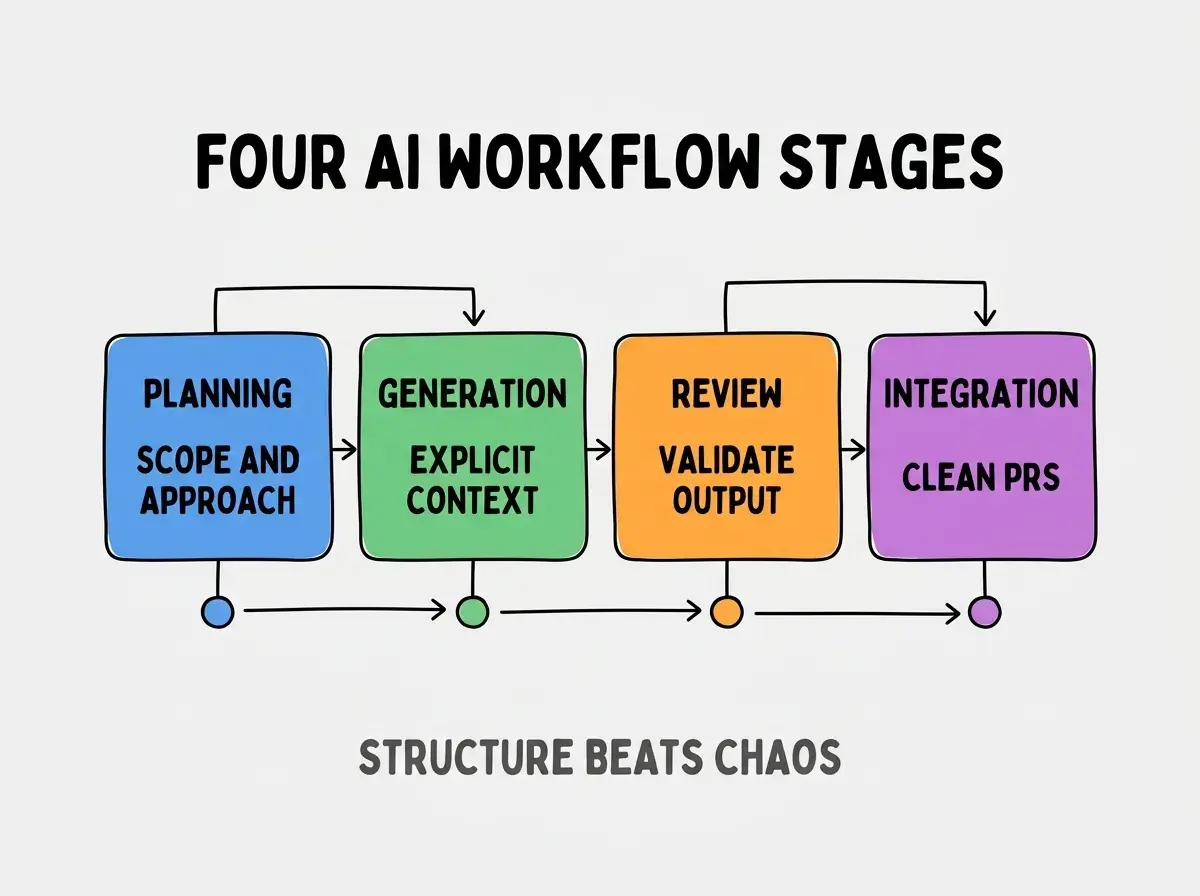
Stage 3, review validating AI output. Reading generated code, testing behavior, checking edge cases. Review catches issues before commitment.
Stage 4, integration producing clean PRs. Logical commits, clear messages, focused scope. Integration affects how teammates experience your AI assisted work.
What Makes The Workflow Sustainable
Three patterns characterize sustainable AI coding workflow.
Pattern 1, planning matches feature complexity. Simple features need simple plans; complex features need detailed plans. Mismatched planning either wastes time or produces poor outcomes.
Browse more tools articles
Read more toolsPattern 2, context provision becomes habit. Including relevant code, constraints, examples becomes automatic. Without habit, context provision happens inconsistently.
Pattern 3, review depth matches change risk. High risk changes get deep review; low risk changes get appropriate review. Mismatched review either misses issues or wastes time.
The Specific Tooling That Supports The Workflow
Three tool categories support optimal AI coding workflow.
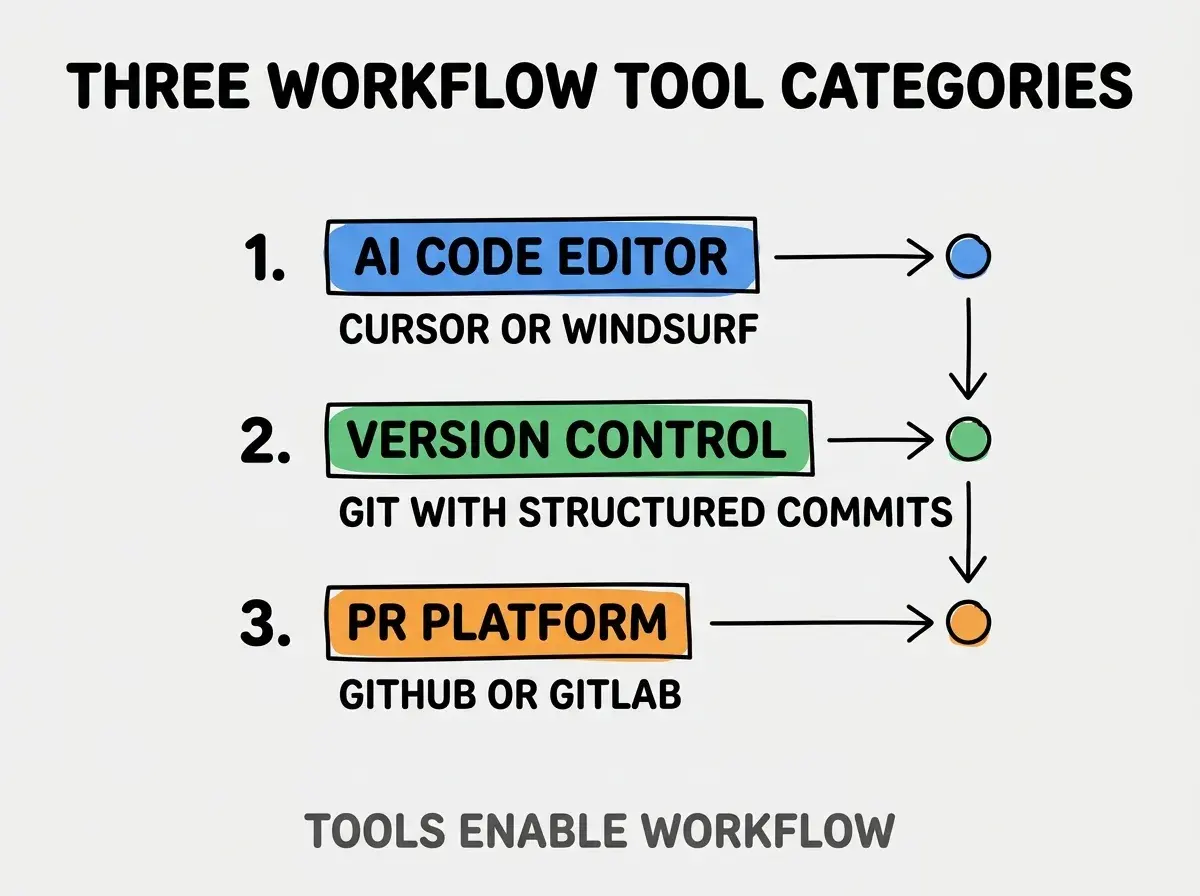
Tool 1, AI code editor like Cursor or Windsurf. Editor integration makes context provision easier. Editor choice affects generation quality.
Tool 2, version control with structured commits. Git workflow that captures workflow stages. Commit structure affects PR quality.
Tool 3, PR platform for team integration. GitHub, GitLab. PR platform affects team workflow integration.
What Makes The Workflow Resilient To Failure
Three patterns separate resilient workflows from fragile ones.
Pattern 1, defensive commits at workflow checkpoints. Commits before risky changes enable rollback. Without commits, AI mistakes destroy progress.
Pattern 2, branch hygiene preserving experimental work. Feature branches isolate experiments from main. Without branches, experiments contaminate main.
Pattern 3, regular sync with team conventions. Solo workflow drift creates merge conflicts later. Without sync, solo work becomes harder to integrate.
The combination produces workflow that handles real development reality. Without these patterns, workflow optimizes for happy path but fails under realistic conditions.
How To Adapt The Workflow For Different Project Types
Three project types deserve specific workflow adaptations.
Type A, greenfield projects with high freedom. More planning matters; few constraints exist initially. Planning establishes constraints that prevent later rewrites.
Type B, brownfield projects with existing constraints. More context provision matters; existing code constrains AI generation. Context provision improves AI output for brownfield work.
Type C, exploratory projects with high uncertainty. Faster iteration matters; planning depth limited until uncertainty resolves. Iteration produces learning that planning cannot replace.
The combination produces workflow adaptations matched to project types. Without adaptation, generic workflow misses type specific opportunities.
The most damaging AI workflow mistake is skipping planning to start coding faster. Skipping planning feels efficient but produces code in wrong direction that requires rework. The fix is to invest in planning proportionally to feature complexity; planning for complex features pays back through reduced rework. Developers who plan before generating produce better outcomes than developers who generate then plan.
The other mistake is treating AI output as final without review. AI output sometimes contains subtle bugs that quick reading misses. The fix is to invest in review proportional to change risk.
A third mistake is generating large changes in single AI sessions. Large changes are harder to review and harder to debug. The fix is to break work into smaller AI sessions.
A fourth mistake is missing context provision. Generic prompts produce generic output. The fix is to provide context that makes AI output specific to your codebase.
How To Measure Workflow Effectiveness
Three metrics demonstrate workflow value.
Metric 1, time from start to merged PR. Shorter time indicates effective workflow. Longer time indicates workflow friction.
Metric 2, post merge bug rates. Lower rates indicate effective review. Higher rates indicate insufficient review.
Metric 3, PR review time from teammates. Shorter review time indicates clean integration. Longer review time indicates integration issues.
The combination produces workflow effectiveness measurement. Without measurement, workflow improvements happen by intuition rather than evidence.
How AI Workflows Will Likely Evolve
AI workflows will likely continue evolving as AI capabilities mature.
The first likely evolution is integration deepening with version control. AI tools that understand git context, branch state, PR history. Integration reduces context provision burden.
The second likely evolution is automated review assistance. AI tools that pre review AI generated code. Pre review reduces human review burden.
The third likely evolution is workflow standardization across teams. Shared workflow patterns emerging across organizations. Standardization reduces individual workflow exploration burden.
The combination suggests workflows will become more capable but also more standardized. Developers learning patterns now build skills that remain valuable as workflows mature.
Common Questions About AI Workflows
AI coding workflows raise questions worth addressing directly.
The first question is how much planning is enough for simple features. Few minutes of thought before generation often sufficient; planning depth should match feature complexity. Excessive planning for simple features wastes time.
The second question is how to handle AI mistakes during generation. Stop, understand mistake, restart with better context. Continuing through AI mistakes produces compounded errors.
What This Means For You
Optimal AI coding workflow determines whether AI assistance produces reliable results. The four stages, sustainable patterns, and tool combinations produce framework for structured AI coding.
- If you're a senior dev: Workflow structure matters more than tool choice. Invest in workflow patterns; they apply across tools.
- If you're an indie hacker: Solo developers benefit dramatically from workflow structure. Without team forcing structure, solo workflow easily becomes ad hoc.
- If you're a founder: Engineering team workflow affects velocity dramatically. Help engineering team develop workflow practices that scale with team growth.
Browse more tools articles
Read more tools