To build a daily AI coding routine that sustains productivity, follow the four routine patterns (morning setup priming AI context for the day, focused coding sessions with explicit time blocks, end of session checkpoint capturing progress, and evening review that captures learnings and prepares tomorrow), recognize what makes routines sustain productivity over months, and apply the patterns that prevent the burnout patterns AI coding produces. The daily routine matters because sustainable AI coding requires deliberate routine that ad hoc work cannot match.
This piece walks through the four routine patterns, what makes routines sustainable, the specific patterns, and the four mistakes that produce routines that get abandoned.
Why Daily AI Coding Routine Matters
Daily routine matters because AI coding sustains better with structure than ad hoc patterns. The matter; structure prevents context loss, decision fatigue, and burnout that ad hoc AI work produces.
The 2026 reality is that AI coding has different sustainability dynamics than human only coding. Routines designed for AI coding sustain better than routines borrowed from non AI coding patterns.
A 2025 developer productivity study tracking 600 AI tool users found that developers with structured daily routines maintained productivity 4.2x longer over 6 months compared to developers with ad hoc patterns. Routine matters dramatically for sustained AI coding productivity.
The pattern to copy is the way professional athletes structure daily routines. Athletes have morning routines, training blocks, recovery periods, evening routines; structure produces sustained performance that ad hoc training cannot match. AI coding follows similar pattern; structure produces sustained productivity.
The Four Routine Pattern Approach
Four patterns produce sustainable daily AI coding routines.
Pattern 1, morning setup priming AI context. Project review, day planning, AI tool setup. Setup primes productive day.
Pattern 2, focused coding sessions with time blocks. 90 minute blocks with breaks. Time blocks prevent fatigue.
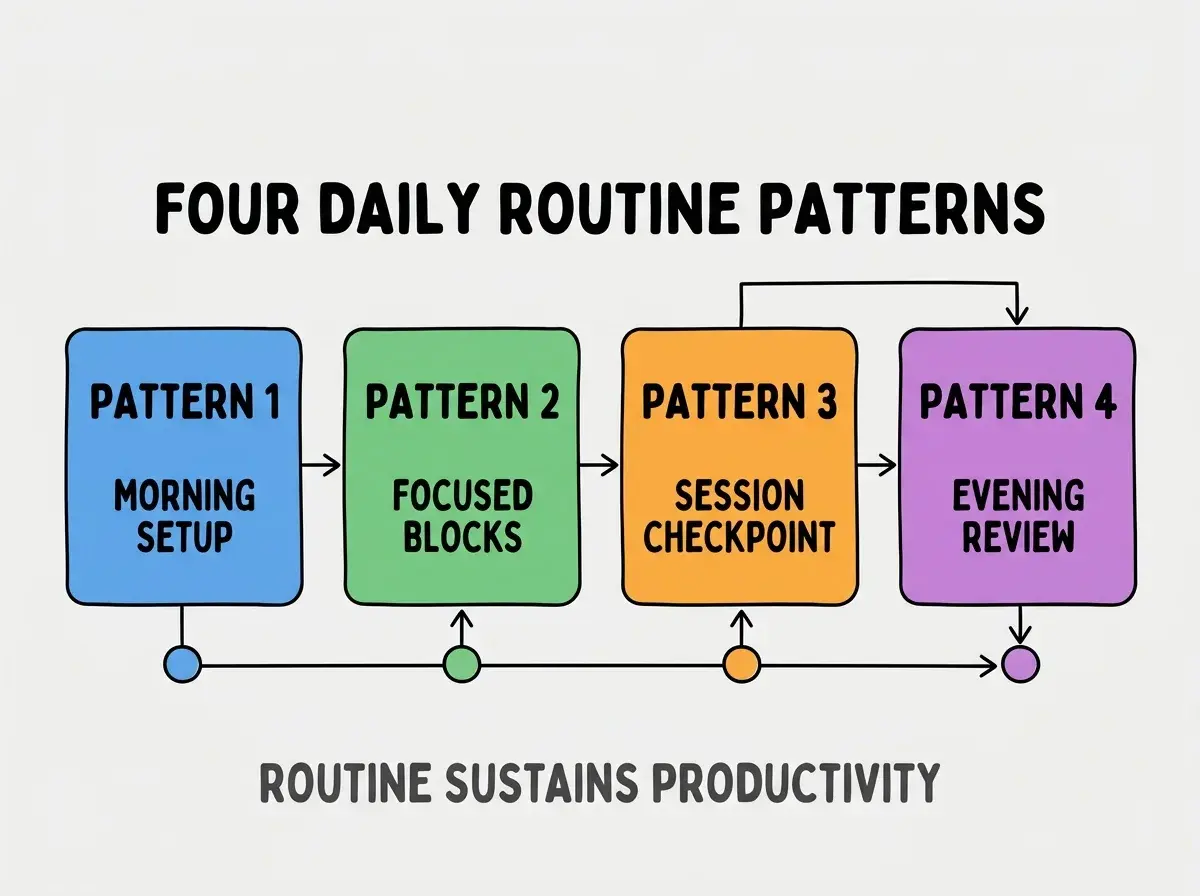
Pattern 3, end of session checkpoint. Commits, status notes, next session plan. Checkpoints preserve progress.
Pattern 4, evening review capturing learnings. What worked, what did not, what to try tomorrow. Review compounds learning.
What Makes Routines Sustain Productivity
Three patterns characterize sustainable routines.
Pattern 1, routines flexible enough to accommodate variation. Rigid routines break under variation. Without flexibility, routines abandon.
Browse more tools articles
Read more toolsPattern 2, routines simple enough to follow consistently. Complex routines fail consistently. Simplicity matters for adherence.
Pattern 3, routines aligned with personal energy patterns. Morning person versus night person. Alignment matters for effectiveness.
The Specific Routine Patterns That Work
Three specific patterns produce productive daily routines.
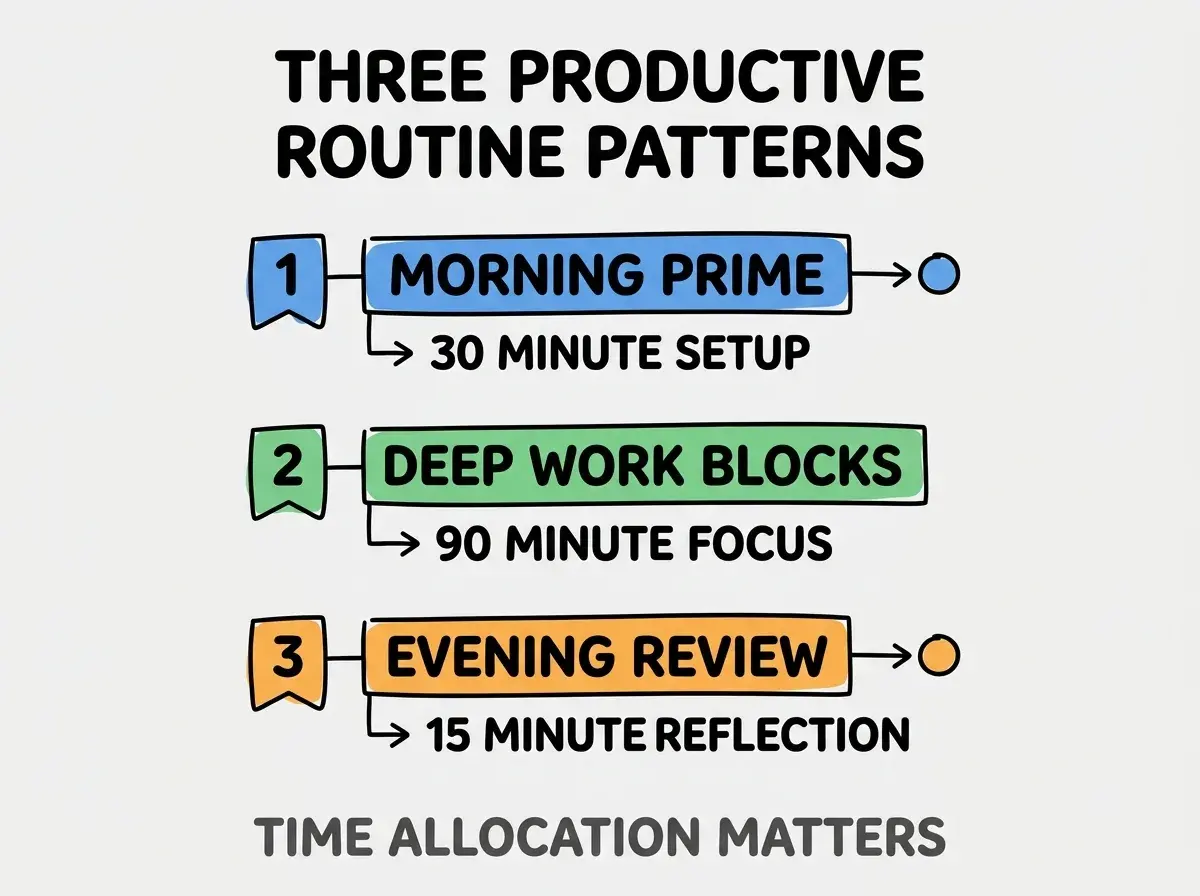
Pattern 1, morning prime session 30 minutes. Project review, day planning, environment setup. Prime sets productive trajectory.
Pattern 2, deep work blocks 90 minutes. Focused AI coding with breaks between blocks. 90 minutes matches attention patterns.
Pattern 3, evening review 15 minutes. Reflection on learnings, tomorrow planning. Short review compounds over time.
What Makes Routines Sustainable Over Months
Three patterns separate sustainable long term routines from short term patterns.
Pattern 1, recovery periods preventing burnout. Days off, lighter days, longer breaks. Recovery sustains routine.
Pattern 2, routine evolution as work changes. Routines adapt to work patterns. Without evolution, routines outgrow utility.
Pattern 3, community accountability supporting consistency. Other developers maintaining similar routines. Community supports sustained practice.
The combination produces routines that sustain over months and years. Without these patterns, routines often abandon within weeks.
How To Build Your Daily Routine
Three building patterns help personal routine development.
Pattern A, start with one routine element at a time. Add complexity only after consistency. Without incremental approach, routines overwhelm.
Pattern B, experiment with timing and patterns. Personal patterns vary; experimentation reveals what works.
Pattern C, document routine that works for personal reference. Documentation enables consistency. Without documentation, routines drift.
The combination produces personal routines that suit individual patterns. Without building patterns, generic routines fit poorly.
The most damaging daily routine mistake is copying someone else's routine without adapting to personal patterns. Personal energy patterns, work context, AI tool preferences all vary; copying produces poor fit. The fix is to design routine for personal patterns; adapt elements from successful routines but customize. Developers who customize produce sustainable routines while developers who copy often abandon routines that did not fit.
The other mistake is missing recovery periods. Continuous high intensity produces burnout. Recovery essential.
A third mistake is over scheduling routines. Too much structure produces rigidity. Some flexibility required.
A fourth mistake is treating routine failure as personal failure. Routine adjustments normal; not all routines work first try.
How To Handle Specific Routine Challenges
Three challenges deserve specific approaches.
Pattern A, motivation dips during long projects. Smaller wins, milestone celebration, variety days. Motivation matters for sustainability.
Pattern B, context switching between projects. Dedicated context switch routine. Without switch routine, context loss compounds.
Pattern C, schedule disruptions from external factors. Routine flexibility for disruptions. Without flexibility, disruptions abandon routines.
The combination produces challenge handling. Without specific approaches, common challenges abandon routines.
How AI Coding Routines Will Likely Evolve
AI coding routines will likely continue evolving as AI capabilities mature.
The first likely evolution is AI assisted routine optimization. AI suggesting routine improvements based on observed patterns. Optimization improves routines.
The second likely evolution is integrated routine tracking. Tools that track routine compliance and outcomes. Tracking enables improvement.
The third likely evolution is community routine sharing. Developers sharing routines and outcomes. Sharing accelerates learning.
The combination suggests routines will become more capable. Developers learning routine patterns now build sustainability that lasts.
Common Questions About AI Coding Routines
AI coding routines raise questions worth addressing directly.
The first question is whether routines work for solo versus team developers. Both work; team developers may need additional team coordination patterns.
The second question is how to handle weekends. Recovery dominant; light AI coding only if motivated. Without recovery, weekday routine erodes.
The third question is whether routines work across different AI tools. Yes; routine patterns transfer across tools while specific implementation varies.
The fourth question is how to maintain routine when traveling. Travel friendly versions; lighter routines maintain habit. Without travel adaptation, routines abandon.
How Daily Routines Affect Long Term Productivity
Daily routines affect long term productivity beyond immediate sessions. Long term effects compound over months and years.
The first compounding effect is energy management improvement. Routines build sustainable energy patterns. Energy enables sustained productivity.
The second compounding effect is skill development through reflection. Evening reviews compound learning over time. Reflection produces growth.
The third compounding effect is reduced decision fatigue. Routine eliminates daily decisions. Reduced fatigue enables focus on actual work.
Daily routine investment pays back through sustained productivity that ad hoc work cannot match over months and years of practice.
Engineers building sustainable routines now develop habits that compound over careers. Career compounding makes routine investment worthwhile beyond immediate productivity gain.
Routines support sustained AI coding practice that bursts of intense work cannot match. Sustainability matters more than burst intensity for long term outcomes.
What This Means For You
Daily AI coding routines sustain productivity over months that ad hoc patterns cannot match. The four patterns, building approaches, and challenge handling produce framework for personal routines.
- If you're a senior dev: Build routine that suits your patterns; routines compound productivity over career.
- If you're an indie hacker: Solo developers especially need routine; without team forcing structure, ad hoc patterns easily emerge.
- If you're a founder: Help engineering team develop sustainable routines. Sustainability matters for long term team productivity.
Browse more tools articles
Read more tools