To understand the open-source backlash against AI code in 2026, recognize four pressure points that are driving maintainer resistance (low-quality AI-generated pull requests overwhelming maintainers, training data concerns about copyright and license violations, devaluation of human contributions when AI gets credit, and security risks from AI code with subtle vulnerabilities), see how major projects are responding (some banning AI contributions outright, others requiring disclosure), and understand what the trend means for AI tool users who depend on open-source ecosystems. The backlash is real but uneven; navigating it requires understanding the maintainer perspective.
This piece walks through the four pressure points, the responses from major projects, the implications for AI tool users, and the four mistakes contributors make when bringing AI-generated code to open-source.
Why Open-Source Matters Disproportionately
Most AI coding tools depend on open-source ecosystems for training data and runtime libraries. If open-source projects restrict AI usage or push back on AI-generated contributions, the AI ecosystem itself suffers. The relationship is more interdependent than many founders realize.
The 2026 reality is that the relationship between AI tools and open-source has become contentious. Maintainers contributed code freely under specific licenses; AI vendors trained on that code commercially; the value capture asymmetry has produced real tension that is now affecting how projects accept AI contributions.
A 2025 GitHub maintainer survey of 8,000 active open-source maintainers found that 67 percent reported a meaningful increase in low-quality AI-generated pull requests compared to 2023, and 31 percent had implemented policies restricting AI contributions in their projects. The trend is accelerating; maintainer fatigue is real, and the policies are likely to proliferate. The open-source backlash will shape how AI coding tools evolve over the next several years.
The pattern to copy is the way photographers reacted to AI-generated images on stock photo sites. Stock photo platforms had to develop policies about AI submissions; some banned them outright, others required disclosure, others charged different rates. The open-source ecosystem is going through a similar transition; expect varied policies across projects.
The Four Pressure Points
Four pressure points are driving the open-source backlash. Each affects different parts of the ecosystem.
Pressure point 1, low-quality AI-generated PRs overwhelming maintainers. Maintainers spend hours reviewing AI-generated PRs that have plausible-looking but flawed code. The review burden has become unsustainable for many projects.
Pressure point 2, training data concerns. Open-source code under copyleft licenses (GPL, AGPL) was used to train AI models that produce non-licensed output. The license violation concerns are serious and ongoing.
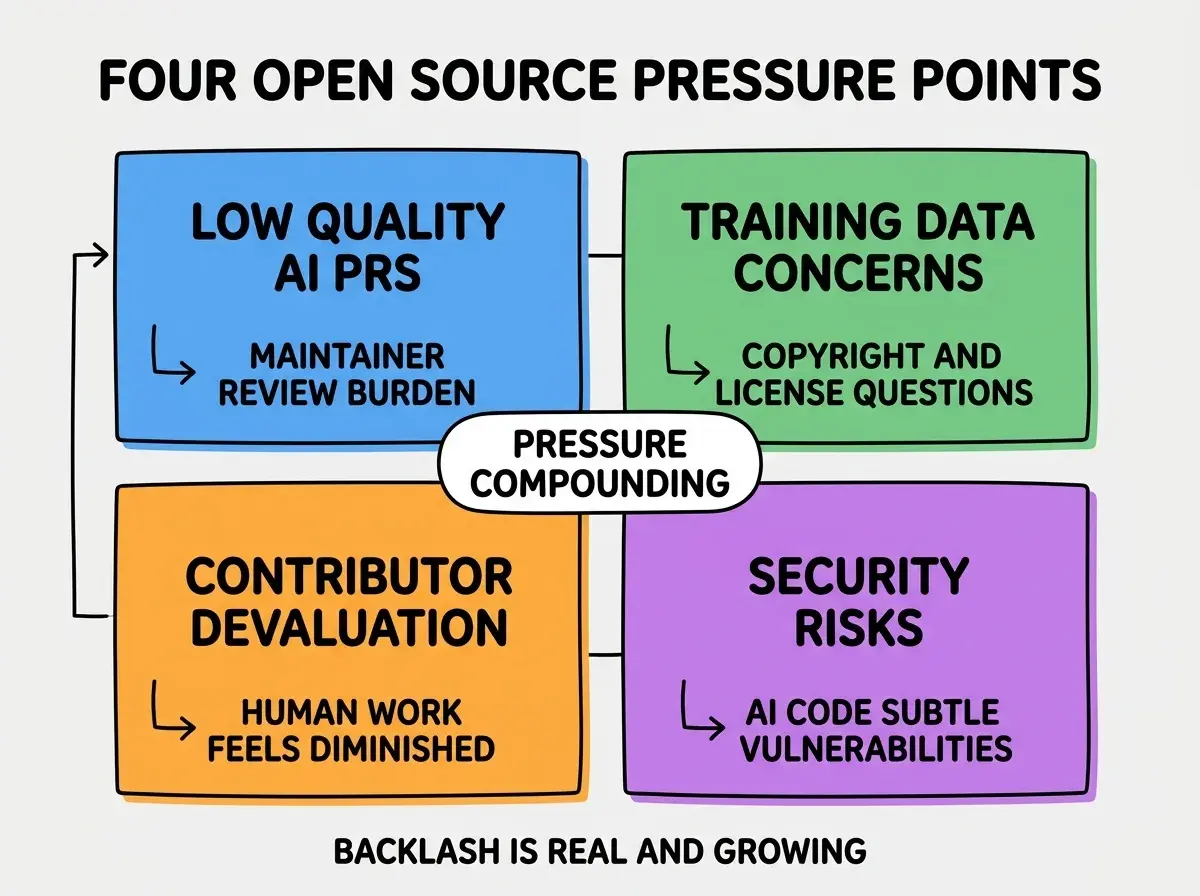
Pressure point 3, contributor devaluation. When AI gets credit for substantive contributions, human contributors feel diminished. The community fabric that sustained open-source weakens.
Pressure point 4, security risks. AI-generated code can contain subtle security vulnerabilities that look correct on review. Maintainers worry about merging unsafe code that was harder to review than human-written code.
How Major Projects Are Responding
Three response patterns characterize how projects are handling AI contributions in 2026.
Response 1, outright bans on AI-generated PRs. Some projects (NetBSD, certain Debian sub-projects) have banned AI-generated contributions explicitly. Maintainer effort to enforce is real but the policy is clear.
Browse more open source and policy guides
Read more pulse articlesResponse 2, mandatory disclosure of AI usage. Many projects now require contributors to disclose when AI was used. Disclosure does not prohibit contributions but creates accountability and informs review effort.
Response 3, focus on contributor accountability rather than tool restriction. Some projects accept AI-assisted contributions but hold the human contributor fully responsible. The approach is harder to enforce but preserves productivity benefits.
What This Means for AI Tool Users
Three implications matter for founders and developers using AI tools that depend on open-source.
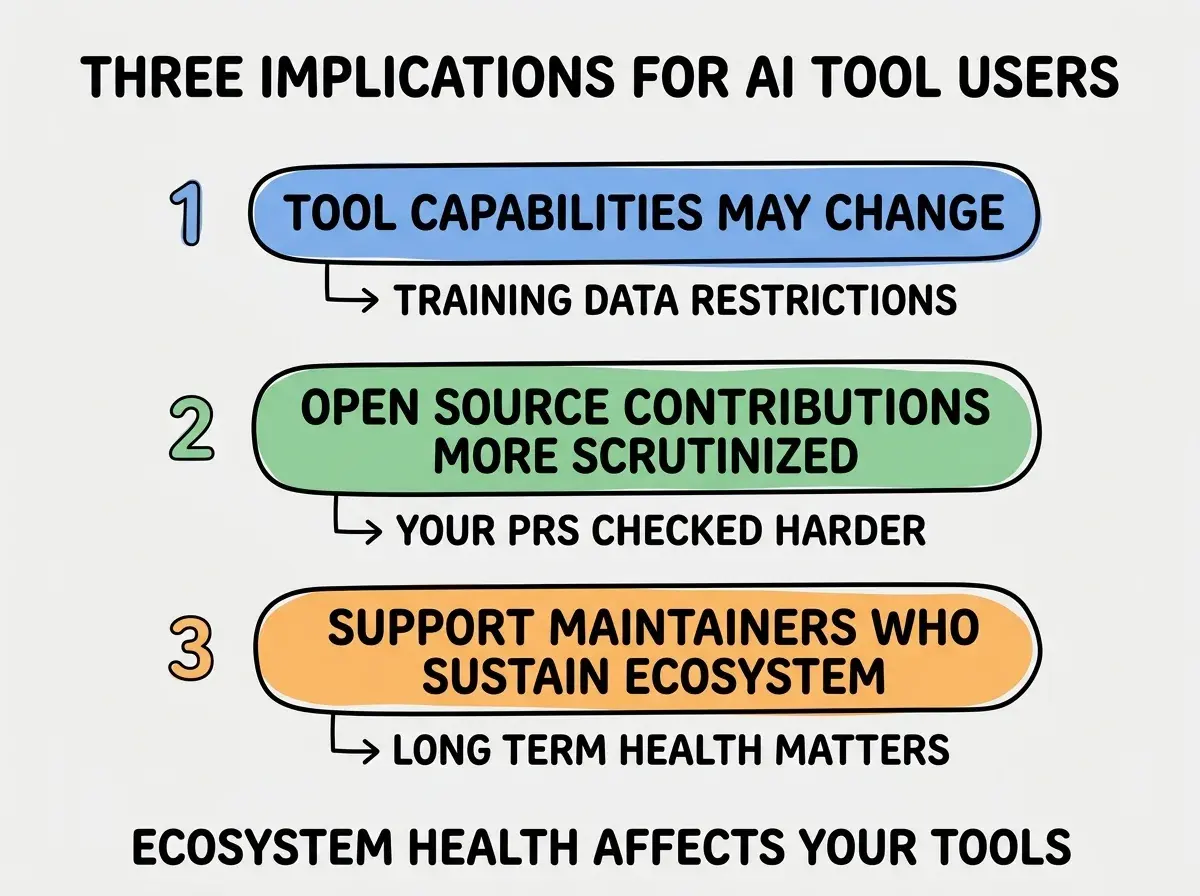
Implication 1, tool capabilities may change. As open-source projects restrict training data, AI tool capabilities may shift. The models you use today may evolve in unexpected ways as data sources change.
Implication 2, open-source contributions face more scrutiny. When you contribute AI-assisted code to open-source projects, expect closer review and potential rejection if the AI involvement is not disclosed.
Implication 3, supporting maintainers benefits the ecosystem. Sponsoring maintainers (GitHub Sponsors, OpenCollective) helps sustain the ecosystem your tools depend on. The investment is small relative to the value extracted.
How the Backlash Is Likely to Evolve
Three trajectories suggest where the open-source backlash is heading through 2027.
Trajectory 1, more projects will adopt explicit AI policies. What is currently informal in many projects will become explicit policy. Expect most major projects to have written AI policies by end of 2026.
Trajectory 2, AI vendors will offer "ethically trained" models. Pressure from open-source community is producing AI models trained only on permissively-licensed data. Premium tier models with cleaner provenance will emerge.
Trajectory 3, attribution and disclosure standards will mature. Tools to detect AI-generated code, disclosure standards for PRs, automated tagging will mature substantially. The friction of disclosure will decrease.
The combination suggests a more structured ecosystem rather than continued chaos. Founders who position for the structured future will adapt easily; those who hope the backlash fades will face increasing friction.
How to Contribute Responsibly to Open Source
Three patterns help when contributing AI-assisted code to open-source projects.
Pattern A, disclose AI usage in PR descriptions. State clearly when AI helped generate the code. Disclosure builds trust with maintainers and respects project policies.
Pattern B, do the deep review yourself before submitting. Do not submit AI-generated PRs without thorough personal review. The maintainer's time is donated; respect it by submitting only PRs you are confident in.
Pattern C, follow each project's specific AI policy. Projects have different policies; check before contributing. Following policies signals respect for the maintainer community.
The combination produces contributions maintainers actually want. Without these patterns, AI-generated PRs add to the burden that is driving the backlash; following them positions you as a contributor maintainers value.
The most damaging open-source mistake is treating AI tools as a license to contribute everywhere at high volume. Some founders use AI to generate dozens of PRs across many projects, hoping volume produces visibility. The fix is to focus contributions on projects you actually care about and use, with the same care you would apply to non-AI contributions. Quality contributions to a few projects produce more goodwill than volume contributions to many; the open-source community has long recognized this pattern, and AI does not change it.
The other mistake is dismissing the backlash as Luddite resistance. The maintainer concerns are substantive: real review burden, real license questions, real security risks, real community health issues. The fix is to engage with the concerns honestly rather than dismiss them; founders who understand maintainer perspective build better relationships with the ecosystem they depend on.
A third mistake is assuming AI tool vendors will solve the open-source tension on their behalf. Tool vendors are slow to address training data concerns, and the friction is unlikely to fully resolve. The fix is for individual contributors and companies to take responsibility for ethical AI use rather than waiting for vendors to handle it. Personal responsibility produces better outcomes than vendor reliance.
What This Means For You
The open-source backlash is real and reshaping how AI tools and open-source coexist in 2026. The four pressure points and emerging responses produce a more cautious environment than 2023 had.
- If you're a founder: Engage with open-source ecosystem health; sponsor maintainers, follow project policies, contribute thoughtfully. The ecosystem your tools depend on is worth protecting.
- If you're changing careers into development: Build understanding of open-source culture. The unwritten norms matter as much as the technical skills for senior roles.
- If you're a student: Contribute to open-source projects with care. Quality contributions teach more than quantity ever will, and they build the reputation that compounds over careers.
Browse more open source and ecosystem guides
Read more pulse articles