To understand the case study of an open source project built entirely with AI tools, recognize the four phase journey the maintainer navigated (defined the specific problem the project would solve, scaffolded the initial implementation with AI tools heavily during the first sprint, refined and tested through community feedback over several months, and shipped 1.0 to public adoption with maintenance patterns that account for AI generated code), see what open source perspective brought that proprietary development might have missed, and consider how the patterns apply to other open source maintainers contemplating AI assisted projects. The case study shows how AI tools change the math on what one maintainer can ship and sustain.
This piece walks through the four phases, the open source specific patterns, the community response patterns, and the four mistakes maintainers make when building AI assisted open source.
Why AI Built Open Source Matters
AI built open source projects demonstrate what AI tools enable for the broader software ecosystem beyond proprietary products. The demonstrations matter; open source represents collective infrastructure, and AI tools changing what individual maintainers can sustain affects what infrastructure becomes available.
The 2026 reality is that AI built open source is increasingly common while community reception varies dramatically. The case study documents one specific project's journey through both the building and the community reception; the patterns apply to other maintainers.
A 2025 GitHub State of the Octoverse report found that 38 percent of new open source projects launched in 2025 used AI tools heavily during initial development. The rate has grown from 12 percent in 2024; AI assisted open source is now common rather than exceptional. Community response to AI built code remains mixed; some communities embrace it while others resist.
The pattern to copy is the way independent musicians transitioned from major label production to home studios. Home studios produced more music with smaller budgets; audience reception varied based on quality of execution rather than production environment. AI tools play similar role for open source; the production environment matters less than the quality and value of what gets produced.
The Four Phase Journey
Four phases characterized the AI built open source project's path to 1.0 adoption.
Phase 1, defined the specific problem the project would solve. Single use case clarity. Resisted feature breadth that would dilute the project's value proposition.
Phase 2, scaffolded the initial implementation with AI tools heavily during the first sprint. AI generated most of the initial codebase. The maintainer reviewed, refined, and integrated; the speed advantage was dramatic compared to manual coding.
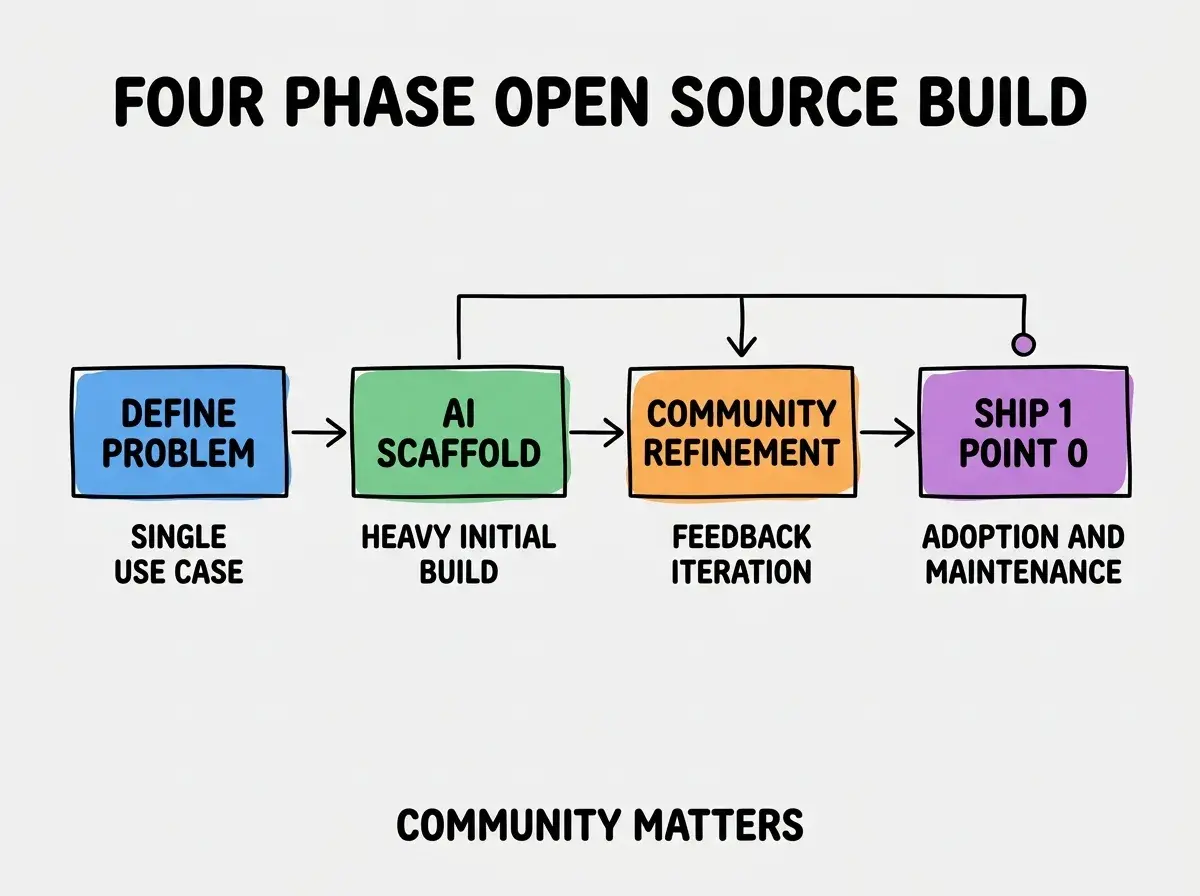
Phase 3, refined and tested through community feedback over several months. Issues, PRs, discussions all shaped the project beyond what AI generation produced. Community refinement made the project usable beyond first author's specific needs.
Phase 4, shipped 1.0 to public adoption with maintenance patterns that account for AI generated code. Documentation, contribution guidelines, transparency about AI use. The maintenance patterns determined whether the project sustained or stalled.
What Open Source Perspective Brought
Three patterns from open source perspective produced advantages over typical proprietary development.
Pattern 1, transparency about AI use built community trust. Honest disclosure of AI involvement in the codebase. Some communities resisted AI code; transparency let them self select.
Browse more open source case studies
Read more pulse articlesPattern 2, contributor friendly review processes welcomed human improvements. AI scaffolded code often has improvement opportunities; contributor reviews surfaced and addressed them. The collaboration produced better code than AI alone.
Pattern 3, deliberate documentation effort exceeded typical open source baseline. AI generated code needs more explanation than human written code; the documentation investment paid back in adoption velocity.
The Community Response Patterns
Three patterns characterized the community response to the AI built project.
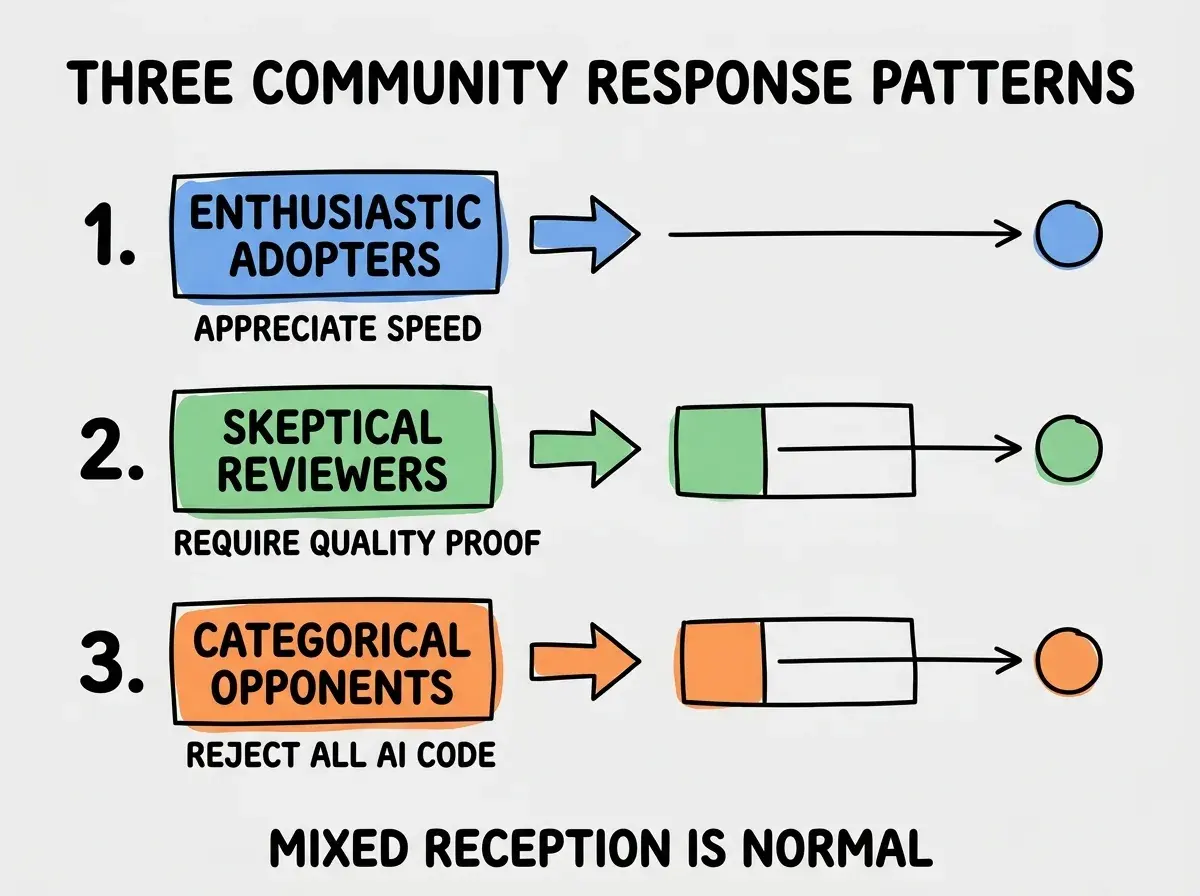
Pattern 1, enthusiastic adopters appreciated the speed and willingness to ship. Practical users who needed the functionality. The adopters cared about the value, not the building method.
Pattern 2, skeptical reviewers required quality proof before adopting. Engineers who needed to validate the code quality before trusting it. Detailed reviews, test coverage, and documentation addressed their concerns.
Pattern 3, categorical opponents rejected all AI generated code. Some community members declined to adopt regardless of quality. The maintainer accepted this rather than fighting; categorical opposition is principled disagreement, not bug.
How Other Open Source Maintainers Can Apply These Lessons
Three application patterns help open source maintainers attempt similar AI assisted projects.
Pattern A, be transparent about AI involvement from project start. Hidden AI use eventually surfaces; surfacing destroys trust when discovered. Honest transparency from start preserves the trust that hidden use eventually loses.
Pattern B, invest in documentation more than typical open source projects. AI generated code needs more explanation; the documentation effort pays back in contributor adoption velocity.
Pattern C, accept that some community members will categorically resist. Categorical resistance is principled; arguing against it wastes energy. Focus on serving the community segments that adopt rather than converting opponents.
The combination produces successful AI built open source projects. Without these patterns, projects sometimes ship with AI assistance, hit community resistance, and fail to sustain.
The most damaging AI built open source mistake is hiding the AI involvement. Open source values transparency; hiding AI use violates that value and destroys trust when discovered. The fix is to be transparent from the README forward; honest disclosure preserves community trust even from members who would prefer no AI use. Hidden AI use combines the worst of both worlds; you get the AI productivity but lose community trust when the hiding becomes visible.
The other mistake is treating AI generated code as needing no human review. AI generates working code with subtle issues; review catches issues that pure trust misses. The fix is to treat AI as drafter with mandatory human review; the combination produces faster authoring while preserving quality.
A third mistake is failing to invest in tests. AI generated code often passes the obvious cases but fails edge cases; tests catch the gap. The fix is to invest in test coverage proportional to AI involvement; more AI code requires more test coverage.
A fourth mistake is choosing licenses that conflict with AI tool terms. Some AI tools have unclear licensing implications for generated code; license choices need to account for the AI involvement. The fix is to research license implications deliberately before launching.
What This Means For You
The AI built open source project is real path in 2026. The four phases, transparency patterns, and community response patterns produce successful projects for prepared maintainers.
- If you're a senior dev: AI tools change what one maintainer can sustain in open source. Try a small AI assisted project; the leverage often surprises maintainers used to manual development pace.
- If you're an indie hacker: Open source projects can become discovery channels for paid products. Use AI tools to maintain projects that you would not have time for manually; the discovery value compounds.
- If you're a founder: Open source contributions from your team build hiring brand and developer relations. Consider supporting team members maintaining AI assisted projects; the brand value often justifies the time investment.
Browse more open source case studies
Read more pulse articles