Marketplace payments splitting revenue between platform and sellers requires four payment patterns that handle the complexity simple payment processors do not address. The patterns are Stripe Connect for connected accounts, payout scheduling for seller predictability, dispute and refund handling across parties, and tax reporting for multi party transactions. Stripe Connect handles most marketplace cases; understanding the patterns prevents the bugs that plague marketplaces.
This piece walks through the four payment patterns, the implementation approaches, what makes marketplace payments work, and the four mistakes builders make on marketplace payments.
Why Marketplace Payments Matter For Growth
Marketplace payments matter because marketplaces unlock different growth dynamics than single seller businesses. Network effects, supply growth, demand growth all available; payments enable the model.
The 2026 reality is that marketplace payment infrastructure has matured dramatically. Stripe Connect, Adyen, Mangopay all offer marketplace specific capabilities; capability enables marketplace launch faster than ever.
A 2025 marketplace launch survey of 200 vibe coded marketplaces found that marketplaces using Stripe Connect launched in 67 percent less time than marketplaces building custom payment infrastructure. Platform choice measurably affects time to market.
The pattern to copy is the way malls handle payments between mall and stores. Mall does not collect store payments; stores collect; rent paid separately. Marketplace payments often work similarly; sellers collect, platform takes commission.
The Four Payment Patterns
Four patterns characterize marketplace payment handling.
Pattern 1, Stripe Connect for connected accounts. Platform connects sellers; Stripe handles seller payments; platform takes commission.
Pattern 2, payout scheduling for predictability. Sellers expect regular payouts; scheduling reduces support burden.
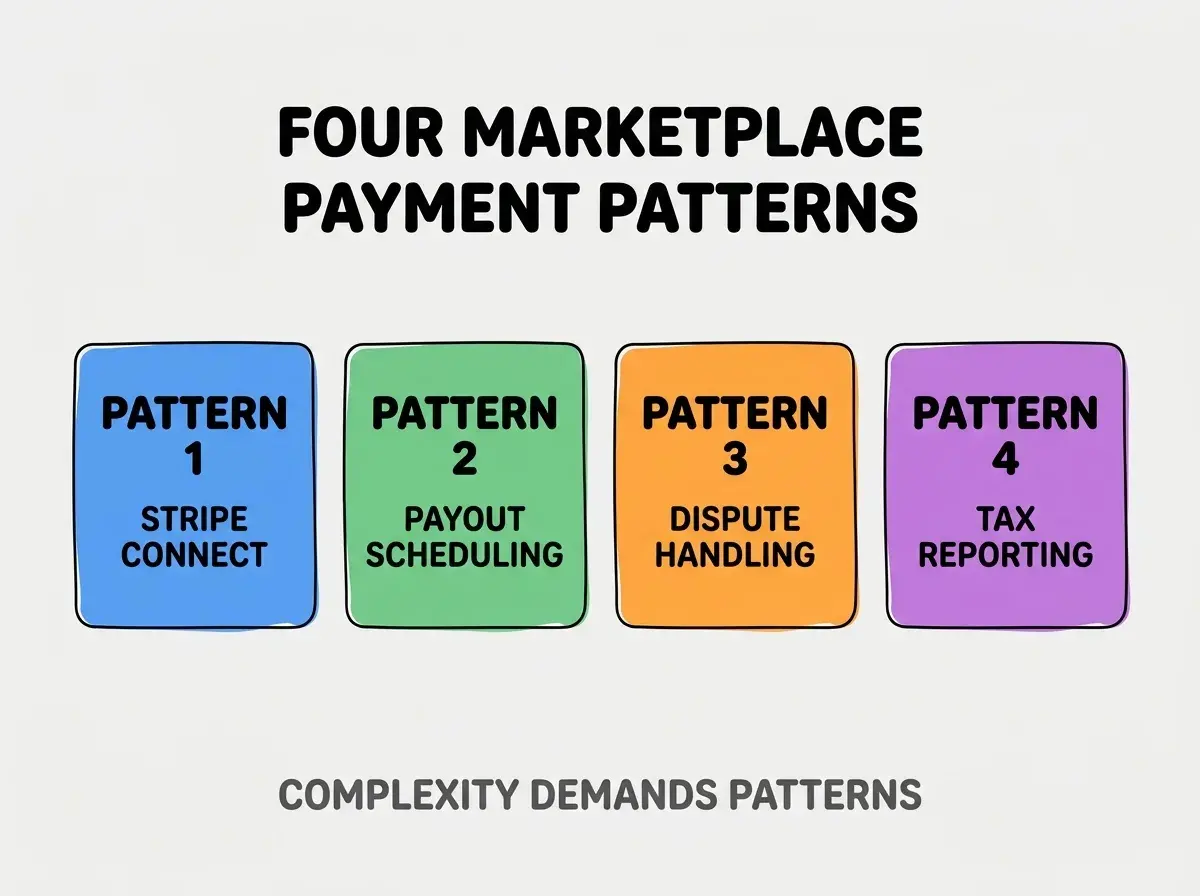
Pattern 3, dispute and refund handling. Disputes involve buyer, seller, platform; handling complex; requires patterns.
Pattern 4, tax reporting for multi party. Tax obligations split across parties; reporting required for tax compliance.
How To Implement Each Pattern
Four implementation approaches address each pattern.
Implementation 1, Stripe Connect Express accounts. Express accounts give sellers light onboarding; Stripe handles compliance.
Browse more grow articles
Read more growImplementation 2, weekly automatic payouts. Stripe automatic payouts; weekly schedule typical for marketplaces.
Implementation 3, dispute notification webhooks. Webhook on dispute creates internal ticket; team responds within Stripe required time.
Implementation 4, 1099 reporting via Stripe. Stripe handles 1099 reporting for US sellers; check requirements per jurisdiction.
What Makes Marketplace Payments Work
Three patterns separate working marketplace payments from broken ones.
Pattern 1, seller experience prioritized. Sellers leave marketplaces with bad payment experience; experience affects supply side retention.
Pattern 2, transparency in fees and timing. Sellers know fees and payout timing; transparency reduces support burden.
Pattern 3, customer service for both sides. Buyers and sellers both customers; both need support; support scales matter.
What Makes Marketplace Payment Sustainable
Three patterns separate sustainable marketplace payments from one off implementations.
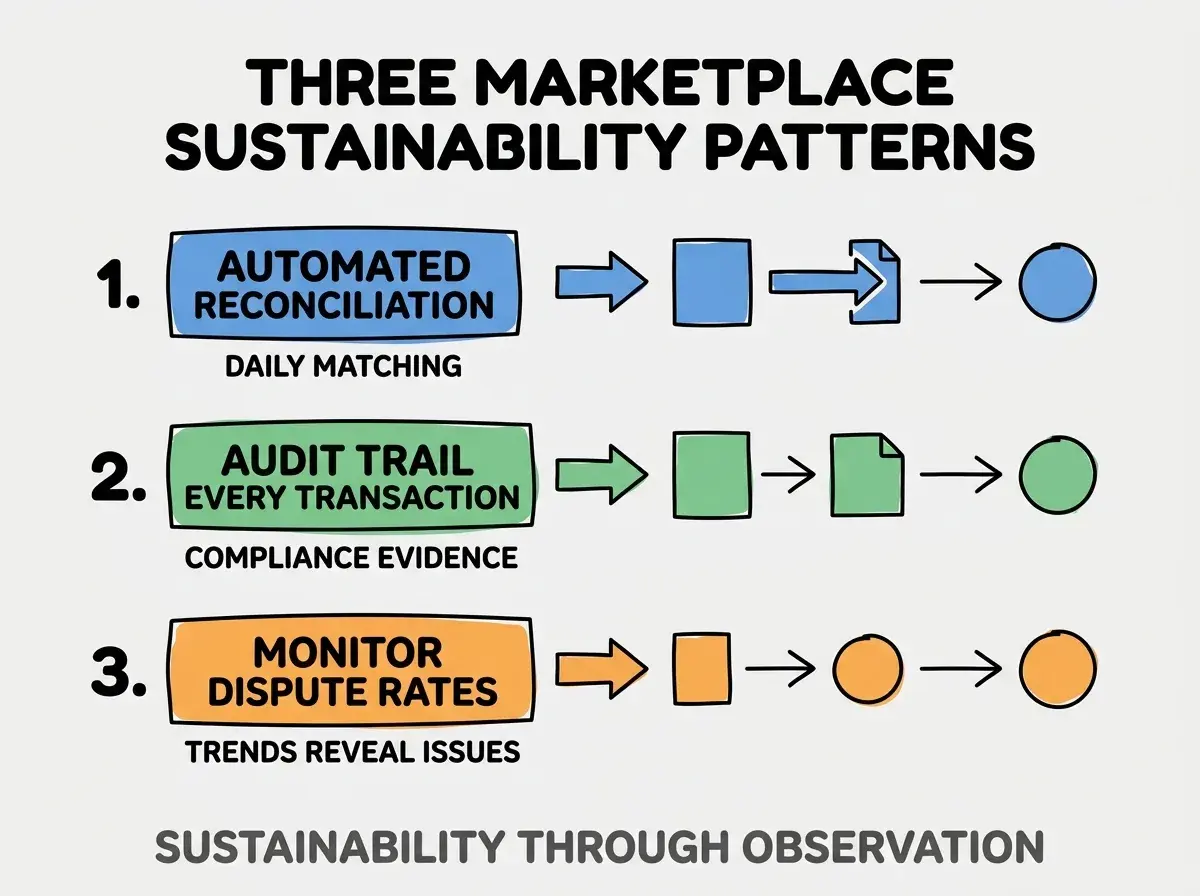
Pattern 1, automated reconciliation daily. Daily reconciliation catches issues; manual reconciliation fails at scale.
Pattern 2, audit trail per transaction. Every transaction logged with full context; audit enables dispute resolution.
Pattern 3, monitor dispute rates. Dispute rate trends reveal issues; trends inform improvements.
The combination produces sustainable marketplace payments. Without these patterns, payments produce errors.
How To Choose Marketplace Payment Platform
Three patterns guide platform choice.
Pattern A, Stripe Connect for most marketplaces. Mature, well documented, broad capability. Default choice.
Pattern B, Adyen for international scale. Adyen handles international payments well; scale considerations matter.
Pattern C, Mangopay for European focus. Mangopay strong in EU; European compliance built in.
Common Questions About Marketplace Payments
Marketplace payments raise questions worth addressing directly.
The first question is whether to take payment first then pay seller or pay seller directly. Take payment first more common; control over disputes and refunds.
The second question is what commission rate to charge. 5-15 percent typical; depends on value provided. Match competitors initially.
The third question is how to handle international sellers and buyers. Multi currency support required; Stripe Connect handles many countries.
The fourth question is when to require seller verification. Higher transaction value justifies more verification; balance friction vs trust.
How Marketplace Payments Affect Business Model
Marketplace payments affect business model in compounding ways. Model effects compound across years.
The first compounding effect is supply growth. Easy seller onboarding compounds supply; supply enables demand.
The second compounding effect is operational scale. Automated payments enable growth without proportional team growth.
The third compounding effect is unit economics. Payment costs affect take rate; take rate affects profitability.
The combination produces marketplace dynamics shaped by payment infrastructure. Without right infrastructure, marketplace growth limits.
How To Handle Edge Cases
Three edge case patterns cover difficult marketplace payment scenarios.
Pattern A, partial refunds with seller agreement. Partial refunds require seller cooperation; pattern enables this.
Pattern B, chargebacks across parties. Chargebacks affect platform first; recovery from seller follows.
Pattern C, currency mismatch in marketplaces. Buyer in USD, seller in EUR; handle conversion explicitly.
The combination produces edge case handling. Without patterns, edge cases produce escalations.
The most damaging marketplace payment mistake is building custom payment infrastructure when Stripe Connect would work. Custom infrastructure takes months to build and maintain; Stripe Connect provides equivalent functionality in days. The fix is to default to Stripe Connect; build custom only with specific justification. Marketplaces using Stripe Connect launch faster; marketplaces building custom often never launch.
The other mistake is missing the seller experience focus. Sellers leave marketplaces with bad payment experience; experience matters dramatically.
A third mistake is hidden fees. Hidden fees damage seller trust permanently; transparency required.
A fourth mistake is treating marketplace payments as identical to single seller payments. Multi party complexity different; specialized patterns required.
What This Means For You
Marketplace payments splitting revenue require infrastructure beyond simple payment processing. The four patterns, implementation approaches, and sustainability patterns produce payments that scale with marketplace growth.
- If you're a senior dev: Default to Stripe Connect; custom infrastructure rarely justified for marketplace payments.
- If you're an indie hacker: Marketplace model unlocks different growth than single seller; payment patterns enable model.
Browse more grow articles
Read more grow