Managing environment specific configurations enables apps to behave differently across dev, staging, and production while sharing code. Four configuration components matter: environment variables (per environment values), feature flags (toggle features per environment), endpoint configuration (API URLs per environment), and secret management (different secrets per environment). Without config management, environments drift; with management, environments consistent.
This tutorial walks through the four components, the implementation patterns, what makes config management sustainable, and the four mistakes builders make on environment configurations.
Why Configuration Management Matters
Configuration management matters because environments differ; configurations encode differences. Without management, environments diverge unpredictably.
The 2026 reality is that config management tools (Doppler, dotenv-vault, platform native) make management accessible. Maturation removed barrier.
A 2025 production reliability study of 500 vibe coded apps found that apps with proper environment configuration management experienced 71 percent fewer environment related incidents than apps with ad hoc configuration, primarily through preventing wrong config in wrong environment. Management measurably affects reliability.
The pattern to copy is the way restaurants standardize recipes across locations. Same recipe; location specific ingredients (water, salt). Configurations work the same way; same code different per environment values.
The Four Configuration Components
Four components form complete config management.
Component 1, environment variables. Per environment values. Foundation.
Component 2, feature flags. Toggle features. Control.
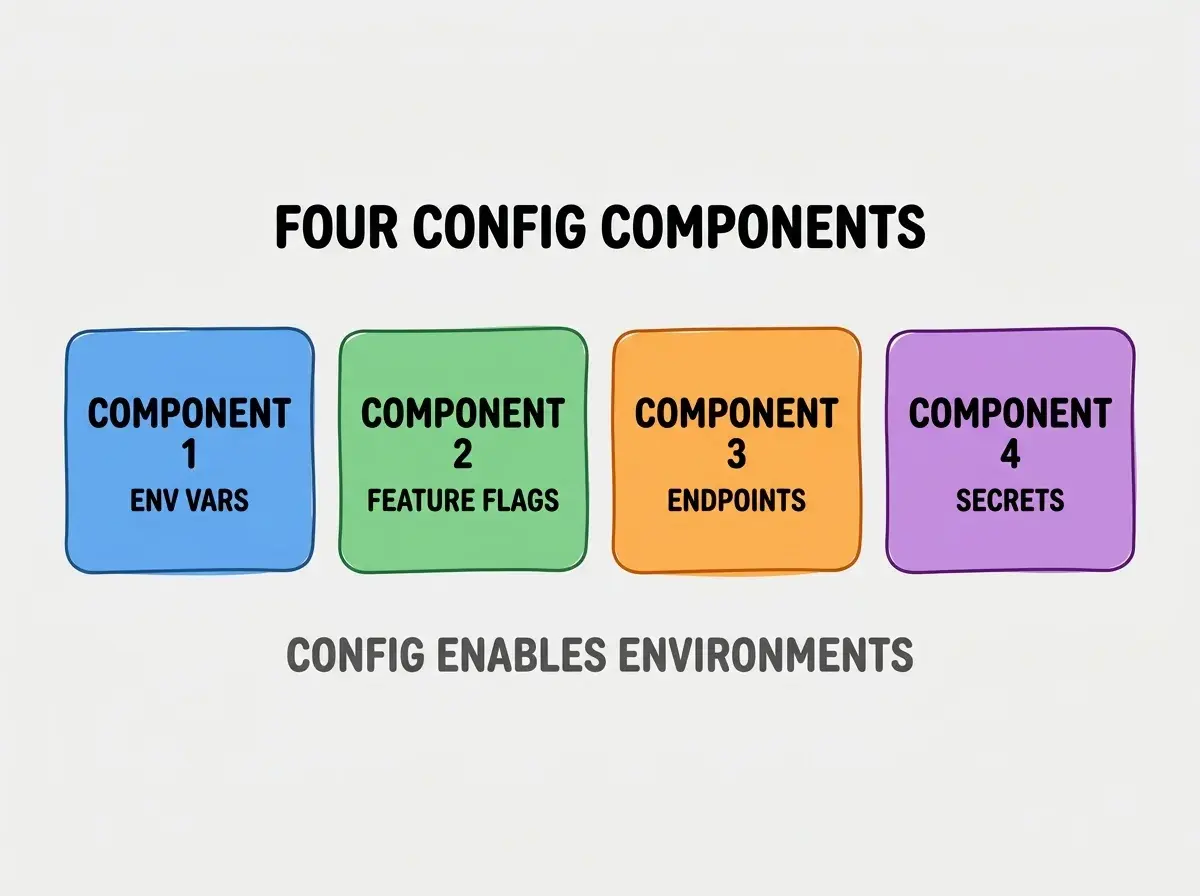
Component 3, endpoints. API URLs per env. Targeting.
Component 4, secrets. Different per env. Security.
How To Implement Each Component
Four implementation patterns address each component.
Implementation 1, .env files per environment. Standard pattern.
Browse more ship
Read more shipImplementation 2, feature flag service. LaunchDarkly, GrowthBook, custom.
Implementation 3, endpoint config in env vars. API URLs as env vars.
Implementation 4, secrets management per env. Vault, Doppler per env.
What Makes Config Management Sustainable
Three patterns separate sustainable from operational pain.
Pattern 1, single source of truth. Configs from one source; not scattered.
Pattern 2, automated deployment. Config deployed with code.
Pattern 3, audit trail of changes. Config changes tracked.
What Makes Config Strategy Effective
Three patterns separate effective from theatrical.
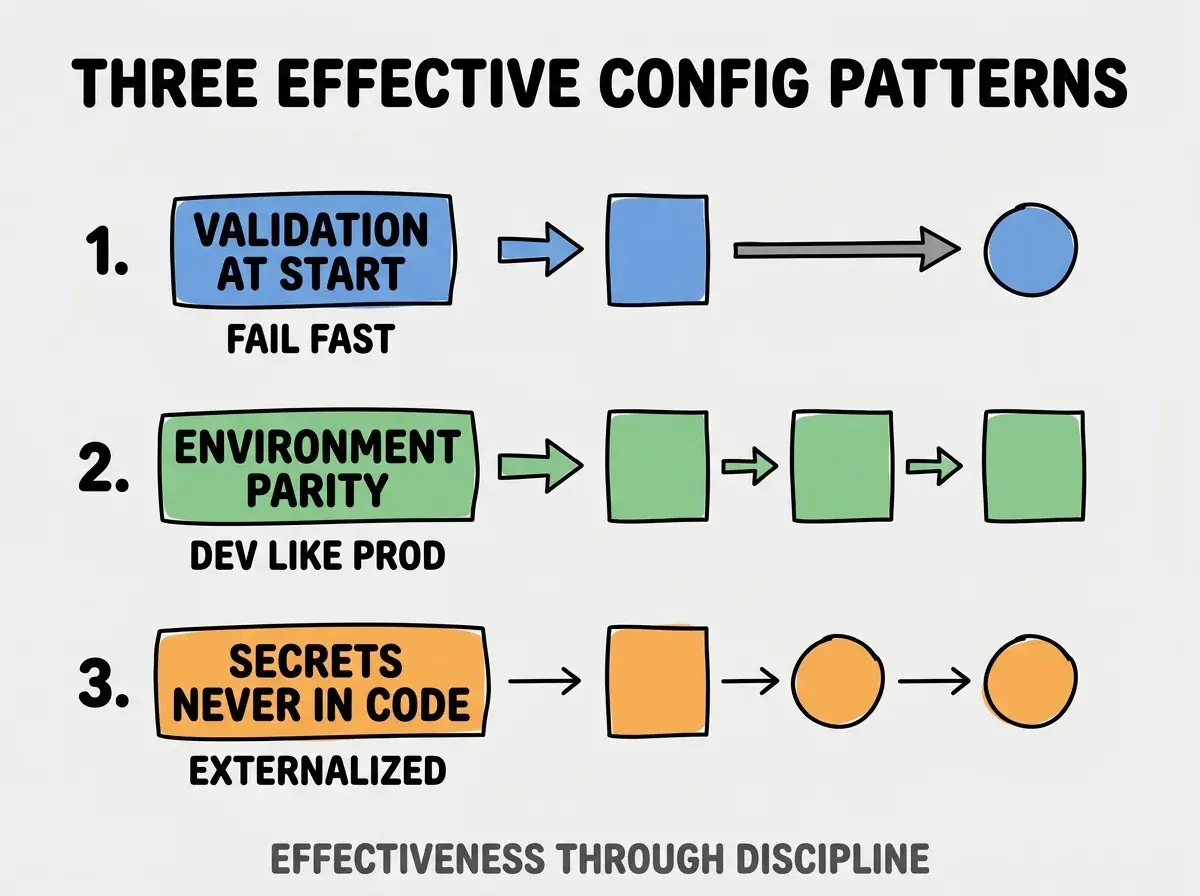
Pattern 1, validation at start. Fail fast on missing config.
Pattern 2, environment parity. Dev like prod; reduces surprises.
Pattern 3, secrets never in code. Always externalized.
The combination produces effective config. Without these patterns, config issues surface in production.
How To Validate Config
Three patterns help validation.
Pattern A, schema validation at startup. Zod, Joi validate.
Pattern B, required vs optional clear. Required fail; optional default.
Pattern C, type safety for config. TypeScript types config.
Common Questions About Configuration
Configuration raises questions worth addressing directly.
The first question is whether to use .env or platform vars. Both; .env local, platform prod.
The second question is what about config in code. No; externalize always.
The third question is whether to share config across services. Sometimes; often per service.
The fourth question is how to handle local development. .env.local; not committed.
How Configuration Affects Reliability
Configuration affects reliability in compounding ways. Reliability effects compound across deploys.
The first compounding effect is environment consistency. Consistent envs predictable.
The second compounding effect is incident prevention. Wrong config wrong env causes incidents.
The third compounding effect is deployment confidence. Validated config deploys safer.
The combination produces reliability shaped by config discipline. Without discipline, reliability fragile.
How To Handle Config Changes Safely
Three patterns help safe changes.
Pattern A, change config via PR. Review config changes.
Pattern B, deploy config with code. Atomic deployment.
Pattern C, monitoring after change. Issues caught early.
The combination produces safe config changes. Without patterns, changes risky.
The most damaging config mistake is hardcoding environment specific values. Hardcoded values means same code different environments has same wrong values. The fix is to externalize all environment values; config in env vars or service. Builders who externalize maintain consistency; builders who hardcode produce wrong behavior in wrong environments.
The other mistake is missing the validation. Missing config silent in production.
A third mistake is over engineering with too many flags. Flag debt accumulates.
A fourth mistake is treating config as one off setup. Config evolves with code.
What This Means For You
Managing environment specific configurations enables consistent code across diverse environments. The four components, implementation patterns, and sustainability approaches produce config management that compounds production reliability.
- If you're a senior dev: Config fluency expected; learn patterns deeply.
- If you're a founder: Config affects deployment confidence; investment justified.
- If you're changing careers: Config expertise valuable; specialty differentiates.
Browse more ship
Read more ship