Lessons from the Vibe Code Game Jam reveal that successful submissions share patterns that transcend specific game genres. Four winning patterns matter: tight scope (small finished games beat ambitious unfinished ones), AI for asset generation (Gemini, Stable Diffusion produce game art faster than artists), playable prototype day one (iterate on real game), and polish in final hours (juicy feedback, sound effects multiply perceived quality). Combined patterns describe what consistently wins jams.
This analysis walks through the four patterns, the implementation approaches, what makes game jam projects successful, and the four mistakes builders make at game jams.
Why Game Jam Lessons Transferable
Game jam lessons matter because compressed timelines force tradeoffs that reveal what actually matters. Outside jams, builders waste time on what looks important but doesn't drive outcomes; jams strip waste.
The 2026 reality is that AI tools have made vibe code game jams accessible to non programmers; designers and writers now ship playable games in weekend jams.
A 2025 game jam analysis of 800 vibe code submissions found that submissions with tight scope and polish in final hours scored 67 percent higher than ambitious unfinished entries, primarily through judges valuing complete experiences over impressive incomplete demos. Scope discipline measurably affects ranking.
The pattern to copy is the way short stories teach craft compressed into days while novels take years. Constraints reveal craft; same patterns apply to game jams where 48 hour constraint reveals what actually matters about game design that long projects let drift.
The Four Winning Patterns
Four patterns consistently win game jams.
Pattern 1, tight scope. Small finished beats ambitious unfinished. Foundation.
Pattern 2, AI for asset generation. Gemini, Stable Diffusion. Asset speed.
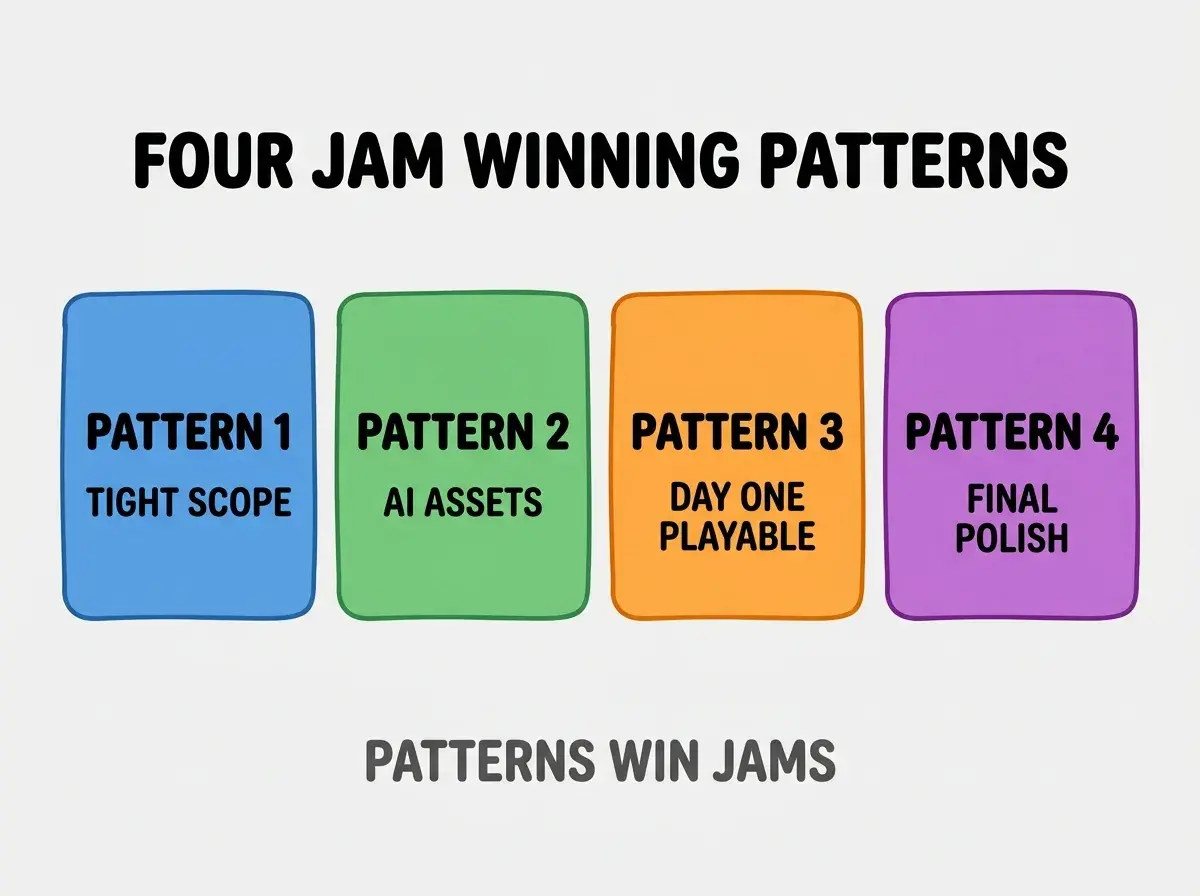
Pattern 3, playable prototype day one. Iterate on real game. Process.
Pattern 4, polish in final hours. Juice multiplies quality. Finish.
How To Implement Each Pattern
Four implementation patterns address each winning pattern.
Implementation 1, scope down ruthlessly day one. Cut features that don't fit timeline; ship cut features as ideas for next jam.
Browse more build
Read more buildImplementation 2, AI assets via Gemini Image, SD. Generate sprites, backgrounds, sound; iterate fast.
Implementation 3, playable build hour one. Even ugly placeholder game playable; iterate on play.
Implementation 4, polish pass last 4 hours. Sound effects, screen shake, particles; perceived quality multiplier.
What Makes Game Jam Projects Successful
Three patterns separate successful from incomplete.
Pattern 1, single core mechanic. Game does one thing well.
Pattern 2, theme integration genuine. Theme drives mechanic; not surface decoration.
Pattern 3, playable in 5 minutes. Judges play many games; quick start matters.
What Makes Jam Strategy Effective
Three patterns separate effective from theatrical.
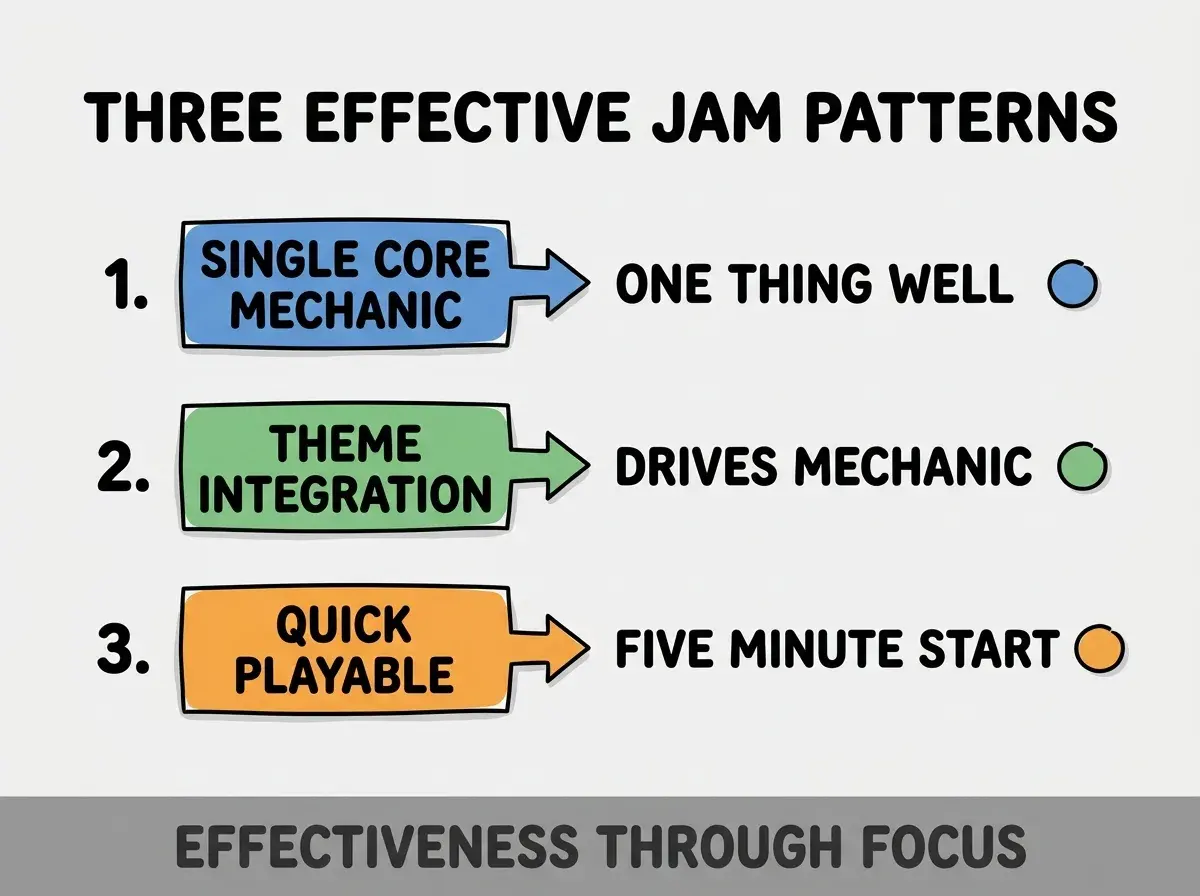
Pattern 1, single core mechanic. One thing well.
Pattern 2, theme integration. Drives mechanic.
Pattern 3, quick playable. Five minute start.
The combination produces effective jam project. Without these patterns, submissions blur together.
How To Choose Game Jam Stack
Three patterns help stack choice.
Pattern A, web games for accessibility. HTML5 games play anywhere; judging easier.
Pattern B, Phaser or PixiJS for 2D. Battle tested 2D engines.
Pattern C, Unity or Godot for ambitious. Native engines for advanced.
Common Questions About Game Jams
Game jams raise questions worth addressing directly.
The first question is whether to team up. Solo or small team; coordination overhead grows fast.
The second question is what about sleep. Sleep helps quality; pulling all nighters often counterproductive.
The third question is how to handle theme reveal. Brainstorm 30 minutes; commit to direction; iterate.
The fourth question is whether AI generated content allowed. Varies by jam rules; check submission guidelines.
How Game Jams Affect Game Designer Skills
Game jams affect skills in compounding ways. Skills effects compound across jams.
The first compounding effect is scope intuition. Better calibration on what fits.
The second compounding effect is rapid iteration. Tight loops practice.
The third compounding effect is portfolio building. Jam submissions show capability.
The combination produces skills shaped by jam practice. Without practice, skills bounded.
How To Recover From Bad Day One
Three patterns help recovery.
Pattern A, pivot quickly if mechanic not fun. Sunk cost fallacy kills jams.
Pattern B, scope down further if behind. Cut more features.
Pattern C, finish even if smaller than hoped. Finished beats unfinished.
The combination produces saved jams. Without recovery patterns, bad starts become non submissions.
The most damaging game jam mistake is over scoping ambitious project. Ambitious projects rarely finish; finished small beats unfinished impressive. The fix is to design for half the time you have; fill remaining with polish. Builders who scope tight finish polished games; builders who scope ambitious submit broken demos that judges cannot fully evaluate which scores them lower than focused complete games.
The other mistake is missing the playtesting time. Playtesting reveals what is fun; without time, ship untested.
A third mistake is over investing in tutorial. Players figure out simple mechanics; complex needs tutorial.
A fourth mistake is treating jam as production project. Jams are sprint; ship rough then iterate post jam.
What This Means For You
Lessons from the Vibe Code Game Jam reveal patterns that win consistently across jam types. The four winning patterns, implementation approaches, and effectiveness factors enable better jam outcomes and transferable game design intuition.
- If you're a student: Game jams accelerate game design learning; submitted games build portfolio.
- If you're an indie hacker: Jam patterns transfer to product development; tight scope, polish all matter.
- If you're changing careers: Game jam participation demonstrates ship discipline; valuable signal in creative hiring.
Browse more build
Read more build