A puzzle game with procedural generation creates infinite playable puzzles algorithmically rather than hand crafted. Four design components matter: puzzle generator algorithm (creates valid puzzles solvable from initial state), difficulty calibration (procedural difficulty matches player skill), validator (ensures generated puzzles solvable), and seed system (reproducible puzzles for sharing). The build takes a weekend with vibe coding tools and produces game with replayability hand crafted alternatives cannot match.
This tutorial walks through the four design components, the prompts that build each, what makes procedural puzzles engaging, and the four mistakes builders make on procedural puzzle games.
Why Procedural Puzzle Games Matter
Procedural puzzle games matter because hand crafted puzzles exhaust players quickly while procedural offers infinite content. AI assists procedural design substantially.
The 2026 reality is that vibe coding tools enable procedural games in weekend that previously required week of traditional development. Build capability democratizes procedural games.
A 2025 indie game survey of 300 vibe coded puzzle games found that procedurally generated puzzles maintained 3.8x longer player engagement than hand crafted puzzle sets, primarily through infinite content removing exhaustion. Procedural generation measurably affects retention.
The pattern to copy is the way Tetris pioneered procedural piece generation. Random pieces from set; player skill matched against pieces. Same patterns apply to broader puzzle types; procedural enables endless play.
The Four Design Components
Four components form complete procedural puzzle game.
Component 1, generator algorithm. Creates puzzles from rules; validator ensures solvable. Algorithm core.
Component 2, difficulty calibration. Difficulty matches player skill; adaptive over session.
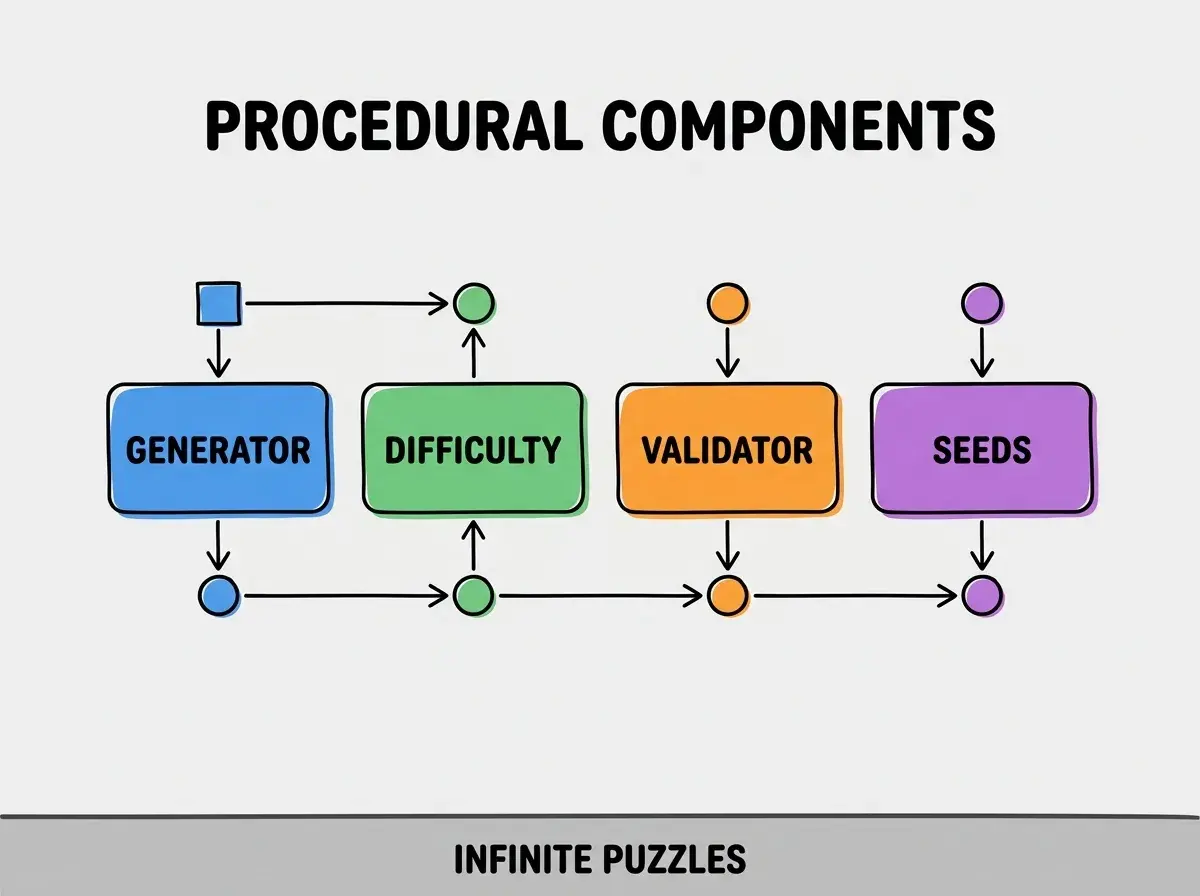
Component 3, validator. Generated puzzles solvable; impossible puzzles frustrate.
Component 4, seed system. Reproducible puzzles; players share specific puzzles.
The Prompts That Build Each Component
Four prompts implement each component.
Prompt 1, build generator. "Sudoku puzzle generator: creates valid Sudoku grids with N numbers removed. Generator ensures unique solution exists."
Browse more build
Read more buildPrompt 2, add difficulty. "Difficulty levels: easy (40 numbers shown), medium (30), hard (20), expert (17). Player level adapts based on solve time."
Prompt 3, build validator. "Solver verifies generated puzzle solvable in reasonable time; rejects unsolvable or trivially easy."
Prompt 4, add seed system. "Each puzzle has seed (number). Same seed produces same puzzle; players share seed for same puzzle experience."
What Makes Procedural Puzzles Engaging
Three patterns separate engaging puzzles from boring ones.
Pattern 1, difficulty progression. Increasing difficulty matches improving skill; flat difficulty bores.
Pattern 2, novel patterns within genre. Variety within genre; novelty maintains interest.
Pattern 3, satisfaction of solve. Solve feels earned; trivial puzzles unsatisfying.
What Makes Procedural Games Sustainable
Three patterns separate sustainable procedural games from one off projects.
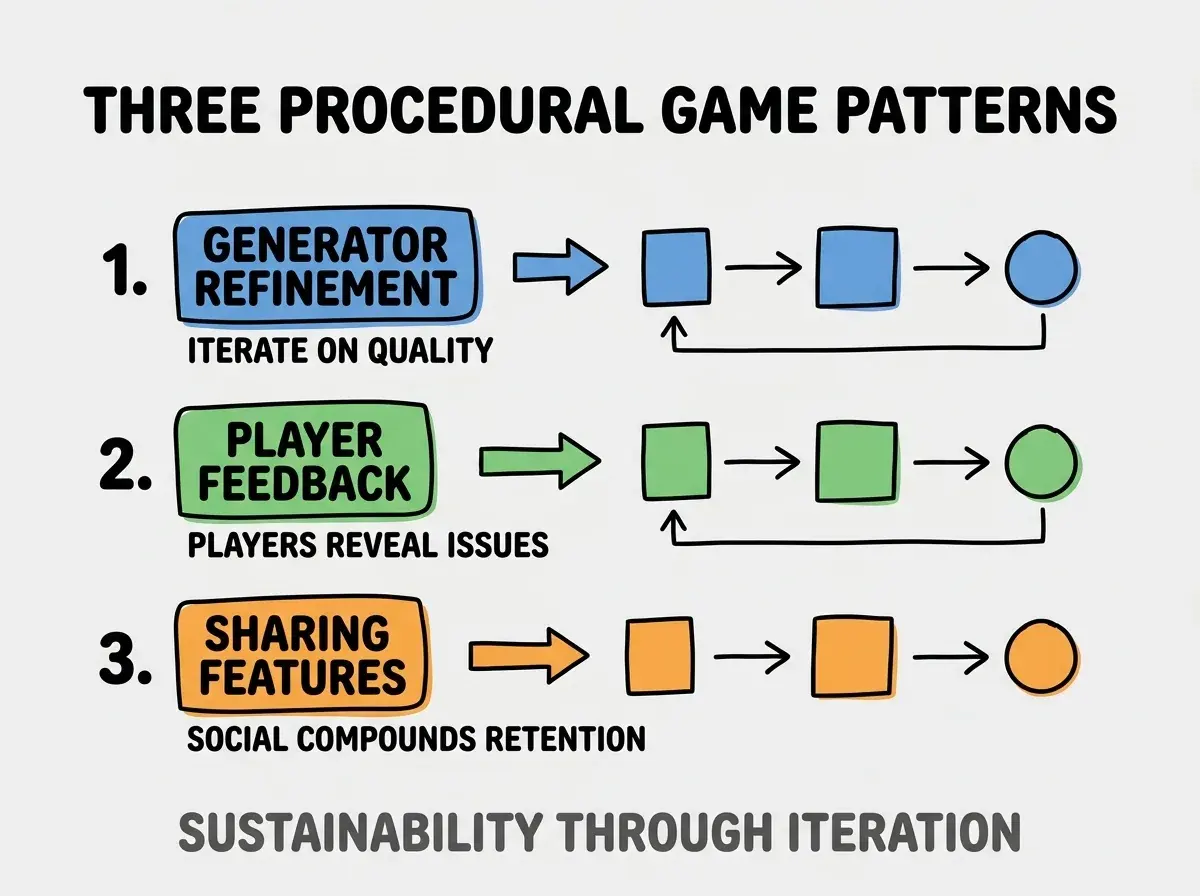
Pattern 1, generator refinement. Iterate on quality; bad puzzles ruin experience.
Pattern 2, player feedback. Players reveal issues; feedback compounds quality.
Pattern 3, sharing features. Social compounds retention; shared puzzles draw players.
The combination produces sustainable procedural games. Without these patterns, games produce initial novelty then decline.
How To Calibrate Difficulty
Three patterns help calibration.
Pattern A, measure solve time per puzzle. Solve time signals difficulty match.
Pattern B, adjust difficulty based on success rate. Success too high, increase; success too low, decrease.
Pattern C, allow manual difficulty selection. Players prefer choice sometimes; selection respects.
Common Questions About Procedural Games
Procedural games raise questions worth addressing directly.
The first question is whether AI generates better puzzles than algorithms. Sometimes; AI good at variety, algorithms good at validity. Hybrid often best.
The second question is what genres work for procedural. Sudoku, crosswords, mazes, match three all work. Genres matter.
The third question is whether to add daily puzzle. Yes; daily puzzle creates ritual; ritual compounds engagement.
The fourth question is how to monetize. Premium themes, hint packs, ad supported all work.
How Procedural Games Affect Engagement
Procedural games affect engagement in compounding ways. Engagement effects compound across player base.
The first compounding effect is infinite content. Players never run out; running out kills engagement.
The second compounding effect is skill matching. Adaptive difficulty maintains flow; flow compounds.
The third compounding effect is sharing virality. Shared puzzles draw new players; sharing compounds growth.
The combination produces engagement shaped by procedural quality. Without procedural, engagement bounded by content production rate.
How To Use AI For Puzzle Design
Three patterns help AI assist design.
Pattern A, AI generates puzzle variations. AI extends generator output; variations compound.
Pattern B, AI tunes difficulty parameters. AI tunes based on player data; tuning improves matching.
Pattern C, AI suggests new genre extensions. AI suggests; designer evaluates. Suggestions inform design.
The combination produces AI assisted procedural design. Without AI, design depends on individual creativity.
The most damaging procedural game mistake is shipping generator without validator. Generators sometimes produce unsolvable puzzles; players hit unsolvable and quit. The fix is to always validate before serving puzzle to player; validator filters out bad output. Builders who validate maintain trust; builders who skip lose players to frustrated quitting.
The other mistake is missing the difficulty progression. Constant difficulty bores; progression maintains interest.
A third mistake is over indexing on procedural variety. Too much variety overwhelming; constraints help.
A fourth mistake is treating it as one off generator. Generators evolve; ongoing refinement compounds quality.
What This Means For You
A puzzle game with procedural generation enables infinite engaging content algorithmically. The four components, prompts, and sustainability patterns produce procedural games that compound player engagement.
- If you're a student: Procedural puzzle games build CS skills (algorithms, data structures); ship and learn.
- If you're a senior dev: Procedural design tests algorithm fluency; good portfolio piece.
- If you're an indie hacker: Procedural games scale better than hand crafted; consider for indie game projects.
Browse more build
Read more build