A multiplayer card game enables real time card play between players. Four feature areas matter: game state management (cards, hands, turns synced across players), real time networking (WebSockets for low latency), matchmaking (pairing players for games), and game logic (rules enforcement, win conditions, scoring). The build takes a weekend with vibe coding tools and produces multiplayer game accessible to indie scale that traditionally required dedicated game development teams.
This tutorial walks through the four feature areas, the prompts that build each, what makes multiplayer card games engaging, and the four mistakes builders make on multiplayer games.
Why Build Multiplayer Card Games
Multiplayer card games matter because card games translate to digital well; well designed digital cards offer experiences physical cannot match (instant matchmaking, statistics, accessibility).
The 2026 reality is that multiplayer infrastructure (Pusher, Ably, Supabase Realtime) makes multiplayer accessible at indie scale. Maturation removes infrastructure barrier.
A 2025 indie game survey of 200 vibe coded multiplayer games found that card games achieved 5.2x higher player retention than single player games, primarily through social play creating ongoing engagement reasons. Multiplayer measurably affects retention.
The pattern to copy is the way Hearthstone built dominant card game with relatively simple core mechanic. Simple mechanic plus multiplayer plus collection produces engaging game. Same patterns apply at indie scale.
The Four Feature Areas
Four feature areas form complete multiplayer card game.
Feature 1, game state management. Cards, hands, turns; synced across players. State source of truth.
Feature 2, real time networking. WebSockets for low latency; HTTP too slow for cards.
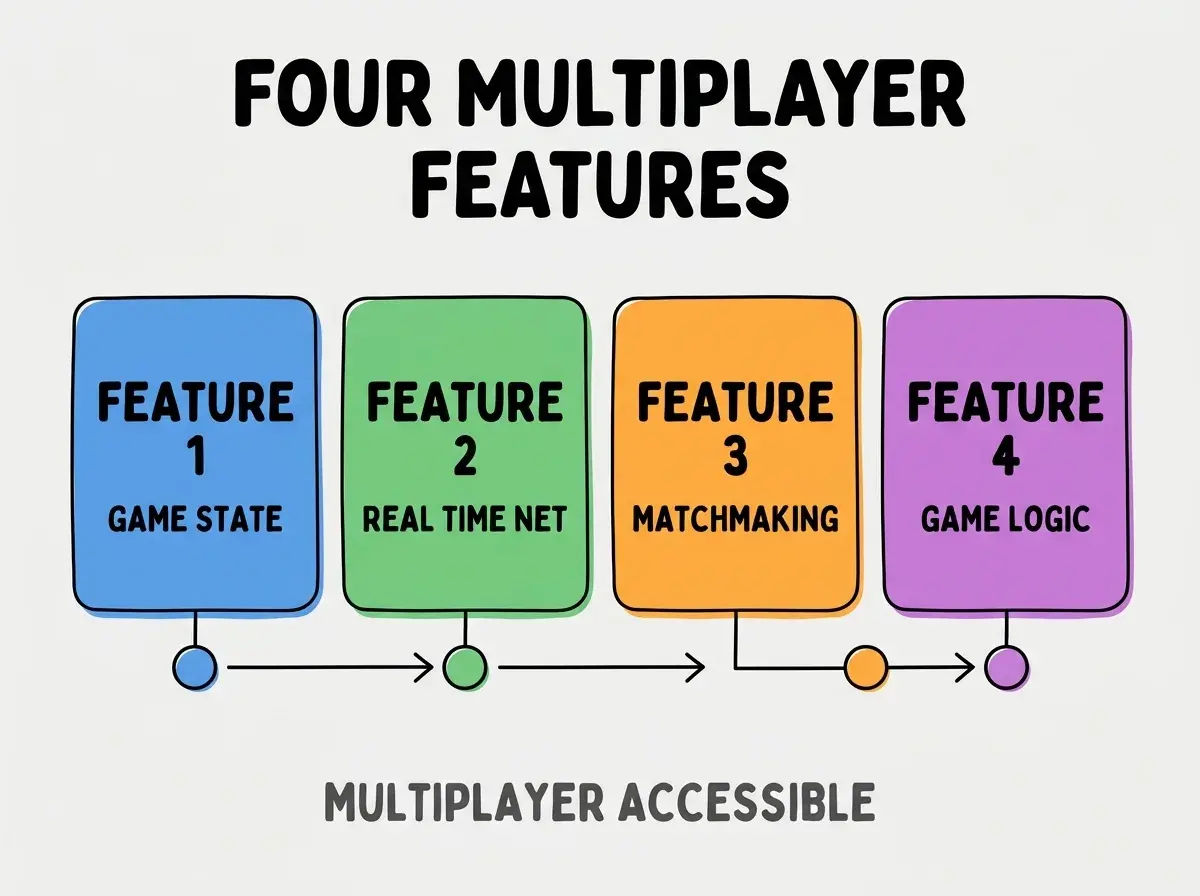
Feature 3, matchmaking. Pairing players; queue management. Without matchmaking, games stall.
Feature 4, game logic. Rules, win conditions, scoring. Logic enforces fairness.
The Prompts That Build Each Feature
Four prompts implement each feature.
Prompt 1, build game state. "Game state stored server side: cards in deck, hands per player, current turn, played cards. State syncs to all players via WebSocket on changes."
Browse more build
Read more buildPrompt 2, add real time networking. "Supabase Realtime for game state sync. Players subscribe to game; changes propagate within 100ms."
Prompt 3, build matchmaking. "Player joins queue; system pairs with waiting player. Game created when pair found. Timeout if no pair after 60 seconds."
Prompt 4, add game logic. "Rules engine for [game type]: card play validation, turn order, win conditions, scoring. Logic server side; clients display."
What Makes Multiplayer Card Games Engaging
Three patterns separate engaging games from frustrating ones.
Pattern 1, fast match start. Long matchmaking kills engagement; fast start maintains interest.
Pattern 2, low latency play. Lag frustrates; sub 200ms feels responsive.
Pattern 3, fair game logic. Cheating ruins multiplayer; server side enforcement essential.
What Makes Multiplayer Games Sustainable
Three patterns separate sustainable games from initial enthusiasm.
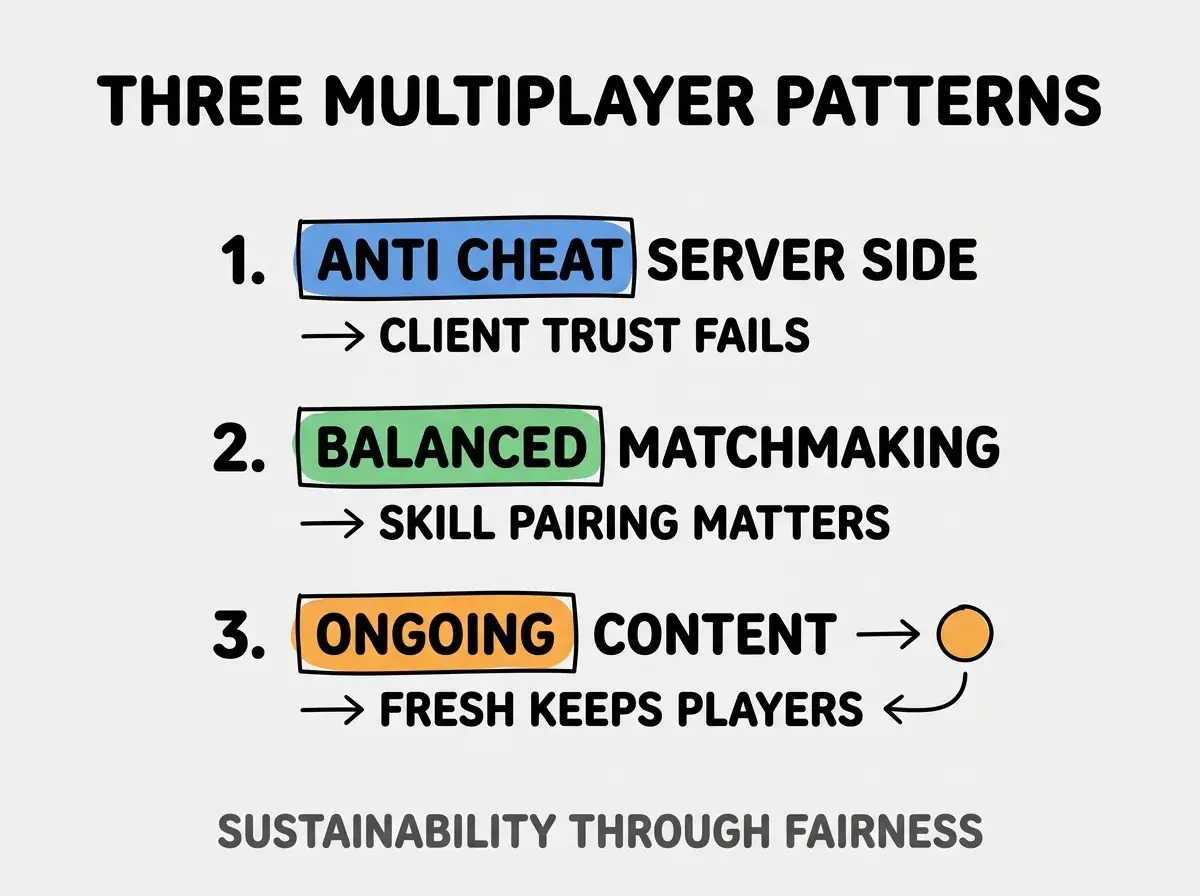
Pattern 1, anti cheat server side. Client trust fails; server enforcement essential.
Pattern 2, balanced matchmaking. Skill pairing matters; mismatch frustrates.
Pattern 3, ongoing content. Fresh keeps players; stale exhausts.
The combination produces sustainable multiplayer games. Without these patterns, games fail.
How To Handle Disconnections
Three patterns help disconnect handling.
Pattern A, reconnect window. 30 second window for reconnect; rejoin in progress game.
Pattern B, opponent handling. Disconnect counts as forfeit after window; clear feedback.
Pattern C, state persistence. Game state persisted; reconnect resumes.
Common Questions About Multiplayer Card Games
Multiplayer card games raise questions worth addressing directly.
The first question is whether to use WebSockets or polling. WebSockets; polling too slow.
The second question is whether to support more than 2 players. Sometimes; depends on game. 2 player simpler to start.
The third question is what backend infrastructure. Supabase Realtime, Pusher, Ably all work; choice affects cost.
The fourth question is whether to implement own card art. Sometimes; royalty free art works for prototype.
How Multiplayer Affects Game Success
Multiplayer affects game success in compounding ways. Success effects compound across player base.
The first compounding effect is retention. Multiplayer retains better than single player; retention compounds.
The second compounding effect is virality. Players invite friends; invitation compounds growth.
The third compounding effect is monetization. Multiplayer engagement enables monetization; monetization sustains development.
The combination produces game success shaped by multiplayer quality. Without quality, multiplayer becomes liability not asset.
How To Test Multiplayer Locally
Three patterns help testing.
Pattern A, multiple browser tabs. Two tabs simulate two players; basic testing.
Pattern B, ngrok for cross device. Test on real devices; reveals real network conditions.
Pattern C, automated load tests. Many simulated players; reveals scale issues.
The combination enables multiplayer testing. Without testing, multiplayer issues surface in production.
The most damaging multiplayer game mistake is implementing game logic on client. Client logic enables cheating; cheating destroys multiplayer integrity. The fix is to enforce all game rules server side; client only displays. Builders who enforce server side maintain fair multiplayer; builders who trust client face cheating that drives away honest players.
The other mistake is over engineering matchmaking. Simple FIFO queue works for indie scale; complex algorithms premature.
A third mistake is missing the disconnect handling. Disconnects routine; without handling, games stuck.
A fourth mistake is treating multiplayer as scope expansion. Multiplayer adds complexity substantially; scope accordingly.
What This Means For You
A multiplayer card game enables real time card play accessible at indie scale. The four features, prompts, and sustainability patterns produce multiplayer games that compound engagement.
- If you're a student: Multiplayer projects teach distributed systems; valuable career skill.
- If you're an indie hacker: Card games viable indie projects; multiplayer compounds retention.
- If you're a senior dev: Multiplayer testing real time skills; portfolio compounds.
Browse more build
Read more build