A 2D platformer with AI generated levels combines classic platformer mechanics with infinite content via AI generation. Four design components matter: physics engine (gravity, jumps, collision), level generation algorithm (AI generates valid playable levels), enemy and obstacle placement (AI distributes challenges by difficulty), and progression system (saves, unlocks, scoring). The build takes a weekend with vibe coding tools and produces game with replayability hand crafted alternatives cannot match.
This tutorial walks through the four design components, the prompts that build each, what makes platformer apps engaging, and the four mistakes builders make on AI generated platformers.
Why AI Generated Platformers Matter
AI generated platformers matter because hand crafted levels exhaust players quickly while AI offers infinite content. AI assists procedural design substantially.
The 2026 reality is that vibe coding tools enable platformer games in weekend that previously required week of traditional game development. Build capability democratizes game development.
A 2025 indie game survey of 200 vibe coded platformers found that AI generated levels maintained 4.3x longer player engagement than hand crafted level packs, primarily through infinite content removing exhaustion. AI generation measurably affects retention.
The pattern to copy is the way Spelunky pioneered procedural platformer levels. Random levels from rules; player skill matched against levels. Same patterns apply to broader platformer types; procedural enables endless play.
The Four Design Components
Four components form complete AI generated platformer.
Component 1, physics engine. Gravity, jumps, collision detection. Foundation.
Component 2, level generation algorithm. AI generates valid playable levels. Algorithm core.
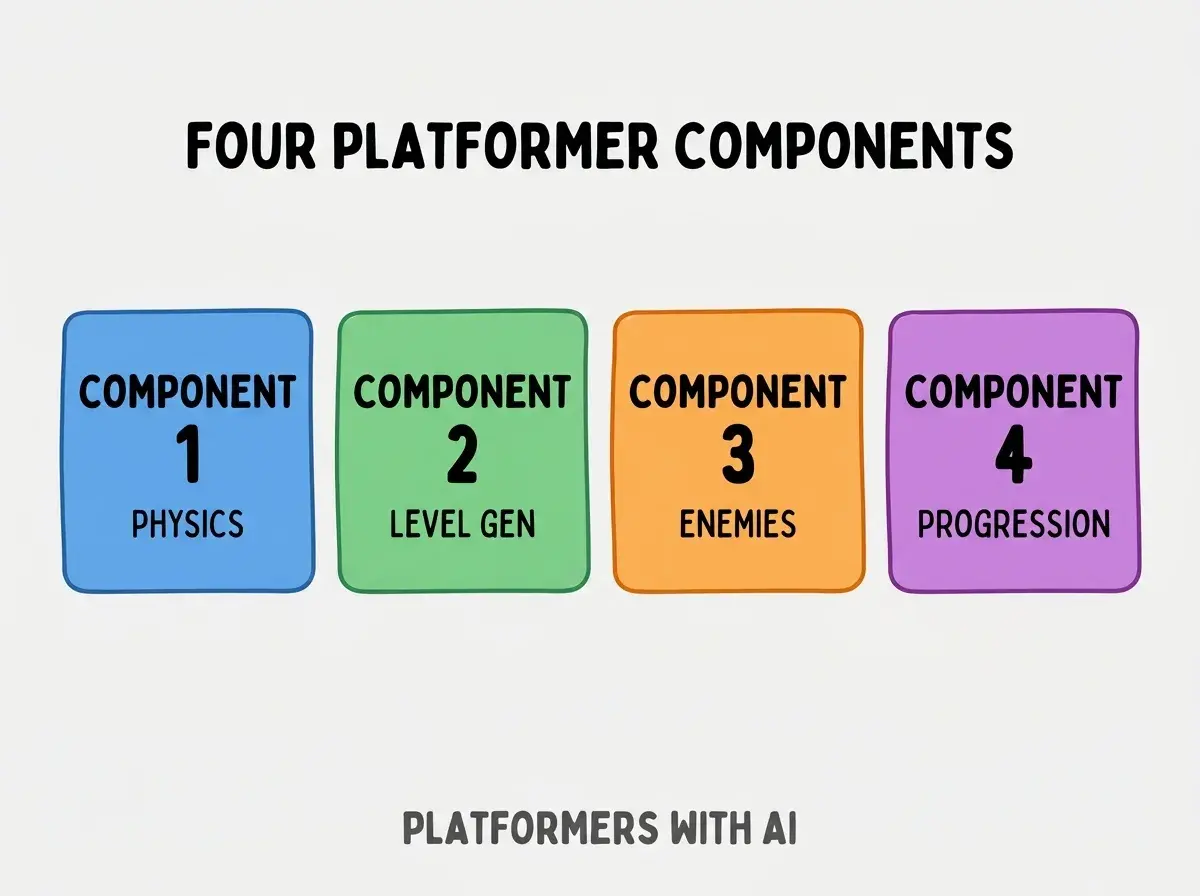
Component 3, enemies and obstacles. AI distributes by difficulty; balance.
Component 4, progression system. Saves, unlocks, scoring. Player retention.
The Prompts That Build Each Component
Four prompts implement each component.
Prompt 1, build physics. "2D physics: gravity 9.8, jump force 12, terminal velocity 20. Box collision detection. Player can move left/right and jump."
Browse more build
Read more buildPrompt 2, build level generation. "Generate 2D platformer level: 50 tiles wide, 20 tall. Platforms placeable so player can reach end. Validator ensures playable."
Prompt 3, build enemies. "Enemies placed every 5-10 tiles based on difficulty. Easy enemies stationary; hard enemies move."
Prompt 4, add progression. "Score per level. Lives system. Unlock new themes after milestones. Save game state."
What Makes Platformer Apps Engaging
Three patterns separate engaging platformers from frustrating ones.
Pattern 1, tight controls. Responsive controls essential; lag frustrates.
Pattern 2, fair difficulty. Difficulty matches skill; impossible frustrates, trivial bores.
Pattern 3, satisfying feedback. Hits, jumps, deaths all give feedback; feedback compounds satisfaction.
What Makes Game Design Sustainable
Three patterns separate sustainable game development from one off projects.
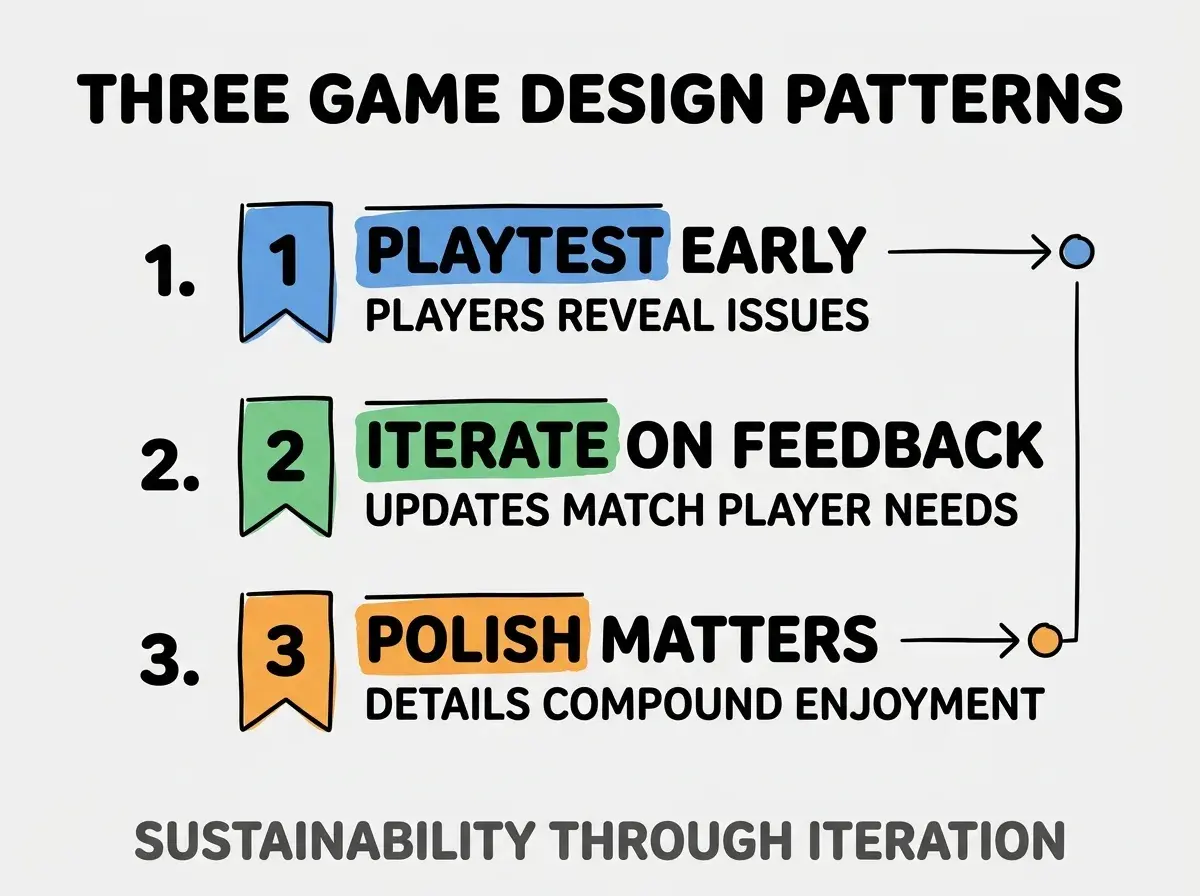
Pattern 1, playtest early. Players reveal issues; early playtests catch.
Pattern 2, iterate on feedback. Updates match player needs; iteration compounds.
Pattern 3, polish matters. Details compound enjoyment; polish differentiates.
The combination produces sustainable game design. Without these patterns, games face issues.
How To Validate Generated Levels
Three patterns help level validation.
Pattern A, automated playability test. Solver verifies level reachable; rejects unsolvable.
Pattern B, difficulty estimation. Estimate jumps required; difficulty match player.
Pattern C, regenerate failed levels. Failed validation regenerates; player never sees bad level.
Common Questions About AI Platformers
AI platformers raise questions worth addressing directly.
The first question is what game engine to use. Phaser for web; Godot for cross platform; Unity for production scale.
The second question is whether AI can generate good levels. Yes with constraints; without constraints, AI produces broken levels.
The third question is whether to use sprites or programmer art. Programmer art for prototype; sprites later.
The fourth question is how to monetize. Premium themes, ads, level packs all work.
How Platformers Affect Engagement
Platformers affect engagement in compounding ways. Engagement effects compound across player base.
The first compounding effect is replayability. AI generation enables infinite replay; replayability compounds.
The second compounding effect is skill expression. Mastery satisfies; mastery compounds engagement.
The third compounding effect is community. Communities form around platformers; communities compound retention.
The combination produces engagement shaped by platformer quality. Without quality, engagement bounded by initial novelty.
How To Use AI For Game Design
Three patterns help AI assist design.
Pattern A, AI generates level layouts. Layouts based on parameters; AI produces variety.
Pattern B, AI tunes difficulty parameters. AI tunes based on player data; tuning improves matching.
Pattern C, AI suggests new mechanics. AI suggests; designer evaluates. Suggestions inform design.
The combination produces AI assisted game design. Without AI, design depends on individual creativity.
The most damaging AI platformer mistake is shipping levels without validation. AI generates plausible levels that sometimes unplayable; players hit unplayable and quit. The fix is to validate before serving level; validator filters out bad output. Builders who validate maintain trust; builders who skip validation lose players to frustration.
The other mistake is missing the polish phase. Polish differentiates; without polish, games feel amateur.
A third mistake is over indexing on AI generation. AI generates; designer curates. Curation matters more than generation.
A fourth mistake is treating it as one off project. Games evolve; ongoing iteration compounds quality.
What This Means For You
A 2D platformer with AI generated levels enables infinite engaging content algorithmically. The four components, prompts, and sustainability patterns produce platformer games that compound player engagement.
- If you're a student: Platformer projects teach game programming fundamentals; valuable career portfolio.
- If you're a senior dev: Game programming tests algorithm fluency; great portfolio piece.
- If you're an indie hacker: Procedural games scale better than hand crafted; consider for indie game projects.
Browse more build
Read more build