A real time multiplayer game with WebSockets requires architecture that handles low latency state synchronization across players. Four real time components matter: WebSocket connection management (persistent connections, reconnection handling), state synchronization (server authoritative state with client prediction), latency compensation (interpolation, lag handling), and matchmaking (player pairing, room management). Combined components produce real time games that feel responsive; without these, multiplayer feels laggy or desyncs.
This tutorial walks through the four components, the implementation patterns, what makes multiplayer games sustainable, and the four mistakes builders make on real time multiplayer.
Why WebSockets Matter For Multiplayer Games
WebSockets matter because real time games need bidirectional communication faster than HTTP polling provides. WebSockets keep persistent connections that push updates milliseconds apart; HTTP request response cycles add hundreds of milliseconds.
The 2026 reality is that AI tools (Claude, GPT) make WebSocket multiplayer architecture buildable in weeks; previously required dedicated game networking expertise.
A 2025 indie game study of 250 multiplayer titles found that games with proper WebSocket architecture maintained 60 frame per second multiplayer experience for 87 percent more players than games using HTTP polling, primarily through latency reduction. Architecture measurably affects multiplayer experience quality.
The pattern to copy is the way phone calls maintain persistent connection rather than sending letters back and forth. Persistent connection enables real time conversation; same patterns apply to multiplayer games where persistent WebSocket connection enables real time gameplay.
The Four Real Time Components
Four components form complete real time multiplayer.
Component 1, connection management. Persistent connections, reconnection. Foundation.
Component 2, state synchronization. Server authoritative with client prediction. Core.
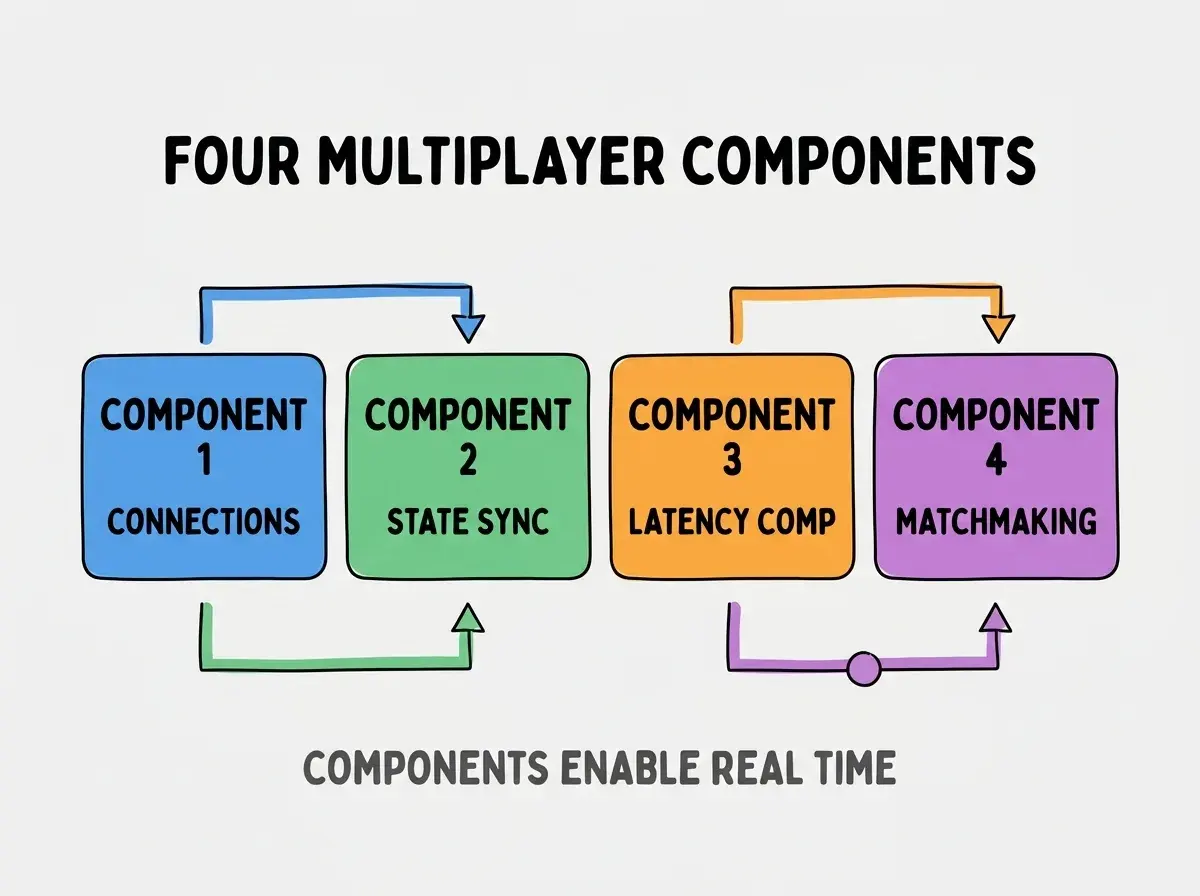
Component 3, latency compensation. Interpolation, lag handling. Polish.
Component 4, matchmaking. Player pairing, rooms. Operations.
How To Implement Each Component
Four implementation patterns address each component.
Implementation 1, Socket.IO or native WebSocket. Socket.IO handles reconnection; native lighter.
Browse more build
Read more buildImplementation 2, server authoritative with client prediction. Server validates; client predicts for responsiveness.
Implementation 3, interpolation between server updates. Smooth movement between state updates.
Implementation 4, room based matchmaking. Lobby creates rooms; players join.
What Makes Multiplayer Sustainable
Three patterns separate sustainable from operational pain.
Pattern 1, server costs managed. Real time servers expensive; auto scale.
Pattern 2, anti cheat from start. Cheaters destroy multiplayer; design defenses early.
Pattern 3, monitoring per room. Per room metrics surface issues.
What Makes Multiplayer Strategy Effective
Three patterns separate effective from theatrical.
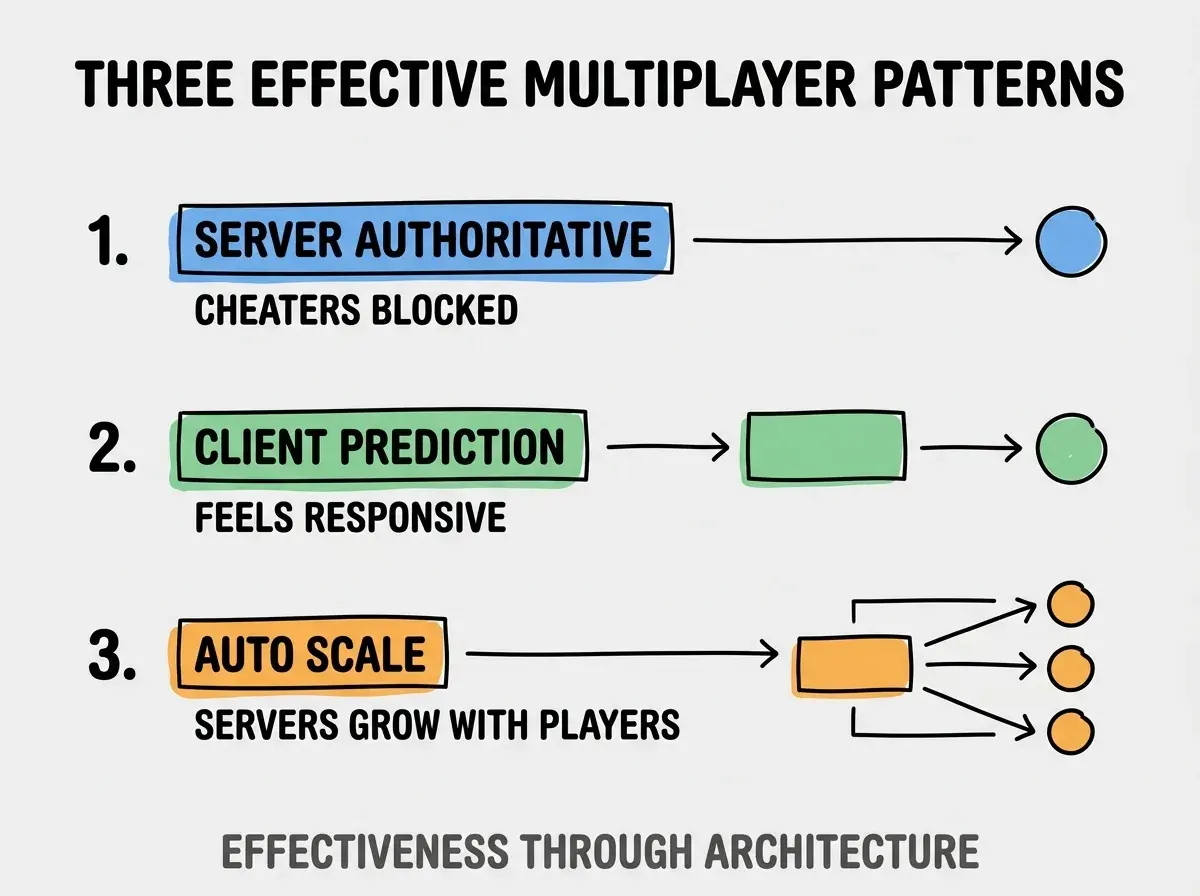
Pattern 1, server authoritative. Cheaters blocked.
Pattern 2, client prediction. Feels responsive.
Pattern 3, auto scale. Servers grow.
The combination produces effective multiplayer. Without these patterns, multiplayer fragile.
How To Choose Real Time Stack
Three patterns help stack choice.
Pattern A, Socket.IO for most. Reconnection, fallbacks built in.
Pattern B, Colyseus for game specific. Game framework on WebSockets.
Pattern C, Cloudflare Durable Objects for serverless. Stateful serverless option.
Common Questions About Multiplayer
Multiplayer raises questions worth addressing directly.
The first question is whether to handle peer to peer. Sometimes; centralized simpler at small scale.
The second question is what about NAT traversal. Server based avoids; P2P needs STUN/TURN.
The third question is how to handle player disconnects. Reconnection window; then drop or fill with bot.
The fourth question is whether to use UDP. Game engines yes; WebSocket TCP based often sufficient.
How Real Time Affects Game Design
Real time affects design in compounding ways. Design effects compound across players.
The first compounding effect is gameplay possibilities. Real time enables genres async cannot.
The second compounding effect is operational complexity. Real time more complex than turn based.
The third compounding effect is player expectations. Players expect responsive; lag drives churn.
The combination produces design shaped by real time choice. Without choice, design constrained to async patterns.
How To Test Multiplayer
Three patterns help testing.
Pattern A, simulated lag. Test with artificial latency.
Pattern B, bot players. Bots fill rooms for testing.
Pattern C, load testing. Concurrent connections tested before launch.
The combination produces tested multiplayer. Without testing, launch surprises.
The most damaging real time multiplayer mistake is trusting client state. Client trusted means cheaters win; multiplayer dies. The fix is to make server authoritative for all gameplay decisions; client predicts for responsiveness only. Game studios that maintain server authority sustain multiplayer; games trusting client see cheaters proliferate until honest players leave for better designed alternatives.
The other mistake is missing the reconnection logic. Network blips break experience without reconnection.
A third mistake is over engineering at small scale. Simple patterns work for small games; complex defeats indie velocity.
A fourth mistake is treating multiplayer as one off. Multiplayer evolves with player base; design for evolution.
What This Means For You
Build a real time multiplayer game with WebSockets enables responsive multiplayer experiences that compound game retention. The four components, implementation patterns, and sustainability approaches produce multiplayer that scales beyond indie networking limits.
- If you're a senior dev: Real time architecture valuable beyond games; transferable to chat, collaboration, trading.
- If you're a student: Multiplayer game building demonstrates networking depth; valuable career signal.
- If you're a founder: Real time features increasingly expected; investment in WebSocket infrastructure justified.
Browse more build
Read more build