Comparing and integrating OpenAI, Anthropic, and Google AI APIs requires understanding different strengths and integration patterns. Four integration considerations matter: API design differences (request format, response structure), capability differences (which model best for what), pricing comparison (cost varies substantially), and reliability differences (rate limits, downtime patterns). Most production apps integrate multiple APIs; selection depends on task and tradeoffs.
This piece walks through the four considerations, the implementation patterns, what makes integration work, and the four mistakes builders make on multi API integration.
Why Multi API Integration Matters
Multi API integration matters because no single AI API best for everything. Different tasks need different models; integration enables choice.
The 2026 reality is that capability gaps between providers remain; specialization compounds value. Integration enables specialization.
A 2025 AI app architecture survey of 400 vibe coded products found that products with multi API integration achieved 31 percent better user satisfaction than single API products, primarily through routing tasks to best model. Routing measurably affects quality.
The pattern to copy is the way restaurants source ingredients from multiple suppliers. Different suppliers excel at different ingredients; restaurants source accordingly. Same patterns apply to AI APIs; route to specialty.
The Four Integration Considerations
Four considerations dominate API integration.
Consideration 1, API design differences. Request format, response structure. Patterns differ.
Consideration 2, capability differences. Which model best for what. Routing logic.
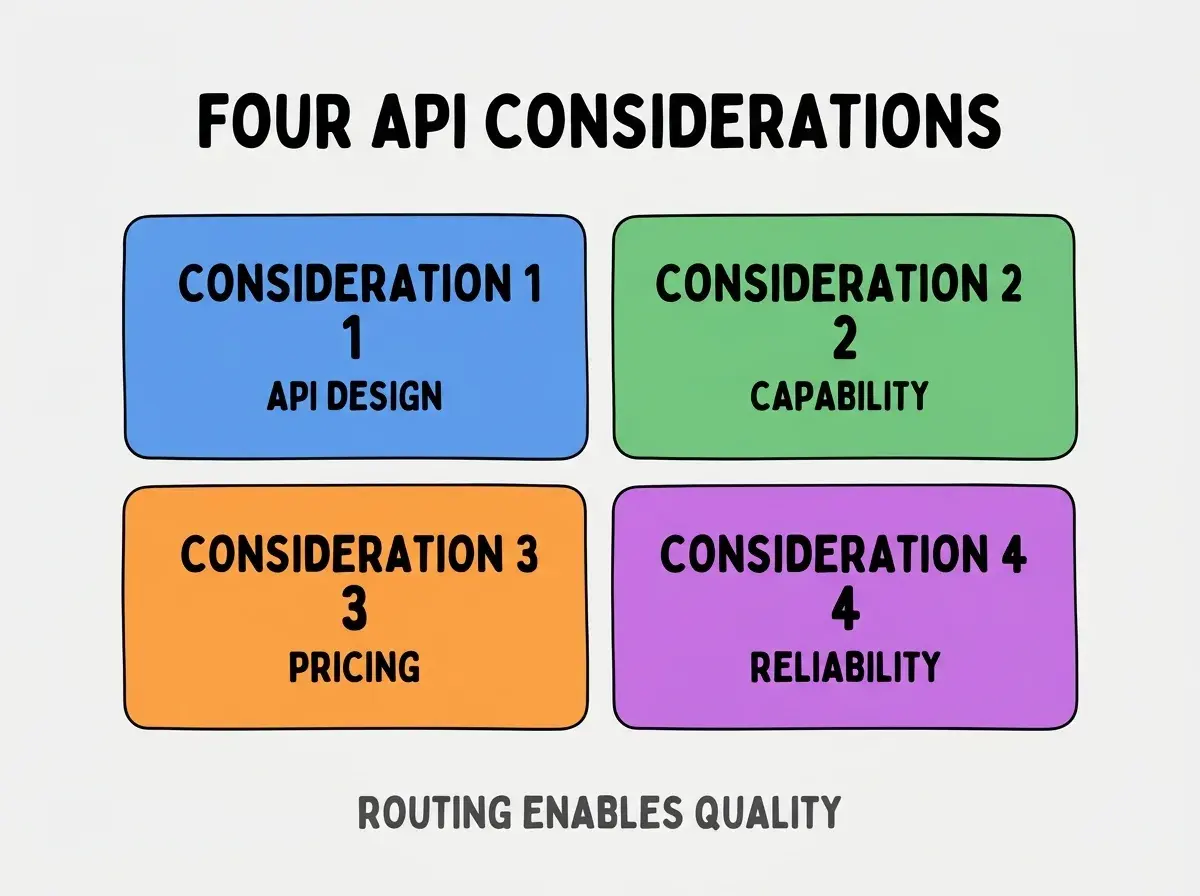
Consideration 3, pricing comparison. Cost varies substantially. Economics.
Consideration 4, reliability differences. Rate limits, downtime. Operations.
How To Implement Each Consideration
Four implementation patterns address each.
Implementation 1, abstraction layer for APIs. Common interface; APIs swappable.
Browse more build
Read more buildImplementation 2, capability matrix per task. Map task to best API.
Implementation 3, cost monitoring per API. Track spend per provider.
Implementation 4, fallback between providers. Provider failure; fallback to alternative.
What Makes Multi API Integration Work
Three patterns separate working integration from chaos.
Pattern 1, abstraction layer essential. Without abstraction, vendor lock in.
Pattern 2, capability matching deliberate. Not random routing; informed choice.
Pattern 3, monitoring per API. Health, cost, latency; visibility.
What Makes API Strategy Sustainable
Three patterns separate sustainable strategy from churn.
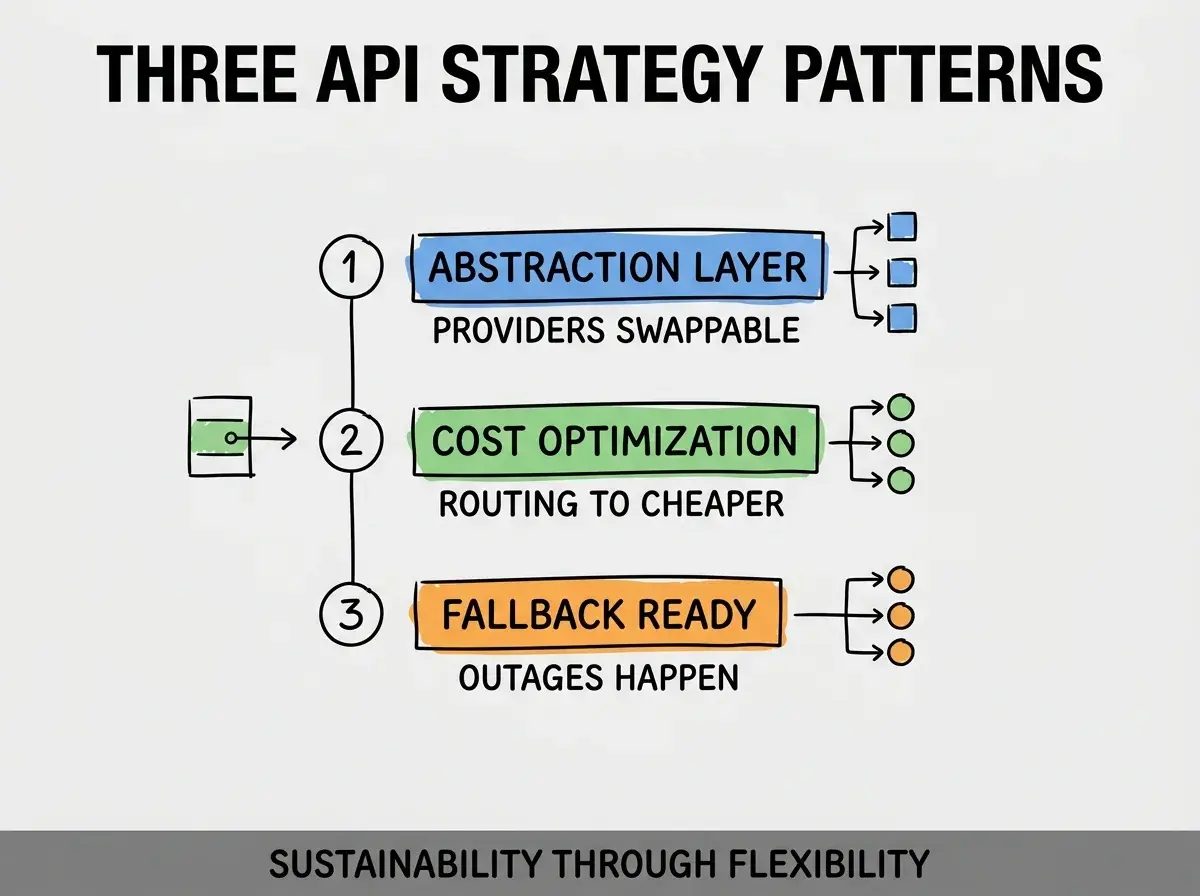
Pattern 1, abstraction layer. Providers swappable; flexibility maintained.
Pattern 2, cost optimization. Routing to cheaper when quality acceptable.
Pattern 3, fallback ready. Outages happen; fallback maintains availability.
The combination produces sustainable API strategy. Without these patterns, vendor lock in and outages compound.
How To Choose Between APIs Per Task
Three patterns help per task choice.
Pattern A, Anthropic Claude for code. Code tasks Claude often best.
Pattern B, OpenAI GPT for general. General tasks GPT broad.
Pattern C, Google Gemini for multi modal. Multi modal native; competitive.
Common Questions About AI APIs
AI APIs raise questions worth addressing directly.
The first question is whether to use one API or many. Many for production; one to start.
The second question is what about new providers (Mistral, Cohere). Worth evaluating; depends on need.
The third question is how to handle rate limits. Backoff plus fallback; standard pattern.
The fourth question is whether to use open source models. Yes for privacy or cost; capability tradeoff.
How API Integration Affects Quality
API integration affects quality in compounding ways. Quality effects compound across requests.
The first compounding effect is task quality. Right model right task; quality compounds.
The second compounding effect is cost efficiency. Routing reduces cost; savings compound.
The third compounding effect is reliability. Fallback maintains availability.
The combination produces quality shaped by integration. Without integration, quality bounded by single API.
How To Test API Integration
Three patterns help testing.
Pattern A, per API tests. Each API tested separately.
Pattern B, fallback scenario tests. Force primary failure; test fallback.
Pattern C, cost monitoring per request. Track per request cost; informs optimization.
The combination produces tested API integration. Without testing, edges ship as production issues.
The most damaging API integration mistake is hard coding single provider. Hard coding produces vendor lock in; switching costs prohibitive when needed. The fix is to abstract API behind interface; providers swappable. Builders who abstract maintain flexibility; builders who hard code face migration projects when providers change pricing or capabilities.
The other mistake is missing the cost monitoring. Costs accumulate fast without monitoring.
A third mistake is over abstracting. Some abstraction premature; balance matters.
A fourth mistake is treating APIs as static. Capabilities change; ongoing evaluation matters.
What This Means For You
Comparing and integrating OpenAI, Anthropic, and Google AI APIs enables routing to best model per task. The four considerations, implementation patterns, and sustainability approaches produce API integration that compounds quality and reliability.
- If you're a senior dev: Multi API fluency expected; learn patterns deeply.
- If you're an indie hacker: Cost optimization compounds; routing matters at scale.
- If you're a founder: API choice affects unit economics; integration informs.
Browse more build
Read more build