To run incident postmortems that produce learning, follow the four postmortem patterns (timeline reconstruction capturing what happened in order, root cause analysis going beyond surface causes, action item generation that prevents recurrence, and blameless culture enabling honest discussion), recognize what makes postmortems produce learning versus blame, and apply the patterns that produce sustainable incident learning. The postmortem capability matters because incidents reveal system improvements that proper review captures.
This piece walks through the four postmortem patterns, what makes postmortems produce learning, the specific templates, and the four mistakes that produce postmortems that do not improve systems.
Why Postmortems Matter
Postmortems matter because incidents are expensive learning opportunities. The matter; incident already happened, learning recovers value from the cost.
The 2026 reality is that AI built apps experience more incidents than human written apps. Postmortems matter more for AI built apps because patterns differ and learning requirements differ.
A 2025 site reliability study of 200 engineering teams found that teams with structured blameless postmortem practices reduced incident recurrence by 67 percent compared to teams without postmortem practices. Postmortems produce measurable system improvements when done well.
The pattern to copy is the way aviation industry handles incidents. Aviation conducts thorough investigations of every incident, focuses on system improvements, shares learnings industry wide. Software postmortems borrow from aviation; structured learning produces system improvements.
The Four Postmortem Patterns
Four patterns produce postmortems that produce learning.
Pattern 1, timeline reconstruction. What happened when, who did what. Timeline establishes shared incident understanding.
Pattern 2, root cause analysis beyond surface. Five whys, contributing factors, system conditions. Deep analysis reveals system causes.
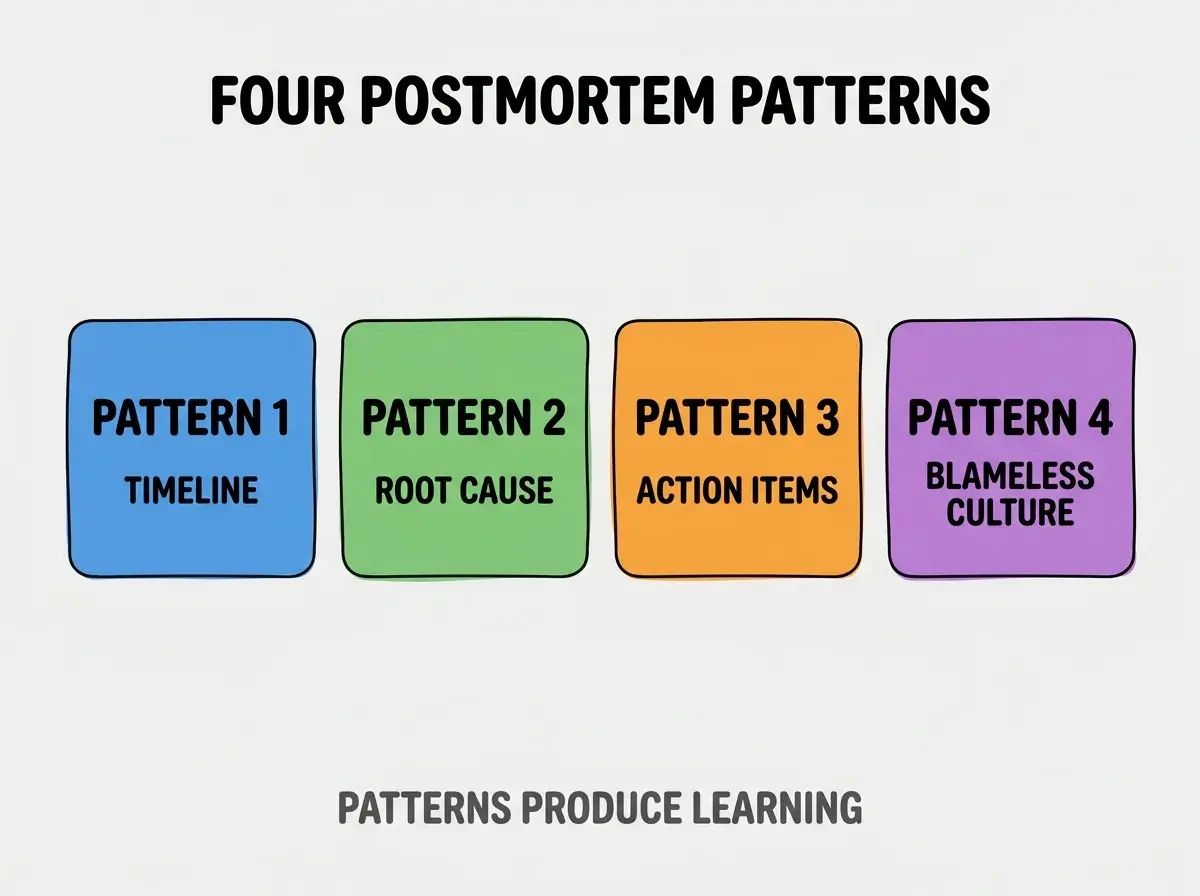
Pattern 3, action item generation. Specific changes preventing recurrence. Actions convert learning into improvement.
Pattern 4, blameless culture enabling honesty. No individual blame; system focus. Culture determines learning depth.
What Makes Postmortems Produce Learning
Three patterns characterize postmortems that produce learning.
Pattern 1, focus on systems not individuals. Individuals make mistakes within systems; system fixes prevent recurrence. Without system focus, learning stays personal.
Browse more grow articles
Read more growPattern 2, action items with owners and deadlines. Specific actions get done; vague actions stay aspirational. Specificity matters.
Pattern 3, follow up on action item completion. Actions without follow up often incomplete. Follow up enables completion.
The Specific Templates That Work
Three template categories handle different incident types.
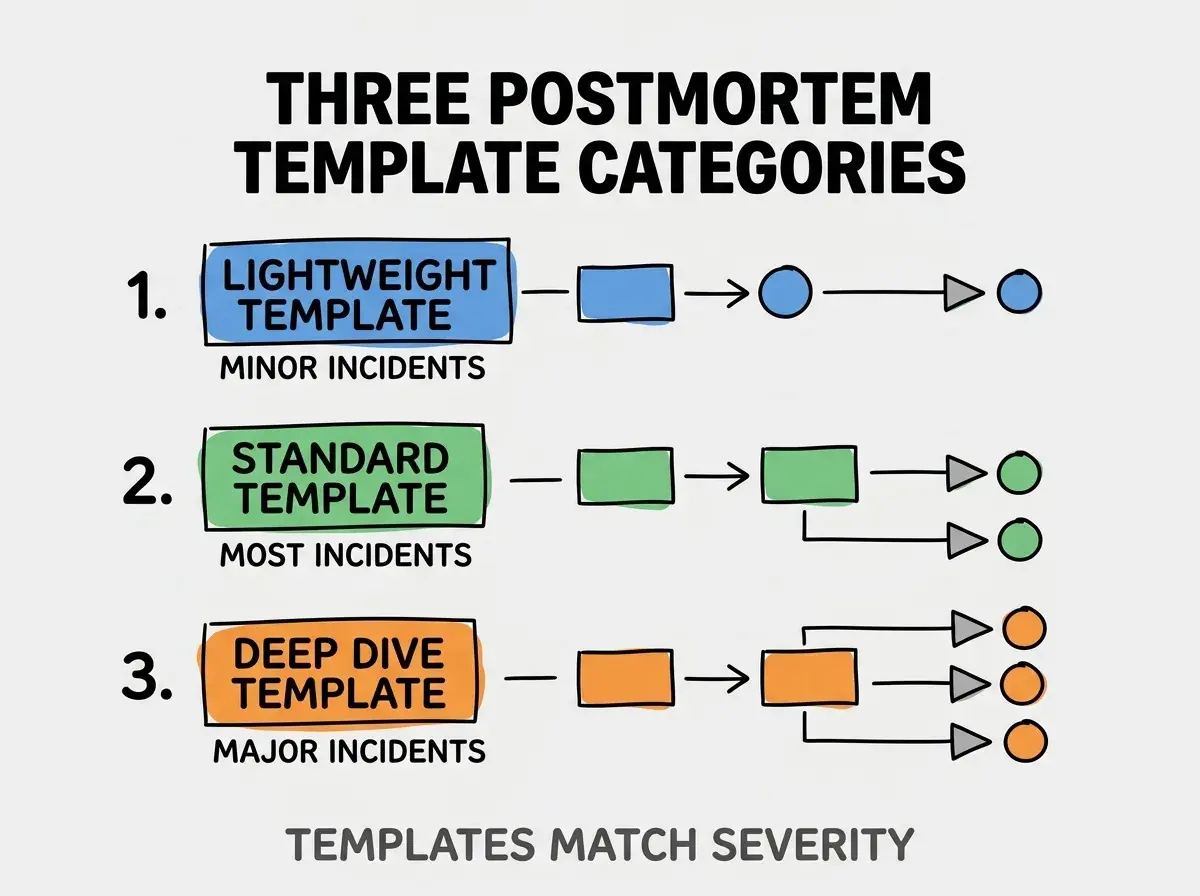
Pattern 1, lightweight template for minor incidents. Quick capture without full process. Appropriate for minor impact incidents.
Pattern 2, standard template for most incidents. Timeline, root cause, actions. Standard handles most incidents.
Pattern 3, deep dive template for major incidents. Comprehensive analysis, multiple meetings, detailed actions. Major incidents justify depth.
What Makes Postmortem Practice Sustainable
Three patterns separate sustainable postmortem practice from problematic patterns.
Pattern 1, postmortems as routine not exceptional. Routine practice normalizes process. Without routine, postmortems become heavy events.
Pattern 2, learning sharing across team. Team wide learning prevents individual silos. Without sharing, learning stays narrow.
Pattern 3, action item tracking integrated with regular work. Actions integrated into normal backlog. Without integration, actions stay separate and forgotten.
The combination produces postmortem practice that compounds learning. Without these patterns, postmortems become bureaucratic without producing improvement.
How To Run Your First Postmortem
Three implementation patterns help first postmortems succeed.
Pattern A, schedule within 48 hours of incident. Memory faded after 48 hours; capture while fresh. Without timeliness, details lost.
Pattern B, include all incident participants. Different perspectives reveal different aspects. Without inclusion, blind spots remain.
Pattern C, separate factual review from emotional processing. Facts first, feelings later. Without separation, emotions overwhelm analysis.
The combination produces first postmortems that establish practice patterns. Without patterns, first postmortems often produce defensiveness rather than learning.
The most damaging postmortem mistake is allowing blame to dominate discussion. Blame produces defensiveness that prevents honest discussion; without honesty, learning cannot happen. The fix is to enforce blameless culture explicitly; system focus rather than individual focus, learning focus rather than blame focus. Teams that enforce blameless culture produce learning; teams that allow blame produce defensiveness that prevents the learning postmortems should produce.
The other mistake is missing the action item follow up. Actions without follow up often incomplete; incomplete actions prevent recurrence prevention. The fix is to track actions explicitly through completion.
A third mistake is over generalizing from single incidents. Single incidents may not represent patterns; patterns emerge from multiple incidents.
A fourth mistake is treating postmortems as documentation exercise rather than learning practice. Documentation matters but learning matters more.
How To Handle Specific Incident Types
Three incident types deserve specific approaches.
Type A, deploy related incidents. Focus on deploy process, rollback patterns, deploy verification. Process improvements often most valuable.
Type B, infrastructure incidents. Focus on resilience patterns, capacity planning, dependency management. Infrastructure improvements compound.
Type C, application incidents. Focus on testing, edge case handling, defensive programming. Application improvements prevent recurrence.
The combination produces type specific approaches. Without specific approaches, generic postmortems miss type specific value.
How Postmortems Will Likely Evolve
Postmortems will likely continue evolving as practices mature.
The first likely evolution is AI assisted incident analysis. AI helping with timeline reconstruction, pattern identification. AI assistance reduces manual analysis effort.
The second likely evolution is cross team learning sharing. Postmortems shared beyond team for organizational learning. Sharing accelerates collective improvement.
The third likely evolution is automated action item tracking. Tools that track action completion automatically. Automation reduces follow up burden.
The combination suggests postmortems will become more capable. Teams learning patterns now build foundation that remains valuable.
Common Questions About Postmortems
Postmortems raise questions worth addressing directly.
The first question is whether to publish postmortems externally. Sometimes; transparency builds trust during incidents. Customer facing postmortems different from internal.
The second question is how long postmortems should take. Standard incidents: 1-2 hours; major incidents: 3-5 hours plus follow up. Time matches severity.
The third question is whether to involve managers in postmortems. Yes for participation; no for blame. Manager presence affects culture; intentional approach matters.
The fourth question is how to handle postmortems for incidents that did not affect users. Still valuable; near misses reveal patterns that prevent customer impact. Run postmortems for severe near misses.
How Postmortems Affect Engineering Culture
Postmortems affect engineering culture beyond pure learning. Culture effects compound over time and shape organizational reliability.
The first compounding effect is psychological safety improvement. Blameless practice builds safety; safety enables honest discussion across all topics not just incidents.
The second compounding effect is system thinking development. Postmortems teach system thinking that applies beyond incidents. Thinking improves architecture decisions broadly.
The third compounding effect is documentation culture spreading. Postmortem documentation habit spreads to other documentation. Documentation improves overall.
The combination produces engineering culture improvements that postmortem practice drives over time. Without practice, culture stays at baseline.
Postmortem practice quality differentiates teams that learn from incidents from teams that just experience incidents. Quality determines learning velocity that compounds over years of operation.
The investment in postmortem culture pays back through reduced incident recurrence, better engineering judgment, and customer trust that organizations without postmortem culture cannot match.
What This Means For You
Incident postmortems convert incident cost into system improvement. The four patterns, template categories, and culture approaches produce framework for sustainable learning from incidents.
- If you're a senior dev: Lead postmortem practice; without leadership, practice often produces blame rather than learning.
- If you're a product manager: Help maintain blameless culture; PMs can model focus on systems over individuals.
- If you're a founder: Help engineering team adopt postmortem practice. Practice produces system improvements that prevent customer impact.
Browse more grow articles
Read more grow