Image optimization at scale through CDN, responsive images, and WebP delivers images appropriate to user device and connection. Four optimization layers matter: format optimization (WebP, AVIF over JPEG), responsive sizing (srcset for different viewports), CDN delivery (geographic edge caching), and lazy loading (load when needed). Combined layers reduce image bytes by 60-90 percent; reduction compounds across all images. Vibe coders shipping unoptimized images sacrifice performance and bandwidth costs.
This piece walks through the four optimization layers, the implementation patterns, what makes image optimization sustainable, and the four mistakes builders make on image optimization.
Why Image Optimization Matters
Image optimization matters because images dominate page weight (60 percent typical). Without optimization, page loads slow and bandwidth costs accumulate.
The 2026 reality is that image optimization tooling (Cloudflare Images, Cloudinary, Next.js Image) makes optimization automatic. Maturation removes excuse for unoptimized images.
A 2025 web performance survey of 800 vibe coded apps found that apps with full image optimization stack achieved 68 percent faster LCP than apps without, primarily through reduced image bytes and CDN delivery. Optimization measurably affects performance.
The pattern to copy is the way streaming services adapt video quality to connection. Streaming adapts; same pattern applies to images. Adaptation compounds user experience across diverse connections.
The Four Optimization Layers
Four layers form complete image optimization.
Layer 1, format optimization. WebP saves 25-35 percent over JPEG; AVIF saves 50 percent. Modern formats matter.
Layer 2, responsive sizing. srcset and sizes attributes; right size per device. Saves bytes.
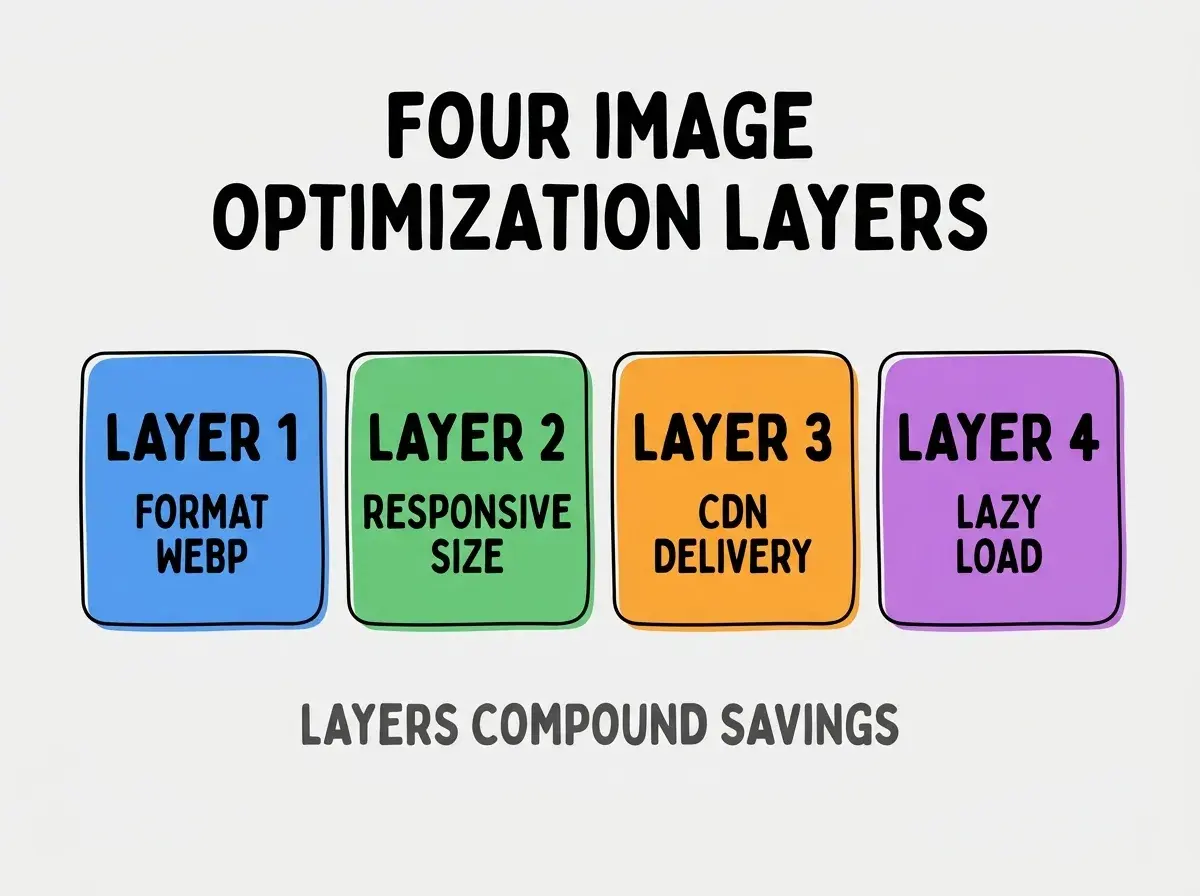
Layer 3, CDN delivery. Edge caching close to users; reduces latency. Cloudflare, Fastly, etc.
Layer 4, lazy loading. loading="lazy" attribute; load when scrolled into view.
How To Implement Each Layer
Four implementation patterns address each layer.
Implementation 1, automatic WebP/AVIF conversion. Cloudflare Images, Cloudinary, Imgix automate format selection.
Browse more grow
Read more growImplementation 2, srcset for responsive. Multiple sizes; browser picks. Standard HTML feature.
Implementation 3, CDN configured for images. Cloudflare automatic for sites on Cloudflare; explicit for others.
Implementation 4, native lazy loading. loading="lazy" attribute on img tags. Modern browsers support.
What Makes Image Optimization Sustainable
Three patterns separate sustainable optimization from one off projects.
Pattern 1, automated optimization in pipeline. Optimization runs automatically; manual fails at scale.
Pattern 2, image budget enforced. Per page image budget; budget prevents bloat.
Pattern 3, regular audit of large images. Audits identify outliers; outliers fixed before damaging performance.
What Makes Image Strategy Effective
Three patterns separate effective strategy from over engineering.
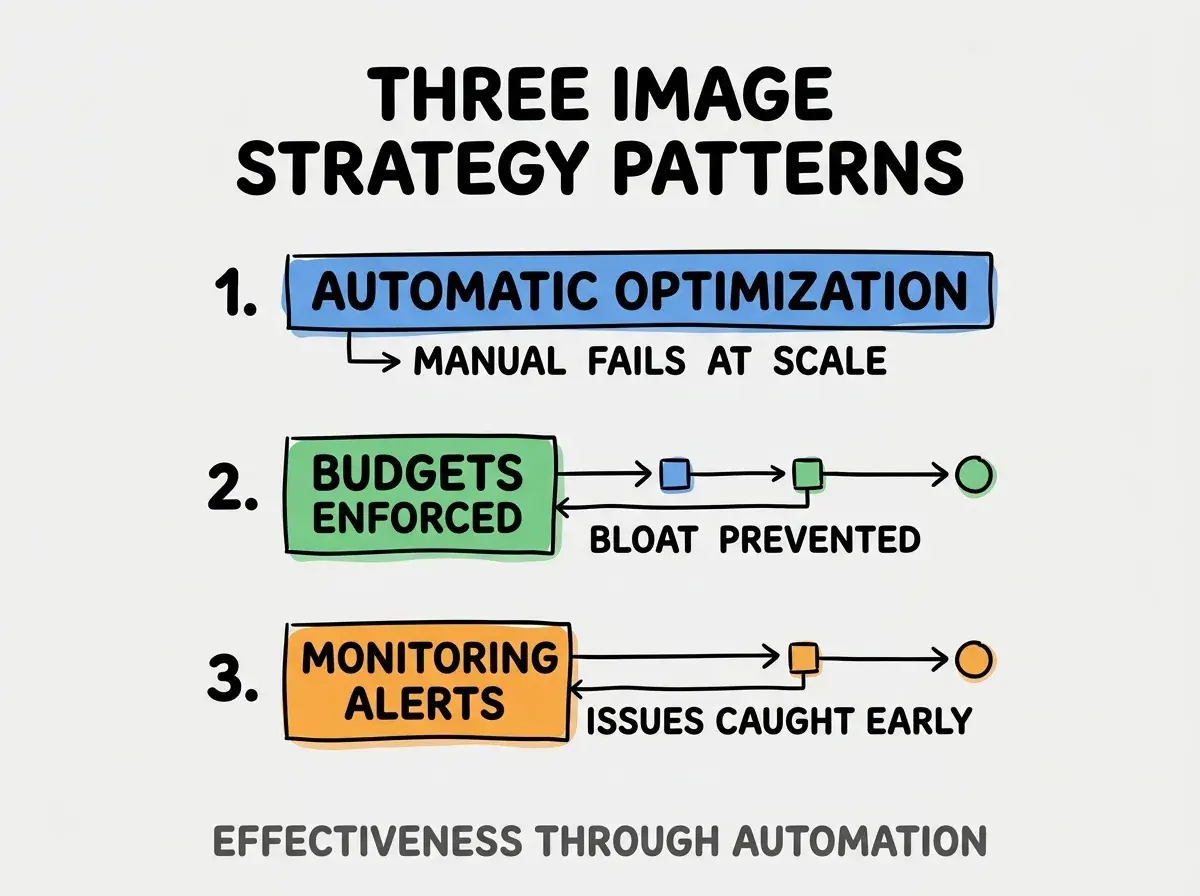
Pattern 1, automatic optimization. Manual fails at scale; automation maintains quality.
Pattern 2, budgets enforced. Bloat prevented; budgets stop drift.
Pattern 3, monitoring alerts. Issues caught early; alerts inform action.
The combination produces effective image strategy. Without these patterns, strategy decays.
How To Choose Image Service
Three patterns help service choice.
Pattern A, integrated CDN preferred. Cloudflare for Cloudflare sites; less integration cost.
Pattern B, evaluate features needed. Transformations, format conversion, lazy loading; match service to needs.
Pattern C, consider cost at scale. Costs scale with bandwidth; calculate for your scale.
Common Questions About Image Optimization
Image optimization raises questions worth addressing directly.
The first question is whether to use Next.js Image component. Yes for Next.js apps; built in optimization.
The second question is whether AVIF worth the complexity. Yes for high traffic; savings compound. Skip for low traffic.
The third question is whether to optimize source images. Yes; optimize at source plus serve optimized.
The fourth question is how to handle SVG. SVG already optimized; serve directly. Optimize SVG with SVGO.
How Image Optimization Affects Business
Image optimization affects business in compounding ways. Effects compound across pages and users.
The first compounding effect is page speed. Faster pages convert better; conversion compounds.
The second compounding effect is bandwidth costs. Optimized images reduce costs; reduction compounds at scale.
The third compounding effect is mobile experience. Mobile users on slow connections benefit most; mobile compounds.
The combination produces business outcomes shaped by image strategy. Without optimization, outcomes bounded by image weight.
How To Audit Existing Images
Three patterns help audit existing images.
Pattern A, find largest images. Largest images biggest impact; prioritize fixing.
Pattern B, find unused images. Unused images waste storage; remove.
Pattern C, find unoptimized formats. JPEG over WebP; PNG over WebP for photos. Conversion savings.
The combination enables image audits. Without audits, optimization opportunities hidden.
The most damaging image optimization mistake is uploading huge originals without optimization pipeline. Originals stored as is consume bandwidth at delivery; optimization at delivery time reduces. The fix is to integrate optimization at upload time; transformations cached. Builders who optimize at upload have fast sites; builders who skip ship slow sites with high bandwidth costs.
The other mistake is missing the lazy loading layer. Lazy loading free byte savings; missing wastes opportunity.
A third mistake is over optimizing critical images. Above fold images load eagerly; lazy loading wrong for these.
A fourth mistake is treating image optimization as one time. Content evolves; ongoing optimization required.
What This Means For You
Image optimization at scale with CDN, responsive images, and WebP delivers fast images across diverse devices. The four layers, implementation patterns, and sustainability approaches produce image strategy that compounds performance.
- If you're a founder: Image optimization affects conversion; investment justified by revenue impact.
- If you're a senior dev: Image strategy fluency expected; learn optimization patterns deeply.
- If you're an indie hacker: Free CDN tier (Cloudflare) makes optimization affordable from day one.
Browse more grow
Read more grow