To understand how Fortune 500 companies are adopting vibe coding in 2026, recognize the four adoption patterns the data reveals (cautious pilots dominate among the top 100 with security teams driving slow rollouts, accelerating expansion characterizes the next 200 companies that completed pilots in 2024 and now expanding broadly, full deployment characterizes about 80 companies that committed early and now have organization wide adoption, and selective rejection characterizes the remaining roughly 120 companies that have decided vibe coding is not appropriate for their specific situations), see what the patterns reveal about enterprise direction, and consider what enterprise adoption means for vendors, builders, and engineers thinking about career direction. The Fortune 500 adoption patterns reveal both opportunity and complexity.
This piece walks through the four adoption patterns, what the data reveals, the implications for builders and engineers, and the four mistakes when interpreting enterprise adoption.
Why Fortune 500 Adoption Patterns Matter
Fortune 500 adoption patterns reveal where enterprise spending will flow over the next 3-5 years. The patterns matter; enterprise spending dominates technology vendor revenue, so understanding adoption patterns helps predict which vendors will succeed and which markets will grow.
The 2026 reality is that Fortune 500 adoption has crossed from experimentation to substantial deployment in many companies. The patterns vary dramatically across companies; some are years ahead while others remain in early evaluation phases.
A 2025 Fortune 500 technology survey found that 76 percent of Fortune 500 companies had at least one production AI coding deployment, while 23 percent had reached organization wide adoption. The gap between any deployment and full adoption reveals the multi year journey from initial pilot to enterprise wide use; the journey takes longer than vendor projections suggest.
The pattern to copy is the way Fortune 500 cloud adoption played out from 2010-2020. Cloud adoption took years of pilots, security reviews, and gradual migration; the journey was slower than vendor projections but produced substantial eventual transformation. AI coding adoption follows similar patterns; understanding the timeline helps set realistic expectations.
The Four Adoption Patterns
Four adoption patterns characterize Fortune 500 vibe coding adoption.
Pattern 1, cautious pilots dominate the top 100 companies. Largest enterprises move slowest; security review processes, procurement complexity, and risk aversion produce extended pilot periods. Top 100 typically have small AI coding deployments rather than broad rollouts.
Pattern 2, accelerating expansion characterizes the next 200 companies. Companies that completed pilots in 2024 are now expanding broadly. The expansion produces substantial spending growth; this segment may be the highest value opportunity for vendors.
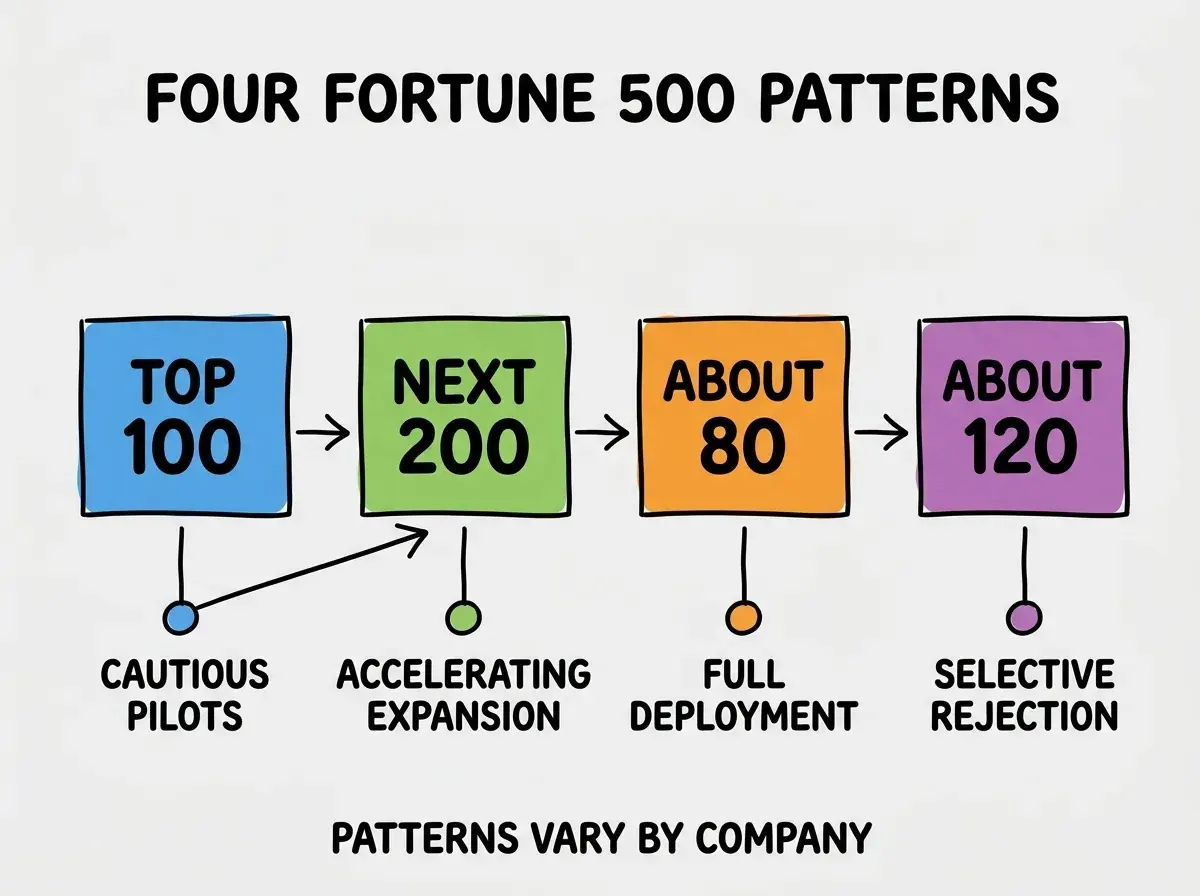
Pattern 3, full deployment characterizes about 80 companies. Companies that committed early now have organization wide AI coding deployments. These companies report substantial productivity gains and competitive advantages.
Pattern 4, selective rejection characterizes about 120 companies. Some companies have evaluated vibe coding and decided it is not appropriate for their specific situations. Reasons vary from regulatory constraints to specific technology stacks to cultural fit issues.
What the Patterns Reveal
Three patterns from the data reveal enterprise direction.
Pattern 1, organization size correlates with adoption speed inversely. Larger organizations move slower; smaller Fortune 500 companies often move faster than the largest. Vendor strategies should account for this size effect.
Browse more enterprise analysis
Read more pulse articlesPattern 2, industry matters more than size for adoption rate. Tech companies, financial services, and consulting firms adopt faster than traditional manufacturing or retail. Industry context predicts adoption better than size alone.
Pattern 3, leadership commitment dominates adoption success. CEO or CTO commitment correlates with adoption velocity more than any other factor. Without leadership commitment, even motivated middle management struggles to drive adoption.
What Enterprise Adoption Means for Builders
Three implications matter for builders thinking about enterprise opportunity.
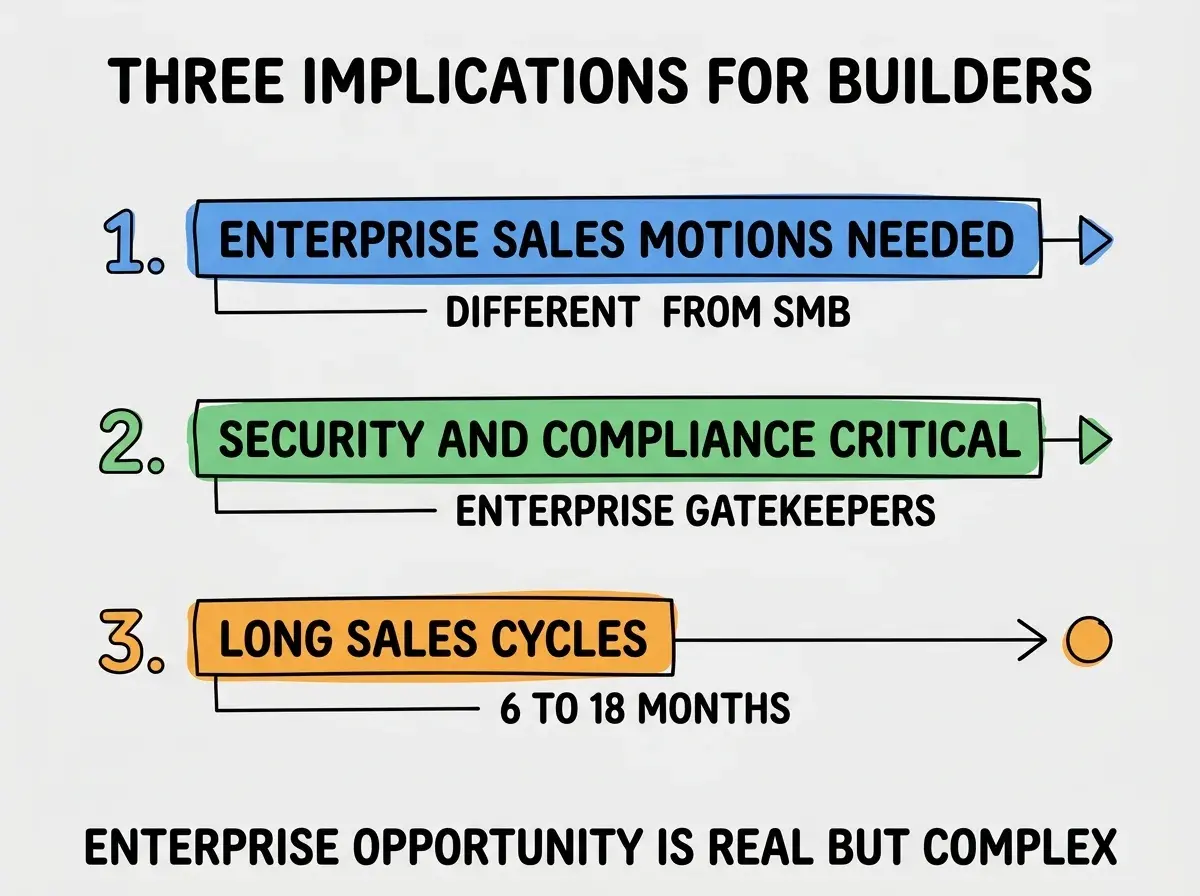
Implication 1, enterprise sales motions differ dramatically from SMB sales. Procurement, security review, RFPs, custom contracts. Builders must develop enterprise sales capabilities or partner with companies that have them.
Implication 2, security and compliance gatekeepers must be addressed. SOC 2, ISO 27001, HIPAA depending on industry. Without compliance, enterprise sales stall regardless of product quality.
Implication 3, sales cycles run 6-18 months for enterprise deals. Cash flow planning must account for long sales cycles; products that need fast revenue are poor fits for enterprise sales.
How Engineers Can Apply Enterprise Insights
Three application patterns help engineers think about career implications.
Pattern A, AI coding skills become baseline expectations in tech companies. Engineers without AI coding fluency face career limitations as adoption grows. Investment in AI tool fluency matters for career growth.
Pattern B, enterprise specific AI coding skills produce career opportunity. Engineers who understand enterprise AI deployment patterns become valuable specialists. The specialization produces career paths beyond general AI coding skills.
Pattern C, traditional industry AI coding adoption creates opportunity for specialists. Engineers who can bridge traditional industries and AI coding produce career opportunities. The bridge requires both AI coding skills and industry domain knowledge.
The combination produces career positioning options beyond pure technical skill. Without these patterns, engineers may face surprising career limitations as adoption patterns play out.
The most damaging enterprise adoption interpretation mistake is assuming all Fortune 500 companies will eventually adopt vibe coding. The 120 companies in selective rejection demonstrate that some enterprises will not adopt; assumption of universal adoption produces wrong predictions. The fix is to understand the adoption patterns specifically; some companies will reject for valid reasons including regulatory, cultural, and technological constraints. Universal adoption is not inevitable.
The other mistake is assuming organization wide adoption follows immediately from pilots. Pilots often take 1-2 years to produce organization wide adoption; some pilots never expand. The fix is to plan for the realistic timeline; vendor cash flow projections should assume 18-36 months from pilot to substantial revenue.
A third mistake is missing the international dimension of Fortune 500 equivalents. European, Asian, and Latin American large enterprises follow different adoption patterns. The fix is to study international patterns separately; assuming US patterns transfer often produces wrong predictions.
A fourth mistake is treating Fortune 500 as monolithic rather than segmented. Different industries, sizes, and leadership styles produce different patterns. The fix is to segment analysis by relevant dimensions; segment specific patterns matter more than overall trends.
What the Adoption Data Says About Vendor Strategies
Three vendor strategy insights matter for thinking about how to position. First, mid market enterprises (the next 200 companies that are accelerating expansion) represent the highest revenue growth opportunity for vendors over the next 24 months; this segment moved past pilot but has not finished rollouts. Second, top 100 companies require enterprise sales sophistication that startup vendors often lack; partnerships with enterprise software vendors often beat direct sales to top 100. Third, the 120 selective rejection companies often will not become customers regardless of effort; vendor sales teams should disqualify these prospects rather than waste cycles attempting conversion.
What This Means For You
The Fortune 500 adoption patterns reveal both opportunity and complexity in enterprise vibe coding adoption. The four patterns, implications for builders, and engineering insights produce framework for thinking about enterprise direction.
- If you're a senior dev: Enterprise AI adoption affects engineering career trajectories. Skills aligned with enterprise patterns produce career opportunities; skills focused on consumer or SMB miss the larger market dynamic.
- If you're a product manager: Enterprise products require different positioning than SMB products. Build for enterprise patterns when targeting enterprise; SMB patterns rarely transfer to enterprise sales.
- If you're a founder: Enterprise represents largest segment of vibe coding spending but requires sales capabilities most startups lack. Plan for enterprise capability development or partner with companies that have it.
Browse more enterprise analysis
Read more pulse articles