To understand how AI coding tools will likely evolve in the next 12 months, recognize the four evolution patterns the trends suggest (autonomous capability expanding for narrow tasks, multi modal interfaces becoming standard, integration with team workflows deepening, and pricing model differentiation between individual and enterprise tiers), see what builders should prepare for, and apply the patterns relevant to your situation. The evolution understanding matters because tool decisions made now affect productivity for years.
This piece walks through the four evolution patterns, what builders should prepare for, the specific implications, and the four mistakes when forecasting AI tool evolution.
Why AI Coding Tool Evolution Matters
AI coding tool evolution matters as tools become essential infrastructure. The mattering matters; tools that consume meaningful time deserve forecasting attention.
The 2026 reality is that AI coding tools have reached maturity inflection point. Previous waves of capability gain may give way to different evolution patterns; understanding evolution informs better tool decisions.
A 2025 enterprise tool survey of 500 software organizations found that organizations with explicit AI tool evolution forecasting saved 47 percent on tool migration costs and made 3.2x better tool selection decisions compared to organizations without forecasting. Forecasting produces measurable value for tool decisions.
The pattern to copy is the way historians analyze technology evolution. Each technology category evolves through predictable phases (introduction, growth, maturity, transformation). AI coding tools currently in growth phase; growth phase patterns inform forecasting for next 12 months.
The Four Evolution Patterns
Four patterns characterize likely AI coding tool evolution.
Pattern 1, autonomous capability expanding for narrow tasks. AI agents handling complete narrow tasks rather than just suggestion. Autonomy expansion changes workflow integration.
Pattern 2, multi modal interfaces becoming standard. Voice, image, gesture inputs supplementing text. Multi modal expands input modalities.
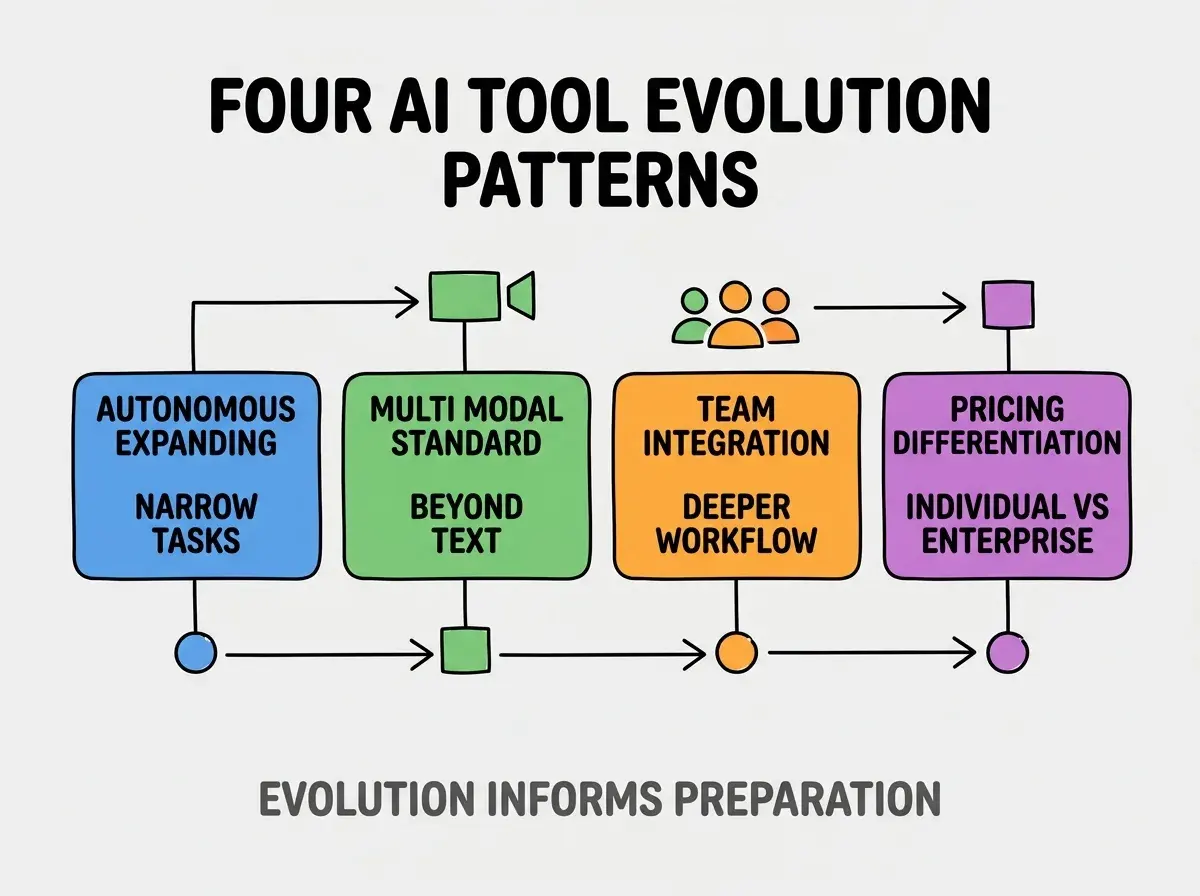
Pattern 3, integration with team workflows deepening. AI tools integrating with project management, code review, deployment. Integration changes value beyond pure code generation.
Pattern 4, pricing model differentiation. Individual tier commoditization, enterprise tier diverging. Differentiation produces different markets within AI tool category.
What Builders Should Prepare For
Three preparation patterns matter for builders.
Preparation 1, autonomous task delegation skill. Knowing what tasks delegate well to autonomous AI matters as autonomy expands. Skill matters more than specific tool.
Browse more pulse articles
Read more pulsePreparation 2, workflow integration thinking. Understanding how AI integrates with workflow becomes more important as integration deepens. Thinking matters for evaluation.
Preparation 3, pricing model awareness. Understanding pricing implications matters as pricing differentiates. Awareness prevents budget surprises.
What The Specific Implications Are
Three implication patterns matter for current decisions.
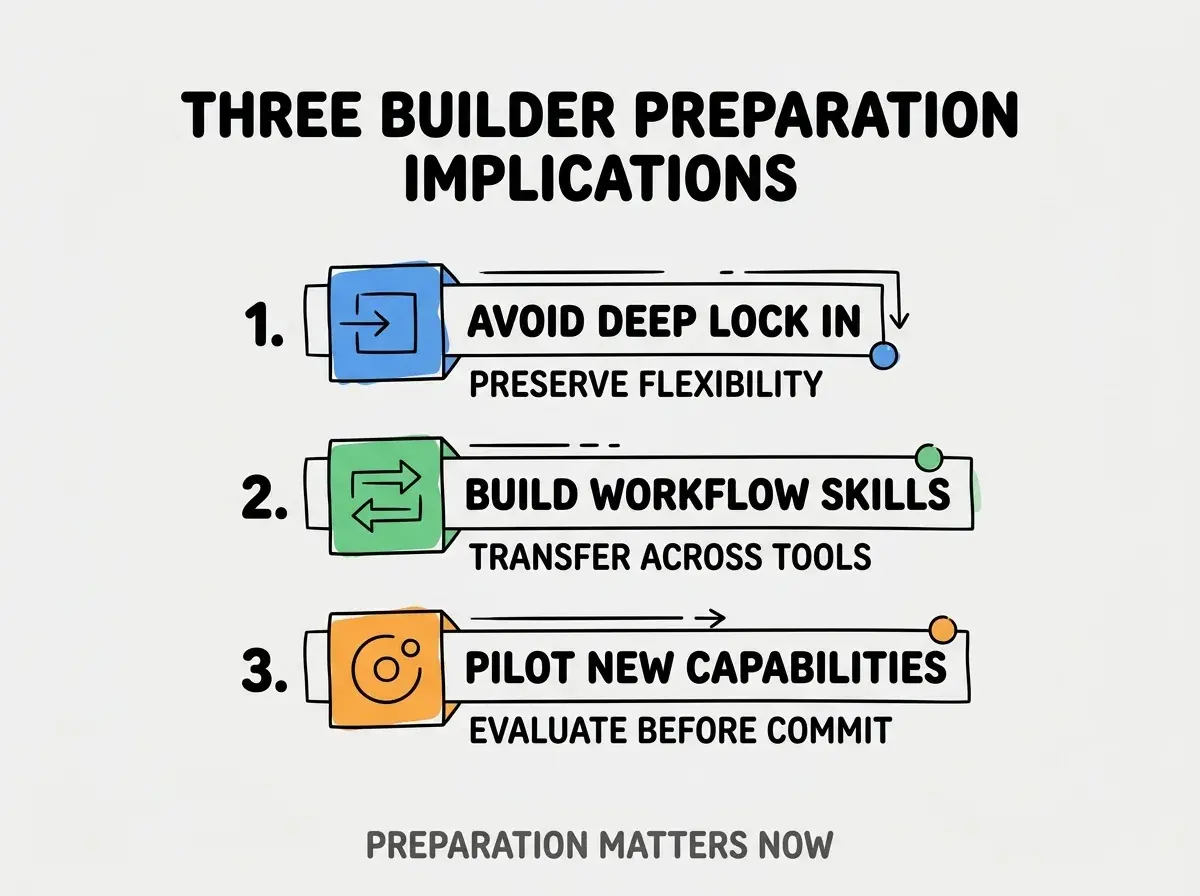
Implication 1, avoid deep lock in to specific tools. Tools evolving rapidly; lock in reduces ability to capture evolution benefits. Flexibility matters for next 12 months.
Implication 2, build workflow skills that transfer across tools. Tool specific skills depreciate as tools evolve; workflow skills transfer. Skills matter more than tool familiarity.
Implication 3, pilot new capabilities before broad adoption. New capabilities deserve evaluation; broad adoption without piloting often produces regret. Piloting catches issues before broad commitment.
What Makes Tool Decisions Sustainable
Three patterns separate sustainable tool decisions from problematic patterns.
Pattern 1, decisions matched to current capability not future promises. Future capabilities promises often delayed; current capabilities matter more for current value. Match decisions to current.
Pattern 2, regular reevaluation cycles. Tools change rapidly; quarterly reevaluation catches changes. Without reevaluation, decisions become stale.
Pattern 3, switching cost consideration in tool choice. High switching cost amplifies decision importance; low switching cost reduces decision risk. Consider switching cost explicitly.
The combination produces tool decisions that age well in evolving market. Without these patterns, decisions often become regrets within 12 months.
How To Forecast Tool Capabilities
Three forecasting patterns help builders forecast AI tool capabilities.
Pattern A, monitor major AI lab announcements. OpenAI, Anthropic, Google announcements predict capability availability. Without monitoring, capabilities announced without preparation.
Pattern B, follow tool vendor roadmaps publicly shared. Vendor roadmaps reveal direction even when timing uncertain. Without following, surprises happen.
Pattern C, participate in beta and preview programs. Early access reveals capabilities before public availability. Participation enables earlier preparation.
The combination produces forecasting capability that matches tool evolution pace. Without forecasting, builders react to changes rather than preparing.
The most damaging AI tool evolution forecasting mistake is anchoring to current state and assuming gradual change. AI tool evolution often happens in jumps; gradual assumptions produce wrong forecasts. The fix is to plan for both gradual evolution and jumps; preparation for both produces better outcomes than preparation for one. Builders who plan for jumps capture opportunities that gradual planners miss.
The other mistake is overestimating short term changes and underestimating long term changes. Short term changes are often slower than expected; long term changes faster. The fix is to discount short term hype while taking long term trends seriously.
A third mistake is ignoring evolution because uncertainty is high. Uncertainty does not eliminate value of forecasting; uncertain forecasts inform better decisions than no forecasts.
A fourth mistake is treating evolution as vendor responsibility. Tool buyer choices shape evolution; passive buyers miss opportunity to influence direction.
How To Handle Specific Evolution Scenarios
Three scenarios deserve specific approaches.
Scenario A, autonomous capability dramatically expanding. Prepare task delegation patterns; develop judgment for what to delegate. Without preparation, autonomy expansion creates either over delegation or under utilization.
Scenario B, pricing model shifting suddenly. Maintain pricing flexibility; avoid long term commitments at unfavorable rates. Without flexibility, pricing shifts produce budget impact.
Scenario C, integration capabilities expanding. Plan workflow integration alongside tool selection. Without planning, integration value goes uncaptured.
The combination produces scenario specific preparation. Without specific approaches, scenarios produce predictable challenges.
How AI Tool Evolution Will Likely Continue Beyond 12 Months
Beyond 12 months, AI tool evolution likely continues but with different patterns.
The first likely longer term evolution is consolidation among tool vendors. Many vendors today; consolidation likely. Consolidation affects tool sustainability.
The second likely longer term evolution is specialization within AI tools. Generalist tools may give way to specialized tools per domain. Specialization changes tool selection criteria.
The third likely longer term evolution is open source AI tools maturing. Open source alternatives to proprietary tools growing. Maturity changes pricing dynamics.
The combination suggests AI tool landscape continues evolving for years. Builders learning forecasting now build skills that remain valuable through evolution.
Common Questions About AI Tool Evolution
AI tool evolution raises questions worth addressing directly.
The first question is whether to delay tool decisions waiting for evolution. No; current value justifies decisions even with future evolution. Decide based on current value.
The second question is how often to reevaluate tool decisions. Quarterly minimum; tool landscape changes faster than annual review captures.
The third question is whether to follow trend reports for forecasting. Useful but biased toward vendor narratives. Combine reports with direct observation for better forecasting.
The fourth question is whether to participate in beta programs. Yes for tools you might adopt; no for tools you would not adopt regardless. Beta participation should match adoption probability rather than being indiscriminate.
What This Means For You
AI coding tool evolution affects tool decisions for years. The four patterns, preparation approaches, and forecasting methods produce framework for navigating tool evolution.
- If you're a senior dev: Tool evolution affects daily work directly. Build forecasting skills; they pay back through better tool decisions.
- If you're a founder: Tool evolution affects company productivity trajectory. Plan tool decisions with evolution awareness.
- If you're an indie hacker: Solo builders most affected by tool evolution. Build flexibility; without flexibility, evolution produces forced migrations.
Browse more pulse articles
Read more pulse