Choosing the right artificial intelligence model for your software engineering team requires looking past marketing claims and focusing on documented capabilities. The landscape of developer tools shifted significantly in early 2026. Teams must now evaluate how these models integrate into their existing environments, handle complex logic, and manage context windows during extensive debugging sessions.
Retrospective edition for March 2026. Researched and published September 9, 2026. Product details reflect documentation checked at publication unless explicitly identified as historical.
This documentation based review examines the stated capabilities of the models available around the March editorial date. We will explore how to structure a fair evaluation across different environments and provide a framework for testing these tools in your own repositories.
Understanding the Current AI Coding Model Landscape
The evolution of coding models has moved from simple code completion to complex workflow integration. According to the March 5 release notes from OpenAI (official documentation), the newly released GPT-5.4 model integrates the coding capabilities of the 5.3 Codex system with broader professional work, computer use, and tool search functions. This represents a significant shift from the initial GPT-5 family launch in August 2025, aiming to provide a more holistic agentic experience across the ChatGPT interface, the API, and the Codex product.
Anthropic released Claude Sonnet 4.6 on February 17 (official documentation), continuing their focus on large context windows and nuanced instruction following. Meanwhile, Google introduced Gemini 3 for developers in November 2025 (official documentation), emphasizing deep integration with their broader ecosystem and improved reasoning capabilities for complex architectures.
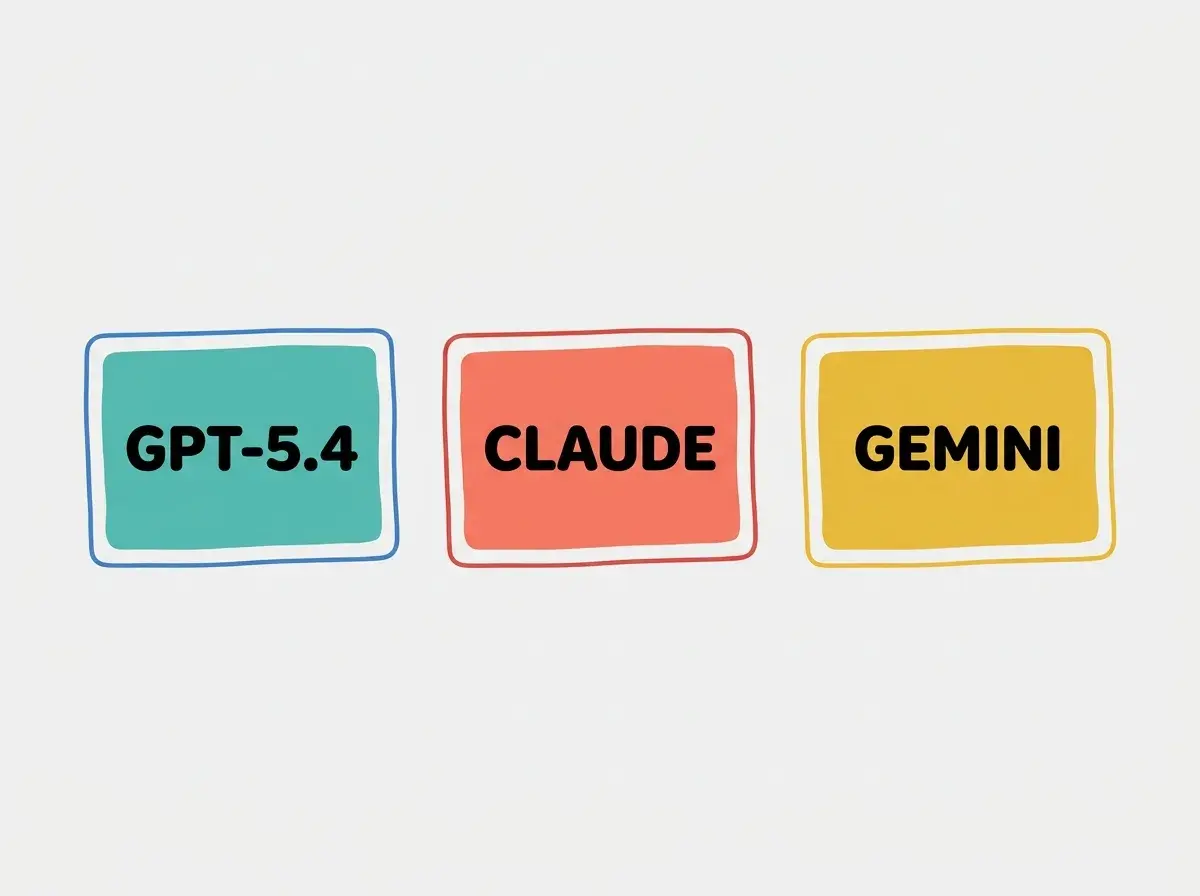
When evaluating these tools, you must separate the underlying model capabilities from the interface you use to access them. A model might possess excellent reasoning skills but fail to deliver value if the integrated development environment extension restricts its access to your broader codebase.
The underlying model is only one variable in your productivity equation. The harness, the context window management, and the file system permissions granted to the agent framework are equally critical to the final output quality.
Evaluating Model Capabilities Versus Harness Permissions
A common point of confusion is attributing the success or failure of a coding task entirely to the model. In practice, the harness (such as a dedicated coding agent or IDE plugin) dictates what the model can see. If you ask a model to refactor a component, but the harness only provides the active file rather than the imported dependencies, the model may make unsupported assumptions or need to request more context.
GPT-5.4 documents native computer use and tool search capabilities, suggesting it can navigate file systems when properly authorized. However, your local security policies and the specific API implementation will govern whether it can actually execute terminal commands or read environment variables. Similarly, Claude Sonnet 4.6 and Gemini 3 rely on the tooling provided by the developer to interact with local files.
Explore clear explanations of AI coding tools, project context, and reliable development workflows.
Explore the blogTo understand how these models compare on paper, we can look at their documented focus areas and intended integration methods.
| Feature | GPT-5.4 | Sonnet 4.6 | Gemini 3 |
|---|---|---|---|
| Primary Integration Focus | Computer use, tool search, unified API | Large context instruction following | Ecosystem integration, architectural reasoning |
| Release Timeline | March 2026 | February 2026 | November 2025 |
| Documented Workflow Feature | Integrates Codex 5.3 with professional work tools | Enhanced multi-step logic execution | Native developer ecosystem hooks |
The table above highlights selected emphasis in the release documentation, not exclusive capabilities or measured rankings based on their documentation. Your choice will depend heavily on the task, supporting tools, permission boundaries, and latency budget.
A Concrete Six Task Proposed Evaluation Framework Setup
Because benchmark relevance depends on tasks, environments, and acceptance criteria, we strongly recommend building an internal evaluation matrix. Use public benchmarks as context alongside repository-specific tests. Instead, propose a specific set of tasks that reflect your daily engineering challenges.
Here is a proposed six task evaluation framework you can implement in your own environment. You should run these tasks using the same prompt and the same repository context for each model, recording the outcomes in a blank scorecard.
Task 1: Frontend Component Scaffolding Prompt the model to generate a React functional component for a user settings dashboard. Provide a design system specification document in the context. Expected Evaluation Criteria: Does the model adhere to the provided design tokens? Does it correctly implement accessibility attributes? Are the state management hooks structured logically?
Task 2: Legacy Code Refactoring Provide a monolithic Python script containing mixed business logic and database queries. Ask the model to refactor it into separate modules following clean architecture principles. Expected Evaluation Criteria: Does the model correctly identify domain boundaries? Are the new function signatures clean and well documented? Does the refactored code maintain the original logical flow without introducing syntax errors?
Task 3: Concurrency Debugging Context Provide a Go application with a known race condition. Ask the model to identify the bug and propose a fix. Expected Evaluation Criteria: Can the model pinpoint the exact lines causing the race condition? Does the proposed solution use appropriate synchronization primitives like mutexes or channels? Is the explanation of the root cause accurate and easy to understand?
Task 4: Comprehensive Test Generation Supply a complex utility function with multiple edge cases. Request a complete suite of unit tests using a specific testing framework. Expected Evaluation Criteria: Does the model cover all logical branches? Are edge cases and boundary conditions explicitly tested? Are the assertions meaningful and robust against minor implementation changes?
Task 5: Infrastructure Pipeline Configuration Ask the model to write a continuous integration pipeline configuration file that builds a Docker image, runs tests, and pushes to a registry only on specific branch merges. Expected Evaluation Criteria: Is the syntax valid for the target CI platform? Are caching mechanisms utilized correctly to optimize build times? Are security best practices for secret management followed?
Task 6: Database Migration Scripting Provide two schemas representing a before and after state. Ask the model to write the SQL migration script to transition between them safely without data loss. Expected Evaluation Criteria: Does the script handle data type conversions safely? Are appropriate constraints and indexes added or removed? Is there a valid rollback script provided alongside the migration?
Do not evaluate models based on a single prompt attempt. AI outputs are probabilistic. Run your evaluation tasks multiple times to assess the consistency and reliability of the generated code before making a final judgment.
Symbolic Cost Worksheet for AI Development Workflows
When scaling these tools across an engineering organization, API costs can become a significant factor. While we cannot provide exact pricing due to frequent changes and negotiated enterprise rates, you can use a symbolic worksheet to model your potential expenses.
To calculate your hypothetical cost, you need to estimate three variables for a typical developer workday. First, estimate the average number of requests made per day. Second, estimate the average input context size per request. Third, estimate the average output generation size per request.
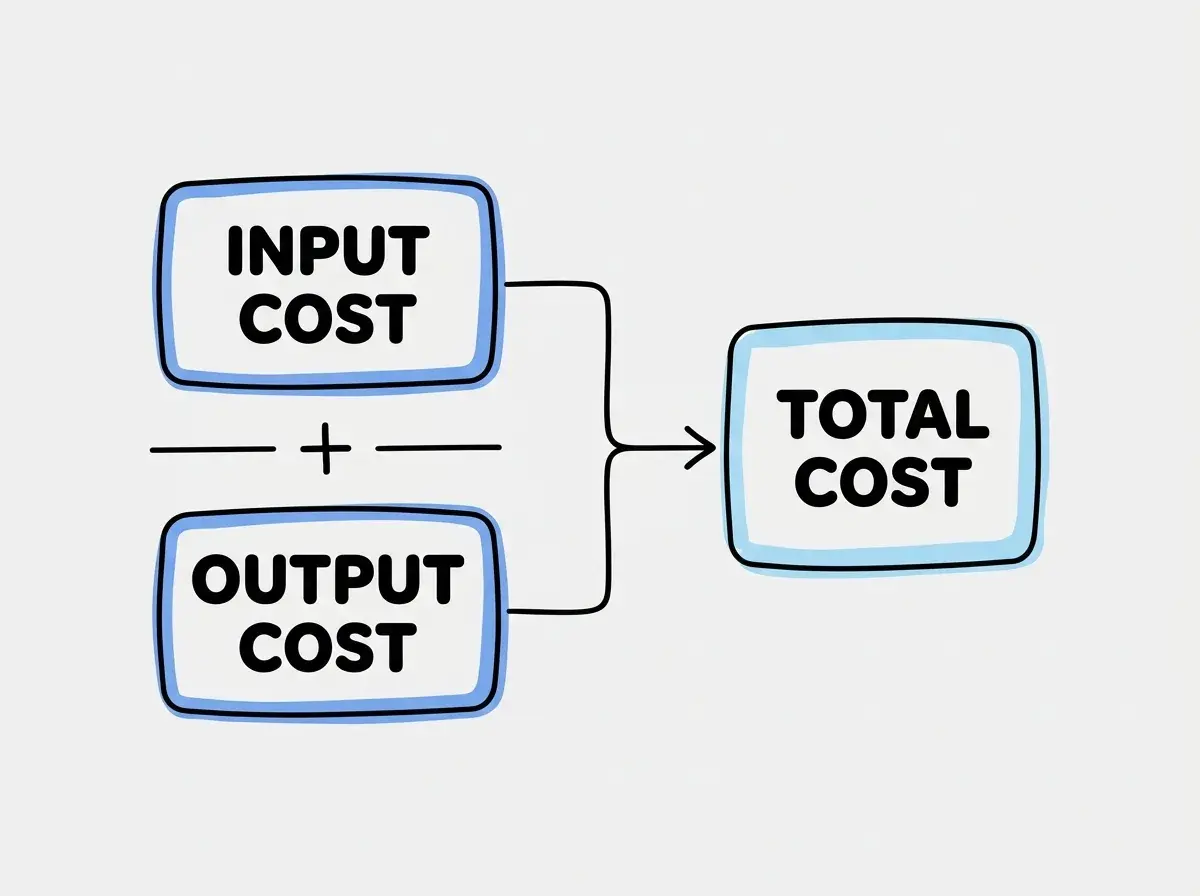
Consider a hypothetical scenario where a developer makes fifty requests a day. If the average input context is ten thousand tokens (representing a few files and documentation) and the average output is five hundred tokens (representing a code snippet or explanation), you can apply the stated pricing of your chosen provider to these numbers.
// Symbolic cost calculation function
function calculateDailyCost(requests, avgInput, avgOutput, inputPricePerK, outputPricePerK) {
  const totalInputTokens = requests * avgInput;
  const totalOutputTokens = requests * avgOutput;

  const inputCost = (totalInputTokens / 1000) * inputPricePerK;
  const outputCost = (totalOutputTokens / 1000) * outputPricePerK;

  return inputCost + outputCost;
}

// Example usage with placeholder symbolic values
const dailyCost = calculateDailyCost(50, 10000, 500, 0.01, 0.03);
console.log(`Estimated daily cost per developer: $${dailyCost}`);
You must multiply this daily cost by the number of developers and the number of working days in a month to understand the financial impact. Furthermore, if you are using an agentic framework that makes multiple autonomous calls per user request, measure all the model calls, including retries and tool-result context, rather than counting one user request as one API call.
The sample rates above are invented worksheet values, not GPT, Claude, or Gemini prices. For a live estimate, enter the provider’s applicable rates and separate cached usage, tool charges, and any other billed categories. Record the rate date alongside your results.
Frequently Asked Questions About Modern Coding AI Tools
What this means for your daily software development work
The introduction of GPT-5.4 alongside Claude Sonnet 4.6 and Gemini 3 provides engineering teams with powerful, documented capabilities for code generation, debugging, and architectural planning. However, the theoretical power of a model is only realized when paired with the right integration strategy and clear organizational guidelines.
You should not switch your entire engineering team to a new tool based solely on release notes or marketing benchmarks. The practical recommendation is to run the same repository test across the models you are considering. Take a known, complex issue from your own codebase, set up a secure environment, and run the six task evaluation framework outlined above.
By measuring how these models handle your specific frontend frameworks, your legacy backend code, and your unique infrastructure configurations, you can make an informed decision that actually improves developer velocity.
Read more practical articles for choosing tools, reviewing changes, and shipping useful software.
Read more guides