Selecting the right artificial intelligence model for software development requires looking past marketing claims and focusing on how these tools actually behave inside your daily workflow. A documentation-based review of the current landscape reveals that raw capability is only one part of the equation. Teams must also weigh integration friction, realistic cost structures, and how well a model aligns with specific developer personas.
Retrospective edition for 2026-04-25. Researched and published September 9, 2026. Product details reflect documentation checked at publication unless explicitly identified as historical.
Assessing the Spring 2026 Model Landscape
How recent releases change the evaluation matrix for development teams
The period through April 25, 2026 brought a flurry of updates to the major coding assistants. Anthropic released Claude Sonnet 4.6 on February 17, followed by Claude Opus 4.7 on April 16. These releases emphasize nuanced reasoning and large context windows. Shortly after, OpenAI introduced GPT-5.5 on April 23. The GPT-5.5 announcement describes the model as being designed for complex work, specifically highlighting coding and computer use capabilities. Meanwhile, Google's Gemini 3 Pro, released earlier on November 18, 2025, remains a strong contender in the ecosystem with deep integration into the Google Cloud stack.
Because there is no definitive cross-model benchmark provided by the vendors that perfectly maps to every unique codebase, engineering leaders must build their own frameworks to determine which tool fits their specific needs. Relying on generic benchmarks often leads to disappointment when the model struggles with your proprietary internal libraries or specific architectural patterns.
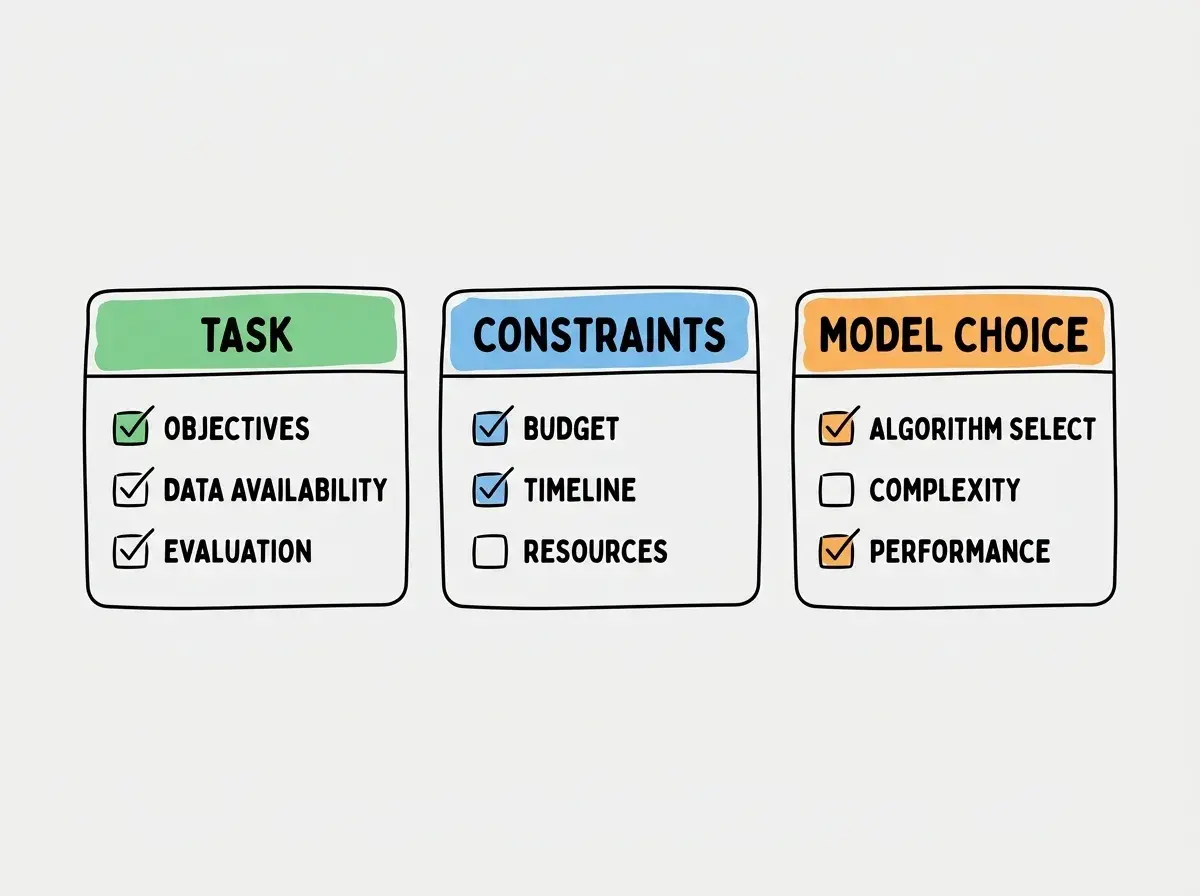
The rapid pace of these releases means that any purchasing decision is inherently a snapshot in time. Instead of searching for an absolute winner, teams should focus on establishing a robust evaluation methodology. This methodology should prioritize how well a model adapts to your specific coding standards and how much manual correction it requires.
Building Your Internal Evaluation Harness
Create a standardized testing framework to measure true utility
To properly evaluate these models, you need a standardized harness that reflects your actual daily engineering work. A theoretical test suite is useless if it does not mimic the friction your developers face. We recommend creating a six-task harness that covers a spectrum of difficulty and context requirements.
First, ask the model to scaffold a new API endpoint including input validation and error handling. This tests its grasp of your chosen framework and boilerplate generation. Second, provide a messy legacy class and ask for a refactor using modern design patterns. This reveals how well the model understands architectural intent. Third, request unit tests for a complex asynchronous function to gauge its ability to handle edge cases and mock external dependencies.
Do not use popular open-source algorithmic challenges for your internal evaluation. Models have often seen these exact problems in their training data, leading to artificially inflated performance that will not translate to your proprietary business logic.
The fourth task should involve debugging. Provide a stack trace and a snippet of logs containing a subtle race condition, then ask the model to identify the root cause. Fifth, require the model to translate a small script from one language to another, such as moving a Python data processing script into Go. Finally, ask it to generate comprehensive documentation for an undocumented internal module. By running GPT-5.5, Claude Opus 4.7, Claude Sonnet 4.6, and Gemini 3 Pro through this exact same six-task harness, you generate qualitative data specific to your codebase.
Hypothetical Cost Modeling for Daily Tasks
Calculate realistic expenditures using a multiplier approach
Evaluating the cost of an AI coding model requires looking beyond the advertised price per thousand tokens. A cheaper model that requires constant prompting and correction can easily cost more in developer time than a premium model that gets it right on the first try. To understand this, we must build a hypothetical cost model based on realistic usage assumptions rather than vendor pricing pages.
Imagine a scenario where a developer executes five complex generation tasks per day. Let us assume a hypothetical baseline cost of $0.40 per successful task execution for a premium model. If this premium model succeeds on the first attempt, the daily cost is exactly $2.00 per developer.
Explore clear explanations of AI coding tools, project context, and reliable development workflows.
Explore the blogNow consider a budget model. It might have a hypothetical baseline cost of only $0.10 per task. However, if the budget model struggles with complex logic, the developer might need to refine the prompt, fix syntax errors, and regenerate the output. If this results in two retries after the initial attempt, the developer is running the task three times total. The direct token cost is now $0.30. While this is still cheaper in raw compute, you must factor in the developer time wasted waiting for generations and context switching. When you multiply this friction across an entire engineering organization, compare the measured total before deciding which option is cheaper.
Matching Capabilities to Developer Personas
Align model selection with specific user profiles and requirements
Different users have entirely different requirements for their coding assistants. A tool that works perfectly for a computer science student might completely fail an enterprise platform team. We can break these needs down into three distinct personas to help guide your evaluation.
The Student persona prioritizes broad language support and clear, explanatory output. They are learning the fundamentals and need a model that acts as a patient tutor. Budget is often a primary constraint, making models with generous free tiers or low-cost subscriptions highly attractive. Small coursework projects may prioritize clear explanations over large context capacity; requirements vary.
The Solo SaaS Developer persona requires speed and full-stack capabilities. They are building entire applications alone and need a model that can jump from writing SQL migrations to styling frontend components. Context windows become crucial here, as the model needs to understand how the database schema relates to the user interface. They are usually willing to pay a premium for a model that significantly accelerates their time to market.
The Enterprise Team persona cares deeply about security, privacy, and stack compatibility. They need models that integrate seamlessly with their existing version control and CI/CD pipelines. The ability to ingest large internal codebases and adhere to strict corporate coding standards is non-negotiable. For this persona, the evaluation must include a thorough review of the vendor data retention policies and enterprise licensing agreements.
| Persona | First evaluation priority | Budget check |
|---|---|---|
| Student | Accurate explanations and learning value | Available allowance and predictable spending |
| Solo developer | Accepted full-stack changes with manageable review | Cost per completed task |
| Enterprise team | Repository fit, access policy, and reproducibility | Usage plus integration and review costs |
Price does not prove capability, privacy, or a lower retry rate. Apply the same acceptance checks to inexpensive and premium candidates.
Use a small, reviewable task to check how this applies in your own project before expanding the workflow.
Always evaluate models based on the specific persona of the developer using it. Match capability and budget to the task rather than the developer’s seniority. A junior engineer can face a difficult debugging task, while a senior architect may only need a simple transformation.
Stack Compatibility and Retirement Planning
Evaluate infrastructure integration and prepare for deprecations
Even the most capable model is useless if it cannot integrate with your daily tools. When reviewing documentation for models like Gemini 3 Pro or Claude Opus 4.7, pay close attention to their ecosystem integrations. Does the model have an officially supported extension for your preferred IDE? Can it be called directly from your terminal? Does it integrate with your pull request review process?
Furthermore, the rapid release cycle means you must plan for model retirement. Retirement schedules differ by provider, model, and access channel. Monitor the official deprecation notices rather than assuming a fixed support lifetime. Your evaluation framework must include a plan for how you will migrate your internal tools and prompts when a model is retired. Keep model selection configurable while recording the exact version used for reproducible evaluations.
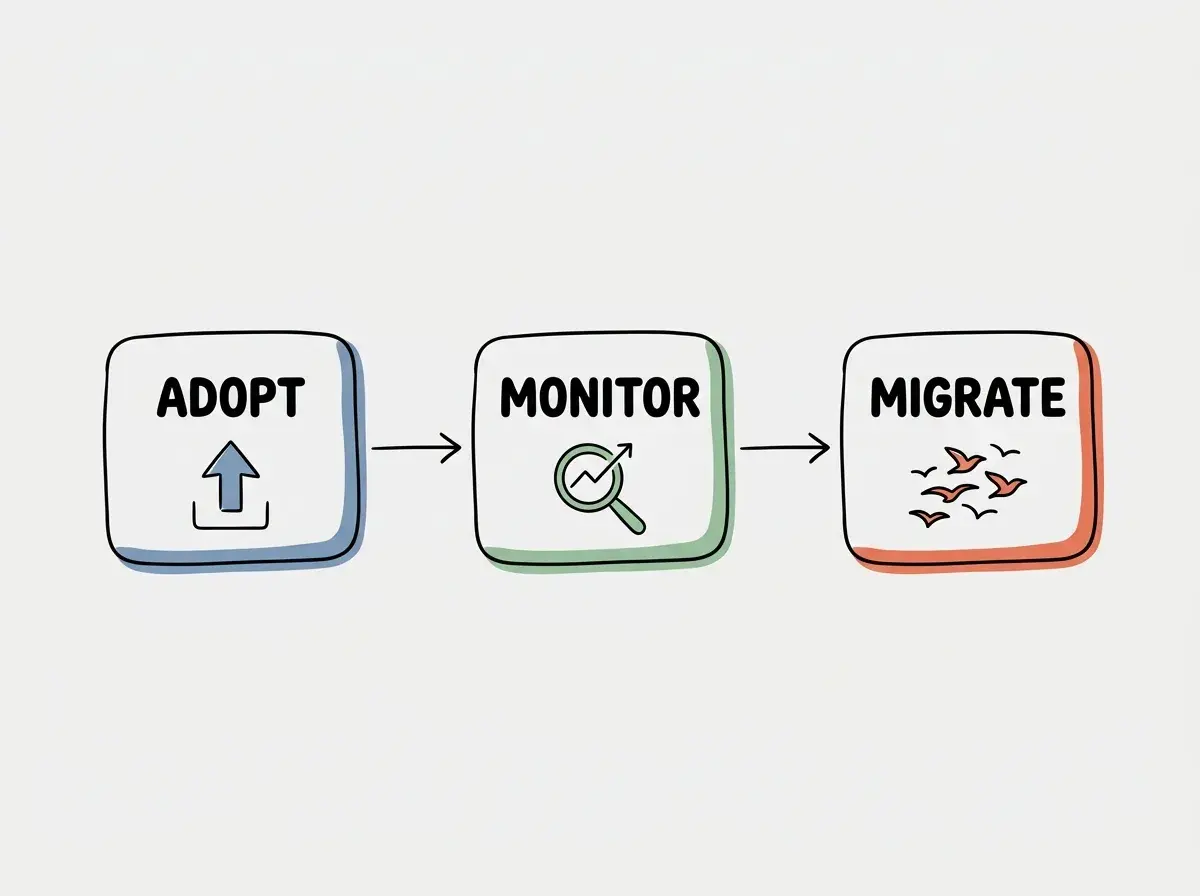
Build abstraction layers in your internal tooling that allow you to swap out the underlying model without rewriting your entire interface. This makes it easier, when a new generation arrives, to, run your six-task evaluation harness and deliberately route traffic to the new best-in-class option.
Answering Common Questions About AI Model Evaluation
Reviewing the practical aspects of implementing a testing framework
What This Means For Your Next Architecture Decision
Choosing an AI coding model is no longer about finding the smartest chatbot. It is about finding the right architectural component for your engineering workflow. By building a custom evaluation harness, modeling realistic costs with retry multipliers, and aligning capabilities with developer personas, you can make a data-driven decision that genuinely improves productivity.
Remember that the landscape will continue to shift. The models available in April 2026 will eventually be replaced. By focusing on a robust, repeatable evaluation framework rather than chasing the latest hype, your team will be prepared to adapt and thrive regardless of which vendor currently holds the crown.
Read more practical articles for choosing tools, reviewing changes, and shipping useful software.
Read more guides