Evaluating new artificial intelligence models for software engineering requires a structured approach to understand how they handle real development workflows. The release of Gemini 3 Pro on November 18, 2025, introduced several new capabilities aimed at developers. According to the official Google developer announcement, the model emphasizes agentic coding features and achieves a vendor reported score of 54.2 on the TerminalBench 2.0 evaluation framework. This documentation based review explores how to structure your own evaluations for these new capabilities.
Retrospective edition for March 8, 2026. Researched and published September 9, 2026. Product details reflect documentation checked at publication unless explicitly identified as historical.
The Antigravity Ecosystem and Agentic Coding
Google has positioned Gemini 3 Pro within what they call the Antigravity ecosystem. Based on their documentation at official documentation, this ecosystem integrates editor, terminal, and browser capabilities into a unified agentic loop. Instead of merely generating static code snippets, the model is designed to read your environment, propose changes, execute terminal commands to test those changes, and use browser access to look up updated documentation or verify web interfaces.
When evaluating this ecosystem for your own team, you should focus on how well the model transitions between these three domains. A typical developer workflow involves writing code in the editor, running a build script in the terminal, reading the error output, and searching the web for a solution. Testing Gemini 3 Pro requires setting up a sandbox environment where these actions can be safely monitored and logged. You will want to measure not just if the final code compiles, but how many autonomous steps the model took to reach that state and whether it accurately interpreted terminal errors.
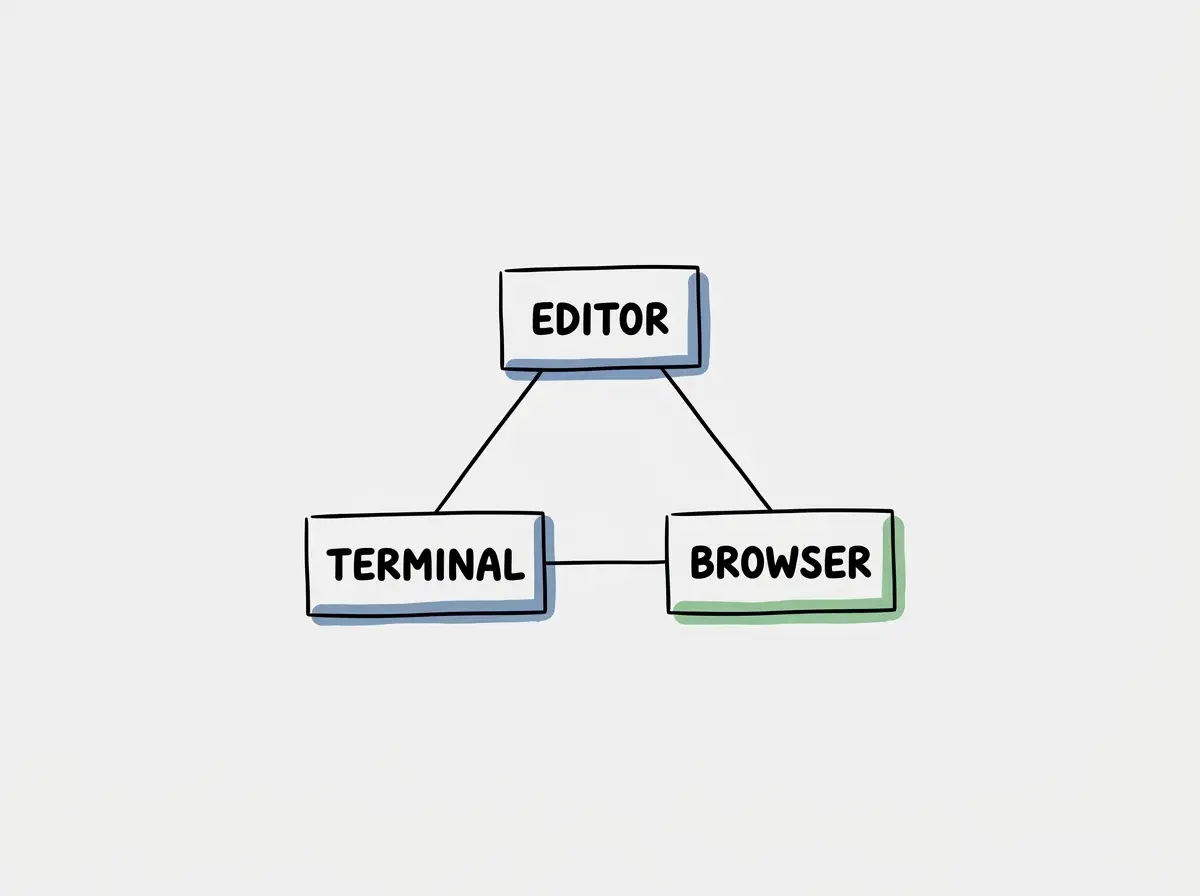
The integration of these tools changes the evaluation paradigm. You are no longer just testing code generation accuracy. You must test the model ability to recover from unexpected state changes in the terminal or navigate complex documentation sites in the browser without getting stuck in infinite loops.
Long Context Retrieval Versus Attention
One of the primary selling points of modern development models is their massive context windows. However, feeding an entire repository into a prompt requires understanding the difference between simple retrieval and deep attention. When a model processes hundreds of thousands of tokens, it may successfully retrieve a specific function definition, but it might fail to apply the nuanced architectural patterns established across multiple files.
According to the API updates detailed at official documentation, Gemini 3 Pro is optimized for these extensive context tasks. To test this effectively, you cannot rely on simple needle in a haystack tests. You need to design evaluations that require the model to synthesize information from the beginning, middle, and end of the context window simultaneously.
When testing long context capabilities, ensure your evaluation tasks require synthesizing architectural patterns from multiple files rather than just locating a single isolated variable definition.
For example, if you provide the model with a large monolithic repository and ask it to extract a microservice, the model must understand the database schema defined in one folder, the business logic in another, and the API routing in a third. It must maintain attention on all three areas to generate a working standalone service. If it only retrieves the business logic and hallucinates the database schema, the overall workflow has failed that acceptance check; the result alone does not identify an internal attention mechanism as the cause.
Explore clear explanations of AI coding tools, project context, and reliable development workflows.
Explore the blogSix Proposed Coding Tasks for Evaluation
To rigorously evaluate Gemini 3 Pro or any similar model, you need structured tasks with clear acceptance criteria. Here are six original proposed coding tasks designed to test different aspects of long context and agentic development.
The first task is Legacy Code Modernization. Provide the model with a legacy application written in an older framework and ask it to migrate a specific module to a modern framework. The acceptance criteria should mandate that the new code uses the latest idiomatic patterns of the target framework, maintains exact feature parity, and includes updated unit tests. Output checking involves running the generated tests and using a static analysis tool to verify the absence of deprecated methods.
The second task is Multi File Refactoring. Supply a repository with tightly coupled classes and request the implementation of a dependency injection pattern. The acceptance criteria require the model to modify the instantiation logic across at least ten different files without breaking the build. You check the output by compiling the code and running an automated dependency graph visualizer to confirm the coupling has been reduced according to your specifications.
The third task is Test Suite Generation for Edge Cases. Give the model a complex utility library that handles date and time parsing across multiple time zones. Ask it to generate a comprehensive test suite focusing exclusively on edge cases like leap years and daylight saving time transitions. Acceptance criteria dictate that the tests must assert correct outcomes for the named edge cases, with coverage used as supporting evidence. Output checking requires executing the test suite with a coverage tool and verifying that all edge case branches are successfully exercised.
The fourth task is Database Migration Scripting. Provide a current schema and a target schema that requires complex data transformations, such as splitting a single user table into separate authentication and profile tables. The model must write a migration script that preserves all data integrity. Acceptance criteria include zero data loss and proper handling of foreign key constraints. Output checking involves running the script against a seeded test database and executing validation queries to confirm data accuracy.
The fifth task is API Integration with Rate Limiting. Ask the model to build a client for a third party API that includes exponential backoff and rate limit handling. The acceptance criteria require the implementation of a robust retry mechanism that respects standard HTTP 429 response headers. To check the output, you can run the client against a mock server configured to aggressively rate limit requests, verifying that the client backs off correctly and eventually completes the data sync.
Do not rely on visual inspection of generated code. Always execute the code in an isolated sandbox with automated tests to verify functional correctness and side effects.
The sixth task is Security Vulnerability Patching. Inject a known but subtle vulnerability into a codebase, such as a complex cross site scripting flaw that requires tracing user input through multiple middleware layers. Ask the model to identify and patch the vulnerability. Acceptance criteria demand that the patch resolves the flaw without introducing regressions in normal functionality. Output checking involves running automated security scanners and functional end to end tests on the patched code.
Cost Formulas and Symbolic Tracking
Running extensive long context evaluations can become expensive. It is crucial to establish a symbolic cost tracking formula before beginning your tests. Do not rely on assumed or static rates, as pricing structures frequently change and depend on your specific enterprise agreements.
A standard symbolic formula for tracking evaluation costs is defined as follows. For this simplified worksheet, use non-overlapping usage buckets: uncached input, output, and cached input. Rates must be per token. Do not add cached input a second time if the API’s total input count already includes it. Include cache storage, tools, or other charges separately when applicable.
function calculateSymbolicCost(usage, rates) {
  const inputCost = usage.uncachedInputTokens * rates.input;
  const outputCost = usage.outputTokens * rates.output;
  const cacheCost = usage.cachedTokens * rates.cache;

  return inputCost + outputCost + cacheCost;
}
By tracking tokens rather than direct currency during the evaluation phase, you can easily recalculate the financial impact if a provider adjusts their pricing model or if you negotiate a different tier. This approach also allows you to compare the efficiency of different prompting strategies. For instance, you might find that providing a larger initial context utilizes more input tokens but drastically reduces the number of output tokens required for corrections, ultimately lowering the total cost.
Comparing Test Design for Competing Models
When evaluating Gemini 3 Pro, it is essential to compare it against other state of the art models using the same rigorous test design. Claude Sonnet 4.6, launched on February 17, 2026, represents a significant alternative in the coding space. According to the release notes at official documentation, this model also focuses heavily on software engineering workflows.
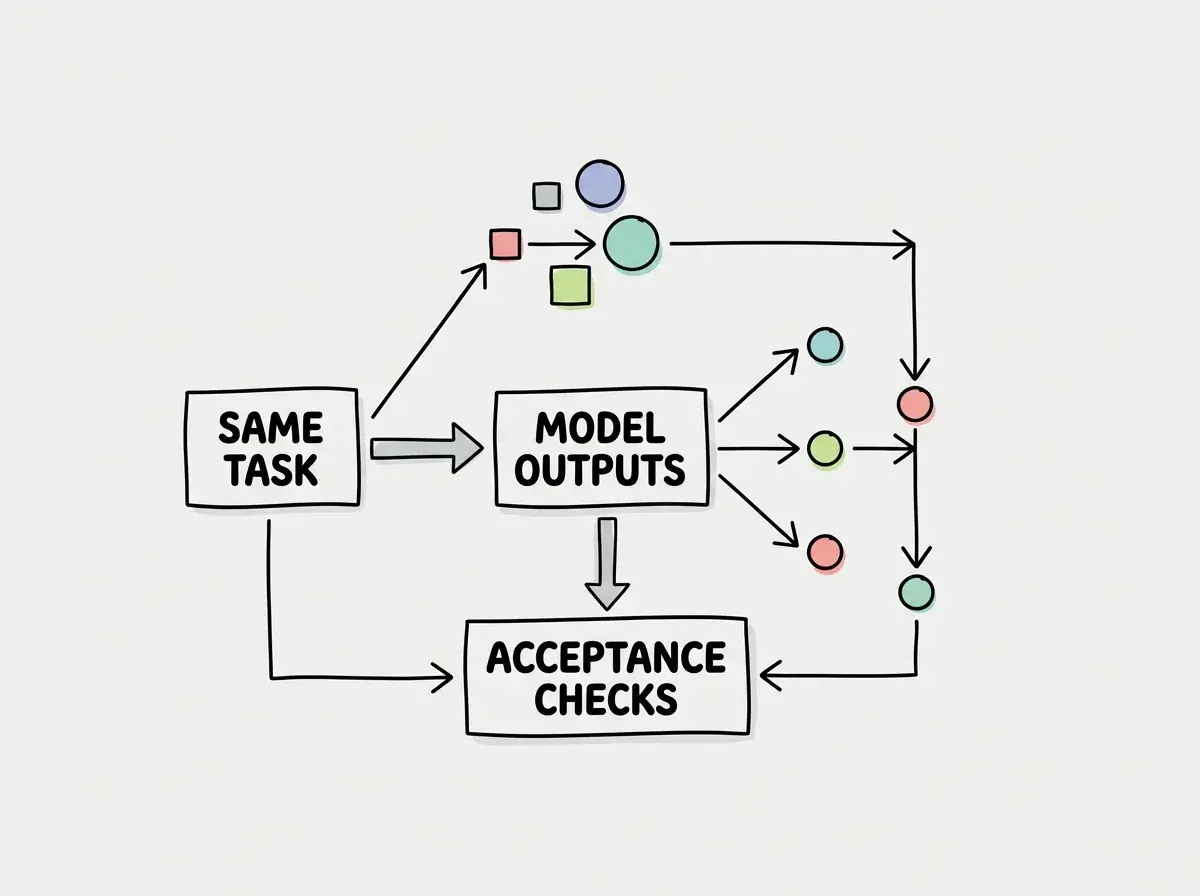
Your test design should not assume an unmeasured winner. Instead, apply the six proposed tasks equally to both models. Because model availability and specific features can change rapidly since the March editorial date, your evaluation infrastructure must be modular. You should be able to swap out the API endpoints and run the identical test suite.
| Evaluation control | Apply to both models |
|---|---|
| Environment | Same isolated checkout and tool permissions |
| Context | Same source files and task specification |
| Completion | Same build, behavior, and regression checks |
| Budget | Record time, usage, retries, and review effort |
Compare the underlying models in a shared harness when possible. If you compare Antigravity with a different coding application, label the result as a comparison of whole workflows.
The goal of this comparison is to identify which model aligns better with your specific engineering practices. One model might excel at generating Python data science scripts while the other might be superior at refactoring enterprise Java applications. Only through controlled, measured testing can you determine the right tool for your organization.
Frequently Asked Questions
What this means for you
The introduction of models like Gemini 3 Pro and Claude Sonnet 4.6 shifts the focus from simple code completion to complex, agentic software engineering. For engineering leaders, this means your evaluation strategies must mature. You can no longer rely on anecdotal developer feedback or basic algorithmic tests. You must invest in automated, sandbox based evaluation pipelines that test long context synthesis, multi step reasoning, and safe execution of terminal commands. By implementing structured tasks and symbolic cost tracking, you can make data driven decisions about which AI tools will genuinely accelerate your development workflows.
Read more practical articles for choosing tools, reviewing changes, and shipping useful software.
Read more guides