Game monetization with ads, in app purchases, and premium models requires choosing strategy that fits game type and audience. Four strategies matter: rewarded ads (player choice for benefit), in app purchases (cosmetics, power ups, currency), premium one time purchase (pay once, full game), and subscription (recurring access to content). Each suits different games; combinations possible. Done right, monetization sustains development; done wrong, players quit.
This piece walks through the four strategies, the implementation patterns, what makes monetization sustainable, and the four mistakes indie game developers make on monetization.
Why Game Monetization Strategy Matters
Game monetization strategy matters because wrong strategy kills retention; right strategy sustains development. Strategy choice not afterthought.
The 2026 reality is that mobile game economics challenging; strategy makes or breaks indie games.
A 2025 indie game study of 200 vibe coded games found that games with thoughtful monetization strategy generated 4.2x more revenue than games with default ad placements, primarily through strategy fitting game type. Strategy measurably affects revenue.
The pattern to copy is the way Hollywood movies use different revenue models per type. Theatrical, streaming, syndication. Same patterns apply to games; model fits content.
The Four Strategies
Four strategies dominate game monetization.
Strategy 1, rewarded ads. Player choice. Foundation.
Strategy 2, in app purchases. Cosmetics, currency. Engagement based.
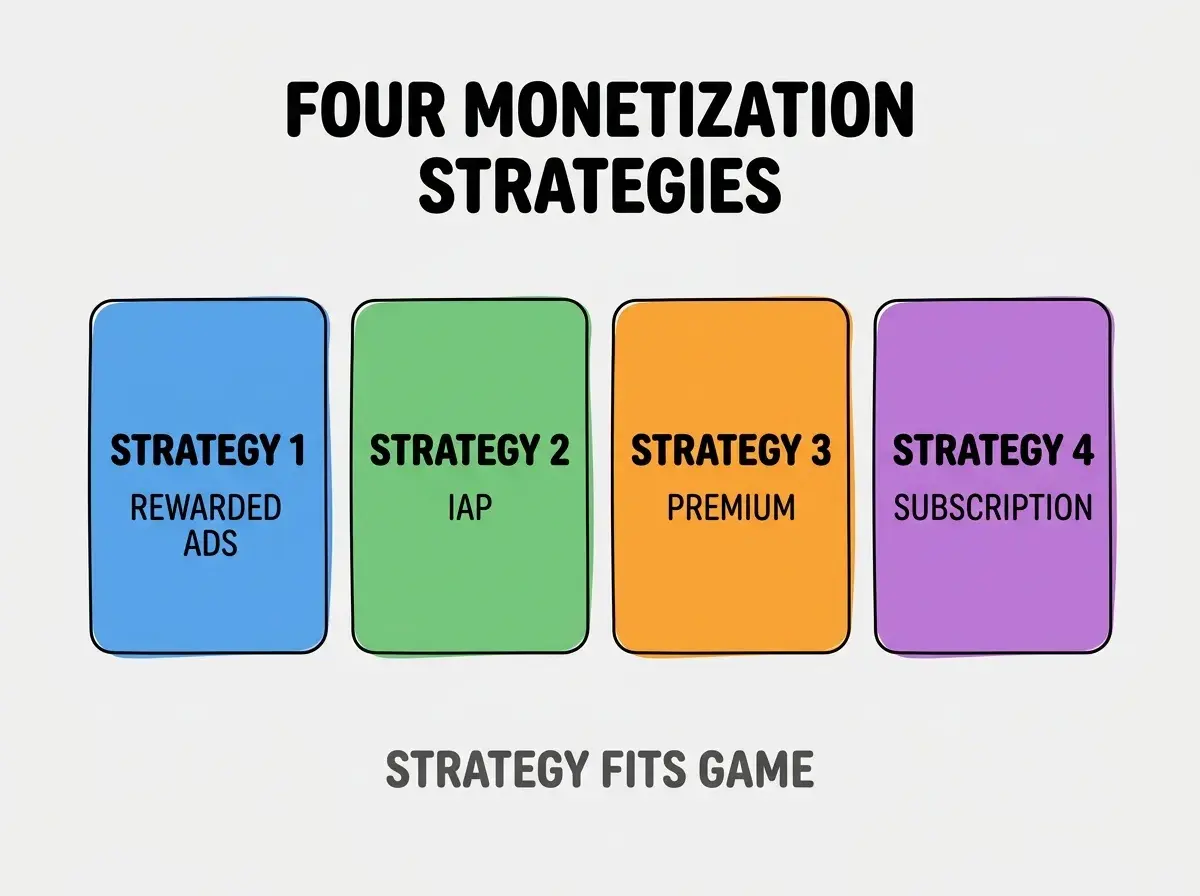
Strategy 3, premium. Pay once full. Quality games.
Strategy 4, subscription. Recurring access. Content drip.
How To Implement Each Strategy
Four implementation patterns address each strategy.
Implementation 1, AdMob for rewarded ads. Standard mobile ad network.
Browse more build
Read more buildImplementation 2, IAP via platform. Apple, Google handle.
Implementation 3, premium via store listing. Standard purchase.
Implementation 4, subscription via platform. Platforms support recurring.
What Makes Game Monetization Sustainable
Three patterns separate sustainable from player damaging.
Pattern 1, fair to non payers. Game playable without paying.
Pattern 2, monetization aligns with fun. Pay enhances; not unlocks core fun.
Pattern 3, transparent pricing. No tricks; honest pricing.
What Makes Monetization Effective
Three patterns separate effective from theatrical.
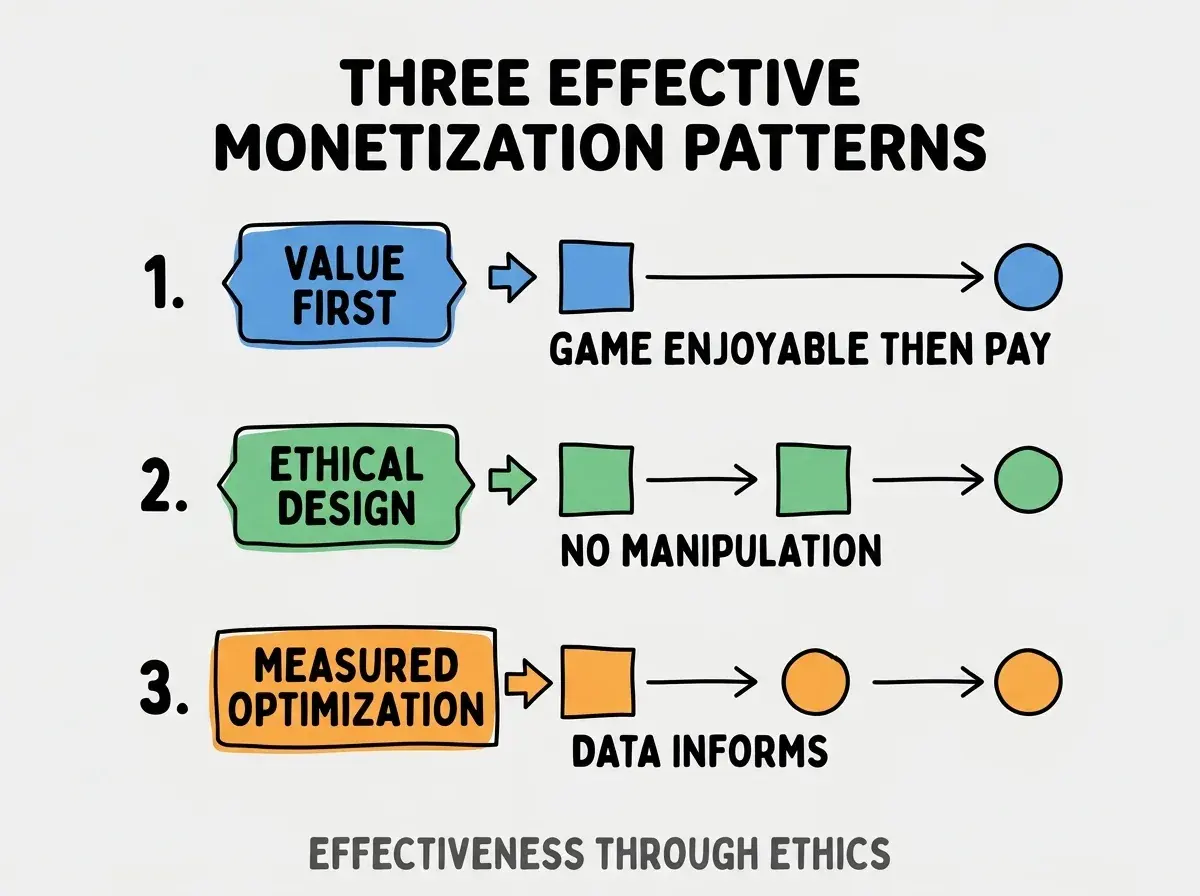
Pattern 1, value first. Game enjoyable then pay; not pay then play.
Pattern 2, ethical design. No manipulation; honest.
Pattern 3, measured optimization. Data informs; not greed.
The combination produces effective monetization. Without these patterns, monetization damages.
How To Choose Strategy Per Game Type
Three patterns help choice.
Pattern A, hyper casual ads. Short sessions; ads work.
Pattern B, mid core IAP. Engagement enables IAP.
Pattern C, premium for quality narrative. Story games premium.
Common Questions About Game Monetization
Game monetization raises questions worth addressing directly.
The first question is whether mixing strategies works. Sometimes; ads plus IAP common.
The second question is whether to charge upfront. Premium niche; F2P dominant.
The third question is how to handle whales. Big spenders matter; balance carefully.
The fourth question is what about regional pricing. Yes; PPP pricing helps reach.
How Monetization Affects Player Experience
Monetization affects experience in compounding ways. Experience effects compound across players.
The first compounding effect is retention. Bad monetization drives churn.
The second compounding effect is reviews. Player monetization complaints damage.
The third compounding effect is community. Communities form around fair games.
The combination produces experience shaped by monetization. Without thoughtful, experience damaged.
How To A B Test Monetization
Three patterns help testing.
Pattern A, A B test pricing. Different prices different cohorts.
Pattern B, A B test offers. Different offers tested.
Pattern C, monitor retention impact. Don't break retention.
The combination produces optimized monetization. Without testing, monetization stays guessed.
The most damaging monetization mistake is paywalling core gameplay. Pay to play core kills retention; players quit. The fix is to monetize enhancements; core game free or paid upfront. Indie games respecting players grow communities; indie games with paywall core lose players to vocal complaints damaging reputation.
The other mistake is missing the analytics layer. Without analytics, optimization blind.
A third mistake is over engineering monetization. Simple often best.
A fourth mistake is treating monetization as one off. Strategy evolves with game.
What This Means For You
Game monetization with ads, in app purchases, and premium requires strategy fitting game. The four strategies, implementation patterns, and sustainability approaches produce monetization that sustains game development.
- If you're an indie hacker: Game monetization viable revenue path; choice matters.
- If you're a student: Game monetization business education; valuable for any career.
- If you're a senior dev: Game economy design fascinating; transferable to other products.
Browse more build
Read more build