To turn vibe coding hobby into first freelance income as a teen builder in 2026, focus on the four service types that teens can credibly offer (small landing pages for local businesses, simple game customization for friends, school project help, social media graphics with code), set up basic business infrastructure with parent help (PayPal/Venmo for payments, simple invoices, basic time tracking), price work in the $50-300 range that small clients can approve quickly, and treat each project as both income and portfolio building. The path from first gig to consistent income takes 3 to 6 months of deliberate practice.
This piece walks through the four service types, the business basics that need parent involvement, the pricing approach, and the four mistakes that make teen freelancing harder than it needs to be.
Why Teen Freelancing With AI Is Newly Viable
Teen freelancing always existed, but the work was usually limited to babysitting, lawn care, or local services. Tech freelancing required years of skill development before being marketable. AI assistance changed that math: a 15-year-old with vibe coding skills can produce work that small businesses pay $100-500 for.
The 2026 reality is that teens with AI fluency are increasingly desirable to small businesses that cannot afford agency rates. The teen brings flexibility, lower rates, and AI-amplified output. The small business gets work done that would otherwise be unaffordable. Both sides benefit.
A 2025 Junior Achievement survey of 3,000 teens ages 14-18 found that 22 percent had earned freelance income from tech work, up from 4 percent in 2022. The income for active teen freelancers averaged $1,800 per year, with some earning $5,000+ from consistent work. The income is meaningful for teens; the experience is significantly more valuable than the money for long-term career trajectory. Teen freelancing is no longer marginal; it is mainstream entry point for tech careers.
The pattern to copy is the way teen musicians built careers in past decades. They started by playing local gigs (school dances, community events, small venues) for modest fees. The early experience built skills, portfolio, and confidence that enabled bigger opportunities. Teen tech freelancing follows the same trajectory: small gigs build the foundation that bigger opportunities require.
The Four Service Types Teens Can Offer
Not every freelance service fits teen builders. Four service types combine reasonable demand with achievable scope.
Service 1, small landing pages for local businesses. Single-page websites for local restaurants, contractors, tutors. $200-500 per project. AI handles most of the work; teen handles design and customization.
Service 2, simple game customization for friends. Custom skins, mods, levels for popular games. Niche but consistent demand among teens. $50-150 per project.
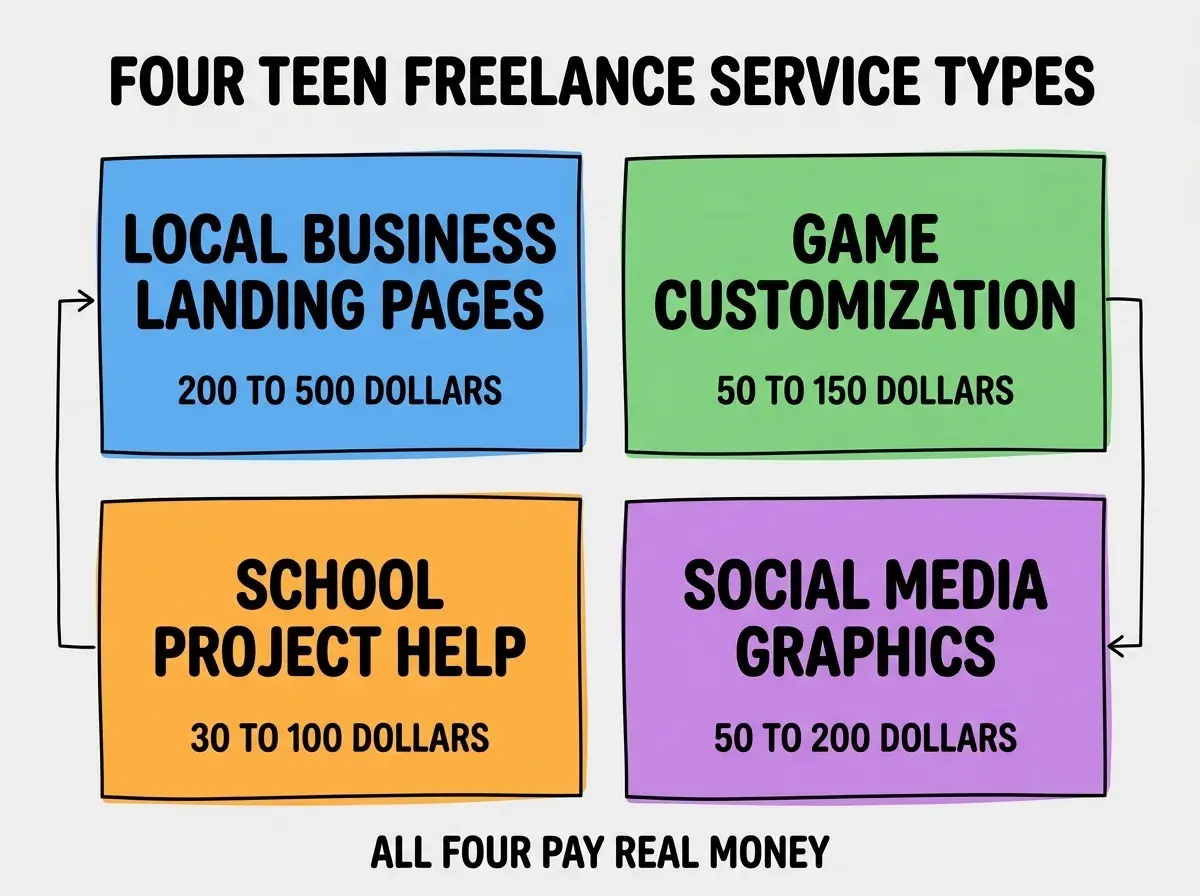
Service 3, school project help. Help peers with their coding projects (without doing them entirely). Tutoring + light building. $30-100 per session.
Service 4, social media graphics with code. Custom animated graphics, simple interactive elements for Instagram/TikTok creators. $50-200 per project.
The Business Basics That Need Parent Involvement
Teen freelancing requires some adult coordination. Three areas where parent involvement matters most.
Area 1, payment processing. Teens cannot open business accounts directly. Use parent's PayPal or Venmo with clear records of what is teen income vs parent income. Some banks now offer teen-friendly business accounts.
Browse more career guides
Read more foundations articlesArea 2, contracts and protection. Even simple gigs benefit from a basic written agreement. Parent can sign as legal guardian. Protects both teen and client.
Area 3, taxes if income gets significant. Above $400/year of self-employment income triggers tax obligations. Parents help navigate the basics; tax software handles the rest.
The Pricing Approach That Works
Teen freelance pricing has specific dynamics. Three patterns work consistently.
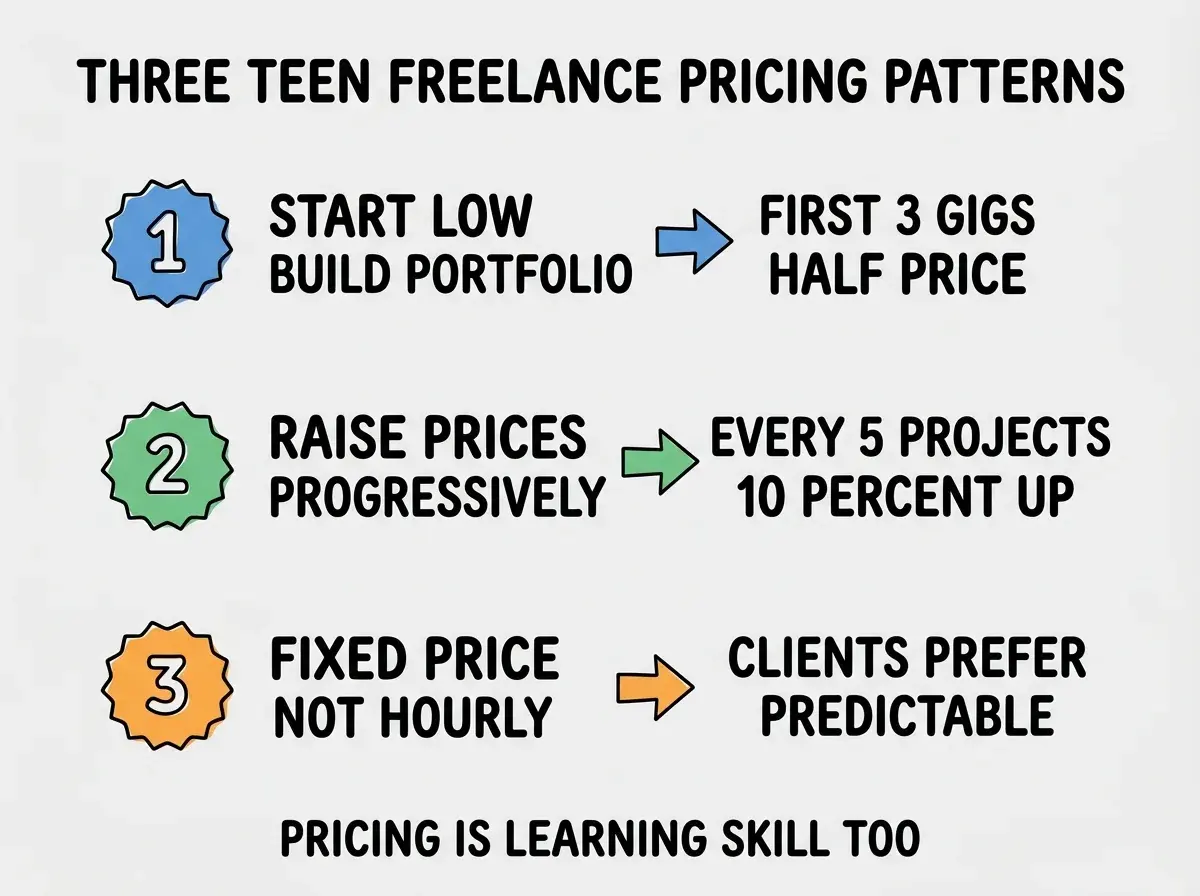
Pattern 1, start low to build portfolio. First 3 gigs at half normal price. The portfolio and references matter more than the income at this stage.
Pattern 2, raise prices progressively. Every 5 completed projects, raise prices by 10 percent. Tests the market and rewards skill development.
Pattern 3, fixed price, not hourly. Small clients prefer knowing the total cost upfront. Teens often undercount hours, making hourly pricing unfavorable. Fixed price aligns incentives.
How to Find First Clients
Three sources produce most teen freelance first clients.
Source 1, family network. Your parents' colleagues, family friends, neighbors. The lowest-friction starting point. Trust is pre-established; expectations are reasonable.
Source 2, school community. Teachers who need classroom websites, school clubs that need landing pages, parent groups that need event sites. Easy access; reasonable scope.
Source 3, local Nextdoor or community Facebook groups. Post offerings in local community forums. Small businesses in your area sometimes respond. Lower hit rate but real opportunities.
The combination produces enough first-client opportunities for most teens to land 3-5 projects in their first 6 months. After that, referrals from happy clients drive most growth.
The most damaging teen freelance mistake is over-promising on timeline or scope to win first gigs. Teens often agree to "have it done in 3 days" or add features mid-project to keep clients happy. The result is missed deadlines, low-quality work, and angry clients. The fix is to under-promise and over-deliver. Set realistic timelines (with parent input on planning), say no to mid-project scope additions, and finish what you commit to. Reputation matters even more for teen freelancers because the local network is small. One bad client experience can spread quickly.
The other mistake is treating freelance work as casual when clients treat it as professional. Show up on time for calls, respond to emails within 24 hours, dress appropriately for video meetings, treat the relationship like the business it is. Teens who behave professionally win bigger opportunities; teens who behave casually stay stuck in cheap small gigs.
Building a Portfolio From First Gigs
Each completed gig becomes portfolio fuel. Three patterns turn freelance work into long-term career advantages.
Pattern A, screenshots and case studies. For every completed project, save screenshots, write a short case study, get a quote from the client. Builds portfolio depth project by project.
Pattern B, public showcase site. Build a personal portfolio site that shows projects with case studies. Becomes the first thing future clients (and college admissions, future employers) look at.
Pattern C, talk about projects publicly. Share project highlights on LinkedIn or X with parent guidance on appropriate sharing. Builds public reputation alongside private portfolio.
The combination compounds across years. A teen who builds 10 freelance projects through high school enters college or workforce with a portfolio that takes most adults years to develop. The early start matters more than any single project.
What to Do When Things Go Wrong
Even careful teen freelancers run into problems. Three patterns help when things go wrong.
Pattern A, get parent help early on disputes. If a client disputes the work or refuses to pay, involve a parent immediately. Adult intermediation often resolves disputes that escalate when teens try to handle them alone.
Pattern B, document everything in writing. Keep emails, texts, and contracts. If a dispute happens, the documentation matters. Lessons learned: do not work without written agreement.
Pattern C, treat each problem as learning. Even bad client experiences teach valuable lessons. The teen who handles a dispute well develops resilience that serves them across their career.
The combination means problems become growth opportunities rather than discouraging setbacks. Most teen freelancers will hit at least one difficult client; how they handle it shapes their long-term confidence.
Dig deeper
A few hand-picked sources if you want to go further.
What This Means For You
Teen freelance work with AI assistance is one of the more interesting opportunities for ambitious teens in 2026. The income is real, the experience is valuable, and the trajectory toward bigger opportunities compounds.
- If you're a founder: Hire teens for small projects when appropriate. The price is right and the work is often surprisingly good.
- If you're changing careers via teen-coded portfolio: Adapt these patterns for adult freelance starts. The principles transfer.
- If you're a student: Try the first-gig flow on a small project. The experience teaches more than any classroom assignment about real-world work.
Browse more career guides
Read more foundations articles