To build a personal brand as a vibe coder in 2026, focus on four pillars that consistently produce career and business value (a public portfolio of shipped projects, regular technical writing about what you build, presence in one or two communities where your audience lives, and authentic engagement with other builders' work), invest 5-10 hours weekly rather than chasing influencer-level commitment, and recognize that the brand compounds over years. Personal brand is real career asset for vibe coders; the patterns that work are accessible to individual builders without becoming full-time creators.
This piece walks through the four pillars, the time investment patterns that work, the content approaches that compound, and the four mistakes vibe coders make when building personal brand.
Why Personal Brand Matters More for Vibe Coders
Traditional developers can rely on credentials (university, employer history, certifications) to signal expertise. Vibe coders often lack traditional credentials but produce work that demonstrates capability. Personal brand becomes the credential; without it, capability is invisible.
The 2026 reality is that personal brand has become substantial career asset for vibe coders. Founders find clients through their writing; freelancers attract premium rates through their portfolios; career-changers land roles through their public work. The brand is not optional; it is increasingly necessary.
A 2025 IndieHackers career study of 1,500 vibe coders found that those with established personal brands (defined as 1000+ engaged followers across professional channels) earned 1.8x more than those without, despite similar technical skills. The premium reflected access to better opportunities, not better skills. Personal brand is the multiplier on technical capability; building it produces compounding returns over careers.
The pattern to copy is the way medical specialists build reputations. They publish papers, speak at conferences, contribute to clinical communities. Their reputations precede them; patients seek them out. Vibe coders benefit from the same dynamics; public work builds reputation that opens doors.
The Four Pillars That Compound
Four pillars consistently produce personal brand value for vibe coders.
Pillar 1, public portfolio of shipped projects. Real projects with real users, documented publicly. The portfolio demonstrates capability that resumes and credentials cannot match in either depth or specificity.
Pillar 2, regular technical writing. Blog posts, Twitter threads, newsletter content about what you build and learn. Writing positions you as expert and creates discoverable surface area for prospects to find you.
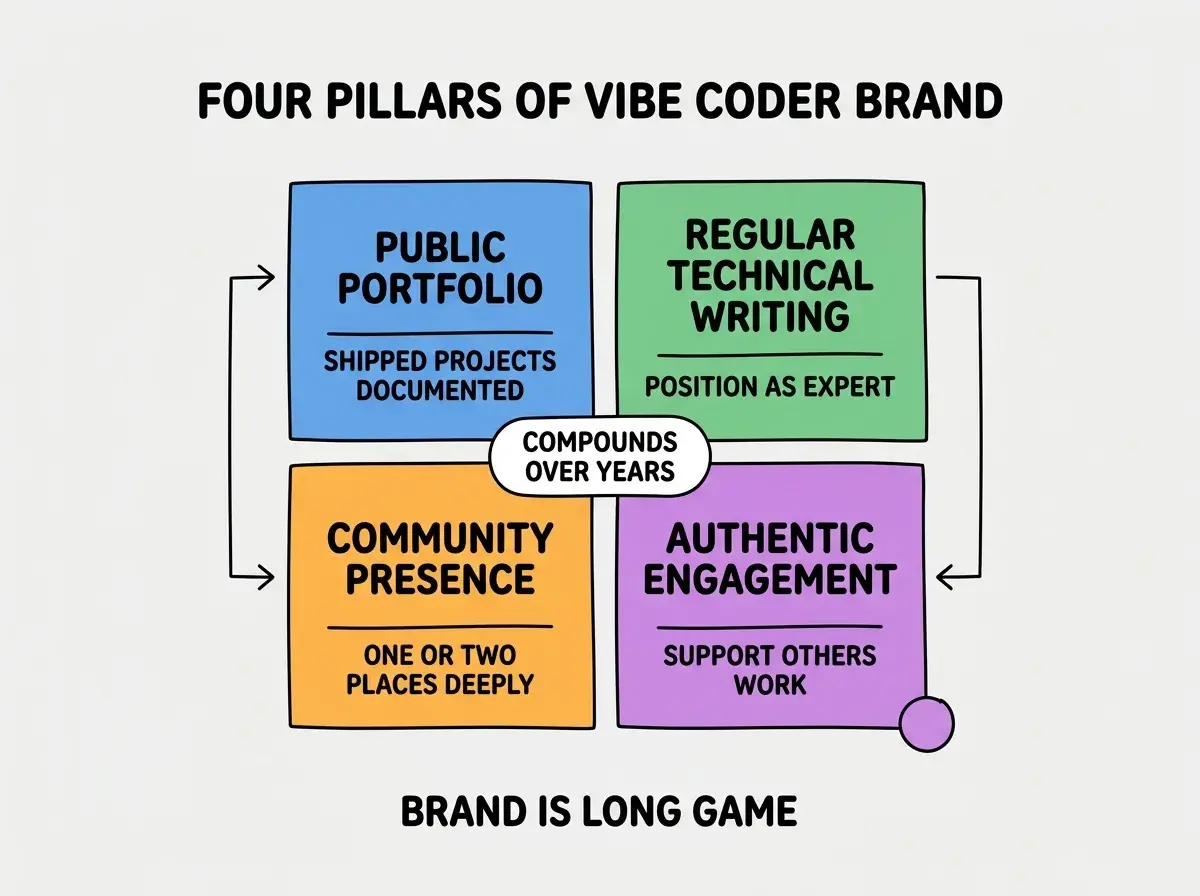
Pillar 3, community presence in one or two places. IndieHackers, X (Twitter), specific Discord communities, LinkedIn. Pick one or two; show up consistently; build reputation in those specific places where your audience genuinely spends time.
Pillar 4, authentic engagement with others' work. Comment thoughtfully on other builders' projects; share their work when good; build the social fabric that produces opportunities for you over time and through reciprocal relationships.
How to Invest Time Sustainably
Three time investment patterns produce brand without burning out.
Pattern 1, 5-10 hours weekly maximum. More than this and you become a content creator instead of a builder. The right balance is brand work that supports building, not replaces it through hours that should go to product.
Browse more career and brand guides
Read more foundations articlesPattern 2, batch writing to specific weekly slots. Saturday morning writing, Wednesday evening engagement. Designated slots produce consistency; ad-hoc effort produces inconsistent output that fails to compound over time.
Pattern 3, prioritize quality over quantity. Two thoughtful posts per month outperform 20 reactive posts. The quality reputation compounds over time; quantity reputation eventually dilutes the brand value.
Content Approaches That Compound
Three content approaches produce brand value over years rather than just immediate engagement.
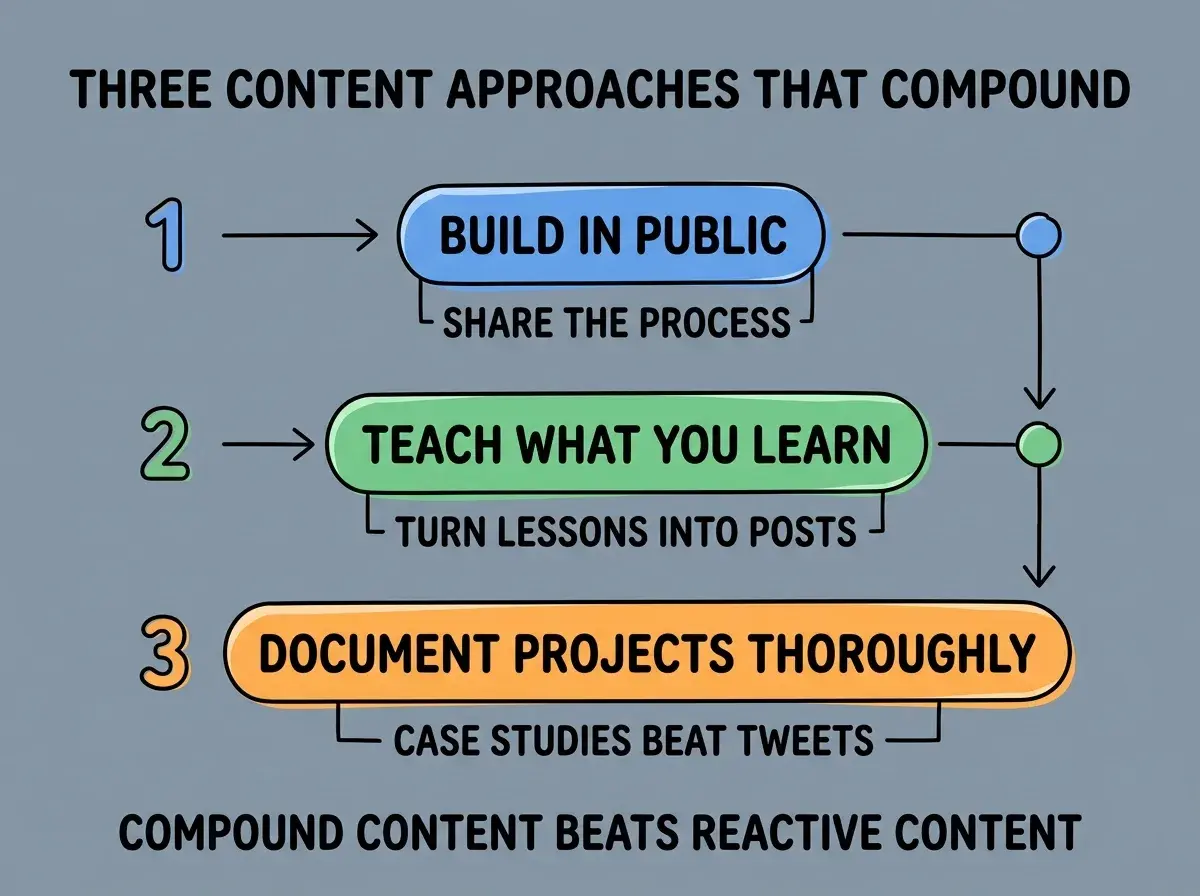
Approach 1, build in public. Share what you are building, what works, what does not, what you learned. The transparency builds trust and provides genuine education for others on similar journeys.
Approach 2, teach what you learn. Every new skill or insight becomes a post. The teaching process deepens your own understanding and produces searchable content that helps others discover you.
Approach 3, document projects thoroughly. Case studies of completed projects beat individual tweets for long-term value. Detailed documentation continues attracting attention years after publication and serves as proof of capability for prospective clients.
How to Distribute Content Effectively
Three distribution patterns help content reach the audience that matters for your brand.
Pattern 1, focus on one or two platforms deeply. X (Twitter), LinkedIn, your own newsletter. Pick where your target audience spends time; show up consistently rather than spreading thin across many platforms.
Pattern 2, use SEO for evergreen content. Long-form blog posts with searchable keywords accumulate traffic over years. The compound effect is dramatic; one well-optimized post can drive traffic for half a decade.
Pattern 3, repurpose content across formats. A single blog post becomes a Twitter thread, a LinkedIn article, a YouTube video. Repurposing extends reach without proportional effort; the content is reused not recreated.
The combination produces distribution leverage. Without distribution patterns, content sits unread; the writing is necessary but not sufficient for brand value.
How to Find Your Authentic Voice
Three patterns help develop a voice that feels authentic rather than performative.
Pattern A, write the way you speak to friends. Avoid corporate language; use your real vocabulary and personality. Authentic voice attracts authentic audience that genuinely engages with your work.
Pattern B, share specific experiences not generic advice. "Here's what happened when I shipped my first SaaS" beats "5 tips for shipping SaaS." Specific stories beat generic advice.
Pattern C, take positions you can defend. Wishy-washy content gets ignored; opinionated content gets engagement. Pick positions you genuinely hold; defend them with evidence and reasoning that can withstand pushback.
The combination produces voice that builds genuine following rather than chasing trending content. Without these patterns, brand-building becomes performance that exhausts the builder and bores the audience.
The most damaging personal brand mistake is treating it as marketing rather than identity. Builders who treat brand as marketing optimize for short-term engagement and produce content that feels hollow over time. The fix is to treat personal brand as professional identity that you build deliberately; the brand reflects who you actually are and what you actually do, not who you wish to appear to be. Identity-based brand building produces sustainable results; performance-based brand building burns out builders within months.
The other mistake is comparing yourself to influencers with full-time content creator commitment. Their numbers reflect full-time investment; your numbers should reflect your part-time investment. The fix is to compare to other part-time builders in your space; the comparison provides realistic benchmarks. Comparing to wrong reference class produces unwarranted discouragement.
A third mistake is chasing virality at the expense of substance. Viral content sometimes happens; building toward virality usually produces hollow content. The fix is to focus on substance and let occasional virality happen naturally; the substantive work compounds, the viral attempts dissipate.
A fourth mistake is treating brand metrics as the goal rather than as proxies. Followers, likes, engagement are useful signals but not goals; opportunities, income, professional growth are goals. The fix is to track real outcomes alongside vanity metrics; the metrics that matter are the ones that change your life.
What This Means For You
Personal brand is high-leverage career investment for vibe coders in 2026. The four pillars, time patterns, and voice approaches produce brand that compounds over years.
- If you're a founder: Build personal brand alongside your products. The brand attracts customers, investors, talent, and partners over time.
- If you're changing careers into development: Personal brand can substitute for traditional credentials in many situations. Start building from the moment you start learning.
- If you're a student: Begin personal brand building during school. Years of compound brand value accrue while peers focus only on coursework.
Browse more career strategy guides
Read more foundations articles