The experience premium is the 2026 phenomenon where senior developers achieve 81 percent productivity gains with AI tools while junior developers achieve only 22 percent. Four drivers explain the gap, the implications shape career strategy, and the gap will likely persist or widen as AI tools become more capable. Understanding the experience premium helps both seniors maximize gains and juniors close the gap deliberately.
This piece walks through what the experience premium actually is, the four drivers behind it, what it means for career decisions, and the four mistakes when interpreting the productivity gap.
Why The Experience Premium Matters
The experience premium matters because it affects career trajectories at a moment when AI tools are reshaping the developer profession. Career decisions made now compound across decades.
The 2026 reality is that the gap is well documented across multiple studies. McKinsey, Stack Overflow, and academic research all show similar patterns. Pattern persistence increases analytical confidence.
A 2025 McKinsey study of 1,200 developers found that senior developers (8+ years experience) achieved 81 percent productivity gains with AI tools, while junior developers (under 2 years experience) achieved 22 percent gains. The 59 percentage point gap is the experience premium; experience compounds rather than equalizes with AI.
The pattern to copy is the way investment returns compound differently for skilled versus unskilled investors. Both invest; skilled investors achieve higher returns from the same market. Skill compounds rather than equalizes.
The Four Experience Premium Drivers
Four drivers explain the experience premium gap.
Driver 1, pattern recognition speeds review. Senior developers recognize good and bad code patterns instantly; juniors have to think through each pattern. Recognition speed multiplies AI productivity.
Driver 2, architecture intuition guides AI prompts. Senior developers prompt AI with architecture context that produces better code; juniors prompt without architecture context and get worse code.
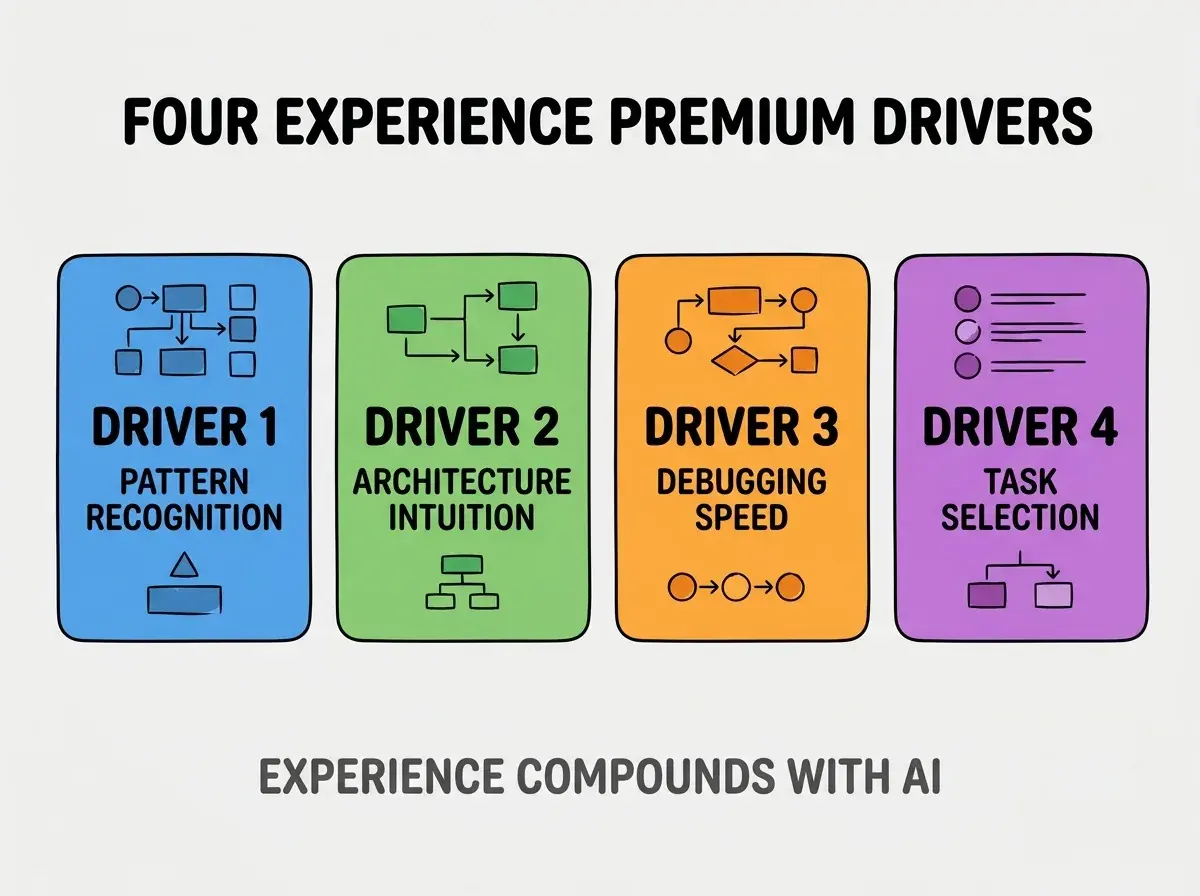
Driver 3, debugging speed matters more. AI generates bugs at predictable rates; senior debugging speed reduces the time cost of those bugs.
Driver 4, task selection avoids AI weaknesses. Senior developers know which tasks to delegate to AI and which to do themselves; juniors delegate everything and waste time on AI failures.
What The Experience Premium Reveals About AI
Three insights emerge from experience premium analysis.
Insight 1, AI amplifies existing skill rather than replacing it. Tools work better in skilled hands; same pattern as previous tool transitions.
Browse more foundations
Read more foundationsInsight 2, judgment matters more, not less, with AI. AI handles execution; humans handle judgment about what to execute and what to accept. Judgment skill becomes more valuable.
Insight 3, rapid skill building strategies become essential for juniors. Closing the gap requires deliberate skill building; default exposure does not close the gap.
What The Premium Means For Career Strategy
Three career strategy patterns emerge from experience premium analysis.
Pattern 1, seniors invest in AI mastery for compound returns. AI tools amplify senior productivity; investment in mastery has larger payoff than for juniors.
Pattern 2, juniors build foundational skills deliberately. AI cannot replace foundational skills; foundational skills determine AI productivity ceiling.
Pattern 3, mid level developers face the highest stakes. Mid level either close gap to senior productivity or compete with juniors at lower productivity. Decision matters.
The combination produces strategy that matches career stage. Without strategy, career trajectories drift in directions that compound badly.
What Makes Skill Building Effective For Juniors
Three patterns separate effective junior skill building from time wasting practice.
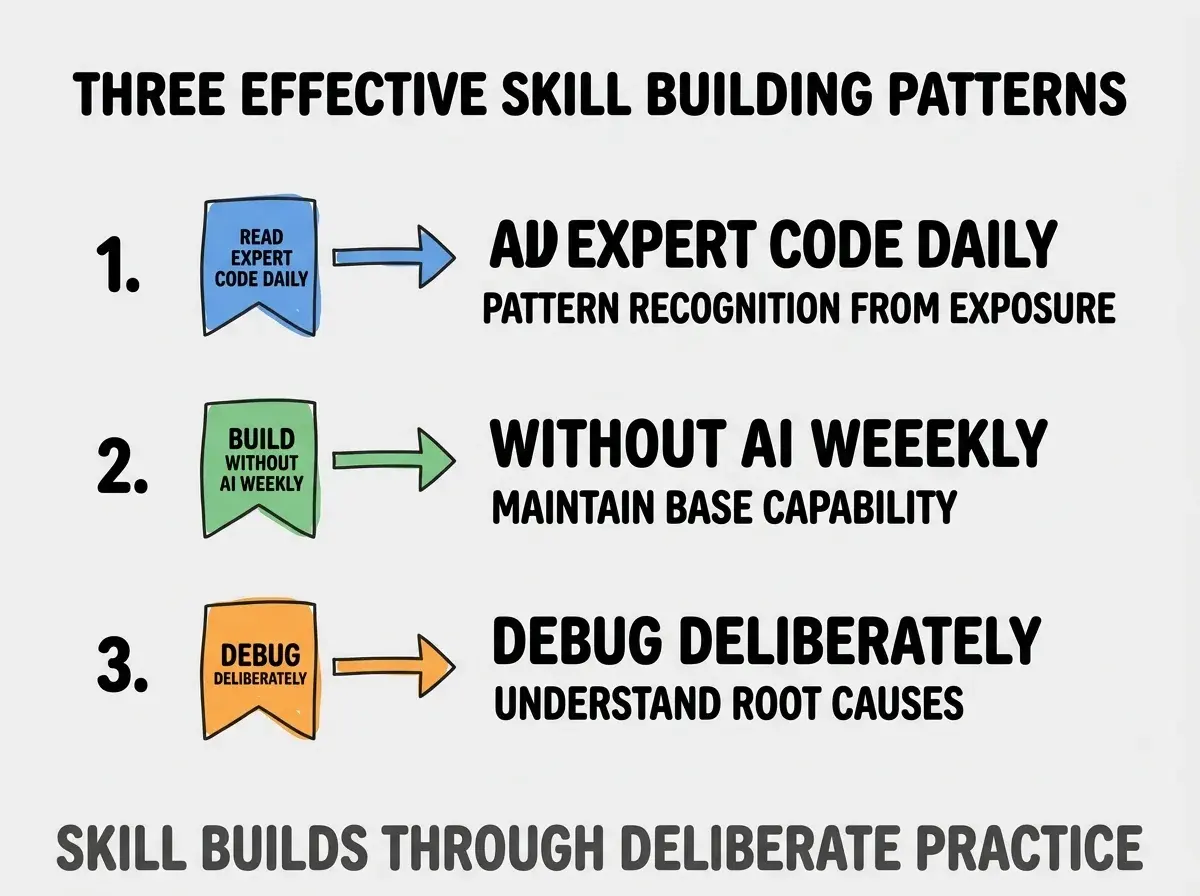
Pattern 1, read expert code daily. Pattern recognition develops from exposure; daily reading compounds faster than occasional reading.
Pattern 2, build without AI weekly. Periodic AI free building maintains base capability; without maintenance, base atrophies.
Pattern 3, debug deliberately to root causes. Each debug session that reaches root cause builds judgment; surface fixes do not build skill.
The combination produces juniors who close the experience premium gap. Without these patterns, juniors stay at 22 percent productivity gains while seniors compound to higher gains.
Common Questions About The Experience Premium
The experience premium raises questions worth addressing directly.
The first question is whether the gap will close as AI improves. Likely no; better AI amplifies skill differences rather than equalizing them. Gap widens with tool capability.
The second question is whether to skip junior roles entirely. Bad advice; junior roles build the foundation that produces senior productivity. Skip produces shallow knowledge.
The third question is whether senior developers should fear AI replacement. The data suggests no; AI amplifies senior productivity, making seniors more valuable, not less.
The fourth question is how juniors compete in a market where seniors are 4x more productive. Specialization, hustle, and rapid skill building. Generic competition is hard; differentiated competition possible.
How The Premium Affects Hiring
The experience premium affects hiring in compounding ways. Hiring effects compound across years.
The first compounding effect is wage divergence. Senior wages rise as their productivity rises; junior wages stagnate or fall. Divergence concentrates capital.
The second compounding effect is hiring patterns. Companies hire fewer juniors and pay more for seniors; pyramid shape changes shape.
The third compounding effect is career path changes. Traditional career path was junior to mid to senior; AI era may produce different paths with different timings.
The combination produces labor market dynamics that reshape engineering careers. Without awareness, individuals face market changes without strategy.
How To Maximize Premium As A Senior
Three patterns help senior developers maximize the experience premium.
Pattern A, invest deliberate practice in AI prompting. Better prompting compounds; investment pays back across years.
Pattern B, expand task scope to use AI capabilities. AI enables tackling tasks that were too large for solo work; scope expansion captures more premium.
Pattern C, mentor juniors to multiply impact. Senior knowledge plus AI plus mentorship multiplies organizational productivity. Mentorship creates leverage.
The combination produces senior productivity that compounds beyond individual ceiling. Without these patterns, seniors leave premium on the table.
The most damaging experience premium mistake is treating it as inevitable destiny rather than addressable gap. The gap is real; the gap is also closable through deliberate practice. The fix is to treat experience premium as motivation rather than excuse; motivation drives the practice that closes the gap. Juniors who treat it as motivation close the gap faster than juniors who treat it as obstacle.
The other mistake is interpreting the premium as evidence AI tools are bad. Tools amplify skill differences; this is feature not bug for skilled users.
A third mistake is denying the premium exists. Denial prevents the strategic response that the premium requires.
A fourth mistake is treating juniors as inferior because of premium. Juniors will become seniors; treating them poorly damages future relationships and team dynamics.
What This Means For You
The experience premium reveals that AI tools amplify rather than equalize skill differences. The four drivers, career strategy patterns, and skill building approaches produce framework for navigating the productivity gap.
- If you're a senior dev: Invest in AI mastery for compound returns; investment payback exceeds junior investment payback.
- If you're a student: Build foundational skills deliberately; foundations determine AI productivity ceiling for entire career.
Browse more foundations
Read more foundations