Enterprise AI development stack for 2026 differs from individual or small team stacks because of compliance, audit, and scale requirements. Four stack tiers matter: AI coding tools enterprise tier (GitHub Copilot Enterprise, Claude Code Enterprise, Cursor Enterprise) for primary development, AI infrastructure for organizational AI use (private model hosting, fine tuning), governance tooling for monitoring and audit, and integration layer connecting AI tools to enterprise systems. Total stack cost typically $50-$500 per developer monthly; benefits typically multiply that by 5-15x.
This piece walks through the four stack tiers, the selection patterns, what makes enterprise stacks sustainable, and the four mistakes enterprises make on AI stacks.
Why Enterprise AI Stacks Differ
Enterprise AI stacks differ because compliance, audit, and scale demands exceed individual or small team needs. Personal stacks suit personal needs; enterprise stacks suit enterprise needs.
The 2026 reality is that enterprise AI tooling has matured to where complete enterprise stacks viable. Maturation enables enterprise scale adoption.
A 2025 enterprise tooling study of 200 Fortune 1000 organizations found that enterprises with formal AI development stacks achieved 38 percent higher engineering productivity than enterprises with ad hoc tool selection, primarily through compliance enabled tool access and integrated workflows. Stack matters at scale.
The pattern to copy is the way enterprises built data engineering stacks. Specific tools, specific tiers, integration layer, governance layer; same pattern applies to AI development stacks. Data engineering lessons transfer.
The Four Stack Tiers
Four tiers form complete enterprise AI development stack.
Tier 1, AI coding tools enterprise tier. GitHub Copilot Enterprise, Claude Code Enterprise, Cursor Enterprise. Enterprise tier essential.
Tier 2, AI infrastructure for organizational use. Private model hosting, fine tuning capabilities, model catalog. Infrastructure differentiates enterprises.
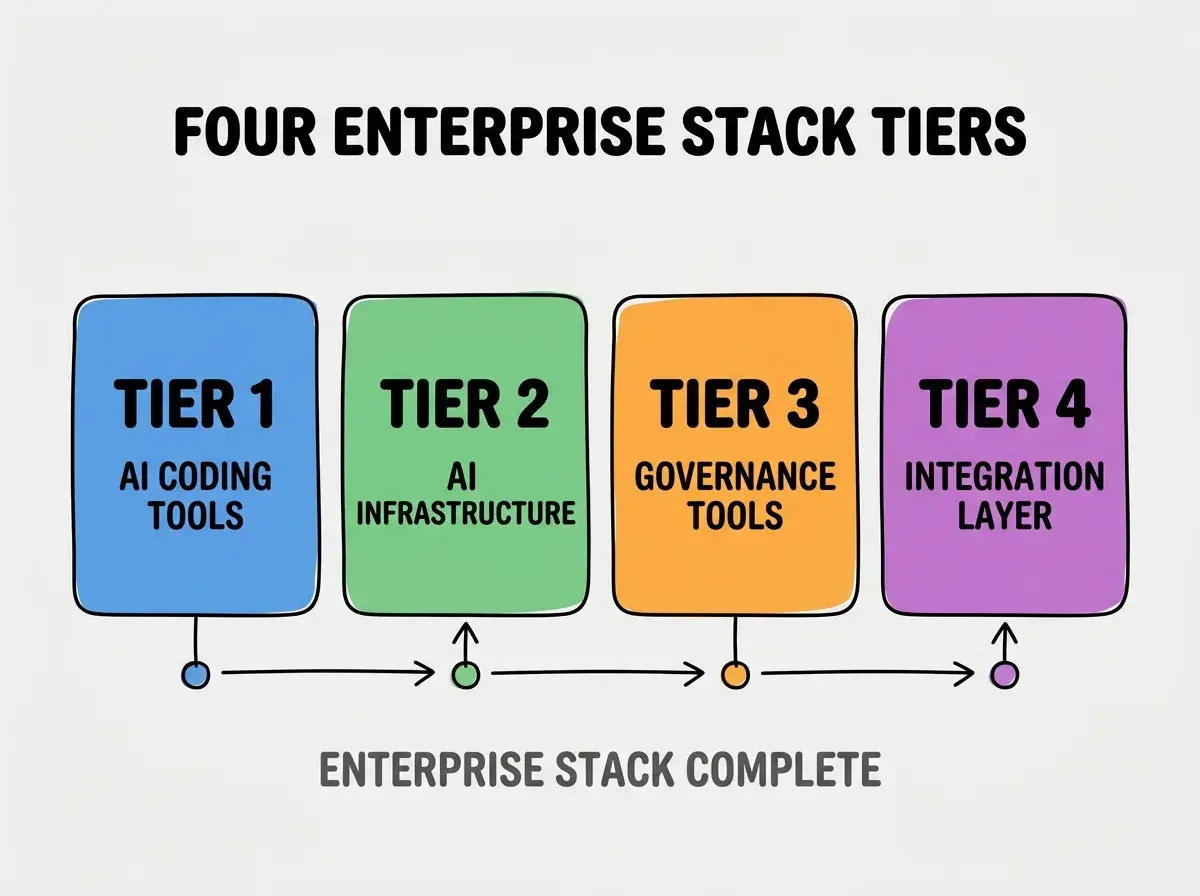
Tier 3, governance tooling. Monitoring AI use, audit logging, policy enforcement. Governance enables compliance.
Tier 4, integration layer. Connecting AI tools to enterprise systems (Jira, ServiceNow, internal docs). Integration multiplies value.
How To Implement Each Tier
Four implementation patterns address each tier.
Implementation 1, AI coding tools selected by team need. Different teams may need different tools; flexibility matters.
Browse more tools
Read more toolsImplementation 2, AI infrastructure based on data sensitivity. Public models for non sensitive; private hosting for sensitive.
Implementation 3, governance integrated with existing compliance. Compliance frameworks already exist; AI governance integrates.
Implementation 4, integration via APIs and webhooks. Standard integration patterns; APIs enable enterprise system connection.
What Makes Enterprise Stacks Sustainable
Three patterns separate sustainable enterprise stacks from initial purchases.
Pattern 1, vendor management discipline. Multiple vendors managed; discipline prevents vendor sprawl.
Pattern 2, regular stack reviews. Quarterly reviews assess fit; reviews identify changes needed.
Pattern 3, internal expertise development. Internal AI expertise enables stack optimization; outsourced expertise limits.
What Makes Enterprise AI Stacks Effective
Three patterns separate effective stacks from theatrical implementations.
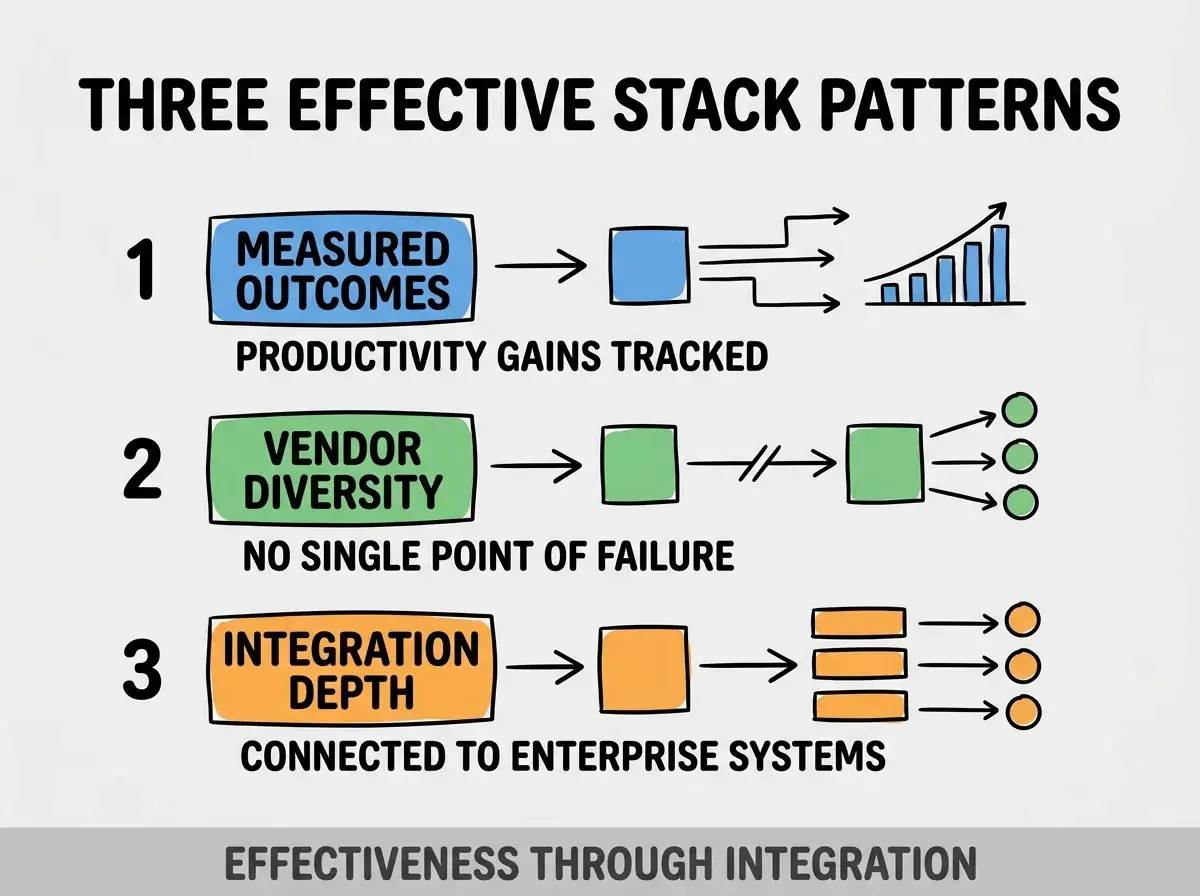
Pattern 1, measured outcomes. Productivity tracked; tracking justifies stack investment.
Pattern 2, vendor diversity. Multiple vendors prevent lock in; diversity enables negotiation leverage.
Pattern 3, integration depth. Deep integration multiplies value; surface integration limits.
The combination produces effective enterprise stacks. Without these patterns, stacks become expensive disconnected tools.
How To Plan Enterprise AI Stack
Three patterns help plan stacks.
Pattern A, audit current developer tool usage. Existing usage informs stack selection; usage reveals needs.
Pattern B, pilot top candidates. Pilots reveal practical fit; spec sheets miss practical issues.
Pattern C, design integration architecture upfront. Integration retrofitted expensive; designed integration cleaner.
Common Questions About Enterprise AI Stacks
Enterprise AI stacks raise questions worth addressing directly.
The first question is whether to standardize on single AI coding tool. Sometimes; depends on team diversity. Multiple tools acceptable when justified.
The second question is whether to host private models. Yes for regulated; sometimes for non regulated. Cost vs control tradeoff.
The third question is what governance tooling to use. Vendor governance plus enterprise tools (DataDog, Splunk). Combination works.
The fourth question is how to budget enterprise AI stack. $50-500 per developer monthly typical; ROI justifies through productivity.
How Stacks Affect Enterprise Outcomes
Stacks affect enterprise outcomes in compounding ways. Outcome effects compound across organizational scale.
The first compounding effect is engineering productivity. Productivity gains compound across thousands of developers.
The second compounding effect is talent attraction. Modern stack attracts talent; outdated stack repels.
The third compounding effect is competitive position. Stack quality affects competitive engineering capability.
The combination produces enterprise outcomes shaped by stack quality. Without thoughtful stack, outcomes lag competitors.
How To Manage Stack Costs
Three patterns help manage costs.
Pattern A, usage based licensing. Per active user better than per seat; matches cost to value.
Pattern B, regular vendor negotiation. Annual renegotiation; vendors compete for enterprise business.
Pattern C, cost monitoring per team. Per team cost reveals patterns; patterns inform optimization.
The combination controls stack costs. Without management, costs grow without bounded outcomes.
The most damaging enterprise stack mistake is selecting tools without integration plan. Tools selected individually don't connect; lack of connection limits value to individual tool capability. The fix is to design integration architecture upfront; tools selected to fit architecture. Enterprises with integrated stacks achieve multiplied value; enterprises with disconnected tools achieve sum of individual values minus integration friction.
The other mistake is over standardization. Single tool for everyone produces compromise; allowing flexibility produces fit. Balance matters.
A third mistake is missing the governance tier. Without governance, compliance fails; failure produces enterprise risk.
A fourth mistake is treating stack as one off purchase. Stacks evolve; evolution requires ongoing investment.
What This Means For You
Enterprise AI development stack for 2026 requires four tiers integrated thoughtfully. The four tiers, implementation patterns, and sustainability approaches produce stacks that enable enterprise scale AI productivity.
- If you're a senior dev: Influence stack selection; technical input produces practical stacks.
- If you're a product manager: Stack affects engineering velocity; stack quality affects roadmap delivery.
- If you're a founder: Enterprise sales require enterprise tier capabilities; build vendor enterprise tier early.
Browse more tools
Read more tools