DNS migration when switching hosting without downtime requires careful planning since DNS changes propagate gradually. Four migration phases matter: TTL reduction (lower before changes for fast rollback), parallel deployment (new host serving traffic alongside old), gradual cutover (DNS updated, traffic shifts), and verification (both during and after). Without phases, hosting migration causes outages; with phases, migration invisible to users.
This tutorial walks through the four phases, the implementation patterns, what makes DNS migration safe, and the four mistakes builders make on DNS migration.
Why DNS Migration Without Downtime Matters
DNS migration without downtime matters because hosting switches happen (cost, capability, vendor changes); each switch risks outage. Discipline prevents.
The 2026 reality is that DNS providers (Cloudflare, Route53) support fast TTL changes. Capability removed barrier; using requires discipline.
A 2025 production migration study of 300 vibe coded apps that migrated hosting found that apps following DNS migration phases experienced 87 percent fewer migration related outages than apps with ad hoc DNS changes, primarily through TTL reduction enabling fast rollback. Phases measurably affect migration safety.
The pattern to copy is the way airlines move planes between hangars without disrupting flights. Coordination and timing prevent disruption. Same patterns apply to DNS migration; coordination prevents outages.
The Four Migration Phases
Four phases form complete DNS migration.
Phase 1, TTL reduction. Lower TTL before changes. Foundation.
Phase 2, parallel deployment. Both hosts serving. Continuity.
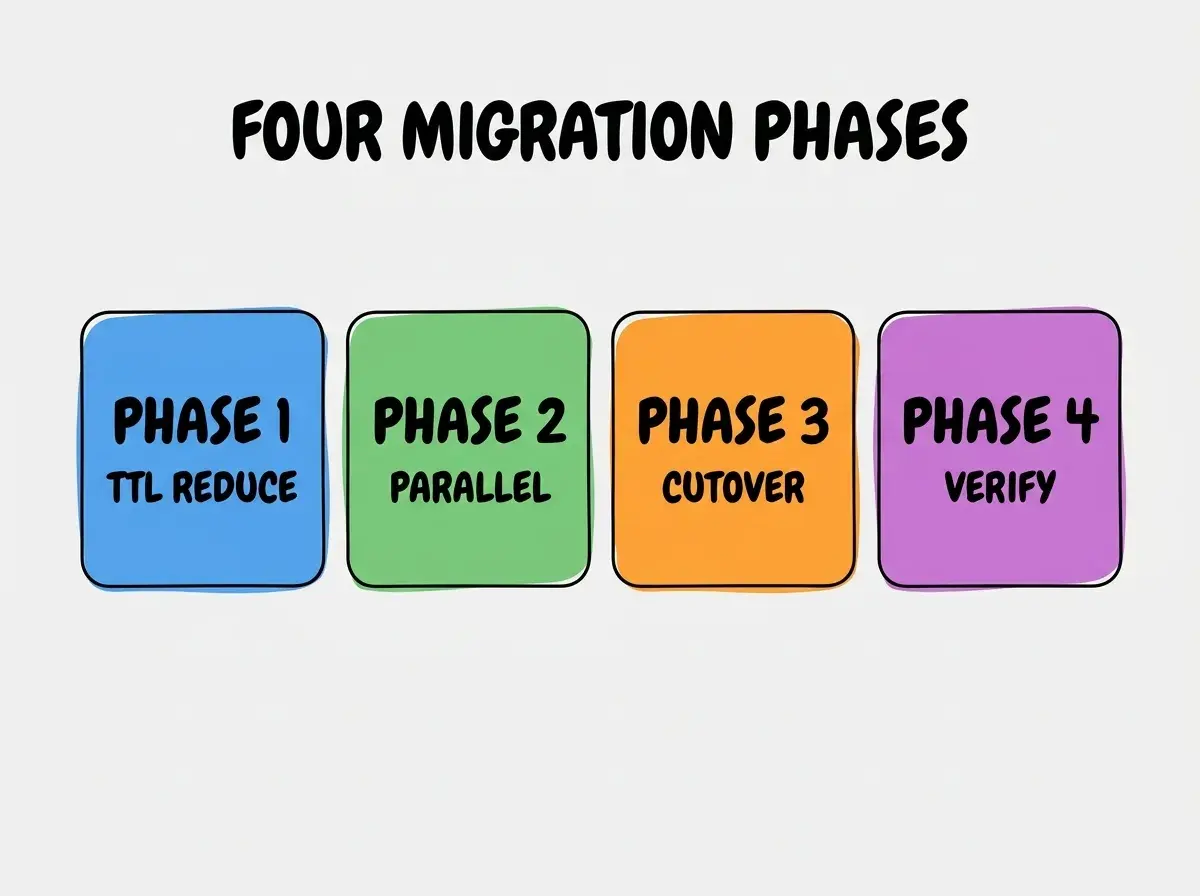
Phase 3, gradual cutover. DNS updated, traffic shifts. Transition.
Phase 4, verification. Both during and after. Safety.
How To Implement Each Phase
Four implementation patterns address each phase.
Implementation 1, TTL to 5 minutes day before. Standard reduction pattern.
Browse more tools
Read more toolsImplementation 2, deploy to new host alongside old. Both serving capability.
Implementation 3, DNS update during low traffic. Minimize impact window.
Implementation 4, monitor both hosts during cutover. Issues caught during.
What Makes DNS Migration Safe
Three patterns separate safe migration from outage prone.
Pattern 1, low TTL before changes. Fast rollback enabled.
Pattern 2, parallel availability. Both hosts serve; rollback fast.
Pattern 3, monitoring during cutover. Issues caught early.
What Makes Migration Strategy Sustainable
Three patterns separate sustainable strategy from one off panic.
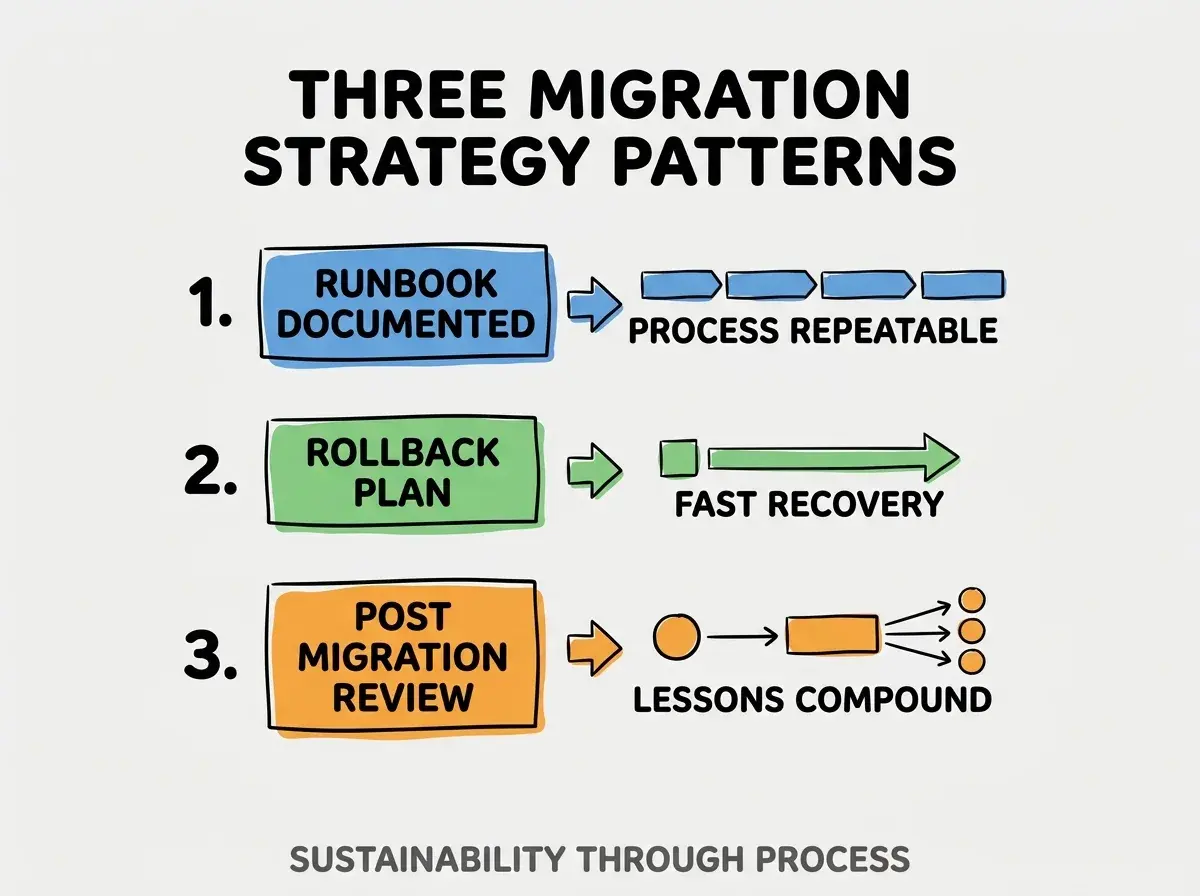
Pattern 1, runbook documented. Process repeatable.
Pattern 2, rollback plan. Fast recovery if needed.
Pattern 3, post migration review. Lessons compound.
The combination produces sustainable migration. Without these patterns, each migration panic.
How To Test Migration Safely
Three patterns help testing.
Pattern A, staging migration first. Practice in non production.
Pattern B, partial traffic test. Subset of traffic via new host.
Pattern C, automated verification. Checks confirm health.
Common Questions About DNS Migration
DNS migration raises questions worth addressing directly.
The first question is when to migrate. Low traffic times; weekend not Friday.
The second question is whether to use weighted routing. Useful for gradual; not always needed.
The third question is what TTL to use. 5 minutes during; longer normal.
The fourth question is how to handle email DNS. MX records separate; care needed.
How DNS Migration Affects Reliability
Migration affects reliability in compounding ways. Effects compound across migrations.
The first compounding effect is migration confidence. Successful migrations build confidence.
The second compounding effect is team capability. Each migration teaches; team strengthens.
The third compounding effect is hosting flexibility. Easy migration enables choice.
The combination produces reliability shaped by migration discipline. Without discipline, migrations risky.
How To Handle Migration Failures
Three patterns help failure handling.
Pattern A, immediate rollback to old DNS. Fast rollback essential.
Pattern B, communication to users. Status page updates.
Pattern C, post mortem after recovery. Learn from failures.
The combination handles failures gracefully. Without patterns, failures cascade.
The most damaging DNS migration mistake is high TTL during change. High TTL means hours to roll back; outage prolonged. The fix is to lower TTL day before; rollback fast if needed. Builders who lower TTL recover fast; builders who change with high TTL face hours long outages when issues arise.
The other mistake is missing the parallel deployment phase. Big bang migration risky.
A third mistake is over indexing on DNS without considering CDN. CDN cache delays.
A fourth mistake is treating migration as one off. Migrations recur; document.
What This Means For You
DNS migration when switching hosting without downtime enables hosting flexibility safely. The four phases, implementation patterns, and sustainability approaches produce migrations that complete invisibly to users.
- If you're a senior dev: DNS migration fluency expected; learn patterns deeply.
- If you're a founder: Migration capability enables strategic choice; investment justified.
- If you're changing careers: Operations expertise valuable; migration patterns transferable.
Browse more tools
Read more tools