Migrating from Express to Next.js API routes consolidates frontend and backend in one framework while gaining edge runtime support. Four migration phases matter: route mapping (Express routes to Next.js route handlers), middleware migration (Express middleware to Next.js middleware), authentication migration (Express auth to Next.js auth patterns), and deployment configuration (separate Express server to Next.js deploy). Migration takes 1-3 days for medium API; benefits include simpler architecture and edge runtime.
This piece walks through the four migration phases, the implementation patterns, what makes migration sustainable, and the four mistakes builders make on Express to Next.js migration.
Why Migrate Express To Next.js
Migrating Express to Next.js matters because separate frontend and backend doubles deployment complexity. Consolidation simplifies; simpler architecture compounds maintenance.
The 2026 reality is that Next.js API routes capable of most Express patterns plus edge runtime support. Capability parity makes migration justifiable.
A 2025 vibe coder architecture study of 600 projects migrating Express to Next.js API routes found that consolidated stacks reduced deployment time by 64 percent and bug rate by 28 percent compared to separate frontend backend, primarily through reduced infrastructure complexity. Consolidation measurably affects operational outcomes.
The pattern to copy is the way restaurants moved from separate kitchen and bar to integrated. Integration reduces coordination overhead; same patterns apply to frontend backend integration.
The Four Migration Phases
Four phases form complete migration.
Phase 1, route mapping. Express routes to Next.js route handlers; pattern translation.
Phase 2, middleware migration. Express middleware to Next.js middleware; concept transfer.
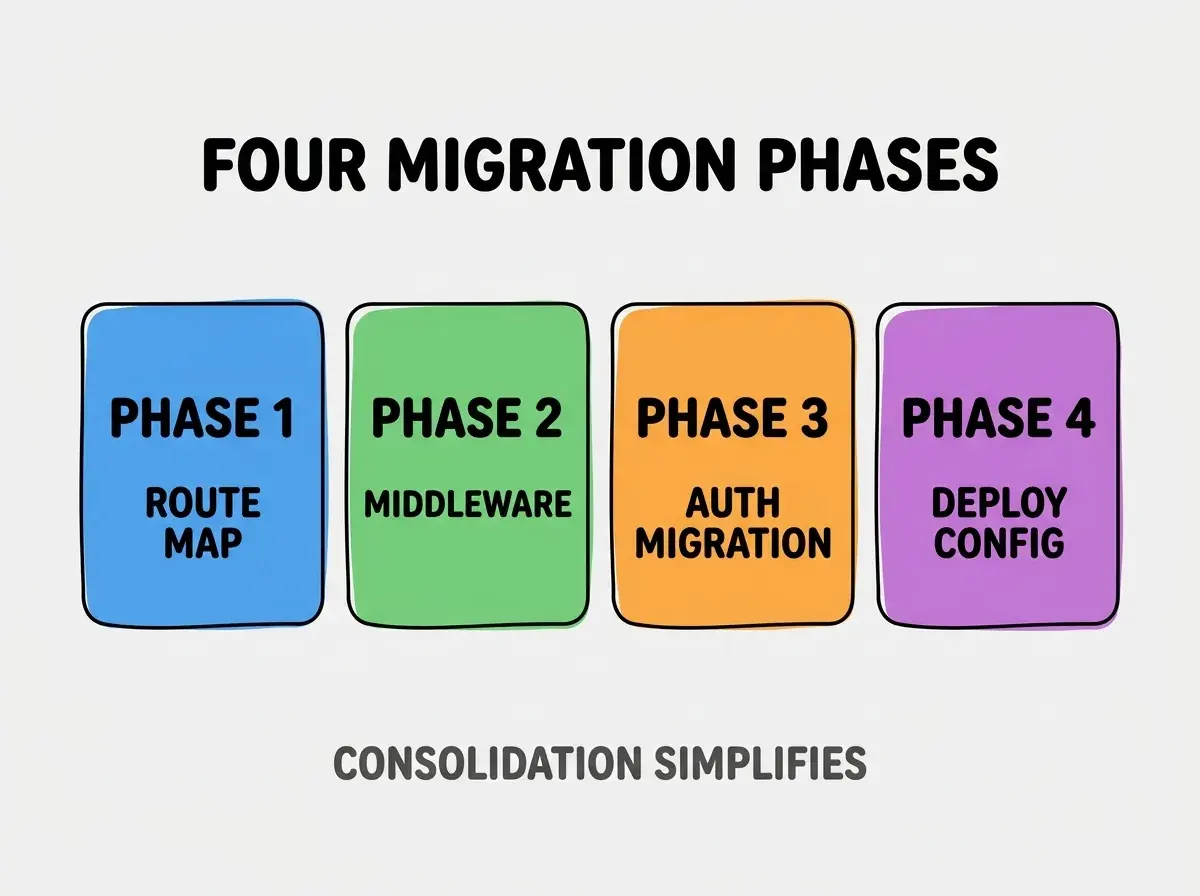
Phase 3, authentication migration. Express auth to Next.js auth; library mapping.
Phase 4, deployment configuration. Server config to Next.js deploy; simpler infra.
How To Migrate Each Phase
Four implementation patterns address each phase.
Implementation 1, app/api directory structure. Each route becomes folder; route.ts handles methods.
Browse more tools
Read more toolsImplementation 2, middleware.ts at root. Single middleware file; runs for matching routes.
Implementation 3, NextAuth or Clerk for auth. NextAuth modern; Clerk hosted.
Implementation 4, Vercel or Cloudflare for deploy. Vercel native; Cloudflare via OpenNext.
What Makes Migration Sustainable
Three patterns separate sustainable migration from frustrated reverts.
Pattern 1, parallel run during migration. Both APIs available; gradual cutover.
Pattern 2, comprehensive tests first. Tests verify equivalence; without tests, regressions hidden.
Pattern 3, route by route migration. Migrate one route at time; risk lower.
What Makes Next.js API Effective
Three patterns separate effective Next.js API from struggling.
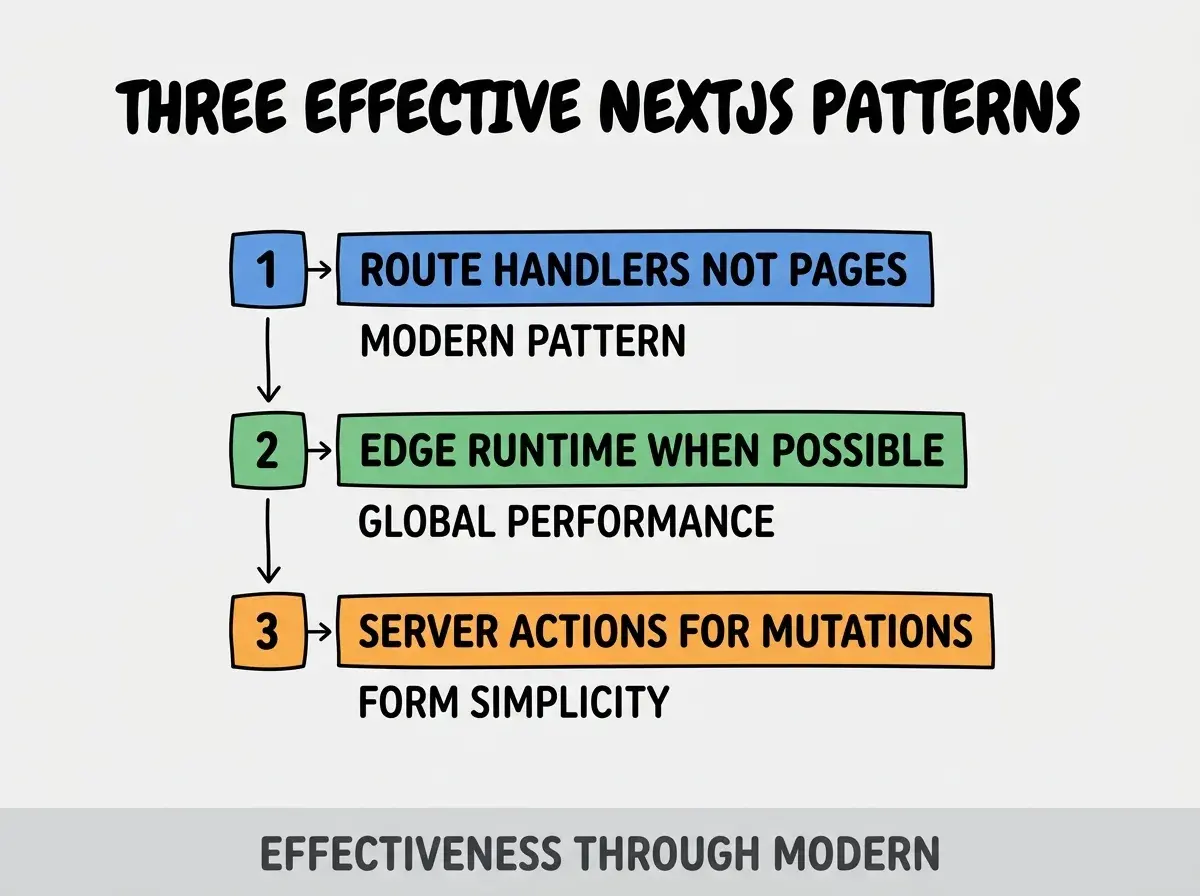
Pattern 1, route handlers not pages. Modern pattern; pages router deprecated for new.
Pattern 2, edge runtime when possible. Global performance; edge benefits.
Pattern 3, Server Actions for mutations. Form simplicity; reduces API needs.
The combination produces effective Next.js API. Without these patterns, miss benefits.
How To Handle Express Specific Features
Three patterns help feature handling.
Pattern A, body parser equivalent. request.json() replaces; built in.
Pattern B, cors via middleware. Cors middleware in middleware.ts.
Pattern C, file upload via FormData. FormData parsing built in.
Common Questions About Express Migration
Express migration raises questions worth addressing directly.
The first question is whether all Express features available. Most; some libraries Next.js incompatible.
The second question is whether to migrate gradually. Yes; gradual safer than big bang.
The third question is whether Next.js API performance matches Express. Generally yes; edge can exceed.
The fourth question is whether Express still maintained. Yes; Express not deprecated. Choice based on need.
How Consolidation Affects Architecture
Consolidation affects architecture in compounding ways. Architecture effects compound across project life.
The first compounding effect is deployment simplicity. Single deploy vs multiple; simplicity compounds.
The second compounding effect is shared types. Shared TypeScript types between frontend backend.
The third compounding effect is faster development. Less context switching; speed compounds.
The combination produces architecture shaped by consolidation. Without consolidation, architecture bounded by separation overhead.
How To Test Migrated APIs
Three patterns help testing.
Pattern A, integration tests verify behavior. Tests run against APIs; verify equivalence.
Pattern B, parallel run validates. Both APIs serve traffic; comparison validates.
Pattern C, gradual rollout. Percentage based rollout; reduces risk.
The combination produces tested migration. Without testing, regressions ship.
The most damaging Express to Next.js mistake is migrating without integration tests. Tests catch behavior differences; without tests, subtle differences ship as bugs. The fix is to add tests before migrating; tests transform migration from risky to safe. Builders who test first migrate confidently; builders who skip tests accumulate regression risk.
The other mistake is forcing all routes to edge. Some routes incompatible; force breaks.
A third mistake is missing the auth complexity. Auth migration substantial; budget time.
A fourth mistake is treating migration as one off. Adoption ongoing; team learning takes time.
What This Means For You
Migrating from Express to Next.js API routes consolidates architecture while gaining edge support. The four phases, implementation patterns, and sustainability approaches produce migration that compounds operational benefits.
- If you're a senior dev: Next.js API fluency expected for modern web; learn patterns deeply.
- If you're a founder: Architecture choice affects deployment; consolidation reduces complexity.
- If you're an indie hacker: Single framework simplifies solo ops; consider migration justified.
Browse more tools
Read more tools