Deep linking and navigation in mobile apps lets users land on specific screens from external links rather than always opening to home. Four deep link types matter: scheme links (myapp:// custom protocol), universal links (https URLs that open app), deferred deep links (links that work even before install), and contextual deep links (carry user context for personalized landing). Combined types produce mobile apps that integrate with web ecosystem; without deep linking, mobile apps feel isolated from rest of internet.
This tutorial walks through the four types, the implementation patterns, what makes deep linking sustainable, and the four mistakes builders make on mobile deep linking.
Why Deep Linking Matters For Mobile Apps
Deep linking matters because mobile users expect web like navigation behavior. Email links, social shares, marketing campaigns all need to land users at specific app screens; without deep linking, users land at home and re navigate.
The 2026 reality is that mobile frameworks (React Native, Flutter, Swift, Kotlin) make deep linking easier than ever; library support reduces what was previously platform specific complexity.
A 2025 mobile UX study of 500 apps found that apps with comprehensive deep linking achieved 34 percent higher conversion from marketing campaigns than apps without, primarily through users landing directly on relevant content. Deep linking measurably affects acquisition funnel.
The pattern to copy is the way web URLs let users link to specific pages rather than always landing on homepage. URLs make web addressable; deep links make mobile apps addressable. Same patterns apply; addressability enables ecosystem participation.
The Four Deep Link Types
Four types form complete mobile deep linking.
Type 1, scheme links. myapp:// protocol. Foundation.
Type 2, universal links. https URLs open app. Modern.
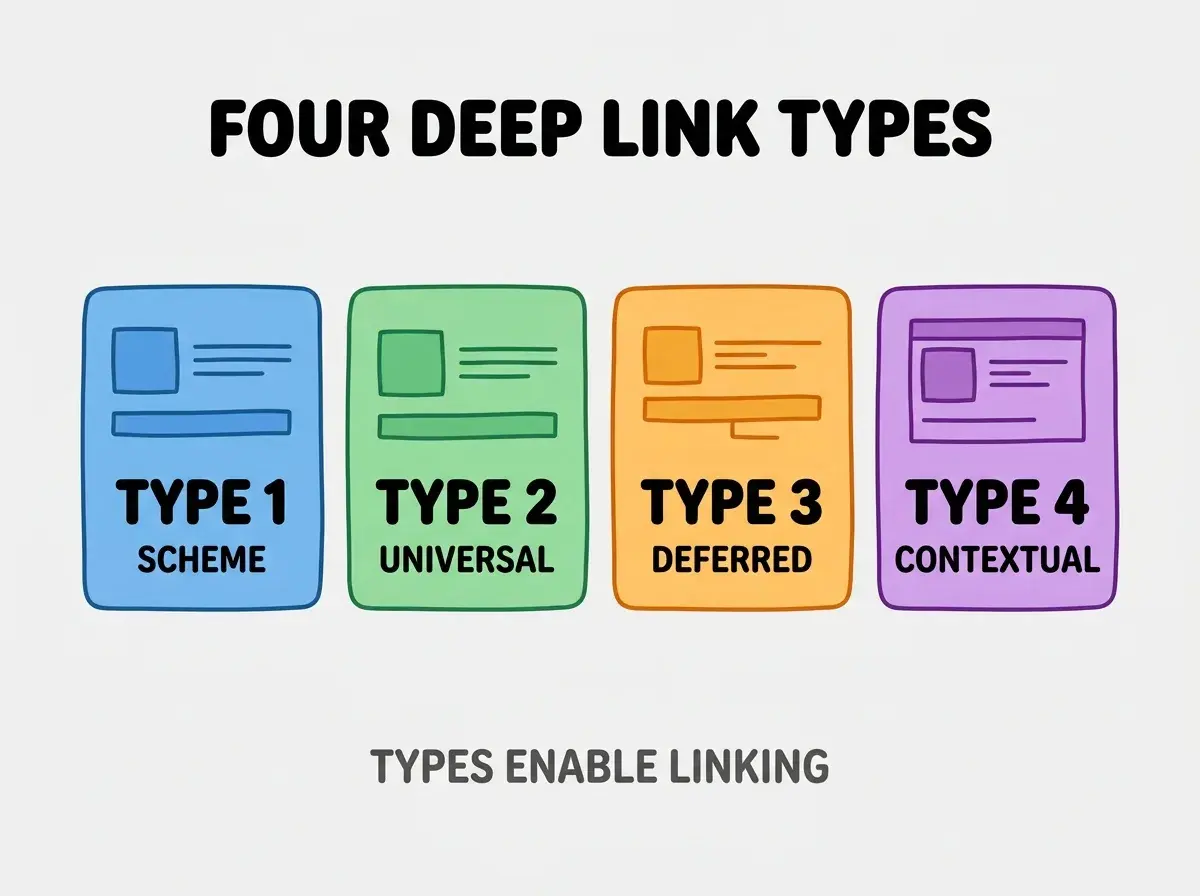
Type 3, deferred deep links. Work before install. Acquisition.
Type 4, contextual deep links. Carry user context. Personalization.
How To Implement Each Type
Four implementation patterns address each type.
Implementation 1, scheme link in app config. Register scheme; handle in app launch routing.
Browse more build
Read more buildImplementation 2, universal links via apple-app-site-association. Apple, Android verification files; HTTPS URLs auto open app.
Implementation 3, deferred via Branch or Adjust. SDKs handle deferred routing; install then route.
Implementation 4, context in URL params. Pass referrer, campaign, content ID; app uses for personalization.
What Makes Deep Linking Sustainable
Three patterns separate sustainable from one off implementations.
Pattern 1, central routing module. All deep links route through one place; not scattered handlers.
Pattern 2, fallback web pages. When app not installed, web page handles; not broken link.
Pattern 3, analytics on every link. Track which links convert; optimize based on data.
What Makes Deep Linking Strategy Effective
Three patterns separate effective from theatrical.
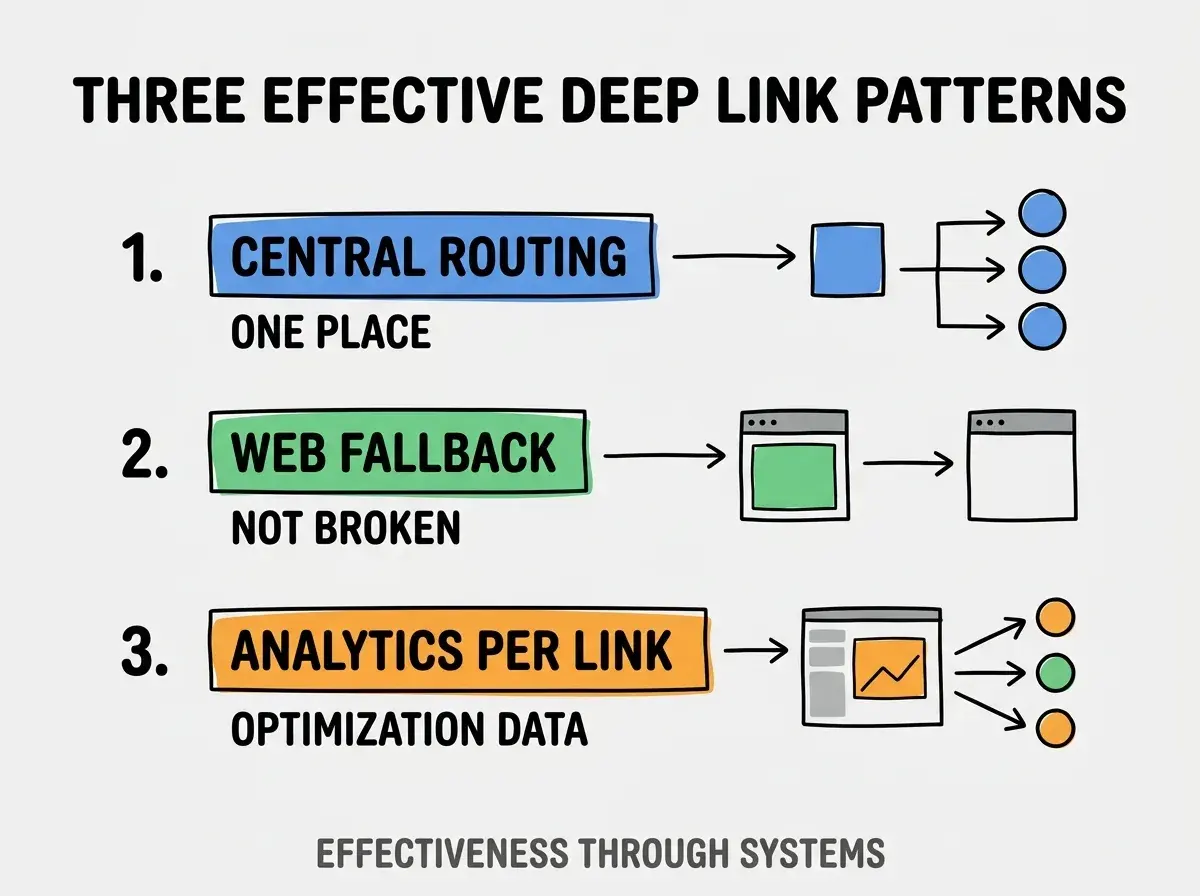
Pattern 1, central routing. One place.
Pattern 2, web fallback. Not broken.
Pattern 3, analytics per link. Optimization data.
The combination produces effective deep linking. Without these patterns, deep linking fragile.
How To Choose Deep Linking Stack
Three patterns help stack choice.
Pattern A, native universal links for simple. Apple Universal Links, Android App Links built in.
Pattern B, Branch for advanced. Deferred, attribution, dashboard.
Pattern C, custom for fully owned. Build everything when product unique.
Common Questions About Deep Linking
Deep linking raises questions worth addressing directly.
The first question is whether to use scheme or universal. Universal preferred; scheme legacy.
The second question is what about apps not installed. Deferred deep linking handles; SDKs help.
The third question is how to handle authenticated content. Auth check after routing; redirect to login if needed.
The fourth question is whether deep links work in iMessage. Yes; Universal Links handle iMessage previews.
How Deep Linking Affects Mobile Acquisition
Deep linking affects acquisition in compounding ways. Acquisition effects compound across campaigns.
The first compounding effect is conversion rate. Direct landing converts higher.
The second compounding effect is attribution clarity. Deep links carry attribution data.
The third compounding effect is referral programs. Sharing links enable viral mechanics.
The combination produces acquisition shaped by deep linking quality. Without quality, acquisition leaks.
How To Test Deep Links
Three patterns help testing.
Pattern A, simulator and device. Both behaviors.
Pattern B, all link types. Scheme, universal, deferred all tested.
Pattern C, edge cases like uninstalled. Handle gracefully.
The combination produces tested deep linking. Without testing, links break in production.
The most damaging deep linking mistake is missing the web fallback. When app not installed, scheme links fail silently; users see nothing. The fix is to always pair deep links with web URLs that handle uninstalled case; either show install prompt or render content. Apps with web fallbacks acquire users through links; apps without lose users to silent failures that damage attribution measurement and marketing ROI calculations.
The other mistake is missing the deferred deep linking. New users from links land at home; lost context.
A third mistake is over engineering URL schemes. Simple URL structure ages better than clever schemes.
A fourth mistake is treating deep linking as one off. Deep linking is ongoing infrastructure; needs maintenance.
What This Means For You
Deep linking and navigation in mobile apps integrates apps with web ecosystem and unlocks acquisition channels. The four types, implementation patterns, and sustainability approaches produce deep linking that compounds mobile app value.
- If you're a senior dev: Deep linking expected for production mobile; learn patterns deeply.
- If you're a founder: Deep linking affects marketing effectiveness; investment in proper implementation justified.
- If you're changing careers: Mobile deep linking expertise valuable; mobile platform fluency demonstrates capability.
Browse more build
Read more build